
Some prints are meant to be read. Specialty prints are meant to be touched, caught in the light, or seen glowing back from across a dark street. Puff that rises off the fabric, high-density edges sharp enough to feel, metallics that turn with the wearer, reflectives that sleep grey by day and blaze white under headlights: these effects turn a standard garment into the piece people ask about, and each one is a small technology with its own rules, costs and failure modes.
Specialty effects are sampled in Bangladesh for fashion brands in the UK, the USA and Europe, each effect proven on the real fabric before it is priced into an order.
This guide covers the specialty range inside our screen printing work, from fashion pieces on garments like the oversized hoodie to safety graphics on the high-visibility vest, so a buyer can brief an effect with its real trade-offs attached.
What Counts as a Specialty Print
A specialty print is any screen print whose behaviour goes beyond flat colour on fabric: it adds height, shine, texture, light response or a physical property such as stretch or softness. The family includes puff, high density, metallic, glitter, foil, reflective, discharge’s special cousins, suede and flock finishes, and glow-in-the-dark. What they share is process: each demands specific ink chemistry, screen choices and curing attention beyond a standard plastisol run.
They also share a commercial logic. Specialty effects are how a basic garment earns a premium without changing its pattern: the hoodie is the same hoodie, but the chest piece stands in relief. That leverage is why fashion brands, merch programs and safety buyers all reach for effects, and why each effect must be specced like the engineering detail it quietly is.
Puff Prints: Ink That Rises
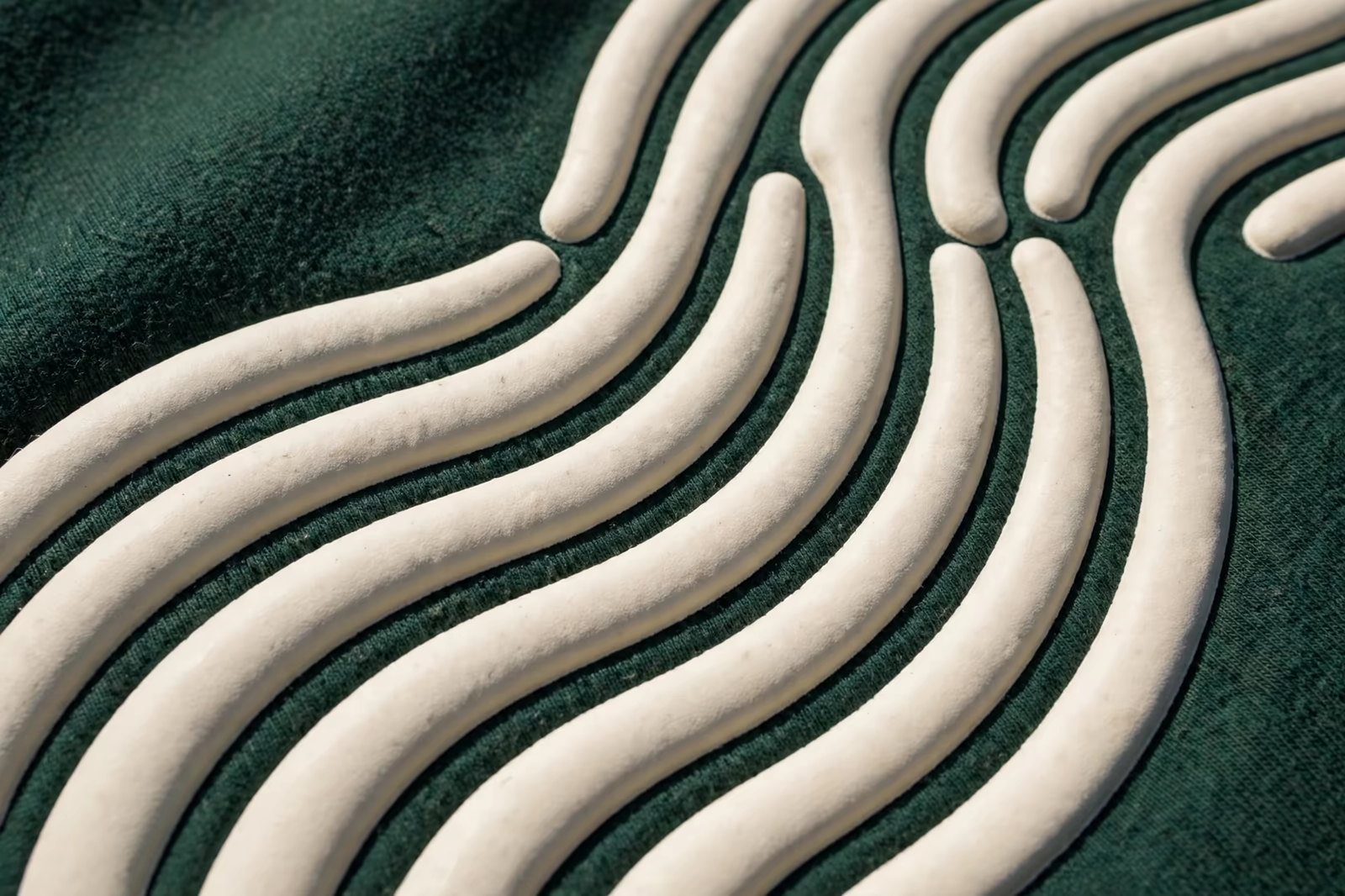
Puff ink contains a blowing agent that expands when heated, so the printed film rises into a soft, rounded relief as it cures. The result reads almost like embroidery’s casual cousin: bold shapes, lettering and logos gain a padded dimension that fingers find immediately. Puff loves simple, chunky artwork and forgives nothing fine; small text and thin lines swell, blur and close up as the ink expands.
Control is a matter of degrees, literally. Too little heat and the puff barely lifts; too much and it over-expands, cracks its surface and can collapse. Printers tune the dryer and the ink deposit to a sample-approved height, and buyers should approve puff on the real garment, because its charm is physical and no photograph reports it honestly. Wash behaviour is good when curing is right, though aggressive tumble drying ages puff faster than flat prints.
High-Density Prints: Sharp, Raised and Precise
High-density printing builds height without puff’s softness. A thick stencil and multiple print passes stack plastisol into a raised design with crisp, almost moulded edges, the kind of chest piece that feels like a rubber badge bonded to the garment. Where puff rounds, high density cuts: lettering stays legible, geometry stays exact, and the premium reads as precision.
The cost is process weight. Thick stencils are slower to make and print, deposits are heavy, and the design’s weight on a light garment must be considered honestly; a large high-density piece on a thin tee can drag the fabric. Artwork needs bold shapes with breathing room, because stacked ink in fine negative spaces fills in. It is the connoisseur’s effect: expensive per print, unforgettable per garment.
Metallic and Glitter Prints: Shine With Structure
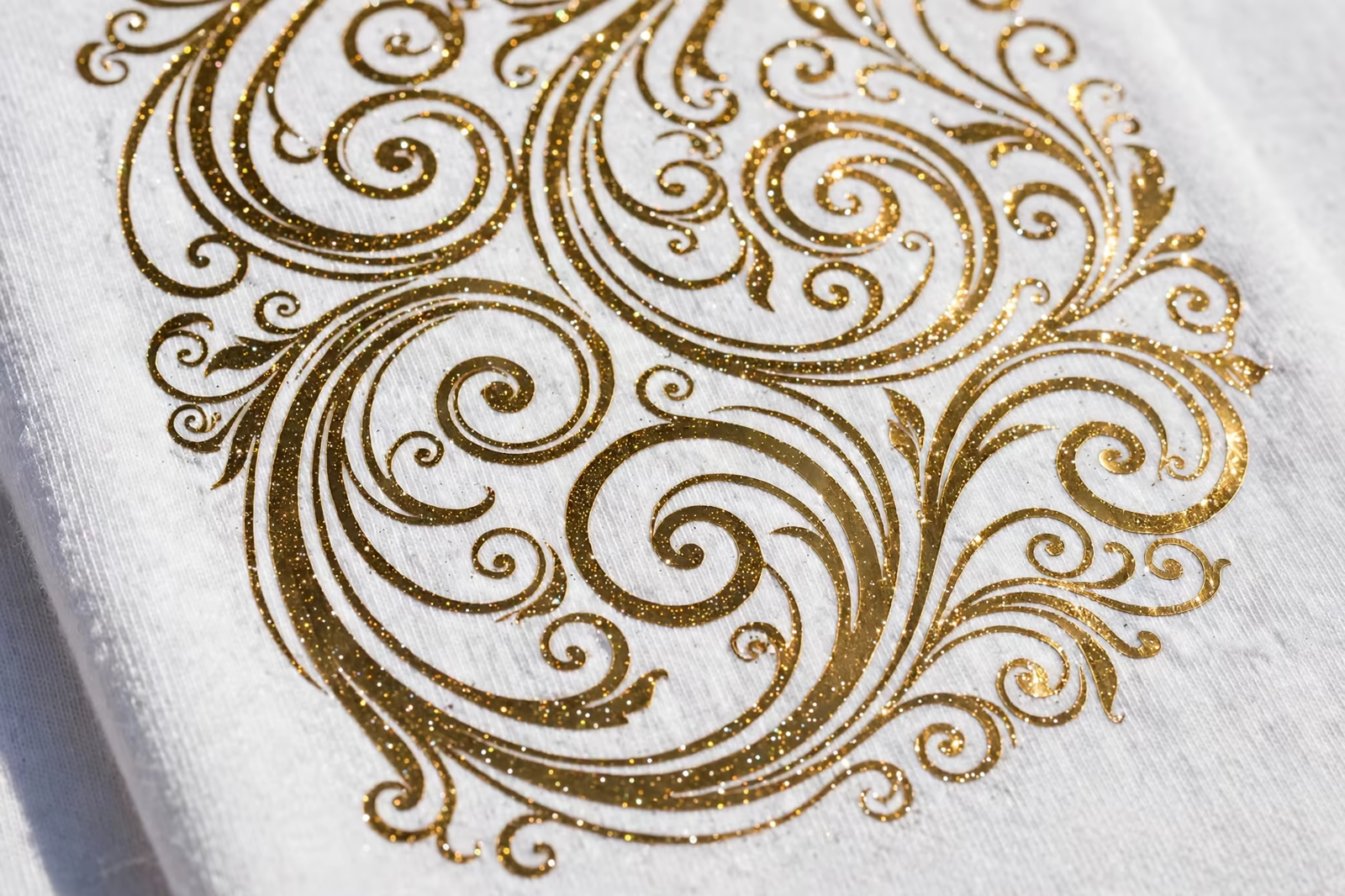
Metallic inks carry fine metal flakes in a binder, printing golds, silvers and coppers that catch light as the wearer moves. Glitter prints carry larger, coloured particles for outright sparkle. Both print through coarse mesh, the particles must pass the screen, and both sit proudly on the fabric surface rather than sinking in, which is exactly their visual point.
Their trade-offs are care and hand feel. Metallic and glitter surfaces are more delicate than standard prints: they prefer gentle washing, inside out, and they shed their brilliance gradually if abused, so they suit fashion and event garments better than hard-washed workwear. Colour is also a range rather than a point; metallics shift with angle and light, and approvals should happen with that movement understood as the effect itself, not as inconsistency.
Reflective Prints: Safety That Looks Like Design
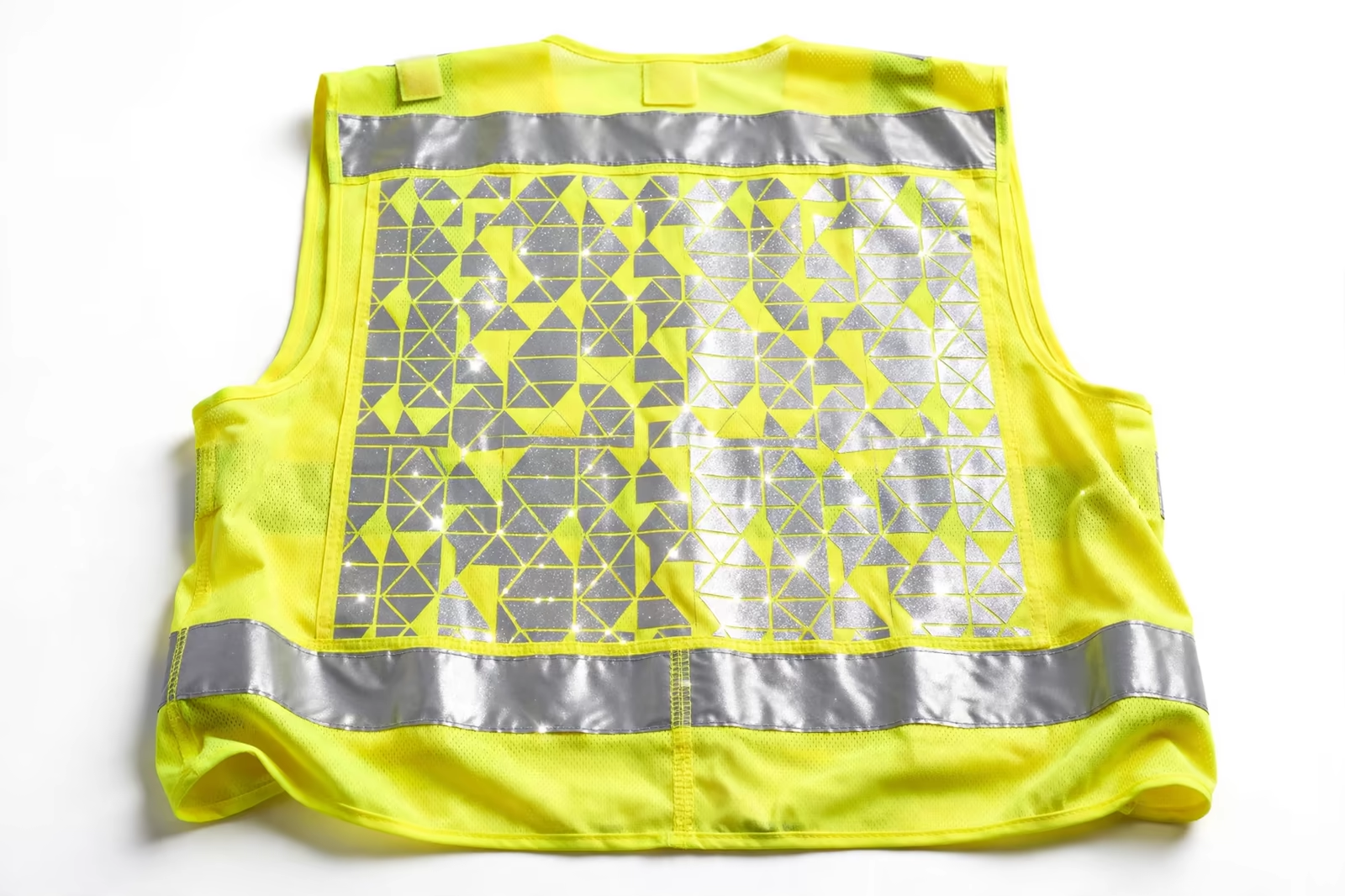
Reflective inks carry microscopic glass beads that return light to its source, so a print that reads as a quiet grey graphic by day flashes bright under headlights or a camera flash. Sportswear brands use them for night-running detail; safety programs use them as supplementary visibility on vests, jackets and workwear where a graphic can work two jobs at once.
Two honest limits govern reflective work. First, printed reflectivity supports certified reflective tape; it does not replace it where a safety standard specifies tape performance, and responsible factories say so at quotation. Second, the effect depends on bead exposure at the print surface, so heavy overprinting, dark colours over the top or abrasion all dim the return. Sample testing with a torch in a dark room is the charmingly low-tech, entirely correct approval method.
Foil, Flock and Suede: Surface Finishes
Foil printing lays a printed adhesive and heat-presses metallic foil onto it, giving mirror-bright designs no ink can match for flat shine. Its weakness is durability: foil is a surface film that cracks and dulls with washing faster than metallic ink, so it belongs on fashion pieces with gentle-care expectations priced into the brief. Flock prints a adhesive and applies short fibres, standing a velvet pile on the garment; suede-effect inks imitate that softness with a matte, napped feel at lower cost.
These finishes share a sampling rule: approve them after washing, not before. Fresh foil is a mirror and fresh flock is lush; the honest question is what remains at wash five, and a factory that shows washed samples unprompted is telling you it has run the effect in production rather than at a trade show.
Their care labels must be written for the finish, not copied from the base garment’s standard set: cool wash, inside out, no iron on the design, and no tumble drying where the effect is delicate. A specialty finish killed by its own care label is a documentation failure, and it is the cheapest failure in this entire guide to prevent.
Glow, Discharge-Plus and Other Novelty Effects
Glow-in-the-dark inks store light and release it as a greenish glow, a novelty that merch and children’s programs deploy happily, with the understanding that brightness and duration are modest and the daytime colour is a pale off-white green. Discharge printing, covered in depth elsewhere in this series, becomes a specialty tool when combined with colour: discharge bases under plastisol colour give bright prints a soft hand on dark garments.
Crackle inks are formulated to craze deliberately into a vintage network of fine cracks; scented and thermochromic inks exist at the far edge of novelty. Each novelty should be briefed with its lifespan stated: these are theatrical effects, and the buyer who knows the glow fades by design will not file a complaint that physics pre-answered.
Artwork Rules for Specialty Effects
Specialty inks punish fine detail more honestly than standard inks forgive it. Bold shapes, generous spacing, minimum line weights fatter than standard work, and text kept large are the shared grammar. Puff swells, high density stacks, metallic flakes need room to pass the mesh, glitter needs more; the separator’s advice at artwork stage is worth more than any later correction.
Effects also layer thoughtfully. A reflective underprint with a standard colour border, a puff element inside a flat design, metallic highlights on a matte base: combination designs are where experienced print teams earn their fee, planning print order, flash points and cure profiles so each effect survives the others’ processing. Ask to see a production sample of the combination, not a promise.
Testing Specialty Prints Before Bulk
Effects earn a stricter sampling protocol than flat colour because each fails in its own way. The washed sample is the baseline: five washes at the program’s care temperature, then checks specific to the effect, puff height retained, high-density edges uncracked when flexed, metallic brightness compared against the fresh standard, reflective return tested with a torch in a dark space. Stretch tests matter doubly, because raised and coated prints concentrate stress at their edges when fabric moves.
Production control then holds the sample’s variables fixed: dryer profile, print order, flash settings and ink batch recorded at approval. Effects drift when any of these wander, and they drift silently, which is why the first-off check at bulk start compares the first production garments against the approved washed sample rather than against a fresh print. A program that builds these checks into its calendar treats specialty work as the premium process it is; one that hopes will eventually explain a claim.
Costs, Minimums and Specifying Specialty Work
Specialty effects price above standard prints for honest reasons: ink cost per kilo is higher, screens and stencils are more specialised, print speeds are slower, and sampling matters more. Buyers should expect the effect quoted as its own line, with the garment and standard colours priced separately, and should treat a specialty effect quoted at standard prices as a question rather than a bargain.
Quantities follow our standard minimum of 1,200 pieces per style in up to two colours, with effects counted per design position. Specify the effect by name, approve a washed sample on the real garment, and agree the care instructions the effect demands; a specialty print briefed that carefully will do the job it was bought for, which is to be the detail the whole garment gets remembered by.
Frequently Asked Questions
How durable is a puff print in the wash?
A correctly cured puff print washes well for the garment’s ordinary life, holding its raised shape through normal domestic cycles. It ages faster under aggressive tumble drying and very hot washes, which can crack the expanded surface over time. Approving a washed sample and writing realistic care instructions keeps expectations and performance aligned.
Can reflective print replace reflective tape on safety garments?
No. Reflective print adds useful visibility and is widely used for logos and design detail on safety and sports garments, but certified high-visibility standards specify tape with tested performance levels that print does not meet. Responsible programs use print as a supplement to compliant tape, never as its substitute.
Why do metallic prints cost more than standard colours?
The ink itself carries real metal flake and costs more per kilo, it prints through coarse screens at slower effective speeds, and colour approval is more involved because the result shifts with light and angle. Foil work adds a pressing stage. The premium is process, not decoration tax, and it should appear as its own quote line.
What artwork works best for specialty effects?
Bold shapes, thick lines, generous spacing and large text. Puff expands and closes fine gaps, high density fills small negative spaces, and metallic and glitter particles need open mesh to pass through. Designs drawn for flat colour usually need honest adaptation for effects, which a good separator will flag at the artwork stage.