
New brands are built on launches; durable brands are built on reorders. The second order of a style is where a label stops being an experiment and becomes a business, because everything that was improvised the first time must now repeat exactly: the same fit, the same fabric hand, the same shade, the same packing, delivered to customers who will compare this delivery against the last one they bought. Repeatability is not a mood; it is a filing system. This guide shows how brands that reorder well organise their specifications, samples and decisions so that order two, five and twelve are the same garment wearing the same name.
The repeat brands we serve from Bangladesh ship season after season into France and across Europe, where customers buy the same style twice and expect it to be the same garment twice.
Reorder discipline runs through our brands programs and services, and it is priced into every conversation that starts when buyers get a quote.
The Golden Sample: One Garment That Settles Arguments
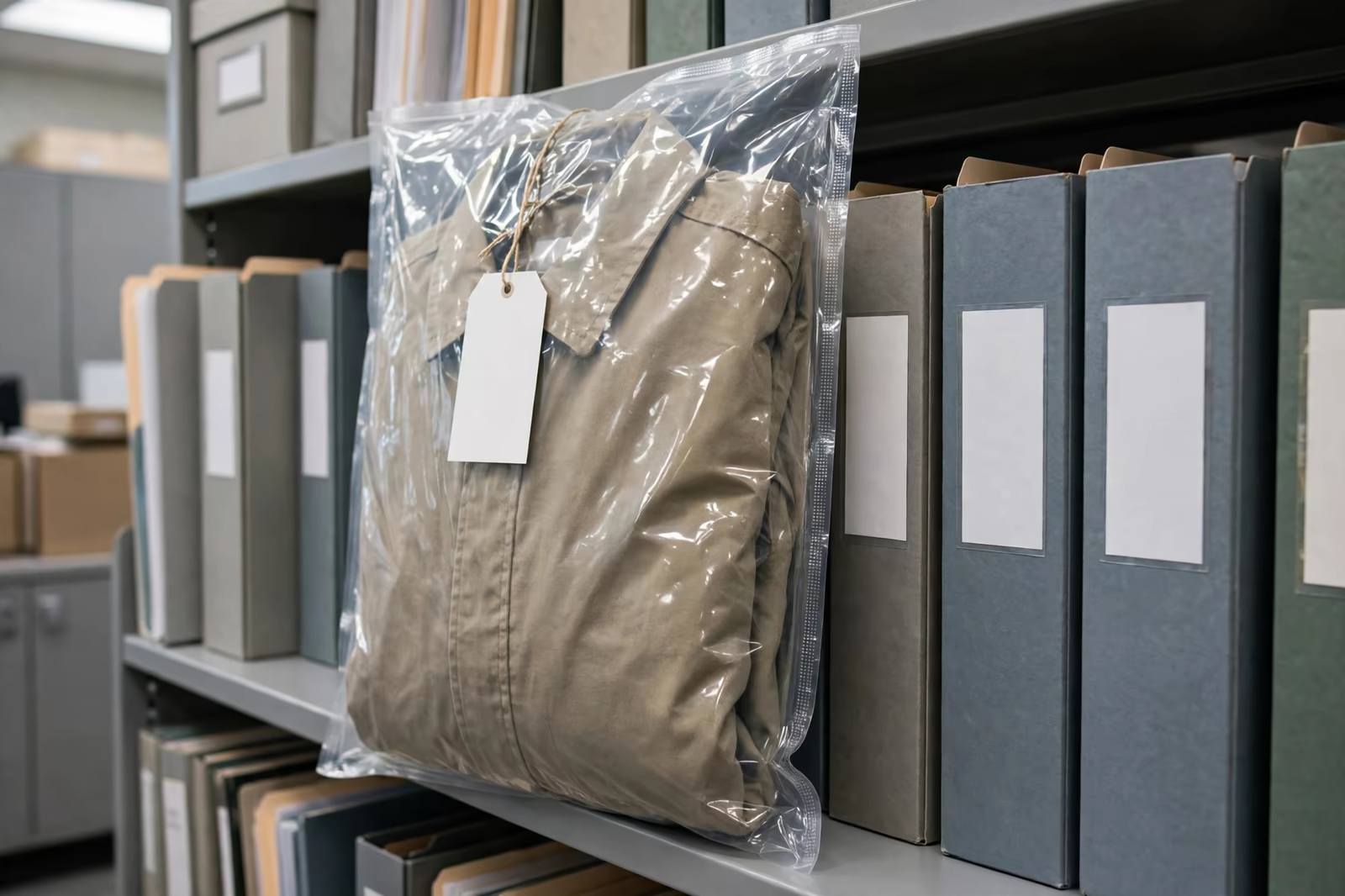
Every repeatable style has a physical constitution: the sealed, approved pre-production sample, retained by both brand and factory, with its approval record attached. When a question arises mid-production, was the pocket always this deep, was this the approved hand feel, the golden sample answers in the garment’s own materials rather than in someone’s recollection of a video call. Brands that skip retaining their copy discover at reorder that the constitution exists only on the factory’s shelf, in the factory’s custody.
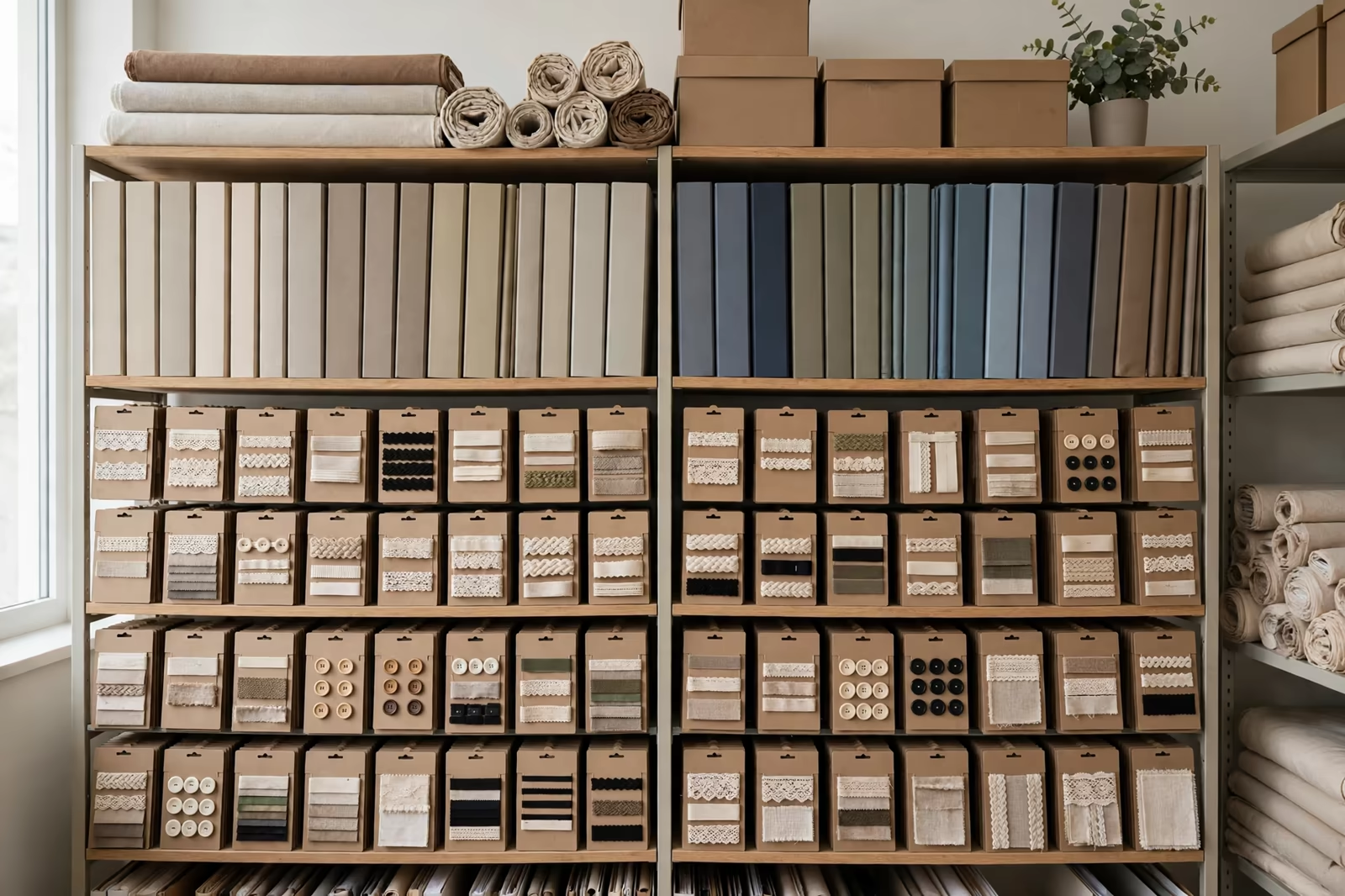
The golden sample’s companions matter as much as the garment: the fabric swatch from the same lot family, the trim card with every component mounted, and the measurement record of that exact sample measured point by point. Together they make the style reproducible even if personnel change on either side, because the knowledge lives in the file, not in a person’s memory of season one.
The Living Tech Pack: Version Discipline
First orders generate changes: a centimetre here, a stitch there, a label moved, a fabric upgraded. Each change is small; their sum is the difference between the tech pack the brand filed at the start and the garment that actually shipped. Reorder discipline means the pack is corrected to the shipped truth, every time, with versions dated and superseded copies retired, so the document that travels with the reorder describes the garment the customers already own.
Version chaos is the quiet killer of repeat brands: three packs in three inboxes, the factory working from the one attached to the newest email, the brand assuming the one in its drive is law. One controlled file, one owner of changes, one rule that nothing verbal amends the pack until the pack itself is amended; this is unglamorous administration, and it is what consistency is actually made of.
Fabric and Shade Continuity Across Orders
Reorders meet the material world again: new fabric lots, new dyeings, the same standards. Continuity is managed, not assumed. Retained shade standards and per-fabric approvals from the first run are judged against the new lot’s submissions before cutting, and bulk fabric is checked against the original hand and weight references, because mills adjust, batches vary and memories fade faster than customers’ expectations.
The brand’s contribution is stability where stability is possible: keeping the same fabric quality and supplier route for a continuing style, resisting the temptation to chase a marginally cheaper cloth that restarts every approval. Churn in materials is the most common reason a reorder feels like a different product wearing the same label, and it is almost always a purchasing decision, not a production failure.
Trims and Branding: The Small Parts That Must Not Wander
Labels, buttons, drawcord tips, zip pullers, printed bags: reorders are where small components quietly substitute, a button’s shade shifts, a label’s weave changes hands, a bag’s print softens, and the customer holding last season’s piece next to this season’s feels the difference before they can name it. The trim card discipline prevents the drift: every component specified by supplier, code and mounted sample, with substitutions treated as changes requiring approval, never as favours.
Artwork files deserve the same control as garments: the print file, the embroidery digitising, the label artwork, held in their production versions with sizes and placements recorded, so a reorder’s decoration is printed from the file, not recreated from a photograph of the last run. Recreation is where small design drift is born, and drift compounds order over order like a photocopy of a photocopy.
The Reorder Brief: Quantities, Mix and Timing
A professional reorder is a brief, not a message saying same again. It states the style’s identity and pack version, the quantity and its size and colour mix, which itself should be evidence-led, sizes weighted by the first run’s sell-through rather than repeated from habit, and the required delivery window with its selling reason, a season, an event, a channel launch. It lists every deliberate change from the last run, explicitly, and confirms that everything not listed is unchanged.
Timing is part of the discipline: reorders placed with the production calendar in mind, fabric routes reopened early, and honest conversations about what rush does to checking, reorder cleaner than first orders because nothing is being invented, which is exactly the advantage the brief exists to protect. Our programs run at a standard minimum of 1,200 pieces per style in up to two colours, and reorders inside that shape inherit the first run’s efficiency as well as its identity.
Learning Loops: What the First Run Taught
Between orders sits the most valuable and most skipped step: the review. Returns reasons, customer comments, wash behaviour, the sizes that sold out and the ones that lingered, the seam that drew a complaint, all of it is specification data for the reorder. Brands that reorder well arrive with a short, factual change list drawn from evidence; brands that reorder on vibes repeat the first run’s mistakes at larger quantities.
The factory’s side of the loop matters equally: production notes on where the garment fought the line, where checking caught recurring slips, where a small construction change would raise quality without touching the design. A reorder brief that invites those notes converts the factory’s experience into the brand’s improvement, order after order, which is the real compounding asset of a stable manufacturing relationship.
Records and Ownership: Whose Files Are They?
Reorder discipline has a legal shadow: who owns the instruments of repetition. Patterns, graded nests, digitised embroidery files and label artworks are the style’s means of production, and professional agreements state plainly whether they are the brand’s property, held by the factory for the brand’s use, transferable on request or on exit. The conversation is easy at the start of a relationship and awkward at the end of one, which is precisely why it belongs at the start.
Ownership on paper must match custody in practice: the brand keeps its own complete copies of packs, artworks and approvals, updated at every version, because a file you cannot produce is a file you do not own in any sense that helps a reorder. The golden sample copy on the brand’s shelf and the pack copy in the brand’s archive are the same principle in two materials.
Size and Colour Mix: Reordering by Evidence
The first run’s size ratio is a hypothesis; the reorder’s should be a conclusion. Sell-through by size and colour from the first delivery is the brand’s own market research, bought and paid for, and the reorder mix that ignores it, repeating the original ratio from habit, donates margin to the sizes that linger and starves the ones that sold out in week two. Adjust the mix in the brief, state it plainly, and let the cutting room work to evidence.
Colour deserves the same treatment with one caution: a colour that sold slowly in a fragmented first run may have failed from shallowness rather than dislike, never deep enough in any size to sell properly. Read the evidence with that generosity before retiring a shade, and read it with equal honesty when the verdict is clear: reorder depth belongs behind proven demand, not behind hope wearing last season’s palette.
When a Style Should Retire Instead
Discipline includes knowing what not to repeat. A style whose returns trace to fit rather than taste, whose fabric draws complaints its construction cannot answer, or whose margin only worked at an introductory price nobody will pay twice, is a style the evidence has retired, whatever the founder’s affection says. Reordering it larger converts a lesson into a liability, and the golden sample becomes a monument instead of a tool.
Retirement is not waste when it is done properly: the style’s files, reviews and material records feed its successor, which inherits the audience, the fabric knowledge and the size evidence without inheriting the flaw. Repeat-order brands are not the ones that never retire styles; they are the ones whose retirements are decisions, taken on records, at the right time.
Multi-Season Programs: The Compounding Effect
Across several reorders, the quiet advantages accumulate into something competitors cannot copy quickly: patterns proven on real bodies at scale, fabric routes whose behaviour is known in every season, checking data that knows where this garment fails before it fails, packing and labelling that channels accept without friction. Each order is cheaper to make well than the last, not because corners are cut but because knowledge has replaced experiment at every step.
This compounding is the deepest argument for reorder discipline as a strategy rather than an administrative chore. The brand’s product becomes reliably itself, customers learn the fit and return for it, and the factory relationship turns from a series of transactions into an asset on the balance sheet of the business, invisible, unglamorous and decisive.
Frequently Asked Questions
How identical will a reorder really be to the first run?
As identical as the discipline behind it. Fit, construction, decoration and packing repeat exactly when they are governed by the golden sample, the corrected tech pack and controlled artwork files, while fabric and shade are matched lot by lot against retained standards. Small material variation inside agreed tolerances is the nature of textiles; visible difference is the nature of missing files, and the two should never be confused.
What should I change between the first order and the reorder?
Only what the evidence indicts: the size that returned, the colour that stalled, the construction point customers criticised. Change is cheap to request and expensive in consequence, because every change reopens approvals and resets part of the learning. List changes explicitly in the reorder brief, keep everything else frozen, and let the garment’s continuity do its quiet commercial work.
Can I move a successful style to a different factory for the reorder?
You can, but understand what travels and what does not. The tech pack, artwork and standards travel; the first factory’s patterns as cut, its line learning and its retained samples do not, unless they were contracted as your property. A moved style is a new first order wearing a proven design, with sampling to match, and should be budgeted and scheduled as one.
How far ahead should a reorder be placed?
Early enough that fabric and trims are secured without heroics and the delivery lands before the selling moment, not after it. Reorder lead times are usually kinder than first-order ones because development is done, but material routes still have their own clocks. Place the brief when the first run’s evidence is in, not when the shelf is already empty.