
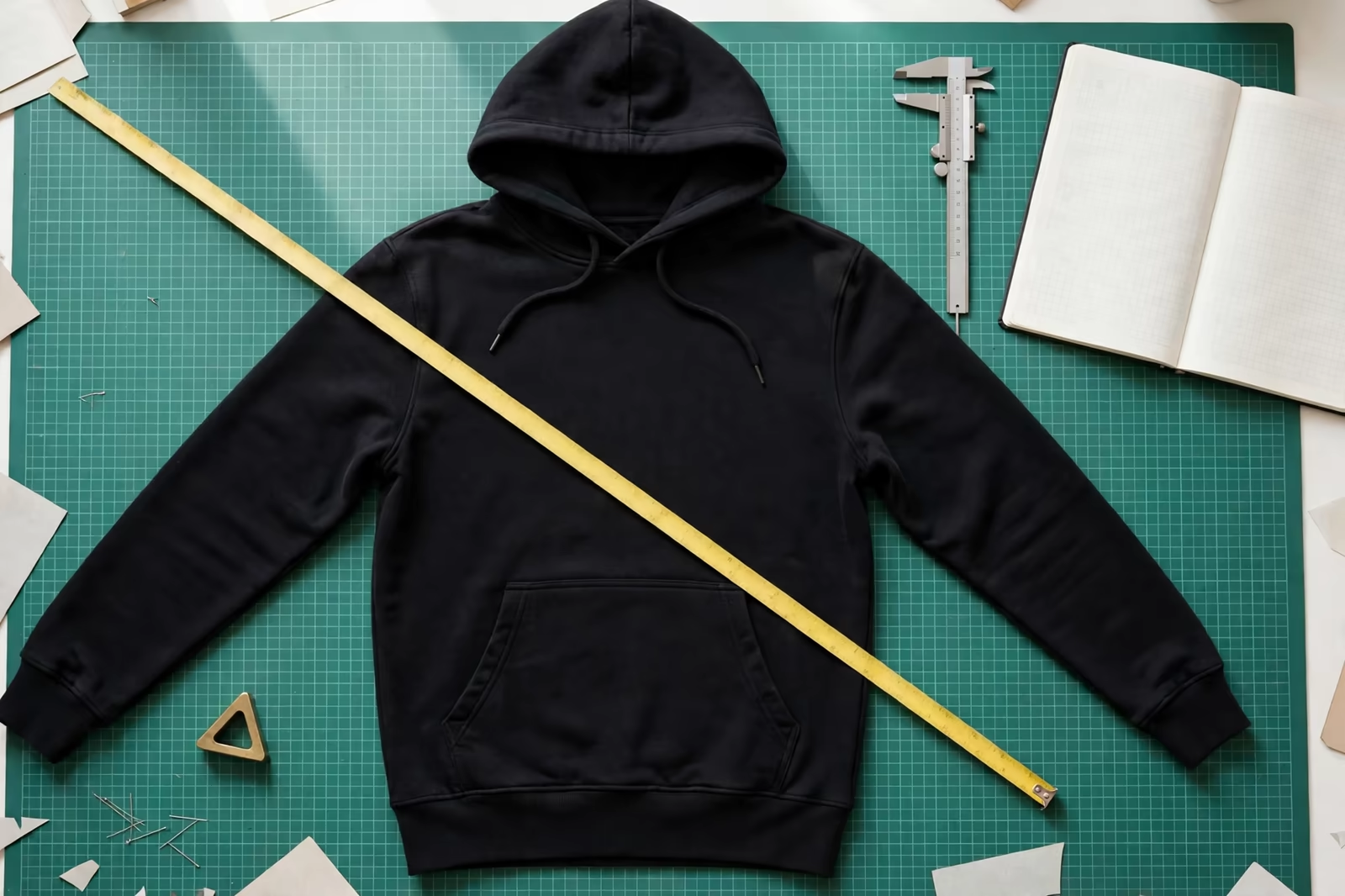
Almost every brand owns a garment it wishes it could sell: the hoodie whose hood sits perfectly, the tee whose shoulder line has survived a decade of imitations, the trouser whose fit customers describe as finally right. Bringing that garment to a factory as a development reference is standard, legitimate practice in the clothing trade. What separates professional development from copying is where the work stops: a fit can be learned from, measured and rebuilt as your own product; a brand’s identity, its artwork, prints, logos and protected designs, cannot be taken. This guide walks the ethical and practical line, because getting it right is what lets a reference garment become your product rather than your problem.
Most reference garments that reach our sample room in Bangladesh come from brands selling in the USA and the UK, where a proven fit is commercial property worth developing properly.
Reference development runs inside our brands programs under our MOQ and production framework; questions are welcome any time via our contact page.
Why Brands Start From a Reference
A reference garment is the most precise brief ever written. Measurements can be misread, sketches can be misjudged, but a physical sample carries its fit, balance, construction and hand feel in a form a pattern maker can interrogate directly. Brands reach for one when a style has proven itself on real bodies, when a fit took seasons to perfect and the cost of re-deriving it from zero is measured in failed samples, or when entering a new category where the house’s pattern knowledge is still young.
There is also honesty in the practice: the garment industry has always learned from garments. Silhouettes, seam placements and construction solutions circulate through the trade the way techniques circulate through any craft, and the law and the ethics of the business draw their lines around identity and protected design, not around the idea that a sleeve can be well shaped.
What Can Be Learned: Fit, Balance and Construction
The legitimate curriculum of a reference is its engineering. Fit: the measurements, ease distribution and balance that make the garment sit as it does. Construction: seam types, stitch densities, reinforcement placements, the order of operations a factory can study and adopt. Material behaviour: the fabric weight, stretch and recovery class the design assumes, which the developer must match with its own sourced cloth of equivalent character.
Learning these things is reverse engineering of function, the same study a tailor performs on any well-made coat. The output is not the reference garment reproduced; it is a new pattern, cut in your manufacturer’s rooms, graded to your size range, built to your specification, informed by the reference’s lessons the way any craft learns from its best examples.
What Must Not Be Taken: Identity and Protected Design
The line sits at identity. Logos, brand names, signature prints, original artwork, distinctive protected design elements and trademarked details belong to their owner, and reproducing them is counterfeiting whatever the quality of the sewing. A factory that will copy a logo will copy yours next season for somebody else, which is why professional brands test a manufacturer’s ethics here before trusting it with their own identity.
Between pure function and pure identity lies a grey band, distinctive design signatures that function as a brand’s fingerprint without carrying its name. The professional habit in the grey band is distance: take the lesson, change the expression. Adjust proportions, redraw details, make the design decisions your own, so the finished product would read to its own designer as an original garment that learned from the market, not as their garment wearing a different label.
The Measurement Process: Reading a Garment Properly
Development begins by reading the reference completely: every point of measure recorded flat and, where possible, on a stand; seam allowances opened at one sacrificial point if the construction must be understood from inside; fabric identified by weight, composition class and stretch behaviour; components, interlinings, tapes, reinforcements, listed one by one. A garment measured casually teaches casually, and the sample that emerges inherits every shortcut.
The measurements become a specification for a garment that does not yet exist: yours. The pattern maker drafts from the numbers and the construction notes, the first proto is sewn in equivalent fabric, and the proto is then measured and fitted against the reference’s behaviour, not its photograph, adjusting where your size range, your fabric or your design decisions differ deliberately from the source.
Fit Is Not One Size: Grading From a Reference
A reference garment is one size, and a product is a range. The sample’s fit must be graded outward and inward by rules, and the reference cannot supply them: its maker’s grading logic is not written on the garment. Your developer applies your size standards and your market’s expectations, then proves them with a size set, because a hood that sits perfectly in medium can drown a small or strangle an extra-large when the grade is guessed instead of engineered.
This is another place where development separates from copying. A copied range inherits one size’s proportions stretched by guesswork; a developed range treats the reference as the base size’s teacher and does its own mathematics for the rest, checking the extremes on bodies before bulk ever begins.
From Reference to Your Pattern: Where Originality Enters
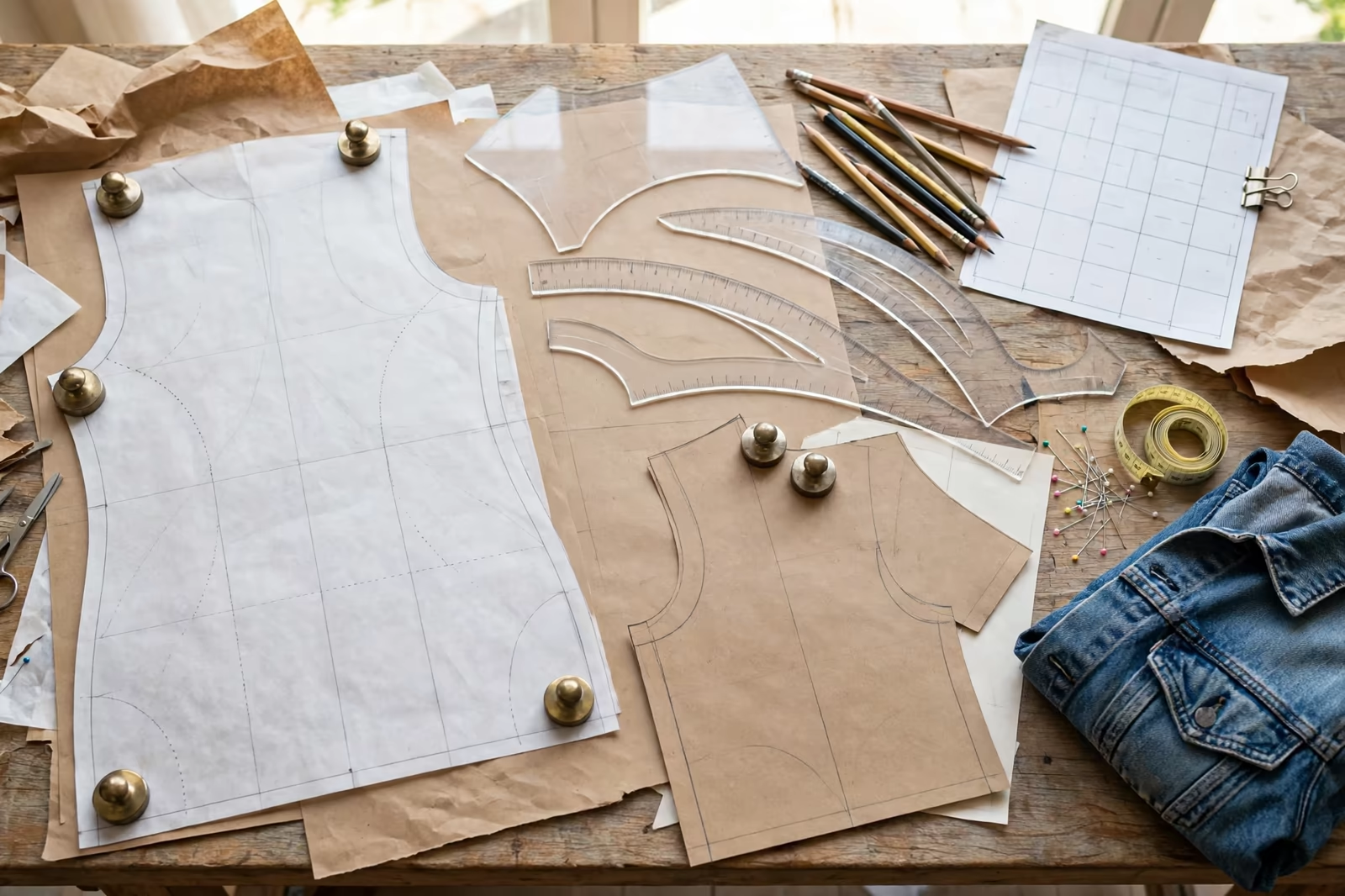
The proto stage is where the product becomes yours in substance. Your designer reviews fit on your fit model, not the reference’s presumed one; pockets move to your hand’s preference; lengths settle to your market; construction is adapted to your price architecture and your factory’s strengths. Each decision is recorded in your tech pack, which now documents your garment, its own measurements and its own construction, traceable to your approvals rather than to another brand’s sample room.
This is also where weak development reveals itself: a sample that only works while the reference sits beside it is a copy, not a development. The test of the process is that the reference can leave the room. Your pattern, your pack and your graded nest must carry the garment alone, because production, reorders and quality control will all work from them, not from a borrowed hoodie on a shelf.
The Ethics Conversation With Your Factory
Raising the ethics question early with a manufacturer is not awkwardness; it is due diligence with a good smell test attached. State plainly what the reference is for, fit and construction study, and what is excluded, identity and protected design, and watch the answer. A professional factory recognises the framework instantly, may add its own boundaries, and documents the agreement in the development file.
A factory that waves the question away, or worse, volunteers how faithfully it can reproduce the branding, has answered a different and more important question: how it will treat your designs when someone else brings them a sample of yours. The reference garment is a small project that reveals a large character, and brands are wise to let it.
Fabric Matching Without Copying Supply Chains
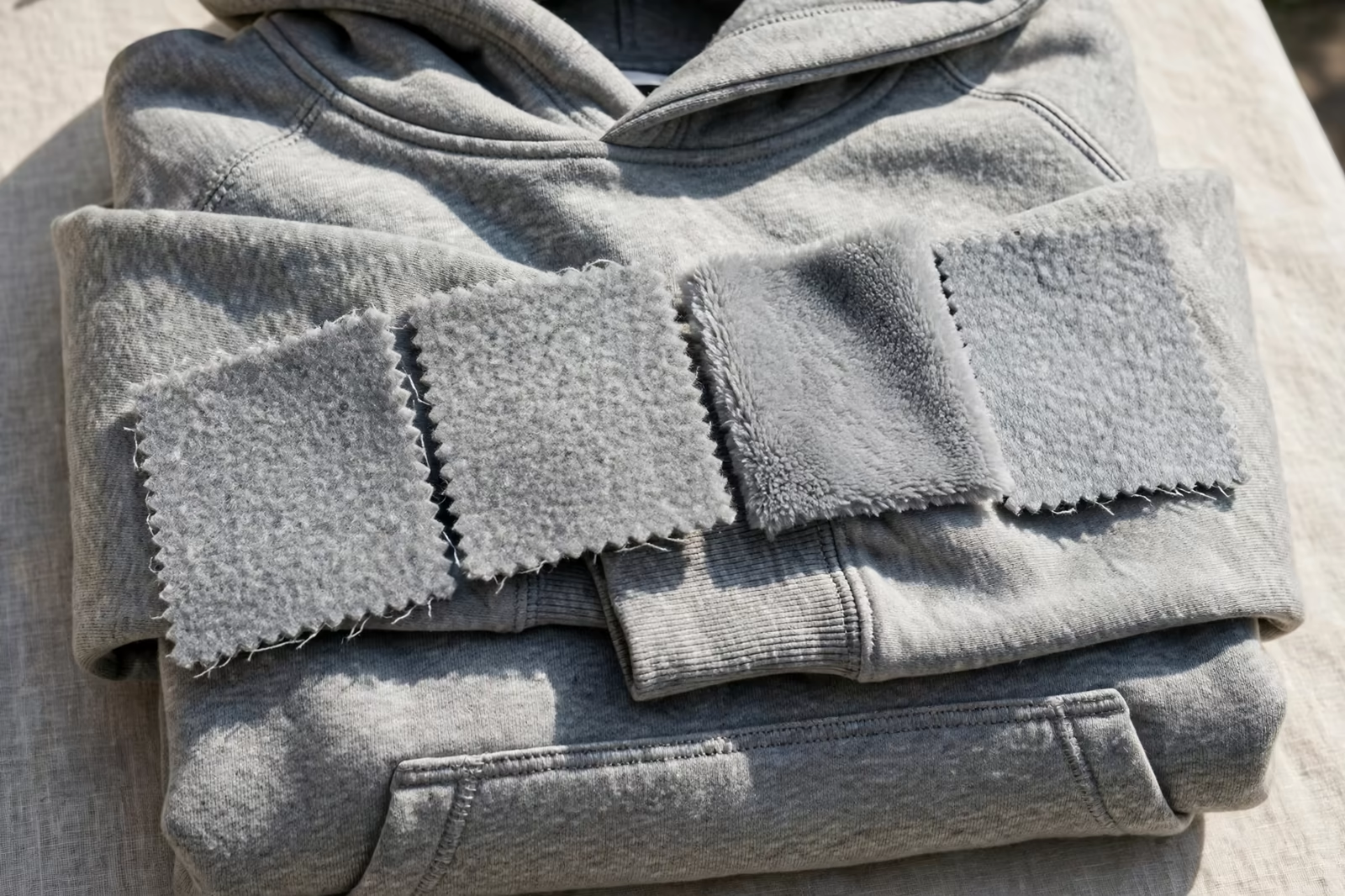
A reference’s fabric must be matched by behaviour, not by theft of source: the developer identifies the class, weight, weave or knit structure, stretch and finish character, then sources equivalents through its own supply routes and submits swatches for approval. The hand feel is compared, the wash behaviour tested, the shade developed to your palette. What is never legitimate is presenting the original brand’s proprietary fabric development as your own sourcing, or copying printed and jacquard designs woven into the cloth itself.
Honest matching has a practical dividend: your fabric comes with your supply security. A copied garment built on a fabric obtained by accident cannot be reordered with confidence, while a garment developed on sourced equivalents stands on lots, approvals and continuity that belong to your program from the first order.
Common Mistakes Brands Make With References
The first mistake is sending a reference in the wrong size and expecting the fit to scale by eye; send the size your base pattern should be built on, usually your core selling size. The second is sending a garment whose fit you love in a fabric unlike anything your price point can use, which teaches lessons the production cloth cannot repeat. The third is asking for the reference’s outcome while forbidding its study, a garment cannot be both unexamined and learned from.
The fourth mistake is silence about origins inside your own team, where a developer’s honest study becomes, retold carelessly, a story that sounds like copying. Keep the file, keep the language precise, fit reference, construction study, original decisions, and the practice stays what it is: the trade’s oldest school, attended properly.
Documenting Provenance: The File That Protects You
Professional brands keep the development paper trail: what reference was used and for what purpose, which elements were studied, which design decisions are original and where they are recorded, approvals at each stage. If a question ever arises about a product’s origins, the file answers it in documents rather than in assurances, showing a garment engineered from functional study and original decisions, which is a very different story from a product with no history at all.
Our own practice mirrors the advice: reference garments are welcomed as fit and construction studies, identity elements are declined without negotiation, and the development record is kept with the style’s file. It protects the brand, it protects us, and it keeps the customer’s trust, the only asset in this business that cannot be reordered, intact. Our programs run at a standard minimum of 1,200 pieces per style in up to two colours, and reference-developed styles enter production on exactly the same footing as any original design.
Frequently Asked Questions
Is it legal to develop a product from a reference garment?
Studying fit, measurements and construction from a garment you own is standard trade practice, and functional features are generally free to learn from. What the law protects is identity and original design expression: trademarks, logos, copyrighted artwork and, in some jurisdictions, registered designs. This guide is practice, not legal advice; for a product close to a famous design, take counsel before sampling, not after.
Will the fit be identical to my reference?
The fit can be matched closely in its measurements and behaviour, because that is what the measurement and proto process is for. It will be built on your pattern, your fabric and your size grading, so it will be your garment that fits like the reference, which is the legitimate goal. Expect the proto rounds to close the last small differences; that iteration is the development working, not failing.
Can you match the reference garment’s fabric exactly?
We match by specification and behaviour: composition class, weight, structure, stretch and finish, sourced through our own routes and approved by swatch and wash test. An original brand’s proprietary cloth cannot be sourced as theirs, and any factory promising you another label’s exact fabric is telling you something about its ethics. In practice, a well-matched equivalent is indistinguishable in wear.
What happens to my reference garment during development?
It is measured, photographed for the file and studied, and where inside construction must be understood, that is discussed with you first; destructive opening of a seam is never done silently. The garment is logged in and out like the valuable brief it is, and returned with your samples. Send a reference you can spare for the development period, not the only one in your archive.