
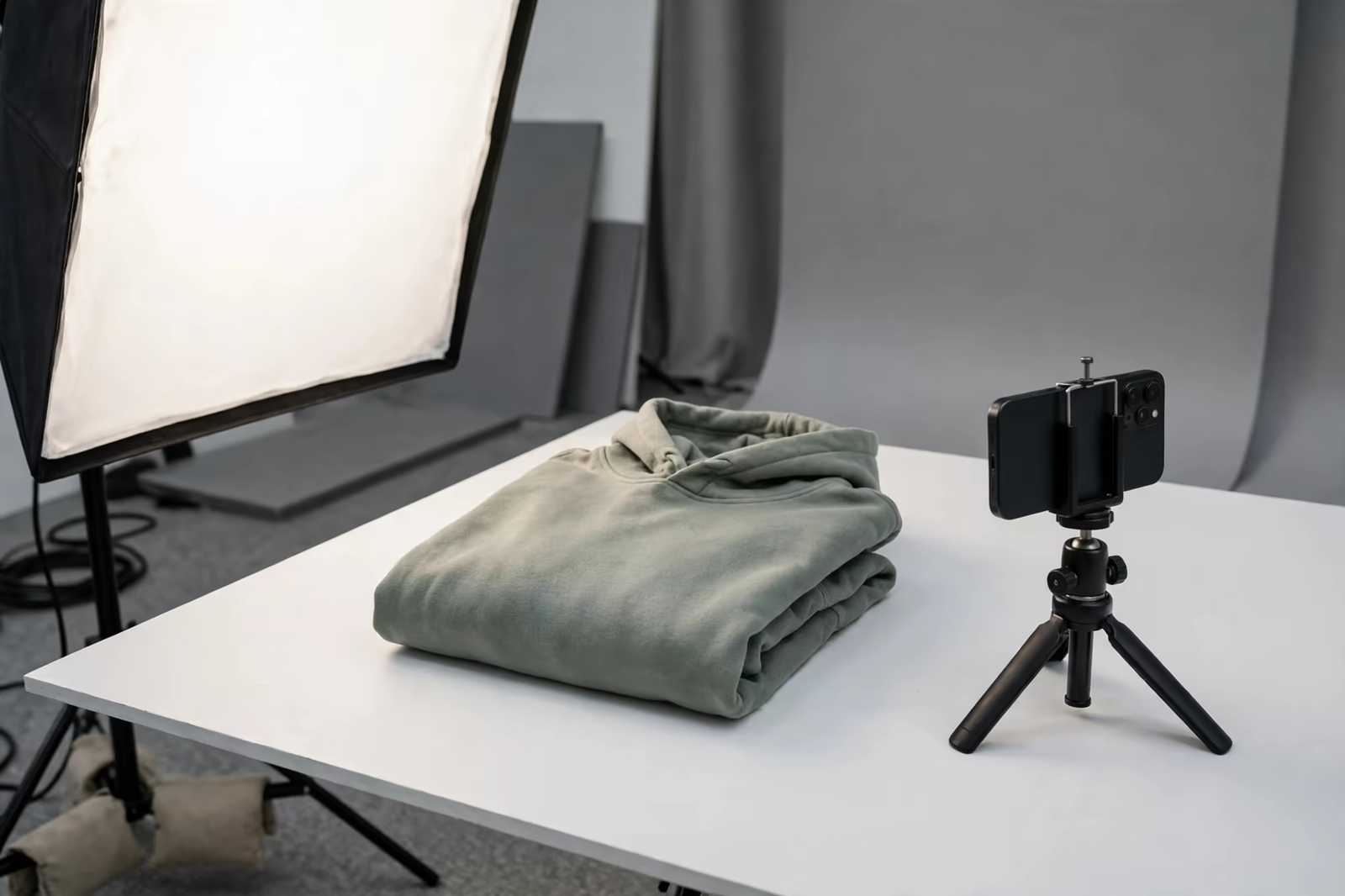
A new label’s hardest problem is rarely the clothing. The garments come back from production well made and correctly labelled, and then meet the world through a phone photograph on a wrinkled bedsheet, and die there. Presentation is the multiplier on everything else a brand spends: the same hoodie earns trust or suspicion depending on the light it is photographed in. The good news is that presentation is a skill with a budget version, and the budget version, done with discipline, beats expensive chaos every season. This guide shows new labels how to photograph, describe and stage their products like brands three times their size, without spending like them.
Most labels working to these budgets manufacture with us in Bangladesh and sell into the USA, the UK and Germany, where a product page has only seconds to earn a buyer’s trust.
Presentation support sits inside our brands programs and our story is on our about us page; when the range is ready, buyers can get a quote for the next season.
Light First: The Only Studio You Must Buy
Photography budgets should be spent in one order, and light is first, second and third. A large soft light source, a window with a sheer curtain or an inexpensive softbox, turns a phone into a product camera: colours render honestly, fabric texture survives, shadows stop eating details. Brands shooting on grey, yellow or mixed light are paying for garments their photographs then lie about, and no editing session fully rescues a colour the light invented.
The discipline is consistency: one lighting setup, one background, one distance, used for every product, so the range reads as a family when the images sit together on a page. A customer browsing twelve products shot twelve ways feels a market stall; twelve shot one way feels a brand, and the feeling is manufactured from nothing more expensive than repetition.
Backgrounds and Styling: Quiet Frames, Honest Garments
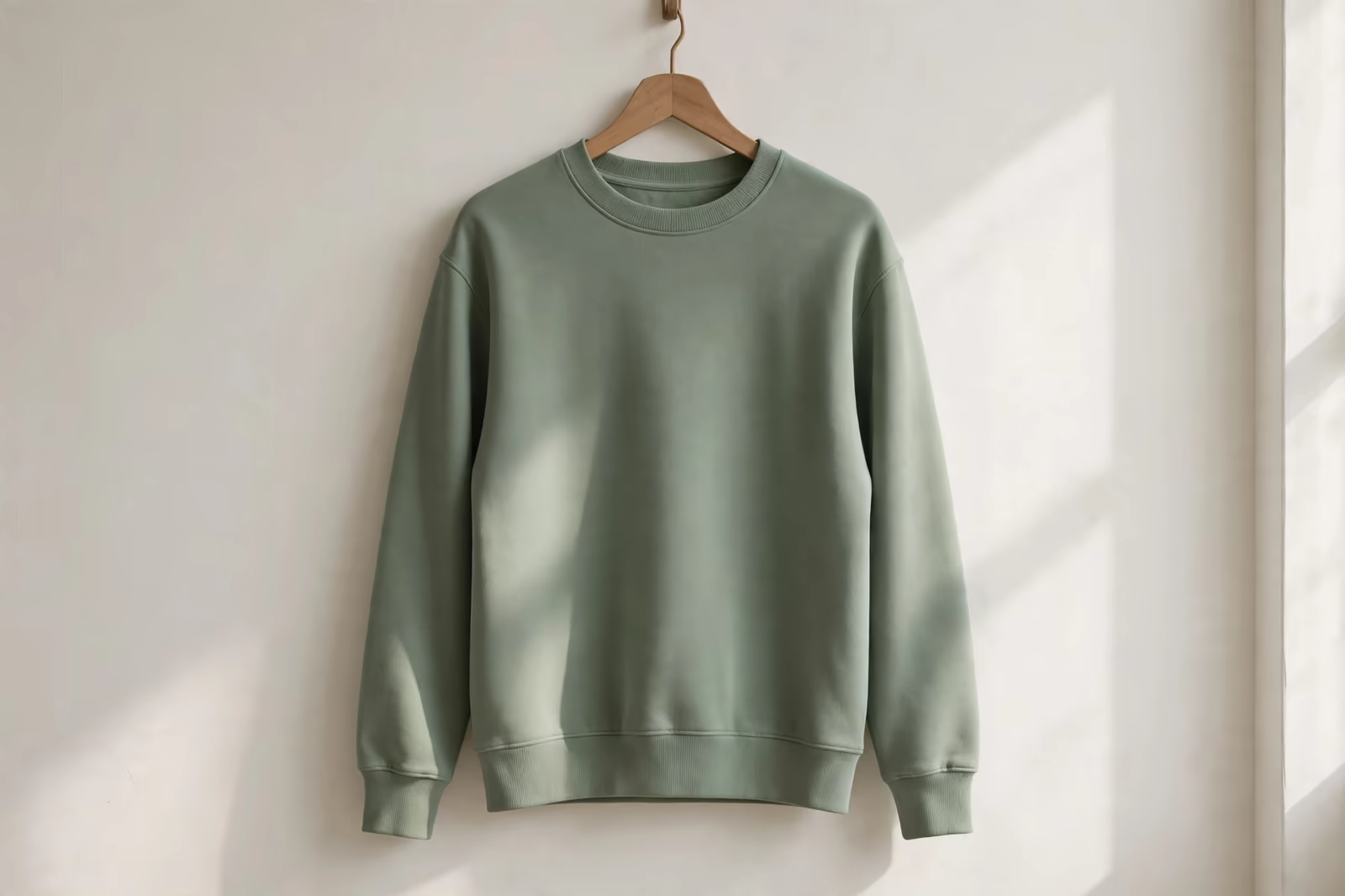
The budget background is a plain wall, a clean sheet of paper or board, and distance from both clutter and creases. Styling does the rest: garments steamed or pressed, never photographed as they fell out of the polybag; sleeves and hems arranged deliberately; the product filled in frame at a consistent crop across the range. Lifestyle settings earn their place later, in campaign images; the catalogue shot’s job is truth at a glance, and truth wants a quiet frame.
Props obey one rule: they may explain the product’s world, never compete with it. A cap beside sunglasses tells a summer story; a cap buried in a styled flat-lay of unrelated objects tells the customer to admire the arrangement and forget the cap. New labels with limited pieces per style should photograph each garment as if it were the only one, because to the customer meeting it, it is.
On-Body Shots Without a Model Budget
Fit sells clothing, and fit needs a body. The budget routes are honest ones: the founder and team wearing the range, photographed in the same disciplined light; fit notes and measurements carrying the information a model’s pose would; a size guide built from the actual garments, measured and published, which does more for conversion and returns than any photograph. What the budget cannot excuse is borrowing other brands’ model photography, a shortcut that is both an infringement and a promise the delivered garment will be compared against unfairly.
When the first paid shoot becomes possible, spend it where bodies matter most: the hero styles, in motion and in detail, with the catalogue range continuing in the house style. Consistency across the two keeps the brand’s visual voice single, and the campaign images lift the whole page instead of making the honest catalogue shots look poor beside them.
Words Beside the Pictures: Descriptions That Sell Quietly
Presentation is half verbal. A product description written to a formula, fabric and its behaviour, fit and how it wears, construction details worth knowing, care in plain language, earns the trust the photograph opened. The budget version of copywriting is not adjectives; it is information arranged kindly, with the customer’s actual questions answered in the order they ask them, and the brand’s voice kept human rather than breathless.
Consistency governs words as it governs light: the same structure, the same measurements style, the same naming for colours and fits across every product. A range that describes itself twelve different ways sounds like twelve sellers sharing a website. One voice, patiently repeated, is the sound of a company.
Size honesty belongs in this section too. Publish the garment’s real measurements, say how the fit behaves on a body of the stated size, and let the customer buy with knowledge instead of hope. Brands fear that candour costs sales; experience says it costs the sales that would have returned anyway, which are the most expensive sales a young label can make.
The Story Layer: Showing the Making Without a Film Crew
Customers increasingly buy the making as well as the made, and new labels hold an asset here that big brands rent: real access to their own production. Photographs and short clips from sampling, fabric approval, fitting and packing, taken on the same disciplined phone, tell a provenance story no stock library can imitate. The content is humble and specific, this style’s seams, that delivery’s cartons, and its credibility comes precisely from its lack of polish.
The boundary is consent and accuracy: production partners are shown as they agree to be shown, processes are described as they actually run, and no imagery implies facilities or scale the brand does not have. Told honestly, the making story becomes the label’s cheapest durable marketing, because it cannot be copied by a competitor whose story is different.
Packaging as Presentation: The First Physical Impression
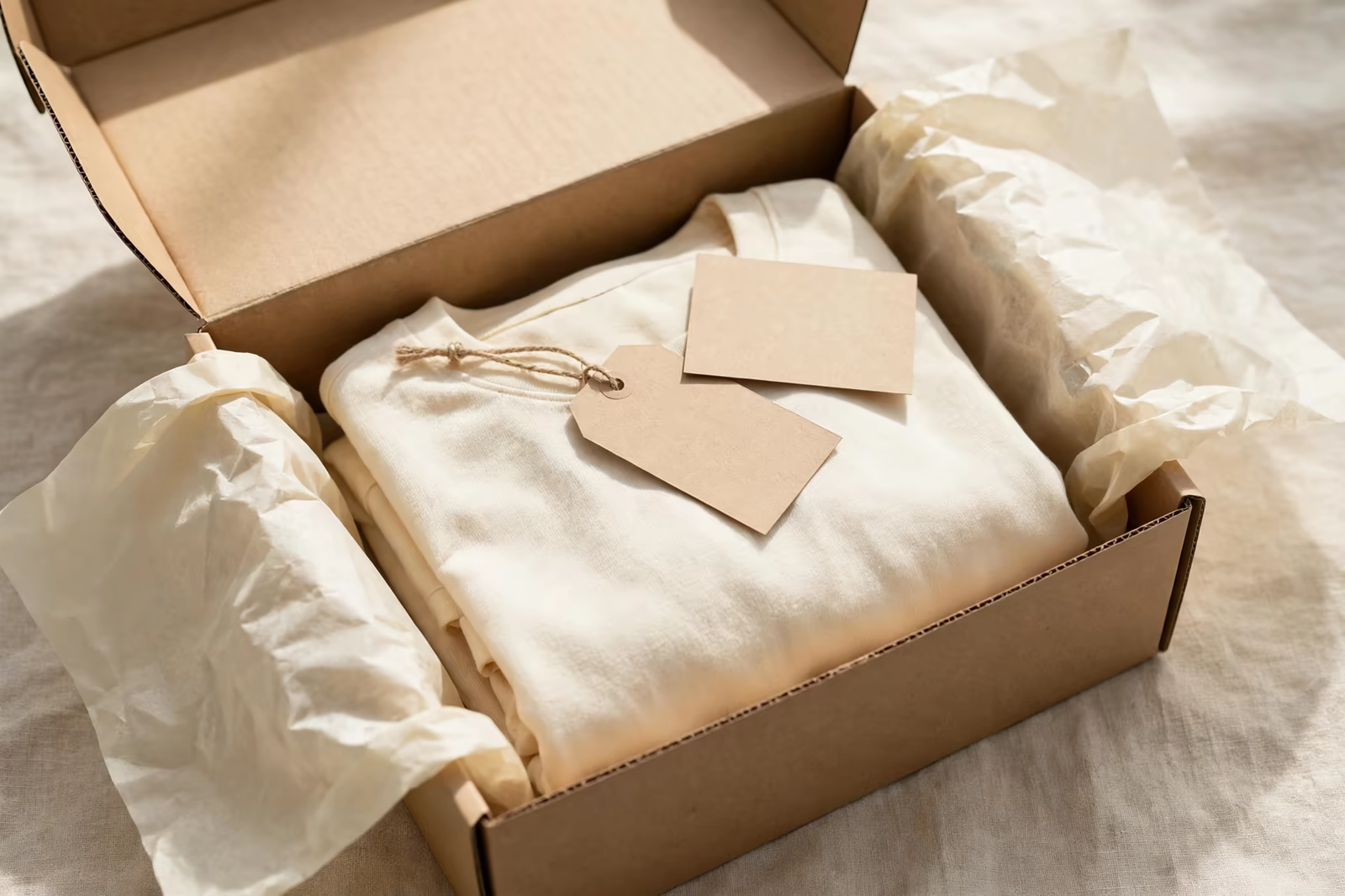
For most online customers, presentation culminates in a parcel. The budget version is neatness with one signature: a clean polybag or paper wrap, the label’s hangtag placed as designed, a card with the brand’s short message, folded garments that open flat rather than springing from a ball. None of this requires custom-printed everything; it requires the same decision made every time, which customers read as care.
Unboxing photographs and reviews then do the brand’s marketing with its own customers as the photographers. Presentation discipline at the packing table is what makes that free channel produce images the brand is proud to repost instead of evidence it would rather hide.
Colour Truth: Managing Screens and Expectations
The best-lit photograph still travels through a thousand different screens, and honest brands plan for the journey. Colours are checked on more than one device before publishing; the shade that matters is the one the garment and the photograph agree on under neutral light, not the one a single warm monitor prefers. Where a colour is genuinely hard to render, deep navies that read black, reds that flare, the description says so in words, and the fabric close-up carries the texture the colour shot cannot.
Returns data will grade the honesty: a colour-related return pattern is usually a photography confession, and the fix is a reshoot under the standard light, not a disclaimer in smaller type. Presentation discipline treats every avoidable return as a lighting bill that arrived late.
Social Content From the Same Shoot
One disciplined shoot should feed every channel: the catalogue set for the store, detail crops for social posts, the making photographs for the story layer, short vertical clips of fabric moving, a garment turning, a seam closing, taken in the same light while the setup stands. Brands that shoot per channel exhaust themselves and fracture their voice; brands that shoot once, systematically, look larger than they are for a month on the proceeds.
The calendar discipline matters more than the camera: a simple rhythm of product, detail, making and customer photographs, rotating through the range, keeps the label present without demanding invention weekly. Presentation is a system that produces content the way production produces garments, to a standard, on schedule, from prepared materials.
The One-Page Presentation Standard
Everything in this guide compresses into a single page the brand can pin above the packing table: the lighting setup and background, the shot list per product, the naming and filing of images, the description formula, the colour-check routine, the packing sequence with its one signature touch. A standard that fits on one page gets followed; a brand book of forty pages gets admired and ignored, and the difference shows in the store within a month.
Write the standard when the first range is photographed, while the decisions are fresh, and amend it the way tech packs are amended: deliberately, in the document, with the whole team working from the same version. Presentation, like fit, is a discipline of repeats.
When to Spend: The Upgrade Order
Budgets grow, and presentation spending has a wise order. First, the system: light, background, steaming, standards, which this guide has priced at nearly nothing. Second, the hero styles: professional photography and a real campaign for the products that carry the brand’s name furthest. Third, the world-building: locations, films and collaborations that widen the story once the product truth is beyond reproach. Spending in reverse order, world first, system last, produces labels that look famous and convert like strangers.
The test at every upgrade is whether the catalogue, the words and the parcel still agree with the campaign. A brand whose story outruns its presentation teaches customers to admire and not to buy, which is the most expensive lesson in the trade and the one this whole guide exists to prevent.
Frequently Asked Questions
Do I need a professional photographer to launch?
No. You need controlled light, a consistent setup, pressed garments and the discipline to shoot the whole range the same way, all achievable with a phone and a window. Professional photography earns its fee later, on hero styles and campaigns, where its polish multiplies a system that already works. Labels that hire polish before system usually own beautiful photographs of an inconsistent store.
How many images does each product need?
Enough to answer the customer’s silent questions: the front, the back, the fabric close enough to read its texture, the fit on a body or a stand, and any detail the description boasts about. Five honest views in one style beat ten improvised ones. Add images when customers ask questions the current set cannot answer; their questions are the cheapest art direction available.
Can I use the factory’s photographs of my products?
Ask what the images are and whose they are. Photographs a factory takes of your production, for you, with permission, are a legitimate asset, and factories often shoot checking and packing stages a brand cannot attend. Images from the factory’s general catalogue belong to other stories, may show other customers’ products, and should never stand in for your range on your page.
What is the cheapest presentation upgrade with the biggest effect?
Steam and light, in that order. A pressed garment under one soft, consistent light source transforms a phone photograph from evidence into presentation, and the setup, once built, costs nothing per product thereafter. Most new-label photography problems diagnosed as camera problems are creases and bad light wearing a disguise.