
Three phrases dominate every first conversation between a brand and a manufacturer, and they are used so loosely that half the industry argues past itself: private label, white label, cut-and-sew. They are not synonyms, not quality grades and not price bands. They are three different answers to one question: how much of this garment is yours. Your design, your fabric, your pattern, your risk. Each model hands the brand a different share of the garment, and choosing the wrong one costs either money you did not need to spend or control you did not know you were giving away.
This guide defines the three models the way factories in Bangladesh run them, compares what each means for design control, cost and speed, and lands on who should choose which, through our brands programs and production routes on our services and MOQ and production pages, for sellers in Australia and the USA.
White Label: Their Garment, Your Label
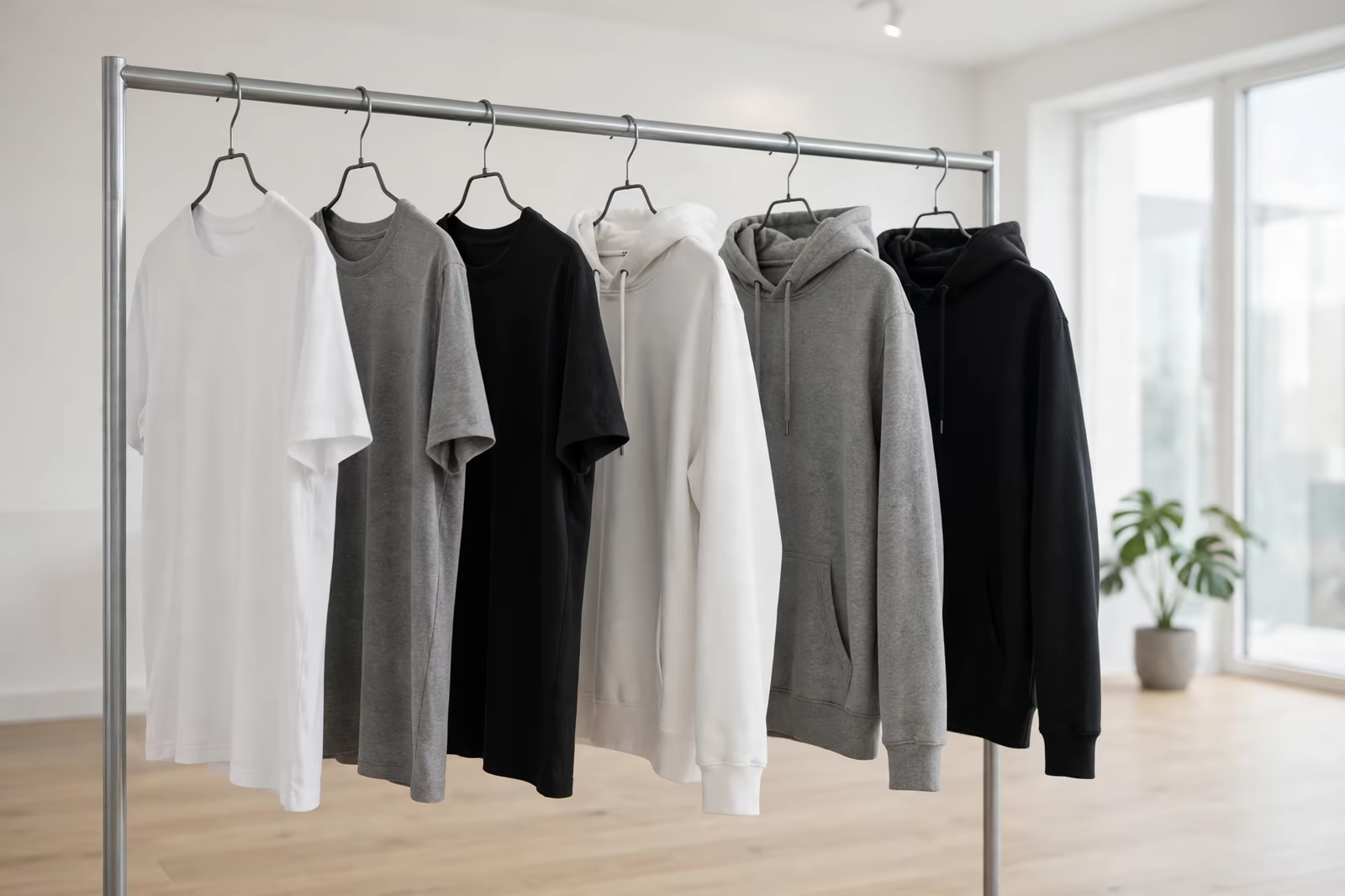
White label is the lightest model: the manufacturer has an existing garment, developed, patterned and often already produced as blank stock or a running style, and the brand buys it substantially as it stands, adding its own label, tag and perhaps a print or embroidery. The design work is done; the brand’s work is selection and decoration. What you are buying is speed and certainty: the fit exists, the fabric exists, the price is knowable on day one because the garment is a known object.
The costs are the mirror of the benefits. The same garment can sit in a competitor’s shop with a different label, because nothing about it is exclusively yours. Fit, fabric and construction are the manufacturer’s choices, adjustable at the edges only. And because the model leans on existing styles or stock, its availability follows the manufacturer’s range, not your imagination. White label suits brands testing a market, filling a range quickly, or selling decoration and brand story harder than garment design.
Private Label: Your Specification, Their Production
Private label moves the design decisions to the brand while keeping production with the manufacturer. The garment is made to order from your specification: your chosen fabric and weight, your size chart, your colours, your construction notes, your label and packaging. The manufacturer may start from a base pattern it knows deeply, most do, but the garment that ships is the one your document describes, produced for you alone, under your name.
This is the model most serious young brands actually live in, because it balances the ledger: real differentiation, a fit and hand-feel competitors cannot buy off the same rail, without the brand needing its own pattern room or fabric sourcing desk. Its price for that control is commitment, a production minimum, sampling rounds, lead time measured in a production calendar rather than a warehouse pick, and the discipline of writing specifications down. In return the garment is yours in every way a customer can touch.
Cut-and-Sew: Your Pattern, From the First Line
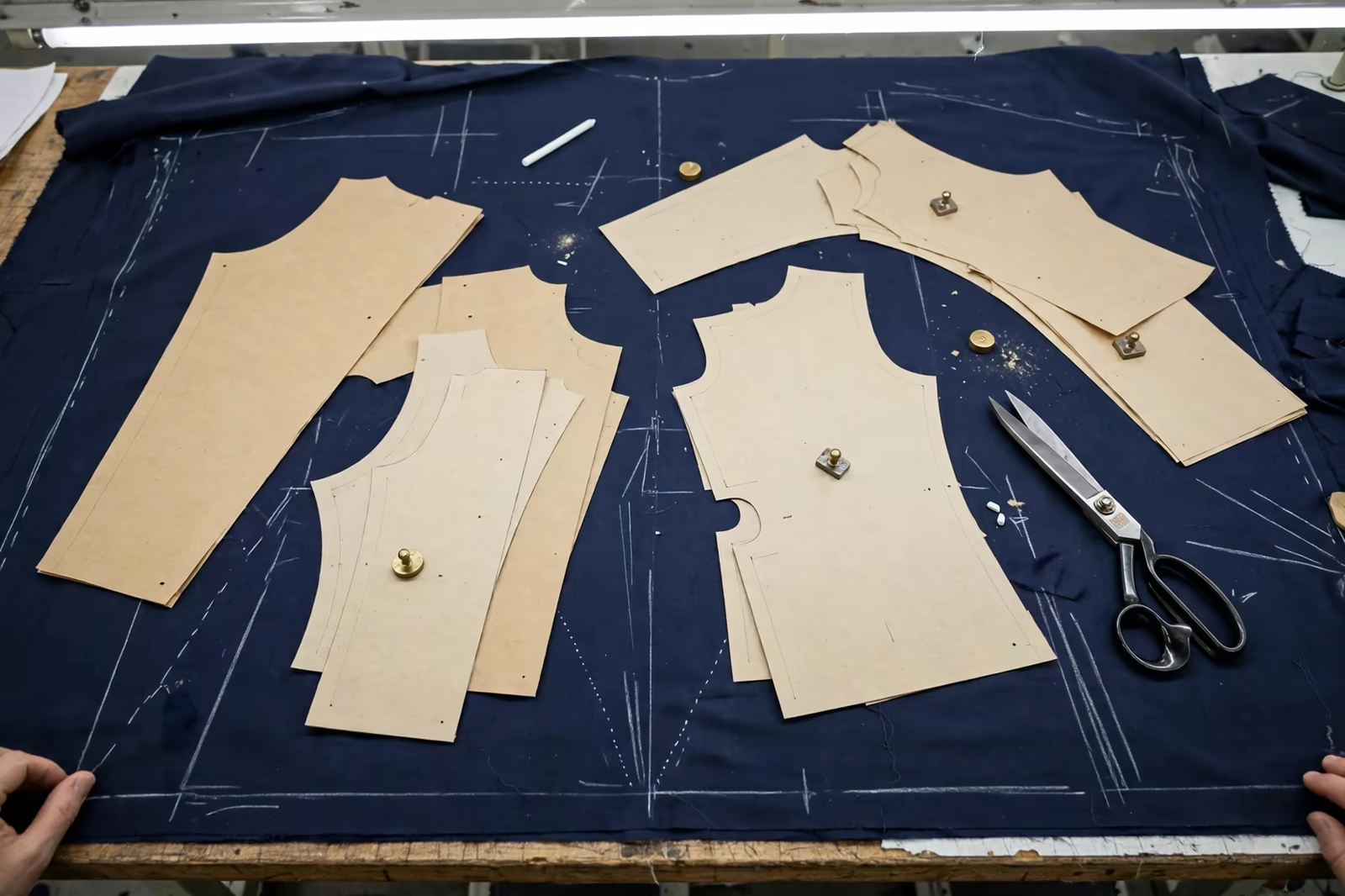
Cut-and-sew, in its strict trade sense, means the garment is built from raw fabric cut to a pattern made for this design, which is how nearly all made-to-order clothing is physically produced. As a model label, brands use it for the deepest level of customisation: an original pattern drafted or graded from your design, your fabric developed or sourced to your standard, construction engineered rather than adapted. Nothing about the garment pre-exists your order except the factory’s skill.
It is the model of maximum control and maximum responsibility. Fit is exactly what your pattern says, including when your pattern is wrong, which is why cut-and-sew programs sample more, measure more and take longer to reach bulk. Established brands with a signature fit, technical garments with engineered construction, and designs a base pattern cannot honestly reach belong here. New brands reaching for it on product one usually discover they were buying difficulty they had not priced.
The Words Are Used Loosely: Ask What Is Included
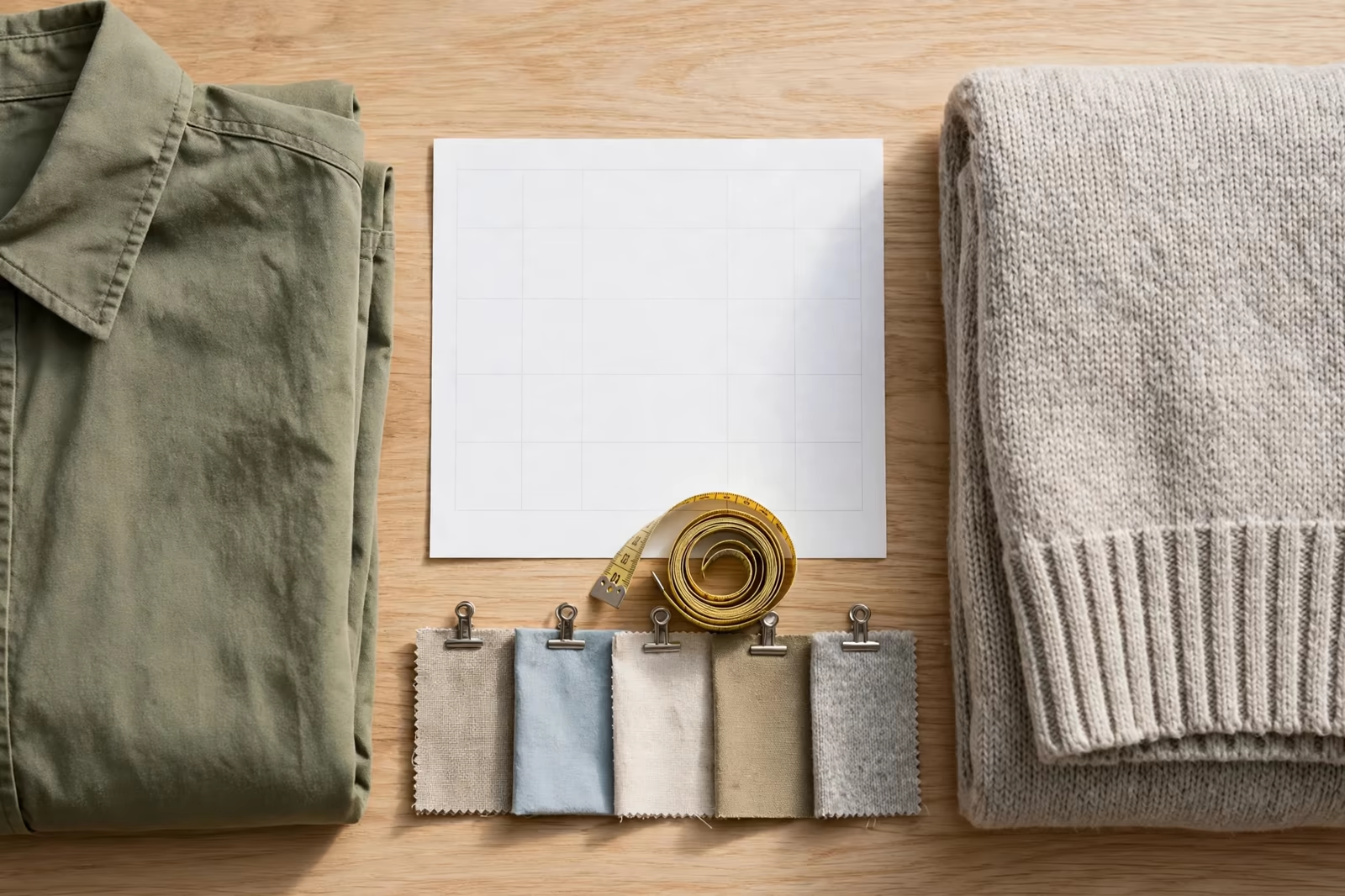
A warning the comparison tables never carry: factories, agents and marketplaces use these three terms with local accents, and the same words can hide different inclusions. One maker’s private label starts from your full tech pack; another’s means their style with your label and a colour change, which is white label wearing a better suit. The models matter less than the itemised answer beneath them, so the professional question is never “do you do private label” but “what exactly can I specify”: fabric, pattern changes, size chart, labels, packaging, decoration.
Get the inclusions in writing beside the quote, model by model, and the vocabulary problem disappears, because you are no longer buying a word. This single habit protects more first orders than any negotiation tactic, since most model disputes are really inclusion surprises discovered when the goods are already sewn.
Design Control Compared Honestly
Ranked by control, the ladder is simple: white label gives you the label, the decoration and the story; private label adds fabric, weight, colour, size chart and construction detail; cut-and-sew adds the pattern itself, the silhouette, the architecture. Each rung is worth having only if your brand will use it. A brand whose customers buy on graphic and price gains little from owning a pattern; a brand whose entire promise is a superior fit gains nothing from relabelling someone else’s.
Ranked by risk, the ladder inverts: the more of the garment is yours, the more of its failure is yours too. A white label fit problem is the manufacturer’s existing problem, shared with every buyer of that style; a cut-and-sew fit problem is your pattern, your sample approval, your cost. Control and accountability are the same coin, and the models are just three exchange rates.
Cost and Minimums: Where the Money Sits
White label carries the lowest entry cost: no development, little or no sampling beyond decoration proofs, and minimums that can be modest where stock exists. Private label prices the garment from its specification, so cost follows your fabric and construction choices, and the minimum reflects real production: our own standard is 1,200 pieces per style in up to two colours, which is the scale at which a dedicated production run prices honestly. Cut-and-sew adds pattern work and development sampling on top, the highest entry cost of the three, recovered only across volume or a premium the design can defend.
The comparison that matters is not entry cost but cost per correct garment: a cheap model that produces a garment your brand cannot proudly sell is the most expensive line in the budget. Founders should cost all three models for their actual first product, with inclusions itemised, and compare them against the price their customer will pay, before falling in love with any rung of the ladder.
Speed: Warehouse Clock Against Production Clock
White label runs on the warehouse clock: if the style exists, decoration and dispatch can be quick, which is why event-driven and opportunistic ranges live there. Private label runs on the production clock: sampling, approval, fabric, sewing, finishing, each stage real time that no urgency deletes, though an organised factory compresses the calendar by running its stages tightly. Cut-and-sew adds development time in front of the same production clock, pattern iterations being the slowest correspondence in the industry.
Brands should choose their clock before they choose their model, because a launch date is also a specification. The failure pattern is familiar: a brand designs like cut-and-sew, budgets like private label and promises its customers white label speed, then blames the factory for the arithmetic. Align the three early and the timeline conversation becomes planning instead of apology.
Quality and Consistency Across Reorders
Quality arguments are usually made wrongly for all three models, as if the label set the standard. In truth consistency follows documentation. A white label garment is consistent because it is the same garment, made the same way, until the manufacturer changes it, which they may, for their own reasons, and your second order can differ from your first without your vote. A private label garment is consistent because your specification, your approved sample and your retained standards travel with every reorder; the factory reproduces a document, not a memory. Cut-and-sew is the same principle at greater depth, the pattern itself being the document.
So the quality question to ask each model is what, exactly, pins this garment to its standard in year two. If the answer is a specification and an approved sample on file, consistency is a system. If the answer is that it is the same style as last time, consistency is a hope wearing a label.
Which Model Fits Which Brand
Choose white label to test, to move fast, or where the garment is a canvas for your decoration and brand. Choose private label when the garment itself is part of your promise, fit, fabric, feel, and you are ready to specify it and commit to a production minimum; this is most growing brands, most of the time. Choose cut-and-sew when your design cannot be reached by adapting anything that exists, and your volume or margin can carry development properly.
And know that brands migrate: a label proved on white label stock graduates to private label once its customer is real, and its signature product earns a cut-and-sew pattern once the fit becomes the brand. The models are stages as much as choices, and the sequence, prove the customer, then own the garment, then own the pattern, has built more durable brands than any single leap to the top rung.
Hybrids: Most Real Ranges Mix the Models
Few working brands run one model across a whole range, and the comparison matters product by product rather than company by company. A typical young range carries its hero product in private label, a seasonal graphic line in white label for speed, and one signature piece in cut-and-sew whose pattern is itself the story. The range still reads as one brand, because labels, packaging and the quality bar are held constant across all three.
The hybrid demands one discipline: the product file records which model each garment uses, what is specified and what is stock, so reorders and quality checks follow the right rules. Write the model into the range plan, and the hybrid stops being a compromise and becomes what it actually is: three tools, each used where it is strongest.
Frequently Asked Questions
Is private label the same as white label with my logo?
No. White label takes the manufacturer’s existing garment and adds your branding; private label produces a garment to your specification, your fabric, weight, colours, size chart and packaging, under your label. The practical test is what you can specify: if the answer is only decoration and colours from a fixed style, you are being offered white label whatever the brochure calls it.
Is cut-and-sew higher quality than private label?
Not inherently. Cut-and-sew describes how much of the garment originates with your design, an original pattern from raw fabric, not a quality grade. A private label garment made to a tight specification can outlast a careless cut-and-sew one. Quality follows specification, sampling and control in every model; the models differ in control and commitment, not in guaranteed standard.
Which model is cheapest to start with?
White label, almost always: no development, minimal sampling, and a garment that already exists. Private label costs more to enter because production is dedicated to your specification at a real minimum, 1,200 pieces per style in our programs, and cut-and-sew adds pattern development on top. Compare cost per correct, sellable garment, not entry price alone.
Can I move from white label to private label later?
Yes, and many brands do exactly that once sales prove the customer. The garment itself will change when you specify your own fabric and fit, so treat the move as a relaunch of the product, sample it fully, and keep the old and new running side by side until the new standard is approved. Migration is normal; the models are stages as much as choices.