
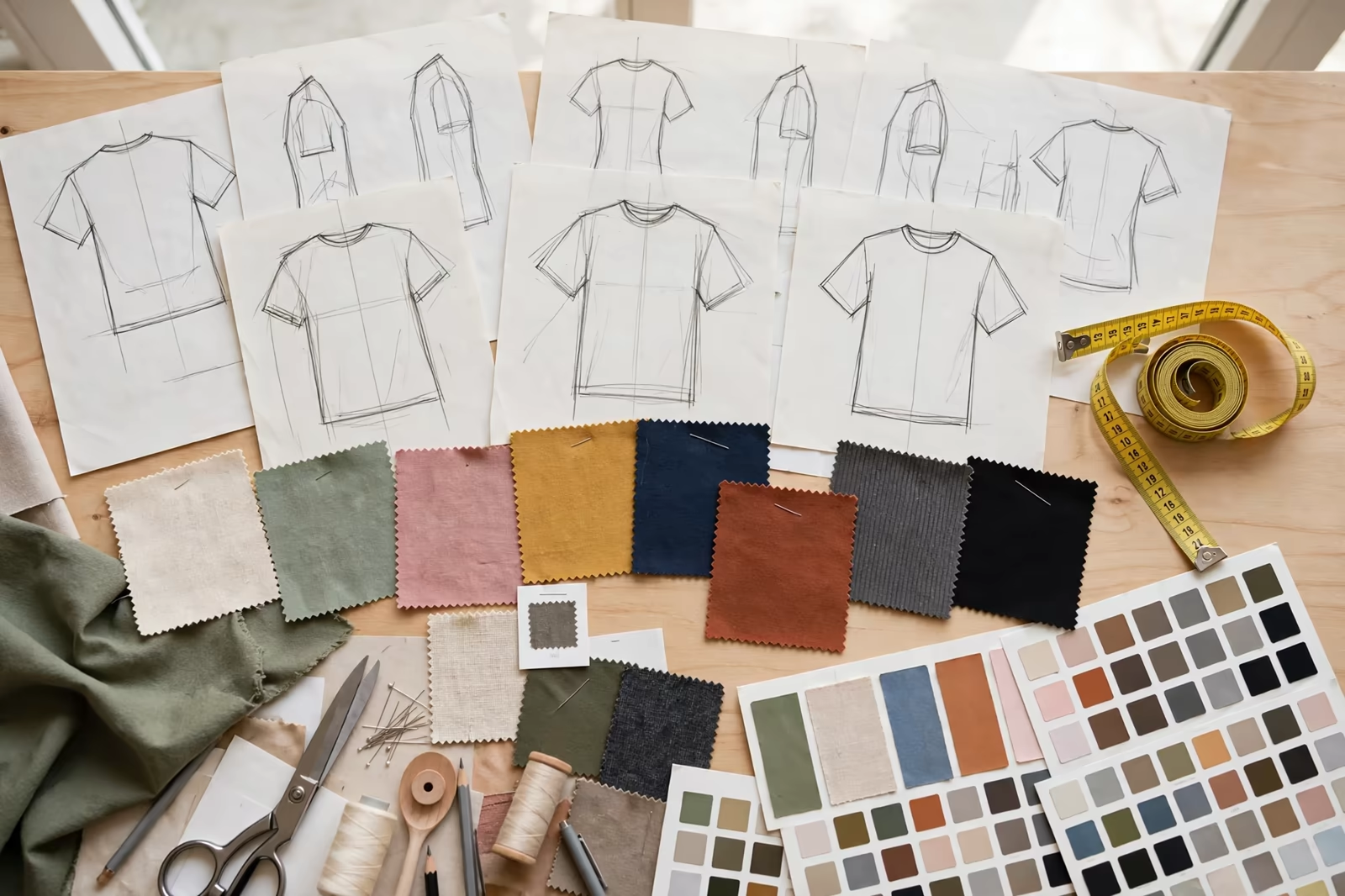
Most clothing brands do not begin with a factory. They begin with a rail of clothes someone wishes existed, a customer who cannot find what they want, a design sketched at a kitchen table. The distance between that sketch and a stocked shop is not talent or luck; it is a sequence of decisions, and the biggest of them is how the clothes get made. For a new brand, the answer is almost always a private label manufacturer: a partner who produces your designs, under your label, to your specification, while you keep the brand, the customer and the margin story.
This guide walks the sequence in the order it actually happens, from idea to first order, through the brands route we run for labels starting exactly where you are, and it ends at the step everything points to, a proper quote request built on a real first product, usually something like the classic crew neck t-shirt.
What Private Label Actually Means for a New Brand
Private label means the garments are manufactured to your order and carry your brand: your label in the neck, your hangtag, your packaging, your name on the carton. The manufacturer is the production engine, invisible to your customer, accountable to you. It is not buying ready stock and sewing a label in, though that model exists under other names; true private label production starts from fabric and pattern, which is why your garments can differ from everyone else’s in fit, weight and finish rather than only in logo.
For a starter brand the model solves the founding problem: you cannot justify a factory, a pattern room and a merchandising team on a first collection, but you can rent all three inside a manufacturer’s minimum order. Everything in this guide assumes that model, made-to-order production under your label, with the manufacturer as partner rather than supplier of finished goods.
Step One: Choose the First Product Like an Accountant
Founders choose first products by love; survivors choose them by arithmetic wearing love’s clothes. The first product should be one garment, in one fabric, in a small colour range, that your customer already understands and already buys from someone else, improved in one specific way you can name in a sentence: a heavier fabric, a better fit through the shoulder, a colour nobody offers. One improvement, provable in the hand, beats ten innovations described on a website.
The crew neck t-shirt is the classic first product for honest reasons: the pattern language is universal, sizing is forgiving, the customer needs no education, and a manufacturer can show you its quality in a single sample. Whatever you choose, choose one product and learn its entire cost anatomy, fabric, trims, make, decoration, packing, freight, before you dream of a range. Brands are built one understood product at a time; ranges are what understood products grow into.
Step Two: Know Your Customer Before Your Colours
A brand is a promise kept for a specific person, and the specificity is the work. Age and income are the least of it; the useful knowledge is what this customer wears now, what annoys them about it, where they buy, what they paid last time and what would have to be true for them to try an unknown name. Founders who can answer those five questions write better briefs than founders with bigger budgets, because every later decision, fabric weight, price point, size range, borrows its answer from them.
This is also where your market’s geography belongs. Brands selling into the USA, the UK, Europe, Canada or Australia are designing for different bodies, climates, labelling laws and price expectations, and a manufacturer who exports to those markets daily will ask you these questions at the first meeting; arriving with answers is the cheapest credibility a new brand can buy.
Step Three: Build the Specification, the Tech Pack Habit
Factories do not make garments from enthusiasm; they make them from specifications. Even a simple first product needs its decisions written down: fabric composition and weight, colours with references, a size chart with real measurements, construction notes, label and packaging instructions, and a reference sample or clear photographs of the standard you mean. This document, the tech pack, grows with your brand, but its habit starts with product one: what is not written will be decided by someone else, at production speed, not in your favour.
Do not let the formality frighten you. A good manufacturer reads a starter’s two-page specification with more respect than a vague forty-page one, because it shows the founder knows the difference between a decision and a wish. Where you genuinely do not know, say so and ask for the standard option; factories price honesty into their patience and guesswork into their quotes.
Step Four: Find the Manufacturer and Read Them Properly
Shortlist a few manufacturers whose shown work resembles your product, then read them the way they will read you. A serious partner asks about your customer, your quantities, your specification and your timeline before it quotes a price; a partner who quotes instantly on a photograph is pricing a guess and will recover the difference later, in quality, in delays or in silence. Ask what they make most, which markets they export to, how sampling works, what their standard minimum is, ours is 1,200 pieces per style in up to two colours, and how communication runs during production.
Geography is part of the read. Bangladesh, where our production sits, offers new brands a rare combination: deep manufacturing skill across basics and fashion basics alike, costs that leave a young brand its margin, and export systems seasoned by decades of shipping to the USA, Europe and beyond. Judge any country, and any factory in it, by evidence: samples, references, the quality of their questions back to you.
Step Five: Samples Are the Real Interview
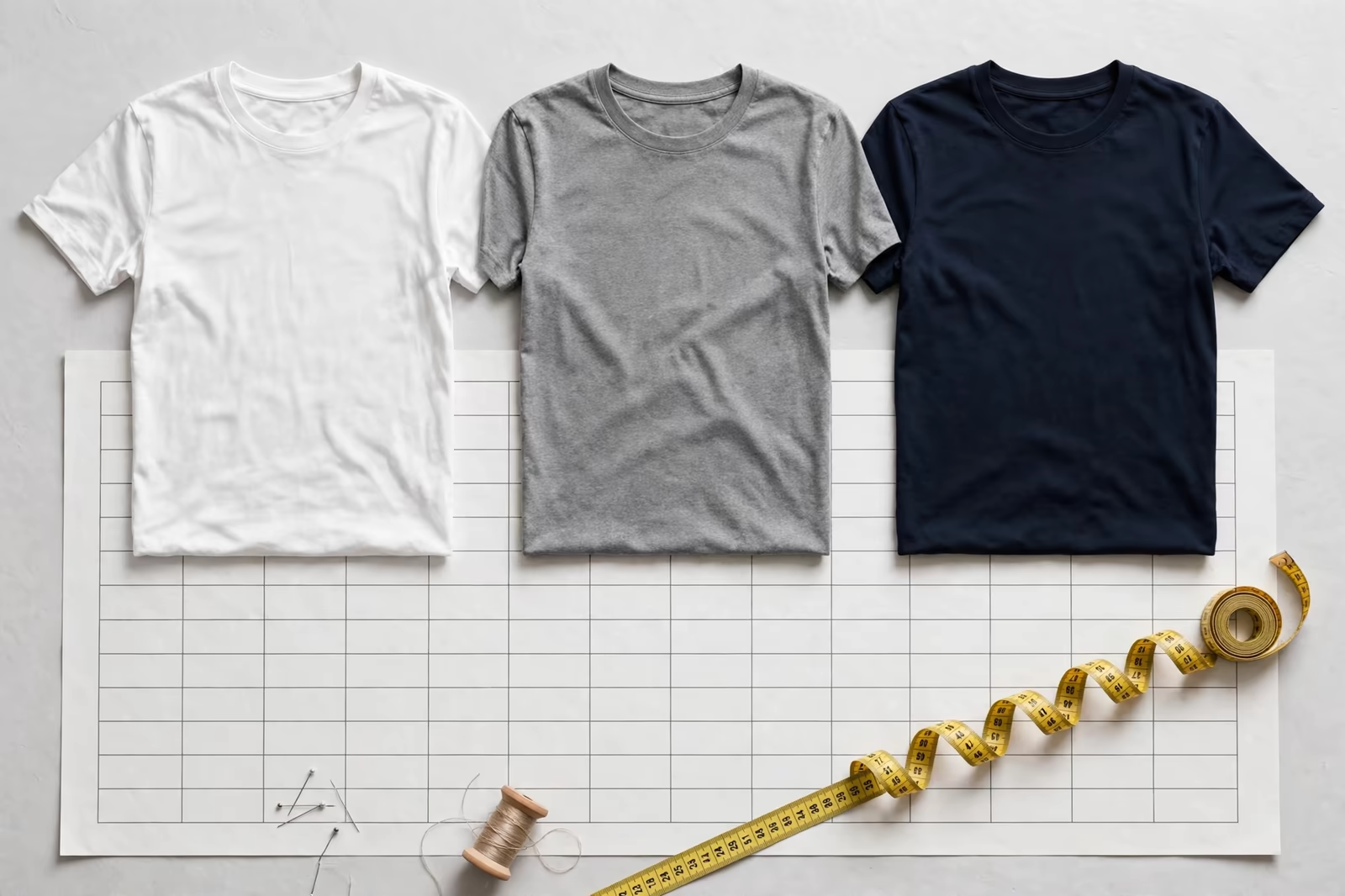
Everything before sampling is conversation; the sample is the manufacturer auditioning in fabric. Order your sample in your actual fabric and your lead colour, wear it, wash it, measure it against your own size chart, and check the boring things: seam behaviour, label placement, how the neck sits after washing. One round of changes is normal and healthy; what you are really testing is how the factory receives corrections, because that relationship, not the sample, is what you are buying for the next five years.
Keep the approved sample, tagged and dated, and keep its specification beside it. Together they are your production contract in physical form: bulk is judged against them, disputes are settled by them, and reorders are made from them. Brands that skip this discipline to save two weeks spend two months discovering why it exists.
Step Six: Cost the Garment Honestly, All the Way Home
The factory price is the beginning of your cost, not the whole of it. Freight, duties, taxes, warehousing, photography, returns, the samples you paid for and the stock that will not sell: a first product must carry all of it in the founder’s spreadsheet before the order is placed, because the retail price your customer will pay was fixed by the market while you were sketching. Work backwards from that price to the production cost you can afford, and let that number discipline your fabric and decoration choices while they are still cheap to change.
This is where private label quietly beats the alternatives for a serious starter: because you control the specification, you control the cost levers, a fabric weight here, a simpler finish there, rather than inheriting a wholesaler’s finished price with no levers at all. Margin is not found at the selling end; it is built, decision by decision, at this one.
Step Seven: Labels, Packaging and the Brand in the Hand
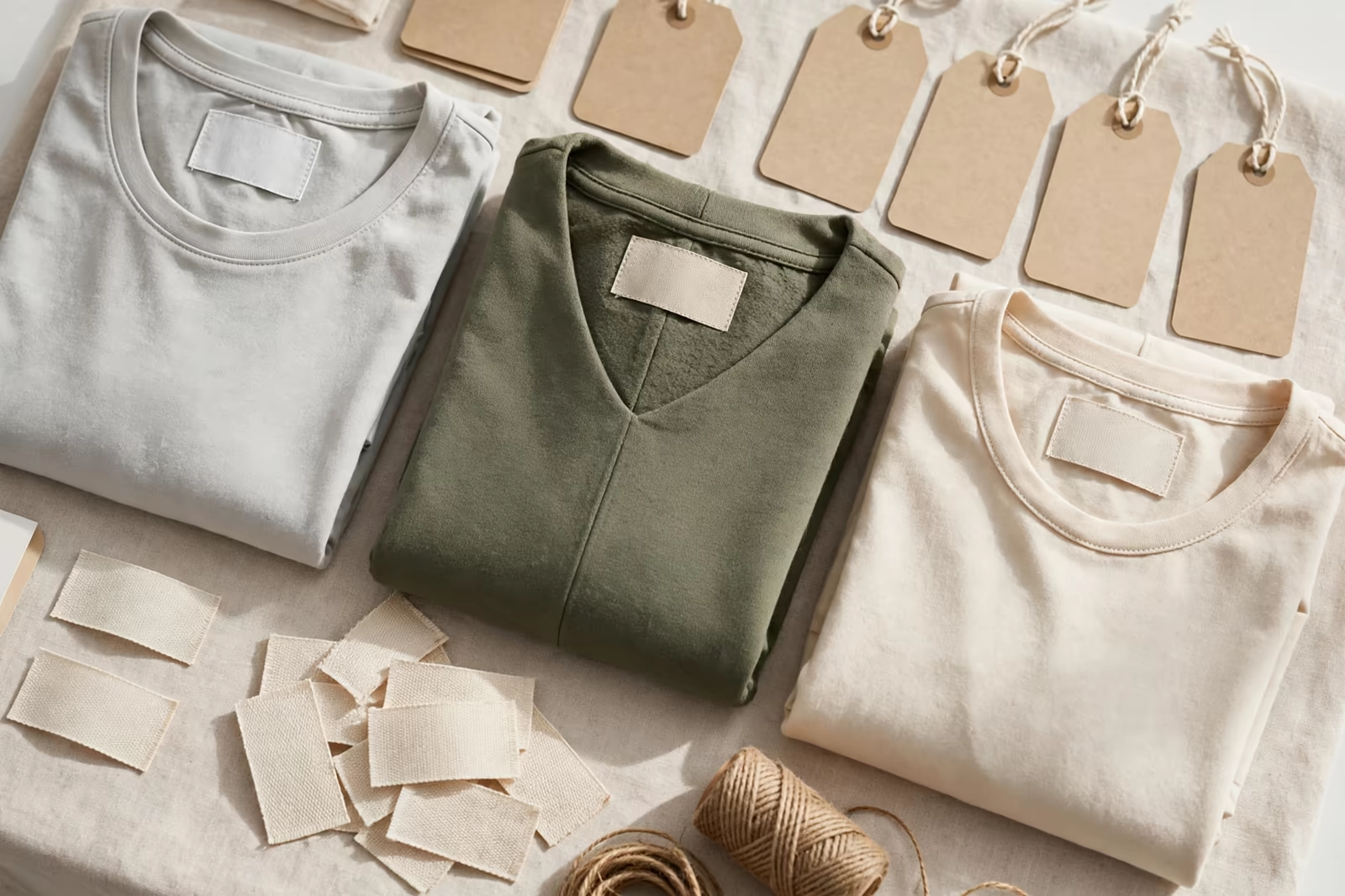
Your customer’s first physical contact with your brand is not the garment; it is the label, the tag and the bag it arrives in. Private label production puts all three in your hands: a woven neck label with your name, a hangtag carrying your story and care instructions your market’s law requires, packaging that survives the post and photographs the way your shop page promises. Order these decisions alongside the garment, not after it, because labels and tags have their own production timelines and a finished garment waiting on a label is stock that cannot ship.
Consistency: The Luxury Signal a Starter Can Afford
Keep the system simple at first: one label, one tag, one bag, executed cleanly. The brands customers remember are rarely the ones with the most branded objects; they are the ones where every object agrees with every other, same typeface, same tone, same care. Consistency is the luxury signal a starter can actually afford.
Step Eight: Place the Order and Run Production Like a Partner
With the sample approved and the costs honest, the first order is a plan, not a leap: quantities by size and colour drawn from your customer’s shape, a timeline agreed with the production calendar in view, and checkpoints named in advance, fabric approval, a pre-production sample from bulk fabric, a mid-production word, final inspection before packing. A manufacturer worth keeping will offer most of these unasked; your job is to be reachable, decisive and quick with approvals, because production queues do not pause politely around a founder’s inbox.
When the cartons land, check them against the approved sample before you check them against your hopes, sell through with the discipline you manufactured with, and write down everything the first order taught you while it is still embarrassing enough to remember. That document, plus your reorder data, is the founding asset of collection two, and it is why the second order is always easier than the first: the sequence in this guide becomes a system, and systems are what brands are.
Frequently Asked Questions
Do I need a registered company and trademark before my first order?
You need enough legal shape to trade and to own your brand name in the markets you will sell in, and a trademark search is cheap insurance before labels are woven with the name. Manufacturers will work with properly formed young businesses; what they cannot do is protect your name for you, so start the paperwork alongside sampling, not after the first stock lands.
How much money does a first private label order take?
It depends on the garment, the fabric and the quantity, which is why honest guides give no magic figure. The components are knowable: samples, production at the manufacturer’s minimum, labels and packaging, freight and duties, and the selling costs of your own shop. Build the full stack for your specific product in a quote request; a real number for your garment beats any average for everyone’s.
Should my first range launch with many products?
Almost never. One product, understood completely, its costs, its fit, its customer’s verdict, teaches more and risks less than five products understood shallowly. Ranges grow from a proven first product’s reorder data; launching wide usually means learning the same expensive lessons five times in parallel, on five minimum orders, in the same season.
What if I cannot draw or design professionally?
You do not need to. Manufacturers work from reference garments, photographs, measurement charts and written changes every day; your job is decisions and standards, not artwork. Bring a reference sample of the fit you want, mark your changes plainly, and let the sample rounds translate your intent into a garment. Clarity outperforms drawing skill at every stage of the process.