
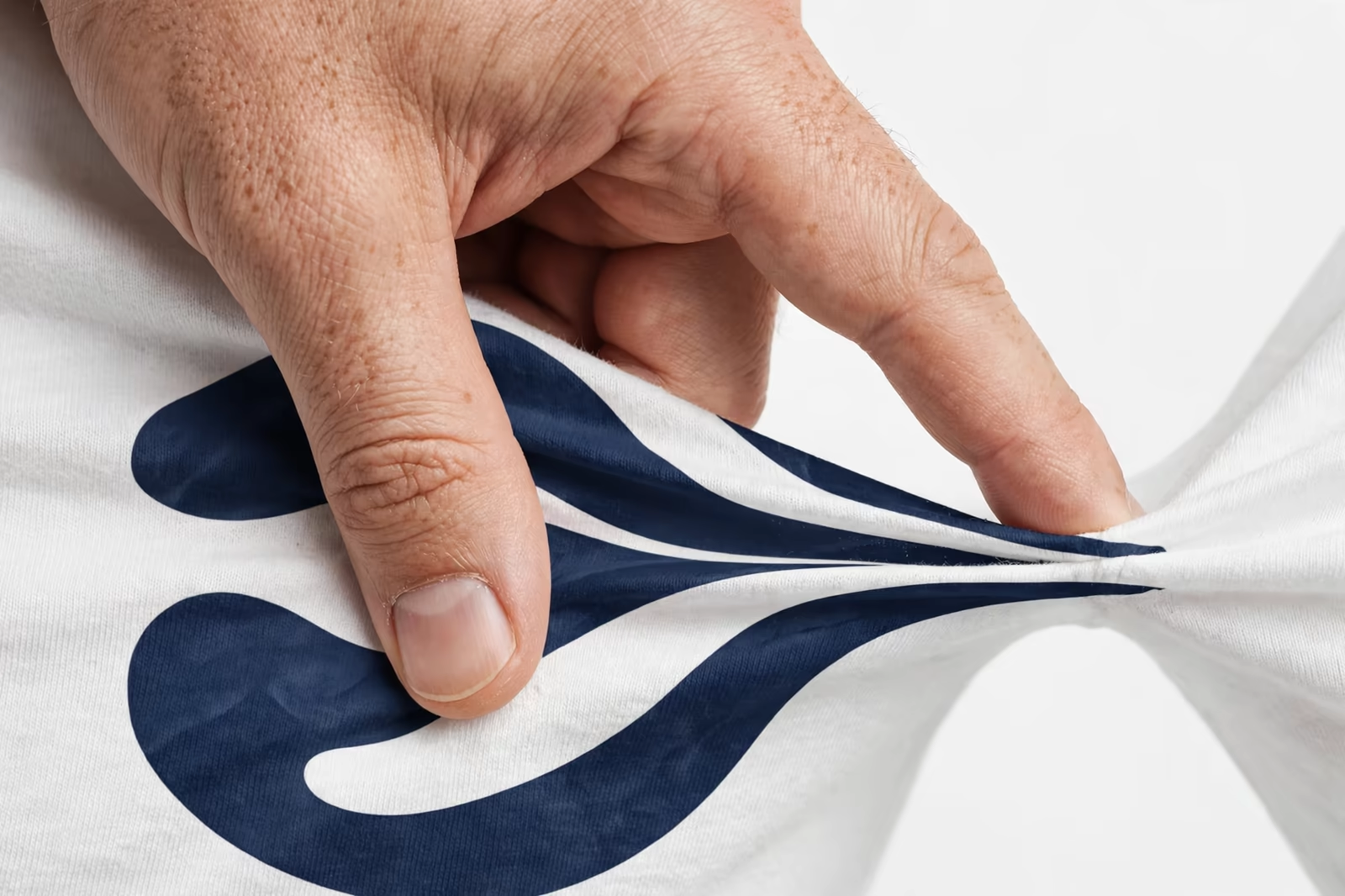
Two t-shirts can carry the same design, printed in the same factory, and feel completely different in the hand, wash differently for years and age along separate paths, purely because of the ink system under the design. Plastisol and water-based inks are the screen printing trade’s two great families, and choosing between them is one of the most consequential decisions a print buyer makes, usually with the least information on the table.
Both ink systems are run in Bangladesh for buyers in Canada, Australia and the USA, and the choice is proven on the actual garment fabric before bulk printing begins.
This comparison is built around our screen printing work, garments such as the premium heavyweight t-shirt that carry both systems well, and the wider services that decide which ink a program should run.
Plastisol and Water-Based Inks: The Basic Difference
Plastisol is a PVC-based ink that sits on top of the fabric. It contains no solvent that evaporates; the liquid ink simply rests on the garment’s surface until heat fuses it into a solid, flexible film. Because it never dries in the screen, it is famously forgiving in production: a printer can stop for lunch and the ink is exactly where it was left.
Water-based ink behaves like a dye’s close cousin. Its pigment rides in water, the water soaks into the fibres and then evaporates or is driven off in the dryer, leaving colour inside the fabric as much as on it. The practical consequence is feel: plastisol prints have a surface you can find with your fingertips, while a good water-based print is close to undetectable by touch.
Hand Feel: The Difference Your Customer Notices First
Hand feel is where the two systems separate most visibly. Plastisol builds a smooth, slightly rubbery layer, crisp and substantial; on light garments with large solid areas it can feel heavy and can trap heat against the chest in summer. Modern plastisol printing can be thinned and printed through fine mesh to soften that hand considerably, but its nature is a film.
Water-based prints, once cured and washed once, read as part of the garment. Vintage and fashion programs prize them precisely because the print breathes with the fabric and cracks, when it ages, in a way buyers read as character rather than failure. For designs where the garment should feel like nothing was added, water-based is the honest answer.
Opacity and Colour on Dark Garments
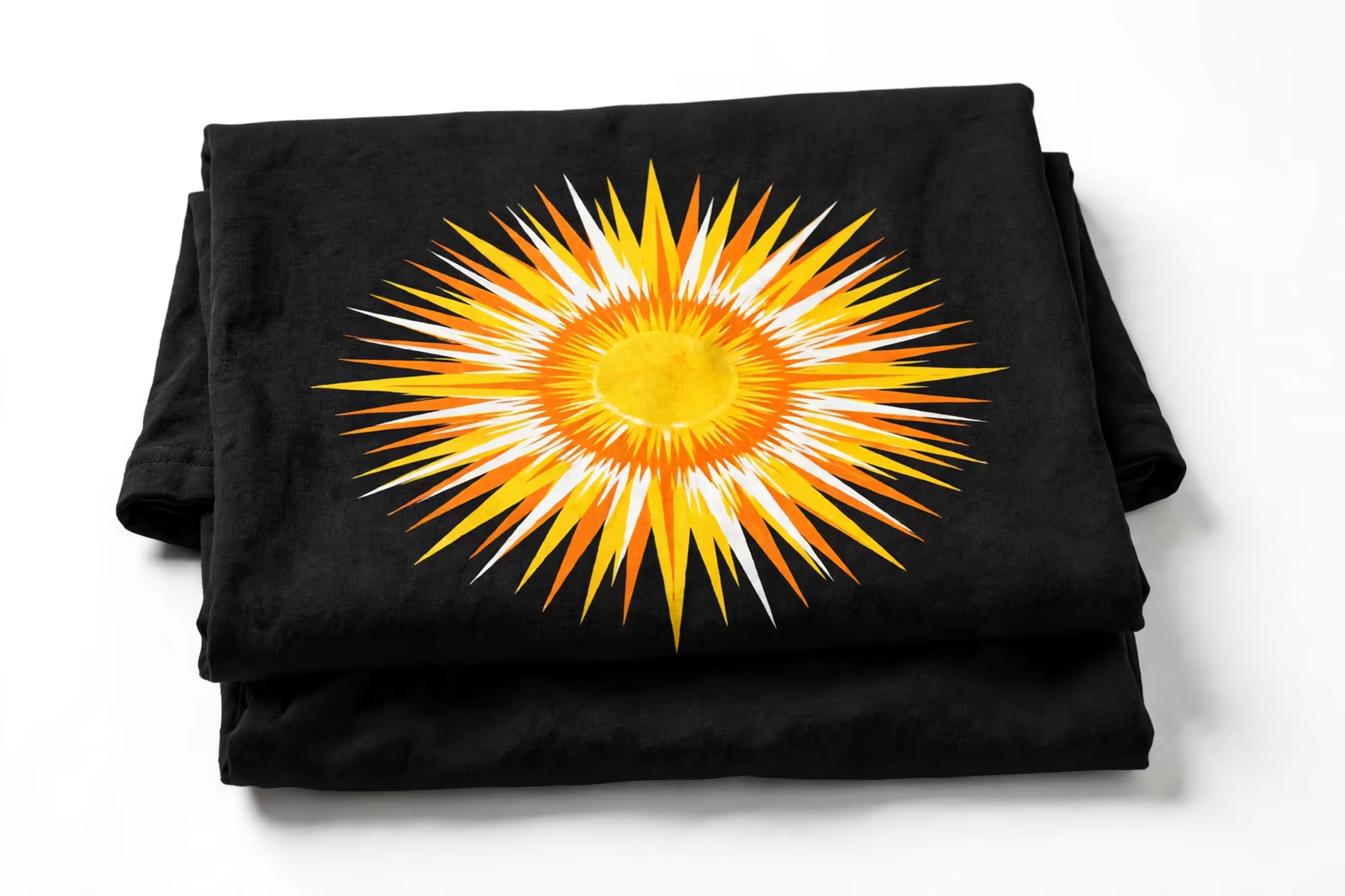
Plastisol is naturally opaque. Bright colours on black fabric are its home ground, usually over a flashed white underbase, and the colour you approve is the colour that survives the wash. Registration and coverage are predictable, which is why workwear and teamwear, where the logo must read at distance, default to it.
Water-based inks are naturally transparent, which makes bright colour on dark garments their hardest problem. High-opacity water-based formulations and multiple hits close much of the gap, and discharge printing, a water-based relative, removes the garment’s dye and replaces it with pigment for genuinely soft bright prints on suitable fabrics. The trade-off is process control: water-based colour on darks rewards a skilled printer and punishes a careless one faster.
Durability and Wash Life Compared
Both systems, properly cured, are durable for the garment’s ordinary life, and both fail the same way when they are not: cracking, fading and washing out are curing failures long before they are ink failures. Plastisol’s film is mechanically tough, resists abrasion and holds colour aggressively, which suits garments washed hard and often, workwear, sportswear and children’s programs.
Water-based prints fade more gracefully, softening gradually rather than cracking in plates, and many fashion buyers prefer that aging curve. Their weakness is a poorly controlled cure, because the water must fully leave the print before the binder sets; a rushed dryer produces prints that pass inspection and fade in the first month.
Eco Claims: What Is True and What Is Marketing
Water-based inks carry the greener reputation, and part of it is earned: no PVC, easier clean-up with water, and a softer chemical profile in the print room. Modern plastisol has answers of its own: most reputable ranges are now phthalate-free, the ink does not dry into waste in screens, and its durability keeps garments in service longer, which is an environmental argument of a different kind.
The honest position is that neither system is impact-free, and the claim that matters is the specific one: ask which ink range, from which maker, with which certifications, rather than accepting a family name as a guarantee. Buyers printing eco claims on the hang tag need the ink’s actual documentation, not the category’s reputation.
Clean-up tells the same two-sided story. Water-based screens wash out with water, but that wash water carries pigment and additives into the drain unless the print room filters it, as responsible factories do. Plastisol screens are cleaned with solvents, yet the ink itself almost never becomes waste: what is not printed goes back in the bucket for the next run, because it cannot dry out. A serious environmental conversation covers the print room’s whole practice, ink, clean-up, filtration and waste handling together, rather than stopping at the word printed on the ink tin.
Which Fabrics Suit Which Ink
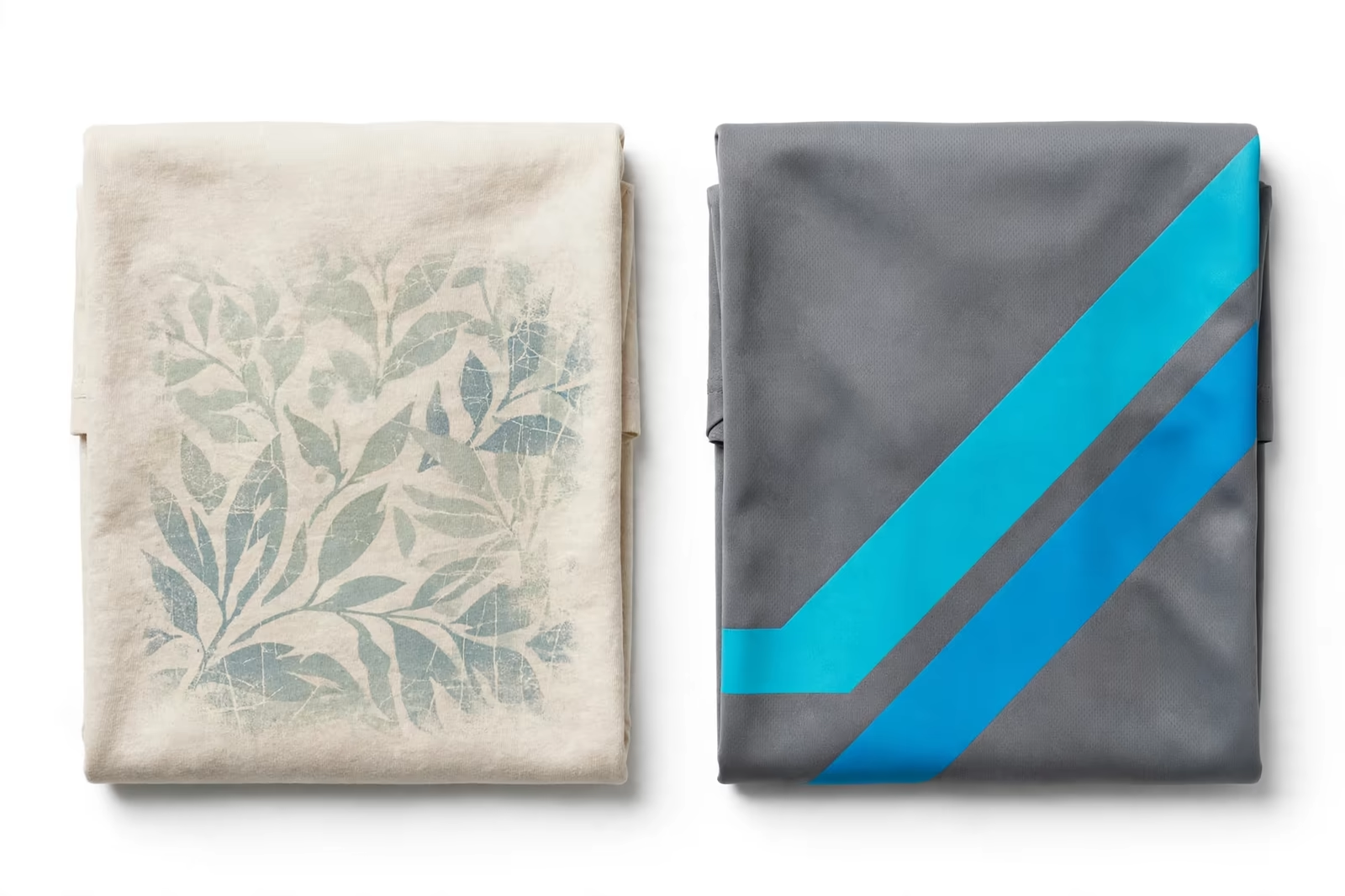
Cotton is friendly to both. Plastisol prints on almost anything that survives the cure temperature, including polyester and blends, with low-bleed formulations and blockers managing dye migration. Water-based inks love natural fibres, where they soak in and cure soft, and work harder on synthetics, where adhesion and wash fastness need high-opacity or specialty ranges designed for the purpose.
Blends sit between the stools and should be sampled in the actual ink, on the actual fabric, before bulk: a 50-50 garment can take plastisol beautifully and fight a standard water-based print for months. The fabric decides more of this question than brand preference ever will.
Cost, Setup and Production Behaviour
Plastisol is the cheaper, calmer production citizen. It is inexpensive per print, never dries in the screen during stoppages, cleans up predictably and runs long shifts without the mesh blocking. Water-based ink costs more in discipline: it dries in screens during pauses, demands humidity and retarder management, and its screens need more attention across a long run.
Those behaviours price themselves into quotes in ways buyers rarely see itemised: a water-based program carries more setup care, more dryer time for full water removal, and more skill at the press. None of that makes it the wrong choice; it makes it a choice to budget honestly rather than discover.
Special Effects and Fine Detail in Each System
Plastisol owns most special effects: puff, high density, glitter, metallic and suede finishes are plastisol technologies, built on its film-forming nature. It also holds bold spot colour and clean edges superbly at production speed.
Water-based owns tonal work: halftones and photographic prints where the ink’s transparency blends colours in the fabric rather than stacking them in layers, producing prints with a softness automatics and plastisol struggle to imitate. Fine detail is achievable in both, with water-based demanding tighter process control as lines get smaller.
Colour Matching and Mixing in Each System
Colour behaves differently in the two families, and buyers approving to a Pantone standard should know how. Plastisol mixes predictably and holds its colour wet-to-cured almost exactly, which makes approvals stable: the ink mixed on Monday prints the same on Friday, and the same formula rebuilds the colour next season. Its opacity also means the fabric under it barely argues with the result.
Water-based colour is a negotiation with the fabric. The ink soaks in, so the garment’s own shade joins the mixture: the same ink reads brighter on white cotton, deeper on natural, and shifts again on a blend. Approvals must therefore happen on the real fabric, and a colour approved on a white swatch is not approved at all for the black garment in the same program. Skilled printers compensate by adjusting formulas per fabric, which is another reason water-based programs carry more sampling rounds in their calendar and should plan for them.
Care, Ironing and Life in the Customer’s Hands
The systems differ again after the sale. Plastisol’s film softens under a hot iron and can stick or gloss if a customer presses the print directly, which is why care labels on plastisol prints advise ironing inside out. The film also stiffens slightly in cold weather and relaxes as it warms, a behaviour wearers notice on large prints in winter.
Water-based prints behave like the garment itself under care: they iron normally, move with the fabric in any temperature, and their gradual softening in the wash reads as the shirt settling in rather than wearing out. For programs whose customers iron formally, school and corporate wear among them, that difference is not trivial. Either way, the care label should be written for the ink actually used, because instructions copied from another program quietly mismatch the product in the drawer.
Choosing an Ink System for Your Program
Decide from the garment outward. Dark garments needing bright, hard-wearing logos point to plastisol or discharge. Fashion prints where feel is the product point to water-based. Hard-washed workwear points to plastisol’s toughness; tonal artwork points to water-based’s blending. Mixed programs often run both, each design on the system that suits it, rather than forcing one ink across a whole range.
Quantities follow our standard minimum of 1,200 pieces per style in up to two colours, with the ink system specified per design in the quote. Whatever the system, approve a strike-off on the real fabric, wash it, and stretch it: the ink debate is settled fastest by a sample that has survived the program’s own laundry.
Frequently Asked Questions
Which ink lasts longer, plastisol or water-based?
Properly cured, both last for the garment’s ordinary service life. Plastisol resists abrasion and hard washing with a tough surface film, while water-based prints fade more gradually and gracefully. In practice, curing quality decides lifespan more than ink family: an under-cured print of either system fails early, whatever its reputation.
Is water-based ink always the eco-friendly choice?
It has real advantages, no PVC and water clean-up chief among them, but the honest answer depends on the specific ink range and its certifications, not the family name. Modern plastisols are generally phthalate-free, and a durable print that keeps a garment in use is itself an environmental factor. Ask for the ink maker’s documentation behind any claim.
Can water-based ink print bright colours on black t-shirts?
Yes, with the right route: high-opacity water-based inks with multiple hits, or discharge printing, which removes the dark dye and replaces it with pigment for a soft, bright result on suitable cotton fabrics. It demands more process control than plastisol on darks, and sampling on the real fabric is essential before bulk.
Why does plastisol feel thicker on the shirt?
Because it is a film sitting on the fabric surface rather than colour soaked into the fibres. Printers can thin the deposit with finer mesh and additives for a softer hand, and small designs feel barely present. Large solid areas on light garments show the difference most, which is where water-based usually wins the brief.