
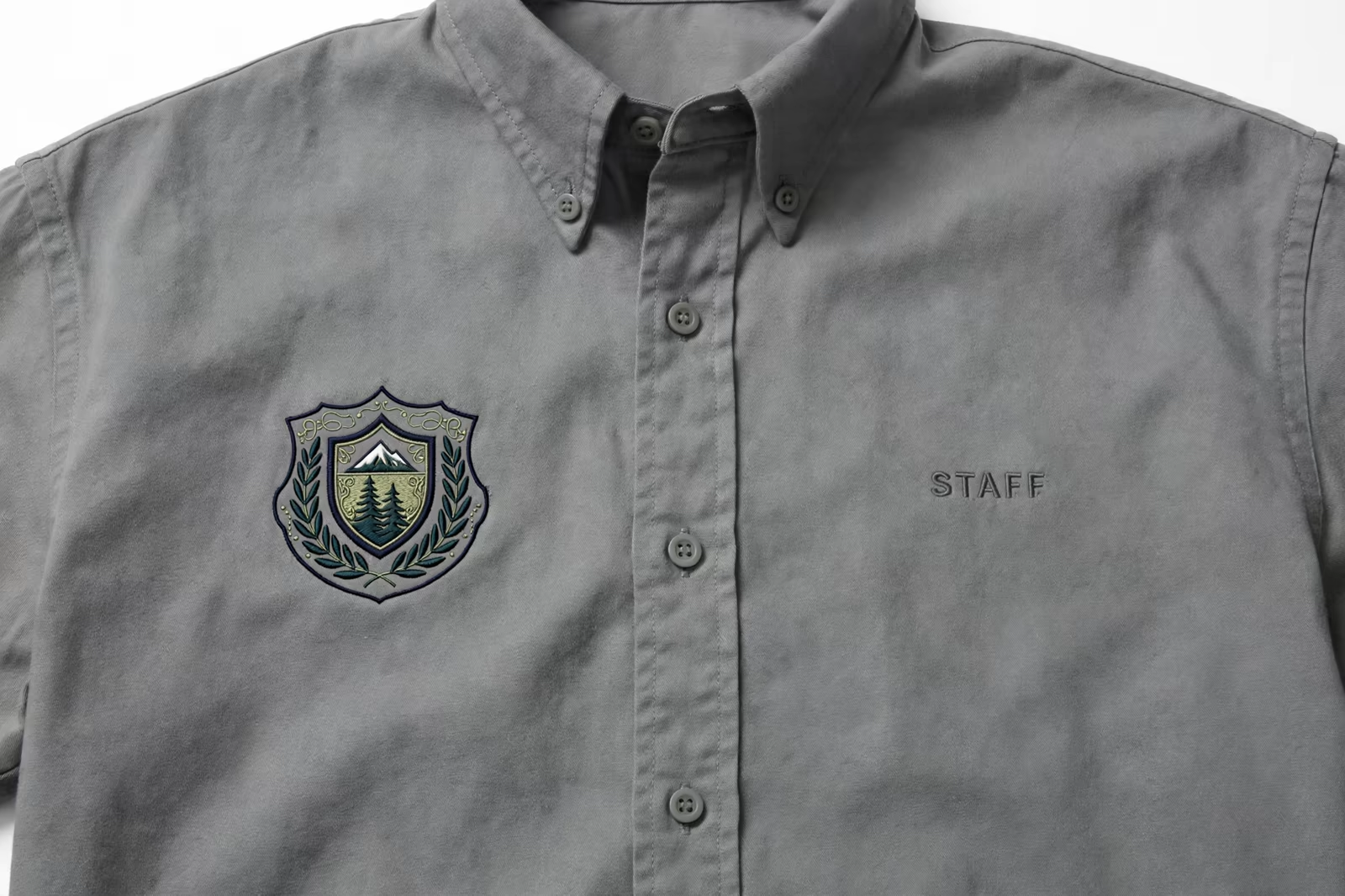
A team shirt with a name on it is a different garment from a team shirt without one. Personalization embroidery, names on chests and backs, numbers on kits, initials on staff uniforms, turns issued clothing into owned clothing: people look after what carries their name, wear it straighter, lose it less. For the buyer it is also the most administratively demanding decoration there is, because every garment in the run is unique and an error has a person’s name on it, literally. Done with systems, it is routine. Done by memory, it is an incident generator.
The names stitched by these methods are embroidered in Bangladesh for staff teams in the USA and Germany, where a named garment is issued, washed and reissued for years.
This guide covers how personalization is run inside our embroidery programs, on garments such as the work shirt and team orders built around the track jacket.
Names on the Chest: The Classic Layout
The standard arrangement pairs the organisation’s mark on the left chest with the person’s name on the right, the two balanced on the same line so the garment reads as designed rather than labelled. Name style is a specification like any other: one font, cut for embroidery, one size, one or two thread colours agreed against the garment, capitals or title case settled once and held for the whole program, including the awkward cases, the double-barrelled, the apostrophed, the very long.
Position uses an anchor rule rather than centring, because names vary in length and a centred long name wanders where a centred short one sits. Fix the starting edge, or the finishing edge, in the placement specification and let every name grow from the same anchor; across a team photograph the line then holds level, and the variation reads as type, not as drift. Sample the longest and shortest names on the list before bulk, because those two approve the territory all the others will occupy.
Numbers: Kits, Sizes and the Big Territory
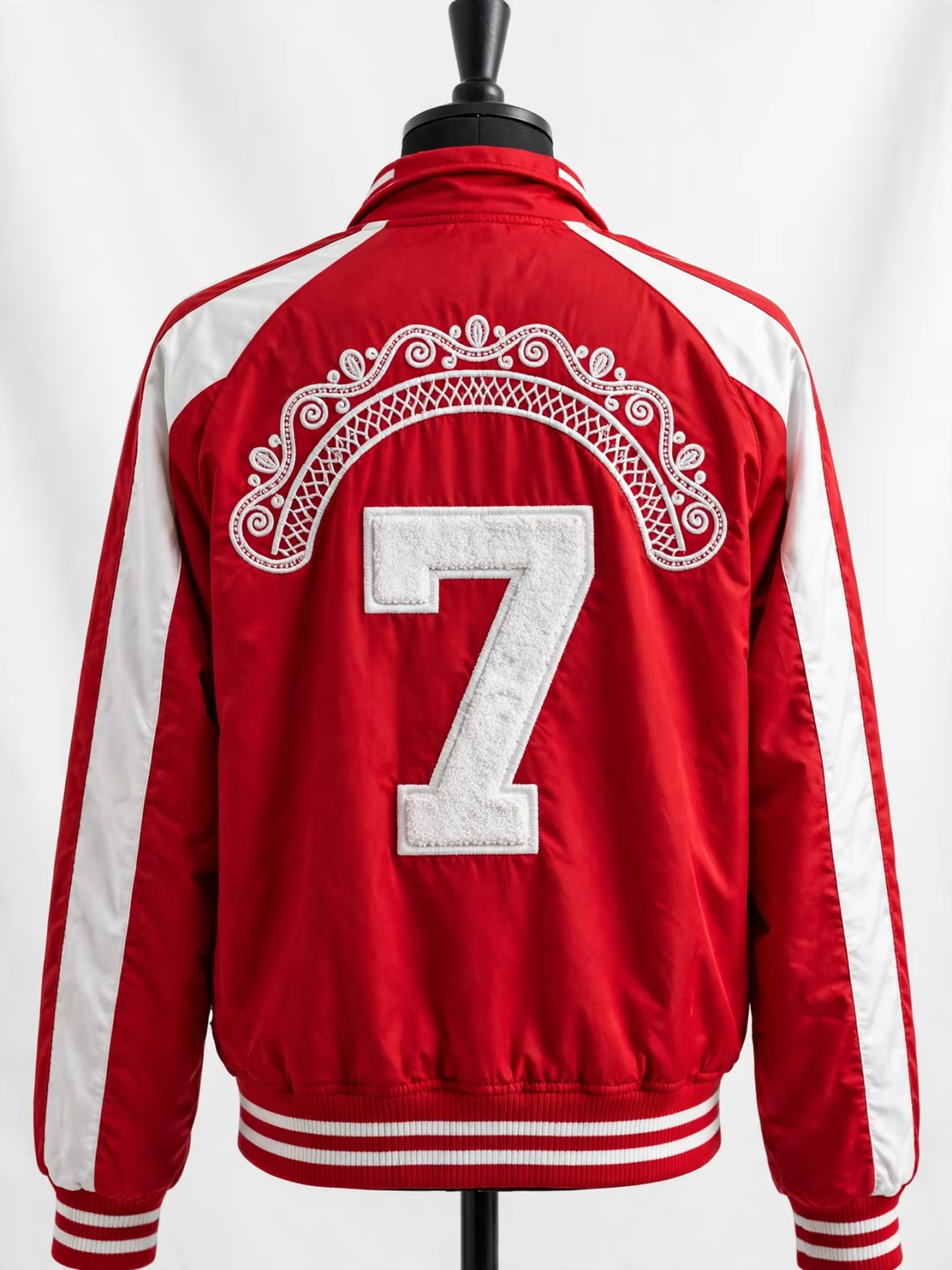
Numbers live larger: backs of kits and team jackets, where they are read across a field or a warehouse floor. Their digitizing is its own discipline, bold collegiate or clean modern cuts, sized by garment and position, with the two-digit problem planned from the start: a number file built for a single digit must have its double-digit partner drawn to match in weight and spacing, or the squad’s 9 and its 11 look like relatives who met late.
Number placement follows the garment’s architecture, centred between the shoulder blades on backs, clear of hoods, zips and seams, and the specification records it per garment family rather than per order. On garments that also carry a sponsor or club mark, the hierarchy is agreed once, name, number, mark in their settled order, so no kit in the fleet improvises its own arrangement mid-season.
The Name List: Where Personalization Is Won or Lost
Every personalization error is born in the list. Names arrive misspelled from HR exports, duplicated across departments, married to the wrong size, and embroidery is pitilessly faithful: it sews exactly what the list says. The program therefore treats the list as a controlled document: one master file, names exactly as they are to appear, each row carrying size, garment and position, frozen at an agreed date, with changes after the freeze handled as exceptions rather than edits.
Proofreading is a shared duty with the evidence on the table: the buyer approves the list, the factory sews the list, and both check it character by character before a needle moves, because “close enough” spellings are how a Chris becomes a Cris at fleet scale. Unusual spellings get flagged and confirmed, not corrected by instinct; the wearer is the only authority on their own name, and the file should show that their version won.
Fonts and Sizes for Names: Legibility at Work
Name fonts obey the same physics as all embroidered text: a minimum letter height below which stitches muddle, a weight bold enough to hold an edge, no fine serifs or hairline scripts at chest size. Within those limits there is real choice, clean block faces for operational fleets, softer scripts for hospitality at larger sizes, and the choice should be made from sew-outs of actual names, not from a font menu, because thread redraws every typeface it touches.
One size serves all names in a position, agreed at sampling; shrinking a long name to fit is the beginner’s error that produces a chest line of uneven voices. The anchor rule absorbs length; size stays constant. Initials and monograms, the compact alternative for programs that want identity without full names, follow their own settled layouts, typically at cuff, chest pocket or cap side, and are sampled with the same seriousness at their smaller scale.
Colour Rules for Names and Numbers
Name colour is usually the logo’s colour or a settled contrast against the garment, and the rule that matters is consistency across garment colours in the fleet: the thread that reads on the navy shirt must have its agreed partner on the white one, decided at sampling in both lights, not improvised per batch. Numbers on kits carry their own tradition, often garment-contrast with an outline, and the outline colour is part of the specification because it is what makes the number read at distance.
Programs serving many sub-brands or departments sometimes colour-code names by unit. It works, and it multiplies the list discipline: the colour becomes another column in the master file, another check at packing, another way for a correct name to arrive on the wrong garment if the systems slacken. Colour coding is a feature to adopt deliberately, with the checks priced in.
Back Names and Lettering Arches
Above a number, a name often rides in an arch, the classic kit arrangement, and the arch is a digitizing decision of its own: letters following a curve must be spaced and rotated individually, with the middle letters standing tallest in reading order and the whole line kept clear of the number below it. Flat or arched, the name and number are drawn as one composition, because the eye reads them as one, and garments where the two were specified separately show the divorce at ten paces.
Staff garments borrow the same logic at smaller scale for back-of-house teams identified from behind: a department or role across the shoulders, readable down a corridor. Role titles change less often than people do, which makes back lettering the durable layer of a staff program, and names, the changeable layer, are kept to the chest where replacements cost less to produce in additions.
Production Flow: One Garment, One Identity
Personalized runs are sewn in list order and kept in list order: each garment’s name file called up individually, sewn, checked against its row and packed against its row, so the carton that reaches the buyer is already sorted the way their distribution list is sorted. The checking is per garment, not per sample of garments, because in personalization every unit is its own design and a statistical check blesses errors it never looked at.
Spares and blanks are part of the flow: new joiners arrive after the freeze in every staff program, so the agreement covers how additions are ordered, in what batches and at what rhythm, with the same list discipline in miniature. Our programs run at our standard minimum of 1,200 pieces per style in up to two colours, with personalization layered on top as its own specified operation, and the addition route agreed at the start rather than negotiated at the first new starter.
Errors, Remakes and the Cost of a Wrong Name
A misspelled name cannot be unpicked into invisibility; dense lettering removed from a garment leaves its ghost in needle holes and disturbed fabric. The honest remedies are a remade garment or, where the design allows, a covered correction, and both are priced in time when a fleet is waiting to be issued. This is why personalization carries the heaviest checking load in the program: the cost asymmetry is extreme, one minute of list proofing against a remade garment and an embarrassed wearer.
Programs should agree the remedy before they need it: whose error triggers whose remake, how additions and corrections are batched, what evidence settles a dispute. The frozen list, the approved sew-outs and the per-garment check together make most disputes impossible in the first place, because each garment can be traced to the row that specified it. Traceability, in personalization, is not bureaucracy; it is the product.
Scripts, Languages and Special Characters
Real name lists are not all plain ASCII. They carry apostrophes, hyphens, accented letters and occasionally whole names in other scripts, and embroidery fonts do not all agree on which of these they can draw. The list check therefore includes a character audit: every special case identified, its rendering approved on a sew-out, and any name the chosen font cannot honour honestly discussed with the buyer before bulk, since a silently simplified accent is a misspelling the factory chose.
Multinational fleets add a style question: one house style imposed on every name, or each name in its own correct form. The respectful answer is the name as its owner writes it, set in the program’s font and size, and modern embroidery fonts cover the Latin family’s accents comfortably. What they cannot do is improvise; the audit exists so that nothing about a person’s name is improvised.
Packing and Distribution: The Last Place Names Go Wrong
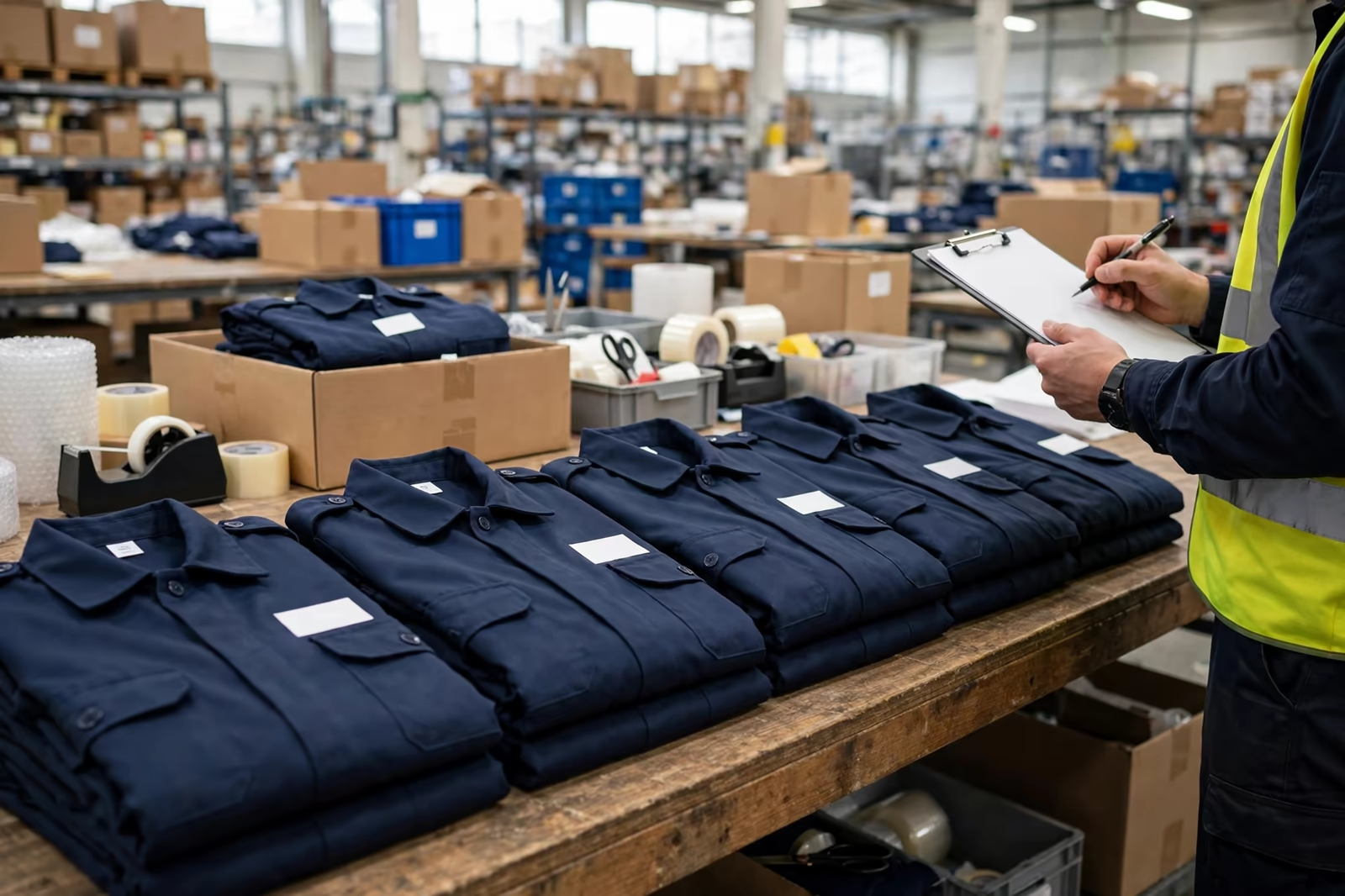
A perfect run can still fail at the carton. Named garments packed out of order reach the buyer’s distribution table as a sorting puzzle, and the first issue of a new uniform, everyone watching, is the worst hour to solve it. Personalized production therefore packs in list order, labels each garment with its name visibly, and lists the carton’s contents in the same sequence as the master file, so receipt is a ticking exercise rather than an excavation.
Buyers can hold this standard in one question: will the cartons arrive in my list’s order, each garment labelled with its wearer’s name. A program that answers yes without blinking has the systems this guide describes. A program that hesitates is telling you the embroidery may be excellent and the logistics are luck, and in personalization the garment that matters is never the average one; it is the specific one, with a specific name, in a specific pair of hands.
Frequently Asked Questions
How are names kept level when they are all different lengths?
By an anchor rule in the placement specification: every name starts, or ends, at the same fixed point and grows from there, at one constant size and font. Centring each name individually makes the line wander; anchoring makes the variation read as type. The longest and shortest names are sampled first to approve the territory.
Who is responsible for name spellings?
Shared, with the evidence on the table: the buyer approves one frozen master list, checked character by character, and the factory sews exactly that list. Unusual spellings are flagged and confirmed with the buyer, never corrected by instinct, because the wearer is the only authority on their own name.
Can new staff be added after the main order?
Yes, through an addition route agreed at the start: small batches of named garments produced in list order under the same specification, fonts, colours and anchors already on record. Programs that settle this early never scramble at a new starter’s first week; programs that do not, renegotiate under time pressure.
Are embroidered numbers better than printed ones for kits?
For jackets and heavier team garments, embroidery’s durability and raised finish usually win; for lightweight match kits, print’s lower weight and cost often do. The honest answer is per garment and per budget, decided with both samples in hand, and many fleets mix: embroidered names, printed large numbers, each where it performs best.