
Almost every first conversation between a brand and a factory reaches the same wall: the minimum order quantity. The founder hears a number far larger than the launch they imagined, the factory hears a customer who may not understand production economics, and both sides can leave the call suspecting the other of bad faith. In truth the MOQ is neither a barrier invented to exclude small brands nor a number the factory plucked from pride. It is the arithmetic of setups, materials and risk, expressed as a quantity. This guide opens that arithmetic up, and then shows how professional brands plan around it without pretending it away.
The minimums explained here are the ones we work to in Bangladesh for brands ordering from Australia, the USA and the UK, and the routes around them are the same ones those brands use every season.
Our own framework is set out on our MOQ and production page, shaped for the labels in our brands programs, and applied when buyers get a quote.
The Setup Costs Hidden Inside Every Order
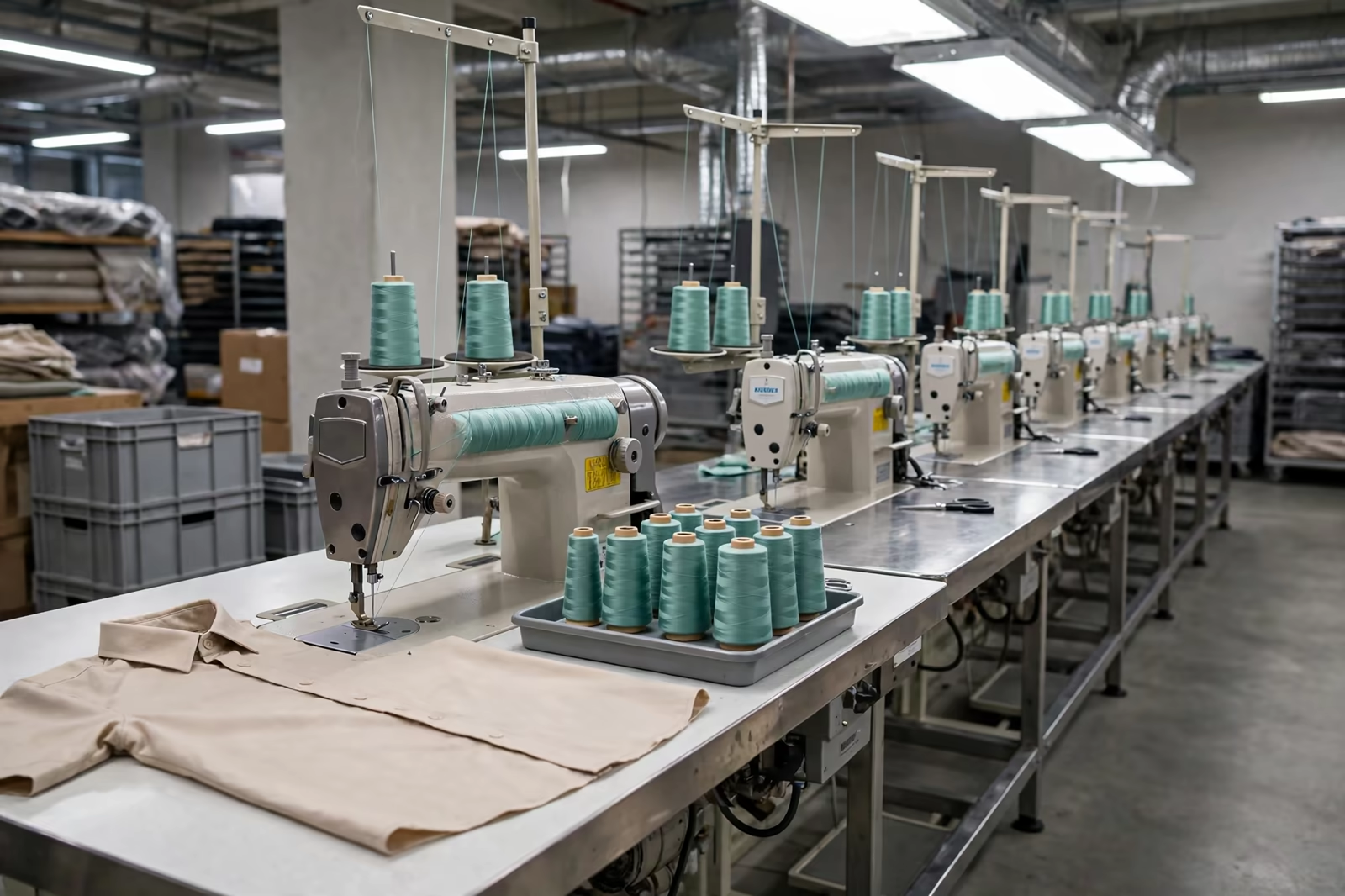
Production begins long before the first garment is sewn, and the beginning costs roughly the same whether the order is small or large: pattern work and grading, marker making, machine setting and thread changes, line balancing, a first-piece approval, quality setup, and the management time of merchandisers, technicians and supervisors. Spread across a long run, those hours cost little per piece. Spread across a short one, they dominate the price, and a factory that ignored them would be quoting fiction.
This is the first half of the MOQ’s logic: below a certain quantity, the true cost per garment rises so steeply that neither side gets a workable price, the brand overpays for its launch and the factory under-recovers its day. The minimum is where the arithmetic becomes honest for both parties, which is why serious factories state it calmly and unserious quotes quietly hide it until the invoice.
Fabric Minimums: The Mill Stands Behind the Factory
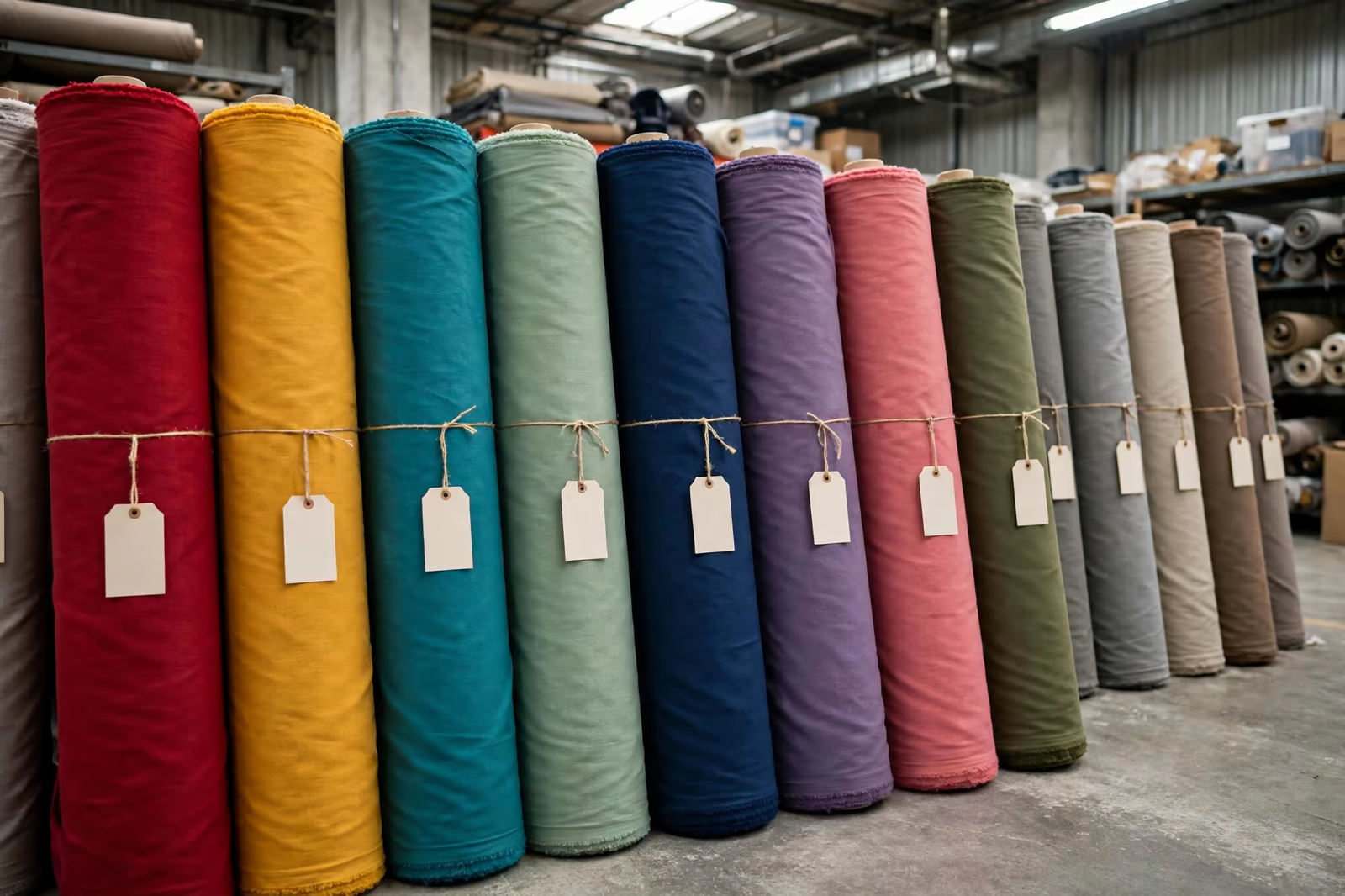
The second half of the logic is upstream. Fabric is not bought by the garment; it is produced or dyed in lots, and mills and dye houses set their own minimums per fabric and per colour. A factory ordering below the dye lot minimum either cannot get the fabric made, pays punitive surcharges, or buys from ready ranges with limited colours and no continuity for reorders. The garment MOQ the brand hears is often simply the mill’s minimum, divided by the fabric one garment consumes, with the factory’s own setup logic applied on top.
Colour multiplies the problem: each colourway is its own fabric lot, its own dyeing, its own thread and trim set. A style in four colours is, materially, four small productions wearing one style number. This is why minimums are quoted per style and per colour, and why reducing launch colours is the single most powerful lever a young brand holds, as a later section explores.
Trims, Printing and the Small-Parts Problem
Everything attached to the garment has its own supply arithmetic. Woven labels, printed tickets, buttons, zips, drawcords, elastic and packaging are manufactured or procured in their own quantities, and branded versions, your label, your button engraving, your printed polybag, carry setup and minimums of their own. A short garment run can be feasible while its bespoke trims are not, and the order waits on the smallest component in its bill of materials.
Embroidery and printing add their own setups: screens made and registered per colour, digitising per design, machine time per changeover. None of these costs vanish at small quantities; they concentrate. When a factory quotes a minimum, part of what it is quoting is the trim and decoration supply chain standing behind it, each link with a smallest sensible run of its own.
Why the Number Differs Between Factories
Brands collecting quotes meet different minimums for the same garment and reasonably ask why. The honest reasons are structural. A factory running long lines for large programs has expensive changeovers and sets its floor accordingly; a smaller, flexible unit changes over cheaply and can live lower. A factory weaving or dyeing in-house faces different material minimums from one buying greige fabric to order. Product type matters too: a basic tee in a running fabric is a different proposition from a lined jacket in a custom-dyed cloth.
What the difference is not, usually, is honesty. The quote to distrust is not the high MOQ but the implausibly low one with no explanation, because the setup arithmetic does not disappear when a salesperson ignores it; it reappears as quality drift, delays, or a mid-production renegotiation, each more expensive than the minimum would have been.
The Real Question: Cost Per Wearable, Sellable Piece
Founders compare MOQs as quantities; professionals compare the cost of the whole launch. A lower minimum at a much higher unit price can cost more, in cash and in margin, than a larger run priced properly, and it can strand the brand with inventory too expensive to promote profitably. The planning question is never how few pieces can be made, but what combination of quantity, price and sell-through the brand’s channels can actually carry.
Our programs run at a standard minimum of 1,200 pieces per style in up to two colours, and that shape is deliberate: a quantity at which fabric lots, setups and trims all price honestly, in the colour discipline a launch can sell through. The number is a planning tool, not a gate, and the rest of this guide is about planning to it well.
Negotiating the Minimum: What Is Actually Flexible
Not every element of a minimum is granite. Fabric from a running quality the factory already produces in volume can carry a new style at friendlier quantities, because the mill lot is already turning. Plain, unbranded trims remove the bespoke trim minimums entirely. A style that shares its block, marker family and line setup with an existing program inherits part of their efficiency. These are the honest flexibilities, and a good merchandising conversation explores them one by one.
What does not flex is the physics: a custom dye lot below the dye house minimum, a dedicated line changeover, a printed design’s screens. A negotiation that respects the difference, asking where the number is structural and where it is habitual, frequently finds real room. A negotiation that simply demands a smaller number usually finds a factory that has quietly decided to recover the difference somewhere the brand cannot see.
Plan Around It One: Fewer Styles, Proper Depth
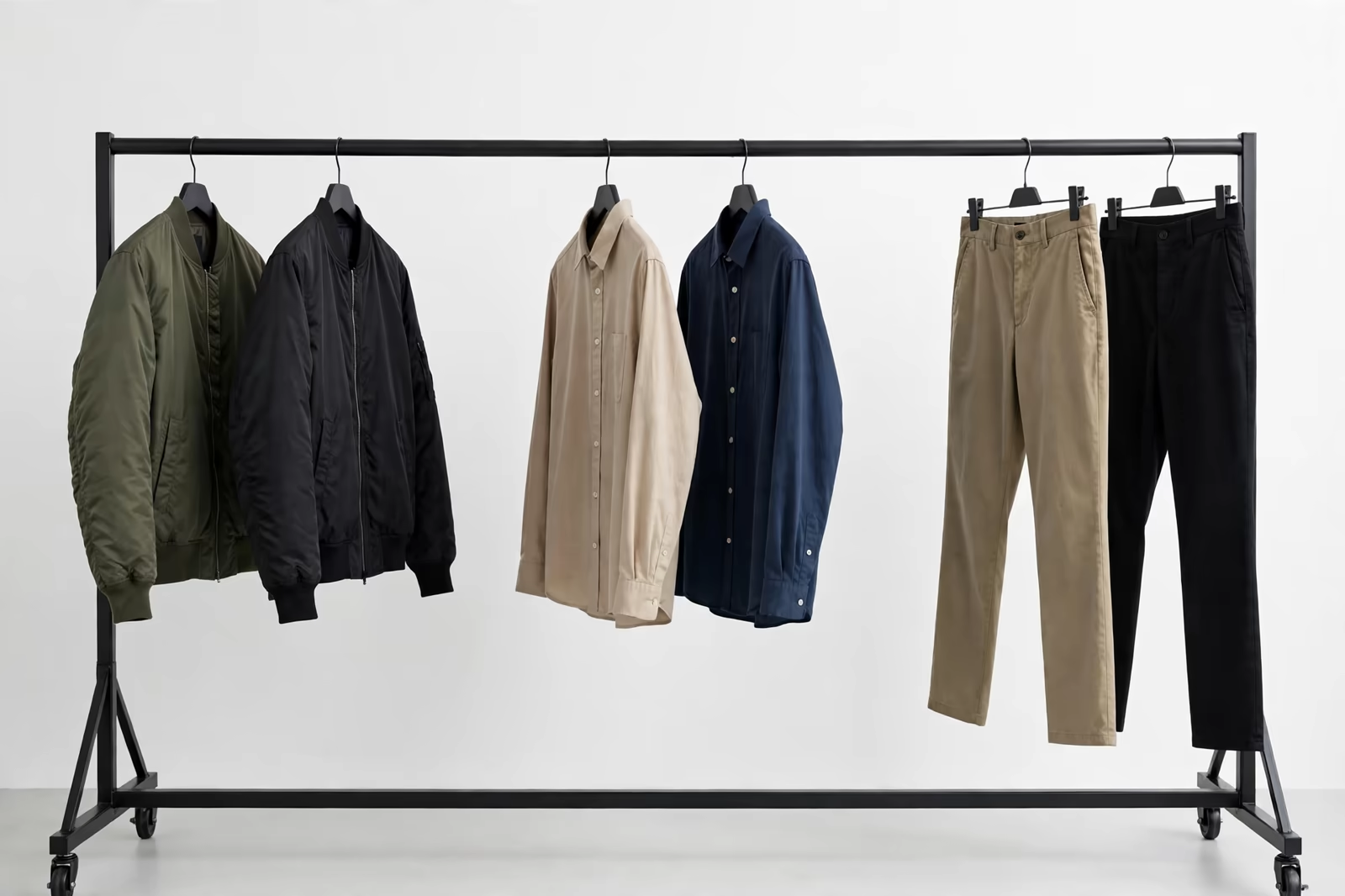
The classic young-brand error is breadth: ten styles at shallow quantities, each below efficient production, each splitting fabric, trims and attention ten ways. The MOQ-era correction is depth over breadth: fewer styles, each produced properly, each with sizes and colours enough to sell, learn and reorder. A capsule of strong styles at real minimums outperforms a crowd of thin ones commercially as well as arithmetically, because depth is what generates the sell-through data the second season is built on.
Depth also buys quality of execution. The factory’s best planning, fabric continuity, line learning and packing discipline all improve when a program is a few styles made well rather than many made thinly, and the brand’s marketing inherits products it can photograph, promote and stand behind without apology.
Plan Around It Two: Colour and Fabric Discipline
Because minimums live per colour and per fabric, discipline there is direct savings. Launching in the standard two colours rather than five keeps each colourway at full production dignity. Sharing one fabric across several styles pools the mill’s minimum across the range instead of fighting it style by style, and choosing fabrics from the factory’s running qualities borrows the continuity of larger programs.
None of this dulls the range when it is done with intent: colour stories are built inside the discipline, graphics and trims carry the variety, and the palette expands in season two, funded by season one’s sell-through and carried by fabric the supply chain already knows.
Plan Around It Three: Phases, Reorders and the Long Game
A minimum is per order, not per relationship, and smart brands sequence around it. The launch order proves the styles; reorders of the winners follow at the same honest quantities, now with the learning of the first run inside them; new styles enter as others retire, keeping the program at efficient scale without ever betting the company on one giant speculative buy. Viewed across a year, the brand’s volume is substantial; viewed per order, each step is survivable.
This phasing is also how trust compounds: the factory plans capacity for a customer whose orders arrive as a rhythm rather than a gamble, fabric continuity is held between phases, and the second order of a style is almost always cleaner and faster than the first, because the whole chain, patterns, markers, line, packing, has already learned the garment once.
MOQ Traps: When a Low Minimum Costs More
The final planning skill is recognising the traps dressed as generosity. A very low minimum paired with ready fabric limits the brand to colours that exist today and may not exist at reorder, breaking continuity exactly when a style succeeds. Trial-order pricing that quietly assumes a large follow-on order the brand has not committed to sets a second-season ambush. And minimums quoted per size, discovered late, can multiply a launch’s true quantity several times over the headline figure.
Each trap is avoided the same way: read what the minimum counts, what fabric it assumes, and what the reorder terms will be, in writing, before the first order. The arithmetic of minimums rewards brands that do their sums early, which is, in the end, all this guide has been asking.
Frequently Asked Questions
Why will one factory not simply accept my smaller order at a higher price?
Sometimes it is the fabric, not the factory: below the mill’s lot minimum the cloth cannot be dyed at any garment price. Sometimes it is the line: a changeover consumes the same hours whatever follows it. And sometimes a factory declines because experience says a squeezed order ends unhappy for both sides. A smaller unit with cheaper changeovers, or a program redesigned to efficient quantities, is usually the real answer.
Is the MOQ per style, per colour or per size?
Professional quotes define it precisely, and ours is per style in up to two colours: sizes inside a colourway share the run, because they share fabric, trims and line setup. What multiplies minimums is new colours and new fabrics, each of which starts its own material lot. Always ask a factory which unit its minimum counts in, before comparing two quotes that may be counting different things.
Can I combine styles to reach a minimum?
Where styles share the same fabric, colour and trims, pooling is often possible, because the material lot and much of the setup are genuinely shared. Where they differ in cloth or colour, combination is arithmetic theatre: the lots remain separate whatever the invoice says. Ask the pooling question fabric by fabric and you will get an honest answer you can plan on.
Does a higher MOQ mean better quality?
Not by itself. Quantity buys efficiency and continuity, which support quality, but quality comes from the factory’s systems at any scale. Judge a partner by its samples, its checking discipline and its references, and treat the MOQ conversation as what it is: a planning discussion about arithmetic, valuable precisely because it shows how honestly the factory thinks.