
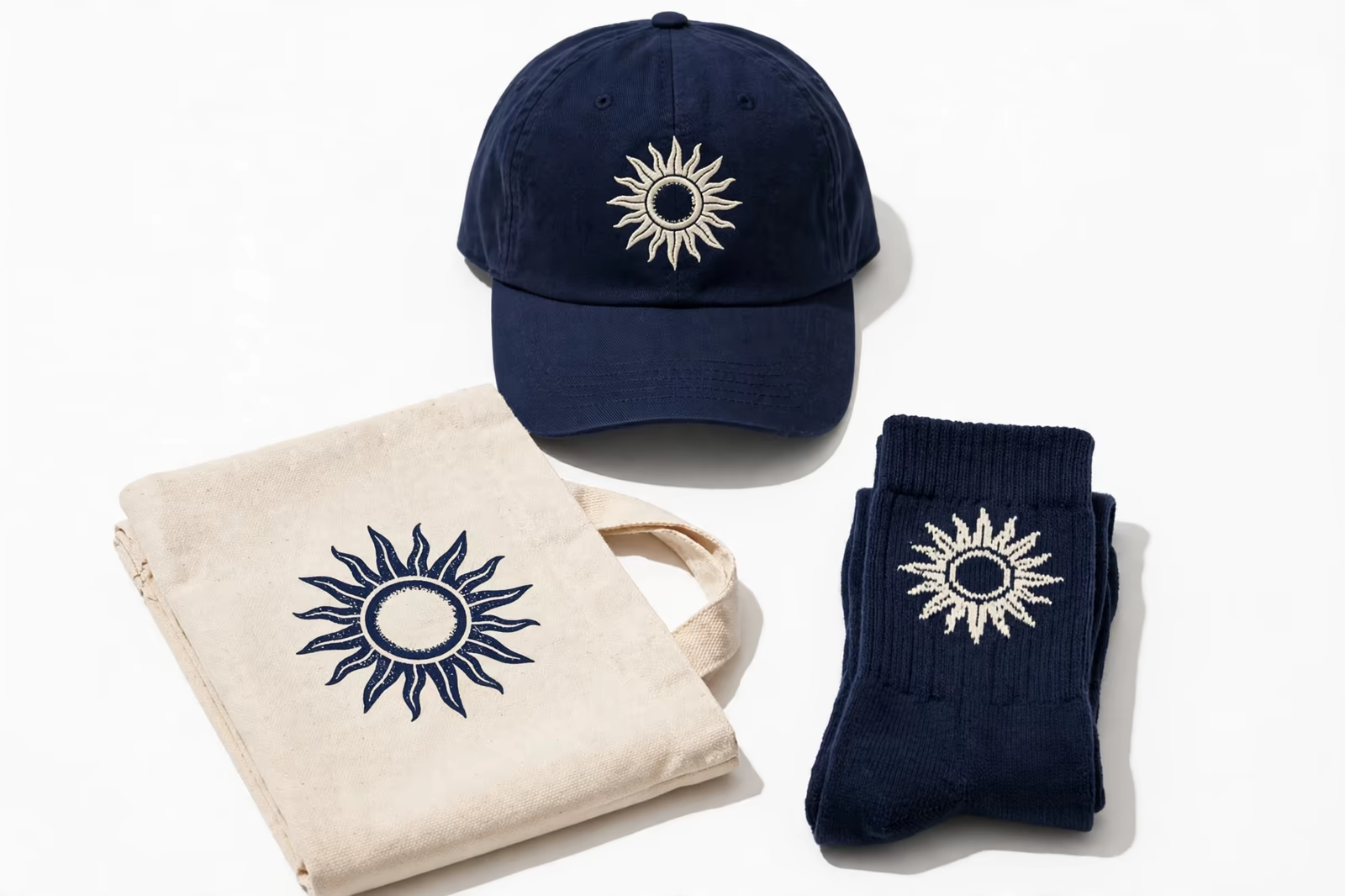
Every merch range has a hero garment, and every smart merch range surrounds it with accessories. Caps, totes and socks are where fans who cannot stretch to the hero jacket still buy into the drop, where gift buyers find the easy yes, and where a label’s average order value quietly doubles. Planning them as one bundle, in one production window, with one design language, is what separates a merch drop that sells through from a pile of unrelated samples that happened to arrive in the same month.
Merch bundles are planned in Bangladesh for buyers in Australia, the UK and France, with caps, totes and socks sampled together so colours and logos match across the drop.
This guide ties together our baseball cap, tote bag and socks lines into one planning method for a single accessories drop.
Why Accessories Carry a Merch Drop
Accessories do four jobs the hero garment cannot. They lower the entry price, so a fan with twenty to spend still leaves with the brand on their head. They travel, a cap and a tote advertise in streets and supermarkets a jacket visits less often. They gift well, sized forgivingly, where garments demand a size decision a gift buyer cannot make. And they bundle, turning a single-item basket into a set with a story.
The commercial logic follows: accessory attach rates decide whether a drop’s economics sing. A range planned as hero-plus-accessories from the first sketch outsells the same hero with accessories added as an afterthought, because the colours, artwork and production windows were designed to meet rather than introduced later and hoped into harmony.
Choosing the Bundle: Hero, Core and Add-On Pieces
A workable bundle has three tiers. The hero accessory, usually the cap, carries the drop’s main artwork and its strongest margin. The core pieces, a tote and a pair of socks in most programs, repeat the design language at friendlier prices. The add-ons, beanies in winter, bucket hats in summer, labels and sticker-level items at the till, complete the set and catch the smallest budgets.
Three to five accessory styles is the honest working range for an independent label. Fewer and the bundle reads thin; more and the production windows, minimums and photography multiply until a small team is managing a catalogue instead of launching a drop. Each piece must earn its place with a distinct job: worn, carried, gifted or collected.
One Design Language Across Caps, Totes and Socks
The bundle reads as one product when its pieces share a design language, and sharing is a discipline, not an accident. One hero artwork, adapted honestly to each product’s native decoration: embroidered on the cap, printed large on the tote, knitted into the sock as jacquard. The adaptations differ, because each technique has its own rules, but the silhouette, colours and attitude stay recognisably the same design.
A shared colour palette does the quieter unifying: the same two or three colourways carried across every piece, so a customer can build a matching set without thinking. Secondary marks, a small woven label design, a repeat pattern, a slogan, give the smaller pieces their own moments while staying inside the family. The test is a flat-lay photograph: if the pieces look like cousins, the language is working; if they look like strangers, it is not.
Production Windows: Planning One Drop, Four Timelines
Each accessory runs on its own clock, and bundle planning is mostly calendar honesty. Caps move through embroidery sampling; socks through jacquard knitting trials; totes are comparatively quick once print screens are made; beanies follow knitting capacity and season. A drop date set by the fastest product strands the slowest, so the launch is planned backwards from the slowest line, with sampling for every piece approved inside the same fortnight wherever possible.
One factory relationship across the bundle, where the program allows it, simplifies the calendar painfully well: one sampling round to attend, one colour approval covering every piece, one shipment consolidating what would otherwise arrive as four partial deliveries in four different weeks. On our programs each accessory style follows the standard minimum of 1,200 pieces in up to two colourways, and a bundle of three styles is planned as three such styles sharing one artwork and one window.
Sampling discipline is what makes the calendar survivable. Each piece returns a sample that must be judged inside the bundle, not on its own merits alone: the cap’s embroidery thread beside the tote’s print ink beside the sock’s yarn, under the same light, in the same sitting. Colour that matches in three separate approval meetings has a way of divorcing by the time the production pieces finally meet.
Pricing the Bundle: Singles, Sets and the Gift Tier
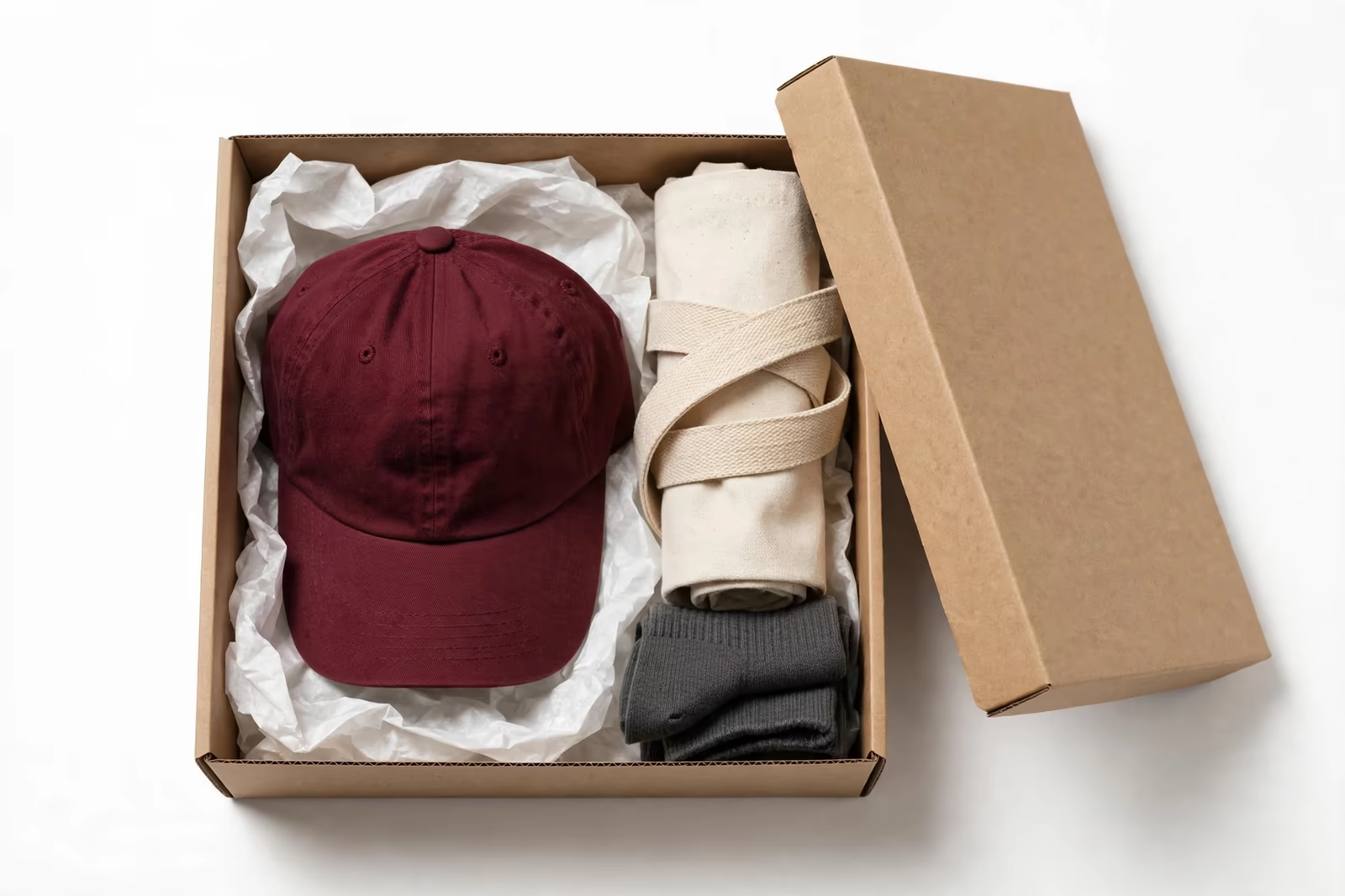
Bundle pricing works in three layers that should be designed together. Singles priced honestly on their own merits, because most customers still buy one piece. A set price, cap plus tote plus socks, discounted just enough to feel like a reward rather than a clearance, commonly the psychological work of the drop. And a gift tier, the set in a box or a tote-as-packaging presentation, priced for the buyer who is purchasing generosity rather than objects.
Margins are planned at bundle level, not piece by piece in isolation: the hero cap may carry the margin that lets the socks price keenly, and the tote, which costs the least to make impressive, often does the bundle’s visual heavy lifting in photography. Programs that price each piece in a separate spreadsheet meeting discover their set discount by accident, usually in the wrong direction.
Colourways and Sizes: Keeping the Range Manageable
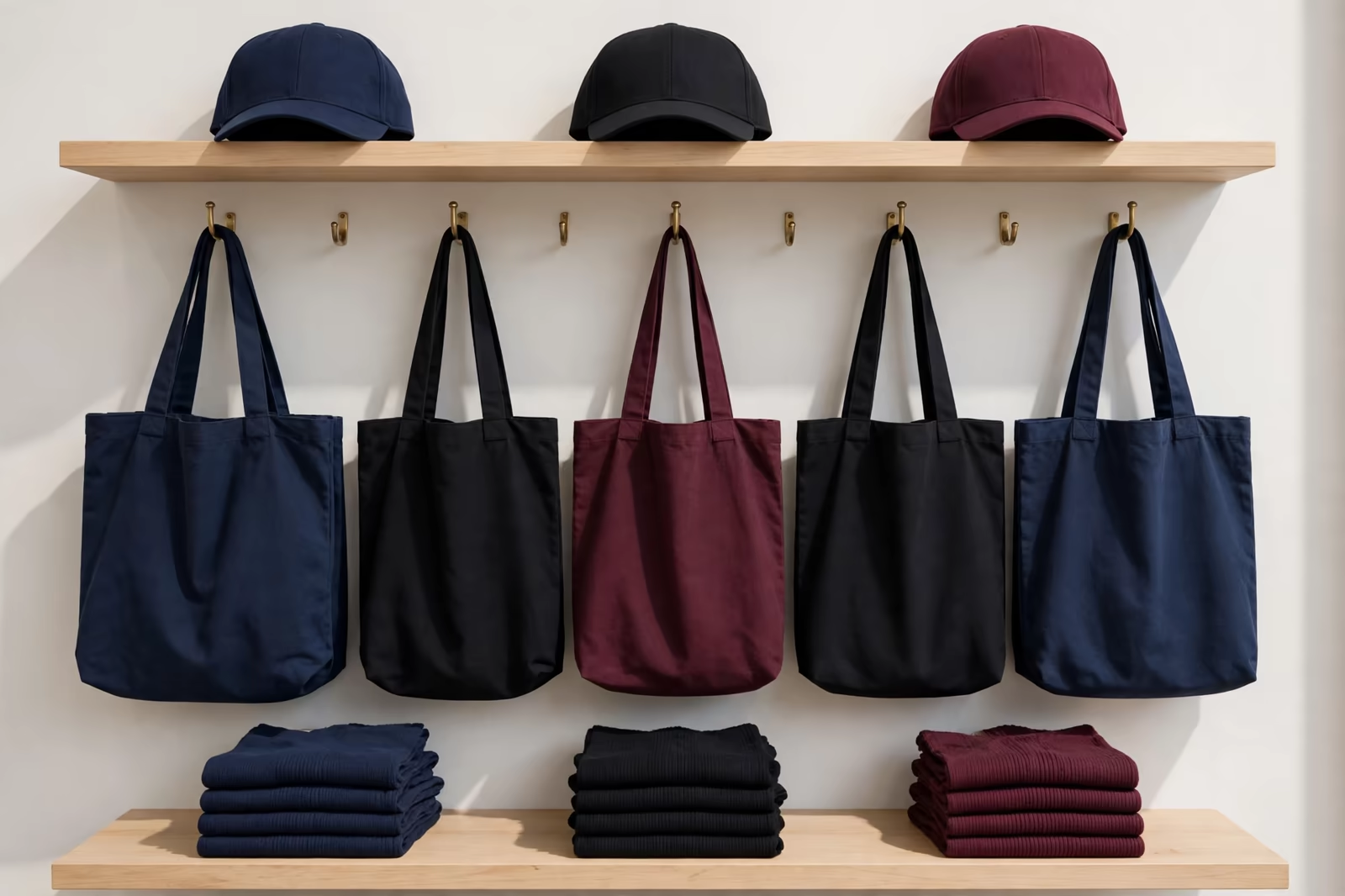
Every colourway multiplies everything: sampling, minimums per style, photography, stock keeping and the chance of a slow colour stranding capital. Two colourways per accessory style is the disciplined standard for a first bundle, a core dark and a statement colour, with the palette shared so pieces cross-match. A third colourway is earned by a proven seller, not granted to a hope.
Sizing is mercifully light in accessories: caps and beanies one size with honest fit notes, socks in two or three ranges, totes one format per design. This is precisely why accessories anchor drops for small teams: the entire bundle may carry fewer size variants than a single garment style, and the stock risk stays readable at a glance.
Quality consistency deserves the same single sitting. A bundle asks the customer to judge the label by its weakest piece, so the tote’s stitching, the sock’s heel and the cap’s closure are set to one standard before bulk, the standard of the hero, because that is the comparison the customer will make on the day the parcel opens.
Photography and Launch: Selling the Set, Not the Pieces
Bundle photography sells relationships: the flat lay of the full set, the worn shot where cap and tote appear together on one person, the detail shots that prove the embroidery and the jacquard are the same design speaking two techniques. A drop photographed piece by piece on white, however competently, asks the customer to assemble the bundle in their imagination, and most will not do the work.
Launch sequencing follows the photography: tease the hero, reveal the set, then let each piece have its own moment across the drop window, with the set price present in every post so the bundle is always the easiest purchase to understand. Stock is counted at bundle level too, because a set cannot sell when its socks have sold out, and the dashboard that matters shows complete sets remaining, not just units.
Restocks follow the bundle logic too. Accessories sell through at different speeds, the cap usually first, and a restock planned per piece keeps the set alive without re-photographing the whole drop. Programs that diarize a mid-window stock check, while sampling goodwill is still warm, rarely meet the saddest sentence in merch, which is a best-selling set that cannot be bought because one small piece ran out quietly.
Common Bundle Planning Mistakes
The mistakes repeat across labels with depressing loyalty. Adding accessories after the hero is designed, so colours and artwork arrive as compromises. Ordering garment quantities of accessories, forgetting that attach-rate products sell in different ratios than heroes. Letting each piece be sampled by a different supplier on a different calendar, then discovering the drop has four birthdays.
The quietest mistake is neglecting the smallest pieces: labels, hang tags and packaging specced in a rush at the end, so a carefully built bundle arrives dressed like three unrelated products. The trims are part of the design language, approved with the same care as the cap’s embroidery, because on the rail and in the unboxing they are the bundle’s accent, and customers hear accents clearly.
There is a wholesale echo of the same idea: retailers and distributors increasingly ask for the set rather than the piece, because a coordinated accessory wall sells itself in a way loose items never do, and a label that can offer the bundle as a ready retail package finds doors opening that a single product, however strong, politely knocks on for seasons.
Specifying a Merch Accessories Bundle for Your Drop
Specify the bundle as one document: the pieces and their tiers, the shared artwork and its adaptation per technique, the palette and its two colourways, the per-style quantities at the standard minimum of 1,200 pieces in up to two colours, and the launch date counted backwards from the slowest product’s sampling. Approve every piece’s sample inside one window and photograph the approved set together before bulk begins.
The labels whose drops get talked about are rarely the ones with the most products. They are the ones whose cap, tote and socks arrive looking like they were always meant to meet, because, on paper, months earlier, they were.
Frequently Asked Questions
How many products should a merch accessories bundle have?
Three to five accessory styles is the workable range for most labels: typically a hero cap, a tote and socks as the core, with a seasonal piece such as a beanie or bucket hat completing the set. Fewer reads thin, more multiplies sampling, minimums and photography until the drop becomes a catalogue. Every piece should have a distinct job in the bundle.
Should accessories launch at the same time as the hero garment?
Yes, planned as one drop with one window. The accessories raise the hero’s conversion by catching buyers at lower prices and giving the launch a set to photograph and gift. The calendar is set backwards from the slowest product’s sampling, so approving every piece inside the same window matters more than any single product’s speed.
How do minimum orders work across a bundle?
Each style carries its own minimum, on our programs 1,200 pieces per style in up to two colourways, so a three-style bundle is three style minimums sharing one artwork and one production window. Colourways inside a style can usually split the quantity, which is how a full-looking range stays inside a sane total commitment.
What sells better, single accessories or sets?
Singles sell more units; sets sell more value. Most customers buy one piece, so singles must stand on their own merits and pricing. The set, priced with a modest bundle saving and photographed as a set, lifts average order value and dominates gifting occasions. A healthy drop plans both layers deliberately rather than hoping one becomes the other.