
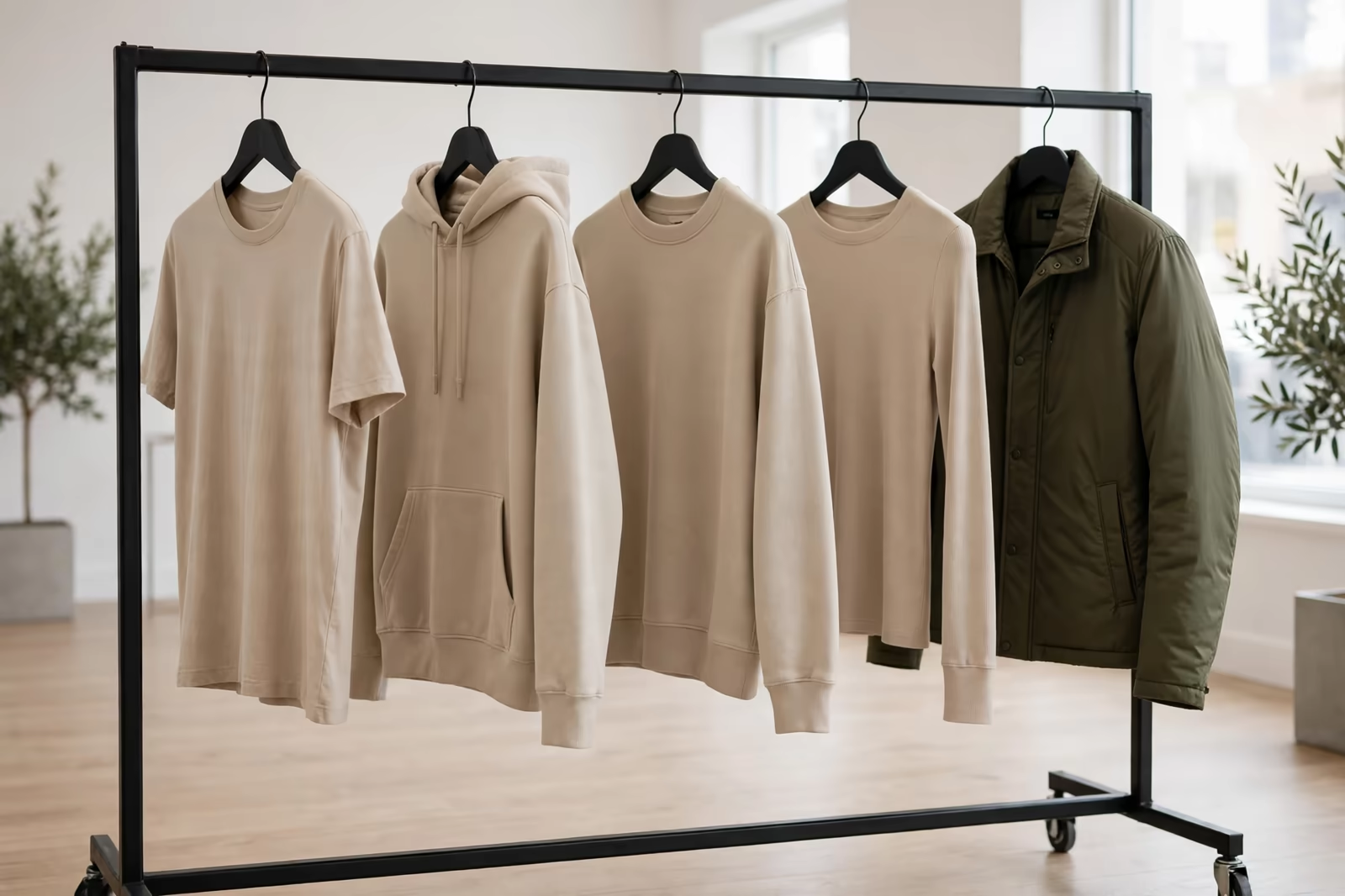
A first range of five styles is the most consequential edit in a young brand’s life. Too few and the shop looks accidental; too many and the budget shatters into minimums. Five is the number where discipline becomes visible: enough to look like a brand, few enough that every style can be sampled properly, funded properly and understood completely. This guide is about choosing which five, and the logic is portfolio logic, not taste: roles, risks and the way the five work as a set rather than as five separate hopes.
The capsule ranges planned on these pages are made in Bangladesh for labels launching in Germany and the UK, where five strong styles have to carry a whole first season.
The strategy runs through our brands programs, and its anchors are the garments most first ranges are built on, the classic crew neck t-shirt and the pullover hoodie.
Why Five Works: The Minimum Credible Range
A shop with two products reads as a project; a shop with fifteen reads as a warehouse that believes in nothing. Five styles cross the threshold of intention. A visitor can see a point of view, an outfit can be assembled, and the brand can be described in a sentence by someone who saw it once. At the same time, five production minimums, five development bills and five size runs are a sum a first budget can actually carry without borrowing against fantasies.
Five is also the largest number a founder can still know intimately: every fit decision, every fabric behaviour, every customer’s complaint about each style held in one head. Knowledge is the young brand’s real capital, and it dilutes by the style. Ranges should grow only when the knowledge of the existing five is complete enough to teach the sixth what it must be.
Style One: The Anchor, Your Volume Product
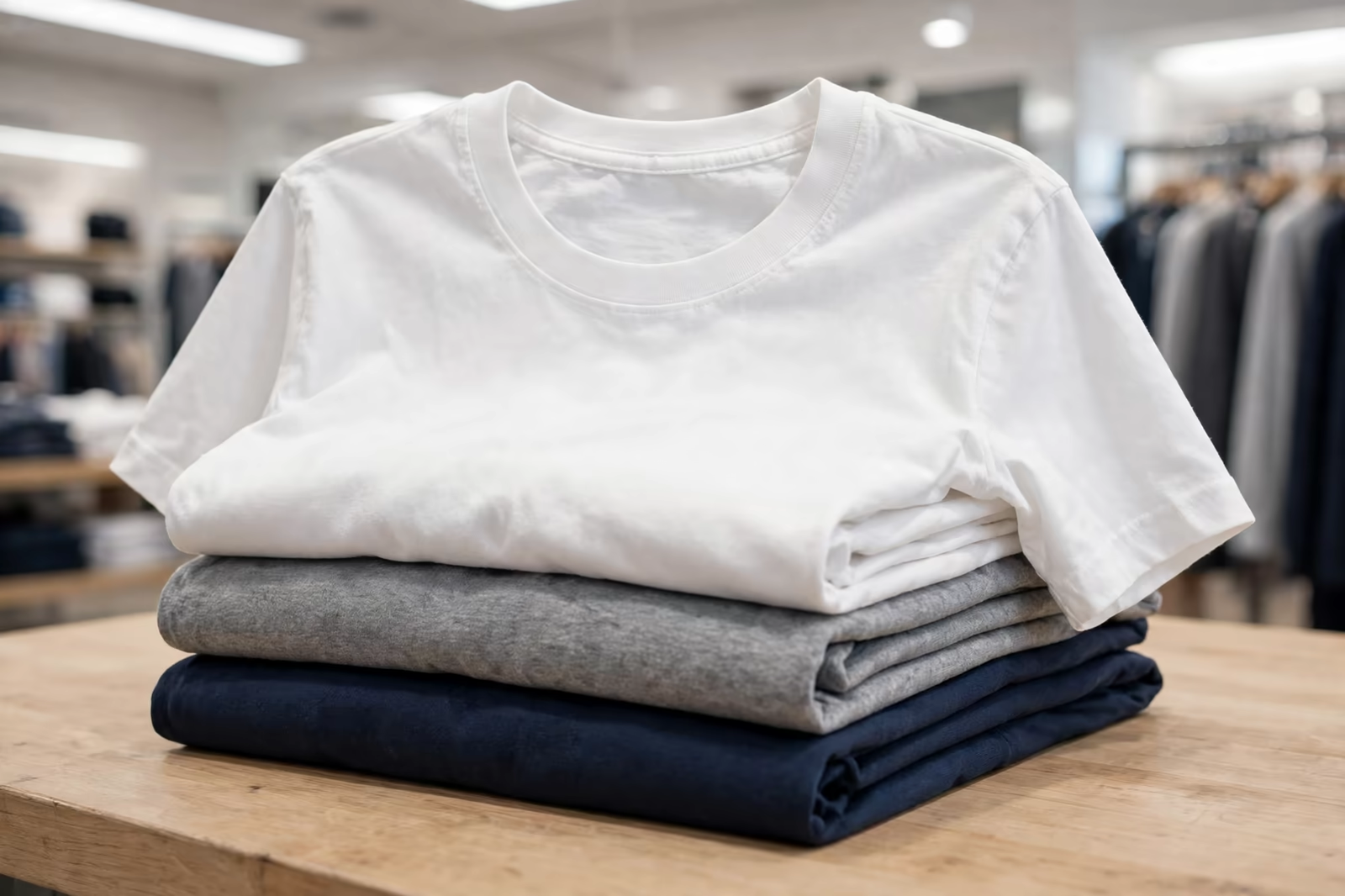
Every capsule needs an anchor: the product the customer already buys, in the category where the brand will be judged first and bought most. For most starter brands this is a t-shirt or its local equivalent, the garment with the widest demand, the most forgiving sizing and the clearest price comparison in the customer’s mind. The anchor carries volume, absorbs the brand’s best fabric decision, and sets the quality reputation everything else borrows.
Choose the anchor by evidence, not affection: what your specific customer replaces most often, wears most days, and can judge instantly in the hand. Its improvement over the market’s standard version should be the one sentence your brand exists to say, heavier cloth, a cleaner fit, a colour that stays true, proven in a single touch.
Style Two: The Second Staple, Worn With the First
The second style should pair with the anchor in the customer’s actual wardrobe: the layer over it, the bottom under it, the piece bought in the same basket. A hoodie over the tee, a sweatshirt beside it, the staple that doubles the outfit without changing the customer. Pairing matters commercially as much as aesthetically, because two styles that sell together raise the value of every order and give photography a story instead of a catalogue.
Technically, the second staple should share the anchor’s world where possible, similar fabrics, compatible colours, overlapping size logic, so development knowledge transfers and the two garments feel like relatives. A capsule is a family, and the first two styles are its parents; everything after inherits from them.
Style Three: The Signature, the One They Remember
Somewhere in the five sits the signature: the style carrying the brand’s distinctive idea, a graphic with a point of view, an unusual colour story, a construction detail nobody else in the price band bothers with. The signature is what gets photographed, shared and described; it is rarely the volume leader and should never be asked to be. Its job is memory.
Signatures carry risk by design, so place the risk deliberately: one style, bounded quantity expectations, and a design strong enough that even its failure teaches the brand something precise about its customer. A capsule with no signature is efficient and forgettable; a capsule of five signatures is a lottery. One is the dosage.
Style Four: The Seasonal Bridge
The fourth style answers the calendar. A launch lands in a season, and the bridge style is the one that makes the range correct for the weather outside the customer’s window while remaining sellable when the season turns: a long sleeve where the anchor is short, a heavier weight where the range is light, the piece that extends the selling window by months rather than weeks.
Bridges are chosen late in the planning and changed most easily between seasons, which makes them the capsule’s flexible joint. Keep its fabric and colours inside the family’s system and the bridge renews the whole range’s relevance at one style’s cost, instead of forcing a relaunch when the weather moves.
Style Five: The Margin Piece
The fifth style is chosen by the spreadsheet: the product whose construction, fabric and price position carry the range’s healthiest margin, funding the discounts, the reshoots and the experiments the other four will demand. Often it is the premium version of a staple, a heavier fabric, a more finished construction, sold at the price the anchor’s reputation makes believable.
Margin pieces fail when they are merely expensive. The customer must feel the step up in the hand within seconds, weight, finish, detail, or the price reads as arrogance. Done honestly, the fifth style quietly subsidises the brand’s learning for seasons, and its sales split against the anchor tells the founder exactly where their customer’s ceiling sits.
Colour Discipline Across the Five
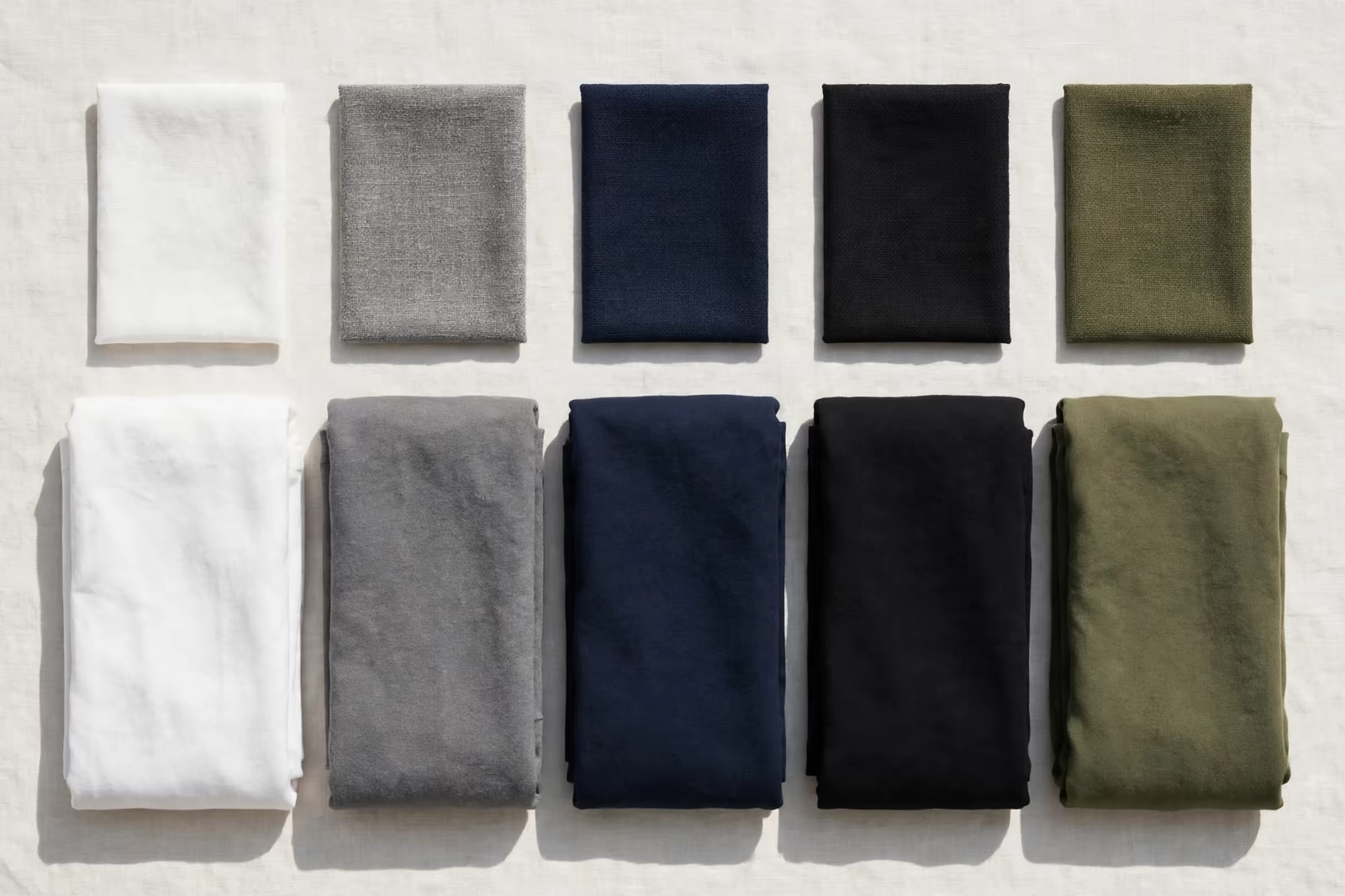
A capsule lives or dies by its colour system. The working pattern: a tight core of neutrals shared across all five styles, so every piece outfits with every other, and one or two accent colours carried by the signature and the bridge. Shared colours multiply outfits without multiplying stock, and they let fabrics and dye lots be planned as a family rather than as five separate gambles.
There is also a production truth inside the colour discipline: shared colours across styles let a manufacturer plan dyeing and fabric as one coherent program, which shows up as consistency, the black of the tee matching the black of the hoodie season after season. Customers notice matching more than they notice novelty, because a wardrobe that agrees with itself is the visible form of a brand knowing what it is.
Resist the rainbow at launch, however the swatch book tempts. Every colour is a size run, a minimum consideration and a markdown risk wearing a pretty name. Colours are added the way styles are: when the existing ones are understood, sold and asked for by name.
What to Leave Out, and Why It Matters
The capsule is defined as much by its exclusions. Leave out the style that needs a second factory’s skill, however beautiful; the one that only works in a fabric your program cannot hold consistently; the one whose minimum the budget can meet only by starving sampling on the others. Each exclusion protects the five that remain, and writing the exclusions down, with their reasons, is how next season’s range plans itself.
Founders grieve exclusions as lost sales, but an unlaunched style costs nothing, while a launched weak style costs its minimum, its development and its share of the founder’s attention for a year. The discipline of the capsule is believing that focus is a feature the customer can see.
Sequencing: Launch Order Inside the Range
Even five styles need not be born on the same morning. A common sequence proves the anchor first, samples running ahead, with the second staple a step behind, so the brand’s first customer verdicts arrive while later styles can still absorb them. The signature follows once the family’s fit and fabric language is settled, the bridge times its arrival to its season, and the margin piece launches when the anchor’s reputation can carry its price.
Staggering also smooths the money: development bills and production deposits land in a rhythm the bank account can survive, instead of one founding avalanche. Our programs run at a standard minimum of 1,200 pieces per style in up to two colours, so five styles are five real commitments; sequencing is how a founder makes them one at a time while the shop still opens as a range.
Depth Over Breadth: Dividing the Money
Inside the five, the budget is not divided equally, and pretending otherwise is the classic capsule error. The anchor earns the deepest size run and the fullest quantity, because its demand is the most predictable; the second staple follows close behind. The signature is bought deliberately shallower, its scarcity part of its story, and the bridge is sized to its season, no deeper than the weather justifies. The margin piece is bought for value per piece rather than volume, its smaller run protected by its price.
Depth decisions are where the capsule becomes a financial instrument instead of a mood board. A size run spread evenly across five styles guarantees the twin failures every founder recognises by autumn: sold out of the sizes the anchor’s customers wanted, and sitting on the sizes the signature’s admirers never needed. Weight the money where the evidence is, and the range’s first season produces information clean enough to plan the second.
Frequently Asked Questions
Must a first range be exactly five styles?
No, five is a working shape, not a law. Three strong styles beat five diluted ones, and seven can work where the budget and the founder’s knowledge genuinely carry them. The principle underneath the number is what matters: few enough that every style is sampled properly, funded properly and known completely, many enough that the shop reads as a brand with a point of view.
Should all five styles share one fabric?
They should share a fabric family where the garments allow it: common fibres, compatible weights, colours dyed inside one system. Sharing multiplies outfits, simplifies development and concentrates buying knowledge. The signature may break the pattern deliberately, that is its job, but a range where every style is a stranger to the others costs five separate educations and reads as five accidents.
What if one of the five fails?
Then the capsule has done its diagnostic work. A failure among five understood styles teaches precisely, because the other four hold the variables steady: the customer, the price architecture, the fabric family. Kill the failure cleanly, keep its lessons in the range file, and let its replacement earn the slot. The failure to fear is not a weak style; it is a range so wide that nobody can tell why anything sold.
When should the range grow beyond five?
When the five are known: their fits proven across reorders, their customers described from data rather than hope, and the selling system moving them without heroic effort. Growth funded by a proven five is expansion; growth added to an unproven ten is dilution. Most brands find the sixth style obvious once the first five have taught them who their customer actually is.