
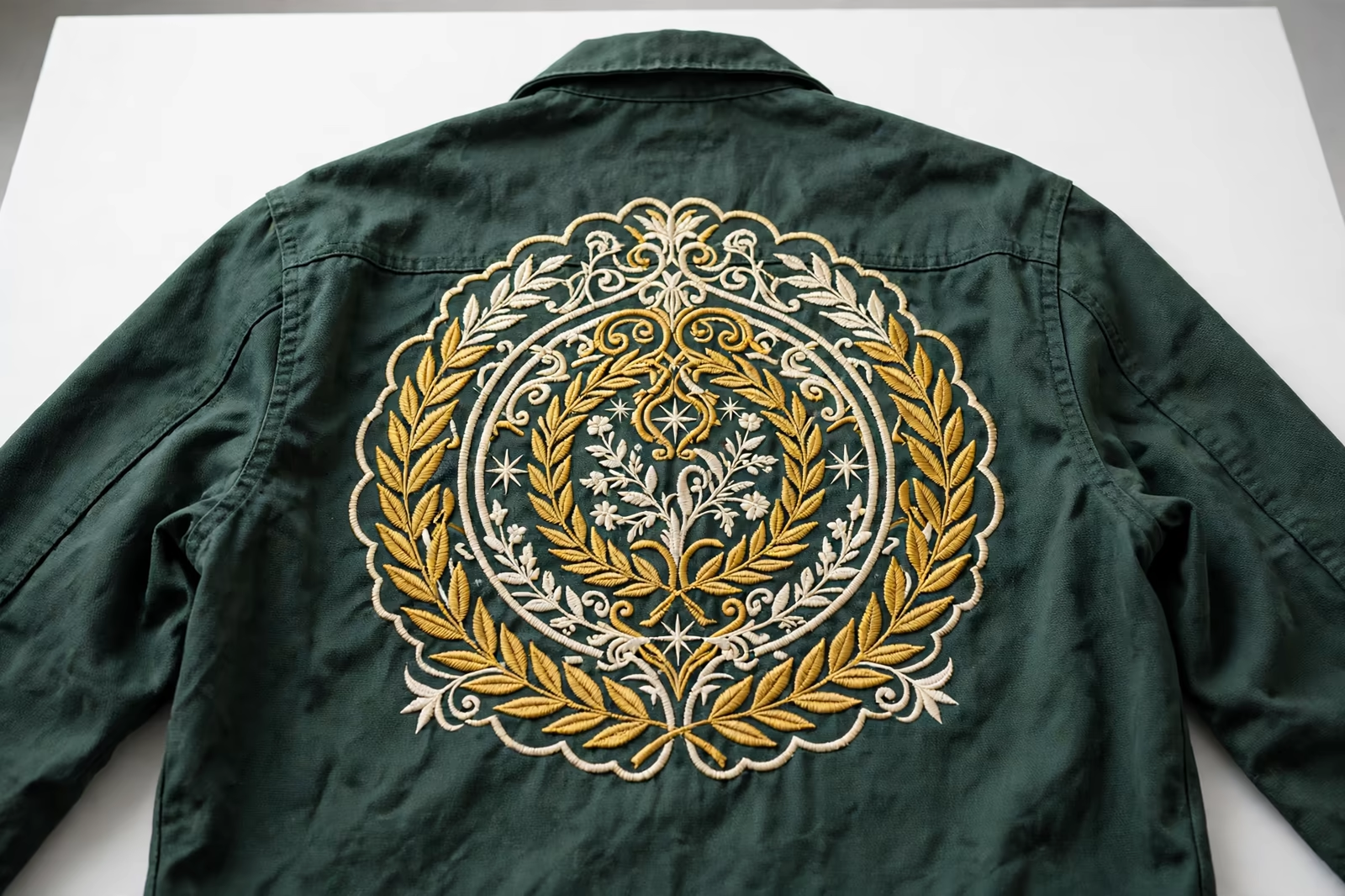
Embroidery is the one decoration priced by arithmetic you can hold in your hand: stitches. Every logo a machine sews contains a countable number of them, and that count, more than any other single figure, decides what the embroidery costs. Buyers who learn to see a design the way a stitch counter does stop being puzzled by quotes, start designing logos that sew beautifully at sensible cost, and can tell in one question whether a factory is pricing the work or guessing at it.
Embroidery pricing for brands in Canada, Australia and the USA is quoted in Bangladesh from the digitised stitch count, so the cost per logo is fixed before sampling starts.
This guide explains stitch count pricing inside our embroidery programs, how it interacts with your payment terms and sampling, and what to send through get a quote to receive a price built from your actual design.
What a Stitch Count Is and How It Is Counted
A stitch is one needle penetration. A typical left-chest logo holds several thousand of them; a full back design can hold tens of thousands. The count is not estimated from the artwork’s appearance but read from the digitized file itself, the stitch map created when the design is digitized, which lists every penetration the machine will make. Until a design is digitized, any stitch count is an informed estimate; after it, the count is a fact.
This is why accurate embroidery pricing follows digitizing rather than preceding it, and why quotes given from a photograph of a logo carry an honesty margin. A factory can estimate closely from experience, size and coverage, but the number that runs the machines, and therefore the number that sets the true cost, exists only once the design has been translated into stitches by someone who knows how the fabric will fight back.
Size: The Multiplier Hiding in Plain Sight
Stitch count grows with area, and area grows faster than buyers expect: double a logo’s width and height and the fill inside it holds roughly four times the stitches. This arithmetic explains the classic quote shock, where a chest logo prices kindly and the same artwork across the back of a jacket prices like a different product. It is not a different rate being applied. It is the same rate meeting four times the work.
The lesson is to size embroidery deliberately. A back design drawn with open space, outlines and negative gaps sews at a fraction of the count of a solid filled panel of the same dimensions, and often looks better for it. When a brief asks for a large logo, the design conversation and the price conversation are the same conversation: how much of that area is thread, and how much can be the garment showing through as part of the design.
Coverage and Density: Filled Shapes Versus Open Ones
Two designs of identical size can differ threefold in stitches, because coverage, not outline, sets the count. A solid filled shape is a carpet of penetrations; an outline of the same shape is a path. Dense fills also need underlay stitches beneath them, a foundation layer the eye never sees that can add a fifth or more to the count of a heavy design. When a quote surprises, the first diagnostic is to look at how much of the design is filled ground rather than line.
Density itself is a quality dial with a price attached. Fills can be sewn lighter, with wider spacing, at lower count and lower cost, and on some fabrics and designs the trade is invisible; on others it reads as thin, gappy work within a season of washing. The professional conversation names the standard being quoted, standard density for a logo expected to hold its face for years, so the buyer compares qualities, not just numbers.
Detail, Lettering and the Small-Element Tax
Fine detail costs stitches out of proportion to its size. Small letters need satin columns with short, careful stitches; tiny shapes need outlines and trims; every separate element adds thread changes, jumps and trims that the machine performs one by one. A logo with many small components can out-count a larger, simpler one, because the machine spends its time starting, stopping and travelling, not only sewing.
This is the economics behind the standard advice to simplify logos for embroidery. Removing a hairline, merging two near-touching elements, or setting small text in a single line instead of two does not merely make the design sew better; it measurably reduces the work the price is built from. The digitizer’s simplification suggestions are pricing information in disguise, and programs that accept them buy the same visual identity for fewer stitches.
Digitizing: The Fixed Cost Before the First Stitch
Digitizing is charged once, as setup, and it behaves like all setup costs: heavy on a short run, negligible on a long one. The work is the translation of artwork into the stitch map, with density, underlay, pull compensation and sewing order decided by a specialist. Because the resulting count comes from this file, the digitizing fee and the stitch price are two halves of one honest quote, and a factory offering free digitizing is recovering it somewhere, usually inside a stitch rate the buyer never sees itemised.
Repeats change the picture completely: the file exists, the count is known, and a repeat order pays only for sewing. Buyers building programs season after season should hold the digitized file as their property on record, because it converts every future order into a simple multiplication and every future quote comparison into arithmetic instead of opinion.
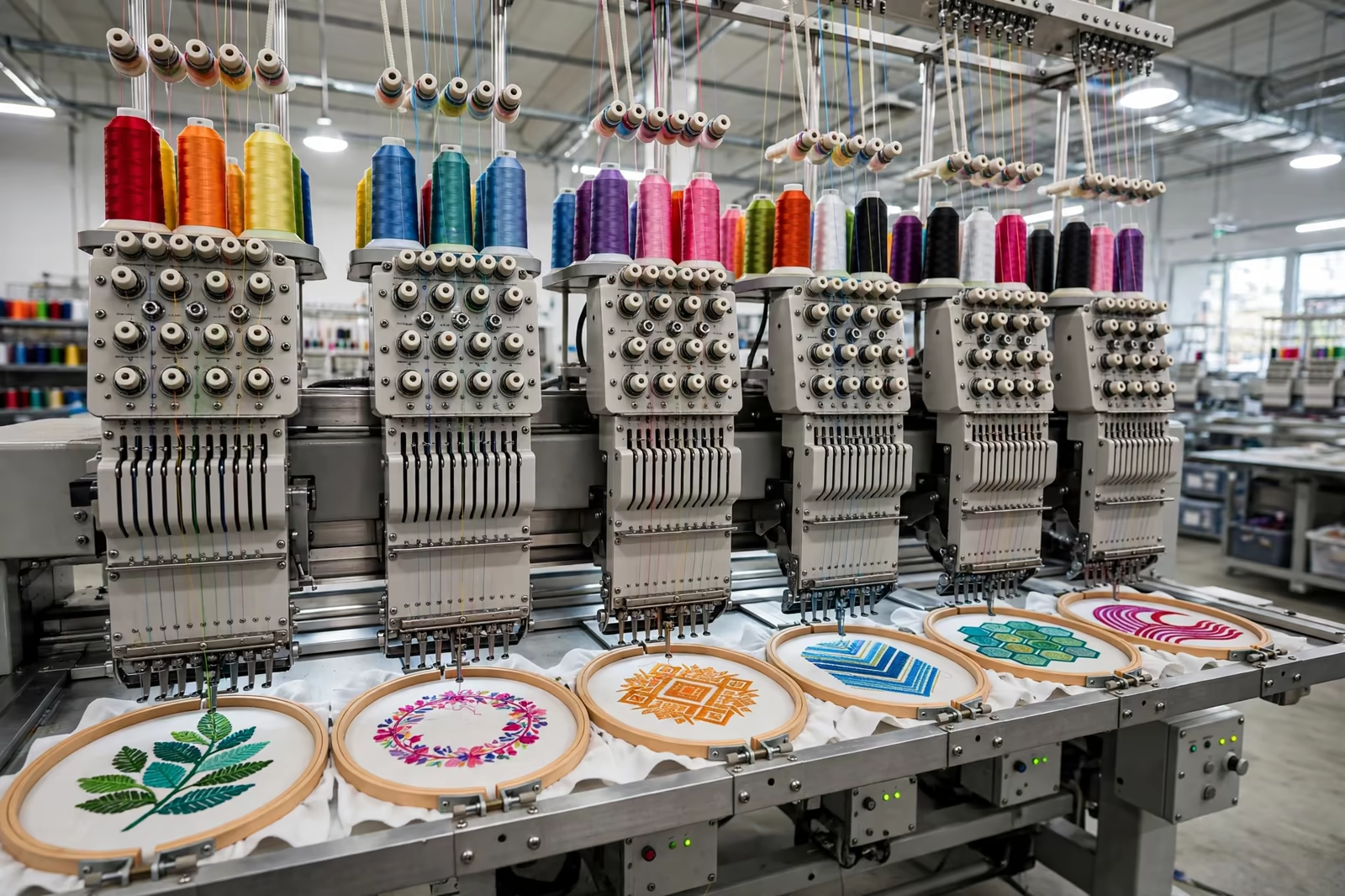
Machine Time: Why Stitches Are Really Minutes
Stitch count prices the work because stitches are time. A machine head sews at a finite rate, slowing for dense fills, colour changes and trims, so a design’s count converts directly into minutes per garment, and minutes across a multi-head machine convert into the run’s true capacity cost. Thread itself is cheap; the time of machines, operators and the floor they stand on is what the count is really measuring.
Understanding this reframes negotiation usefully. A buyer cannot argue a machine into sewing faster, but can hand it fewer stitches: a slightly smaller logo, a lighter fill, an element removed. Every such edit is a real saving the factory can pass on without cutting a corner, which is more than can be said for a discount demanded against an unchanged design, where the saving must come out of density, backing or care instead.
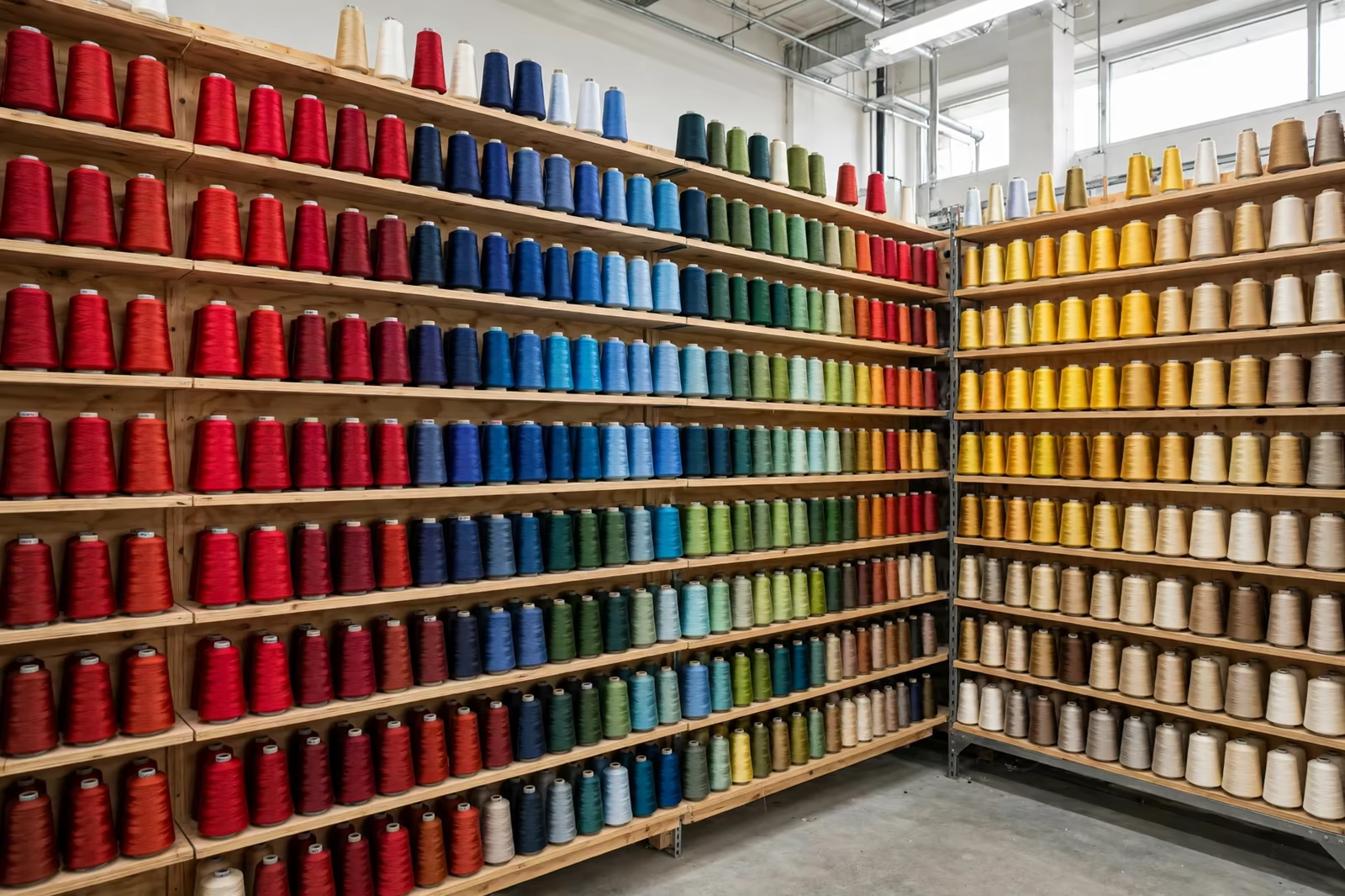
Colours, Trims and Other Honest Adders
Stitch count is the main driver, not the only one. Each colour adds thread changes and the cones, checks and trims that go with them; many small separated elements add trim operations the count understates; metallic and specialty threads run slower by necessity. A complete quote acknowledges these adders openly, because they are visible in the file and the sew-out, and because surprises in embroidery pricing nearly always trace back to an adder nobody named.
Garment handling adds its share too: caps are hooped and sewn differently from flat garments, thick jackets resist the needle more than polo pique, and awkward placements slow the loading that dominates small-run economics. None of this is arbitrary. It is the same principle throughout: embroidery prices time and work, and every feature of the job that adds either belongs in the price where the buyer can see it.
How to Read Two Embroidery Quotes Side by Side
Two quotes for the same logo can differ honestly, because digitizers make different decisions: one builds a heavier underlay and denser fill for a harder-wearing logo; another sews lighter and cheaper. The quotes are then for two different products wearing the same artwork, and the sew-out is the only court that can judge between them. Ask each factory for its stitch count, its density standard and a sew-out on your fabric, and the cheaper quote must explain itself in quality terms.
The red flags are structural: a quote with no stitch count behind it, digitizing neither charged nor mentioned, or a price dramatically below others with no design change proposed. Embroidery’s arithmetic is public; every number in it can be shown. A factory that shows its count, its file and its sew-out is inviting verification, and in a process this countable, the invitation itself is the strongest quality signal on the page.
Designing the Cost Down Without Designing the Logo Away
The craft of economical embroidery is subtraction with judgement. Let the garment supply a background colour instead of stitching a filled panel behind the mark. Convert the smallest text to a single clean line or remove it at chest size and keep it for print. Replace a filled shape with its outline where the brand allows. Choose the size the placement actually needs rather than the largest the hoop allows. Each choice trims thousands of stitches while the logo’s identity, the thing customers recognise, survives untouched.
Our programs run at our standard minimum of 1,200 pieces per style in up to two colours, with embroidery costed from the digitized design so the stitch count sits in the open. Send the artwork at the size you intend, name the placements, and ask for the count with the quote; the conversation that follows, about what to simplify and what to protect, is the most valuable half hour in the whole embroidery program.
Sampling Rounds and What Changes Cost
The sew-out is part of the price story too. A first sew-out is usually carried inside the sampling stage of a program, but design changes after it are new work: a resized logo is a re-digitized file, a simplified version is fresh digitizing, and each new sew-out is machine time and an operator’s attention. Programs that iterate casually through five artwork versions are spending real money in the sampling room, sometimes visibly in the invoice and always inside the timeline.
The economical discipline is to decide at the artwork stage what can be decided there: final size per placement, colours fixed, small elements resolved with thread physics in mind, so the digitizer’s first file is close and the sew-out is a confirmation rather than an exploration. Two rounds is a healthy program. Five rounds is a design process being billed as sampling, and the stitch count conversation, held early, is what usually prevents it.
Frequently Asked Questions
Why is embroidery priced by stitch count?
Because stitches are machine time. A design’s count, read exactly from its digitized file, converts into the minutes each garment spends on the machine, and time is the real cost of embroidery, far beyond the thread itself. Size, coverage and detail all feed the count, which is why two logos of similar size can price very differently.
Can I get an exact price from my logo file alone?
You can get a close estimate from size, coverage and experience, but the exact count exists only after digitizing, when the design has been translated into an actual stitch map. A factory quoting exactly from a photograph is guessing politely; expect the confirmed price to follow the digitized file and its sew-out.
Why does a bigger logo cost so much more?
Because area multiplies. Doubling a design’s width and height roughly quadruples the filled area inside it, and stitches follow area. A large design drawn with open space, outlines and garment showing through can hold its count down, which is why the design conversation and the price conversation are the same one for big work.
How can I reduce embroidery cost without cheapening the logo?
Subtract with judgement: let the garment colour serve as a background instead of a filled panel, outline shapes the brand can spare, remove or enlarge text below legible size, and size the logo to the placement rather than the hoop. Each edit removes real stitches, so the saving is genuine and the quality standard stays intact.