
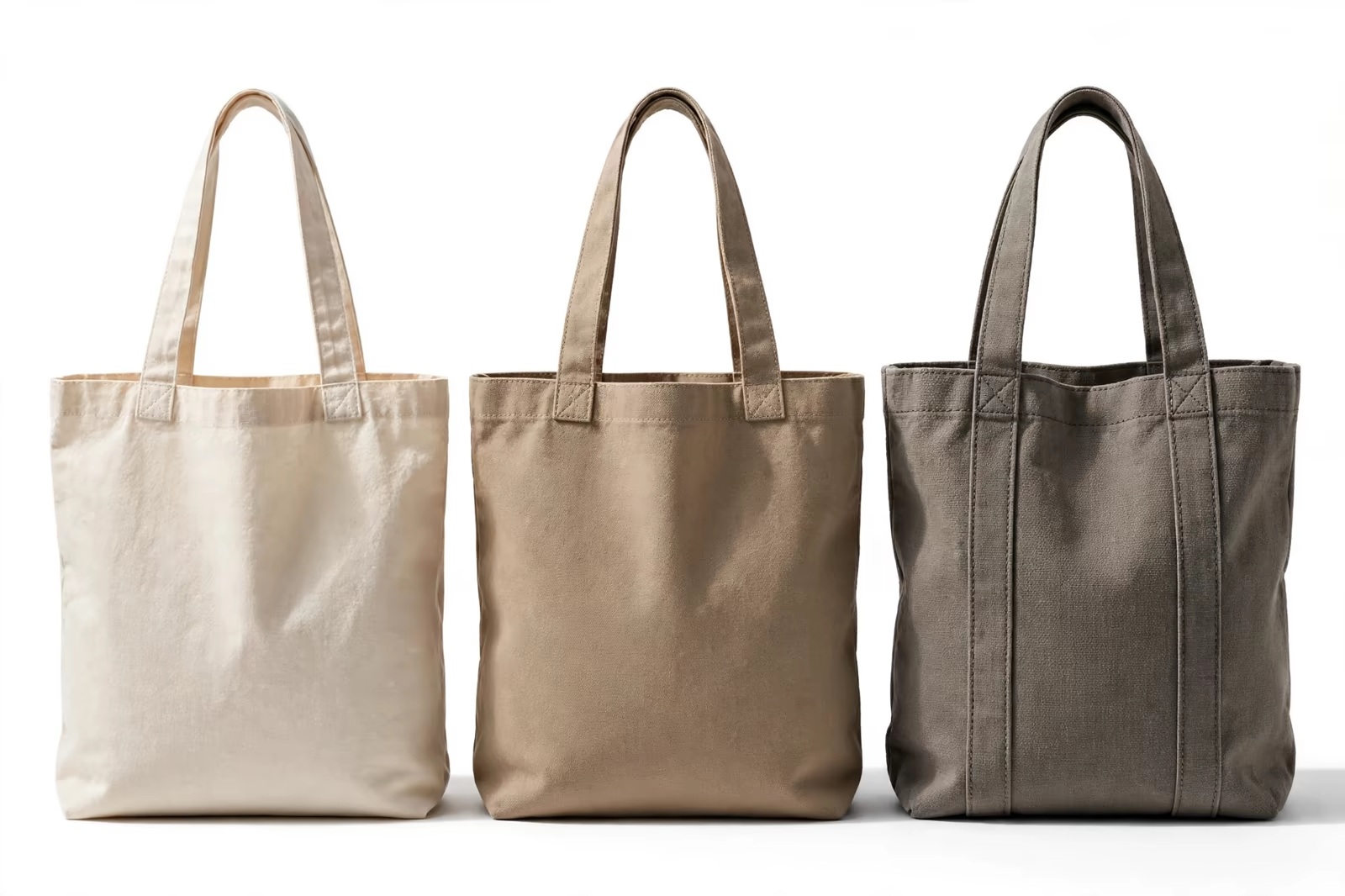
The tote bag is the most re-used item in promotional marketing, and the most casually specified. A good one carries shopping for years and takes the brand everywhere its owner goes. A bad one tears at the handle in the first month and takes the brand’s reputation with it. Canvas weight, handle construction and print area decide which of those two bags a program gets, and none of the three is visible in a thumbnail photograph.
Canvas tote bags are produced in Bangladesh for buyers in France, Germany and Australia, with handle strength tested on the approved sample before bulk cutting starts.
This guide is built around our tote bag range, the screen printing that decorates most of them and the quote details that price a program honestly.
Why Tote Construction Decides Whether a Bag Gets Kept
Promotional products live on usefulness, and no product is kept or binned on usefulness as purely as a tote. Owners keep the bag that carries a laptop, a water bottle and a supermarket run without complaint, and they quietly discard the one that feels like it is deciding whether to survive the trip. Every kept tote is a moving advertisement with a working life measured in years, which makes construction quality a media decision as much as a product one.
The failures buyers report follow a pattern: handles tearing out at the stitch line, fabric so light it shows the contents like an X-ray, prints cracking because the canvas moved under them, and bags arriving a different size than the sample promised. Each is a spec decision, and this guide takes them in the order a buyer makes them.
Canvas Weights: Reading GSM and Ounces for Tote Bags
Tote canvas is sold by weight, quoted in GSM or in ounces per square yard, and the numbers sort the market honestly. Light promotional canvas around 140 to 180 GSM folds small and costs little, suitable for conference inserts and single-event giveaways where the bag’s job ends at the venue door. Mid-weight canvas around 220 to 280 GSM is the retail and everyday standard, with enough body to stand up, carry real loads and print cleanly.
Heavy canvas at 300 GSM and above builds the premium shopper and book-carrier class, the bags owners describe as indestructible and keep for a decade. Weight interacts with everything else in this guide: heavier fabric needs stronger handles and stitching, prints sit on it more stably, and freight costs rise per unit, which matters on programs shipped by air. Buyers should always weigh a cut sample rather than trusting a quoted figure, because a honest 260 GSM and an optimistic one feel different in the hand instantly.
Handle Strength: Lengths, Webbing and the X-Box Stitch
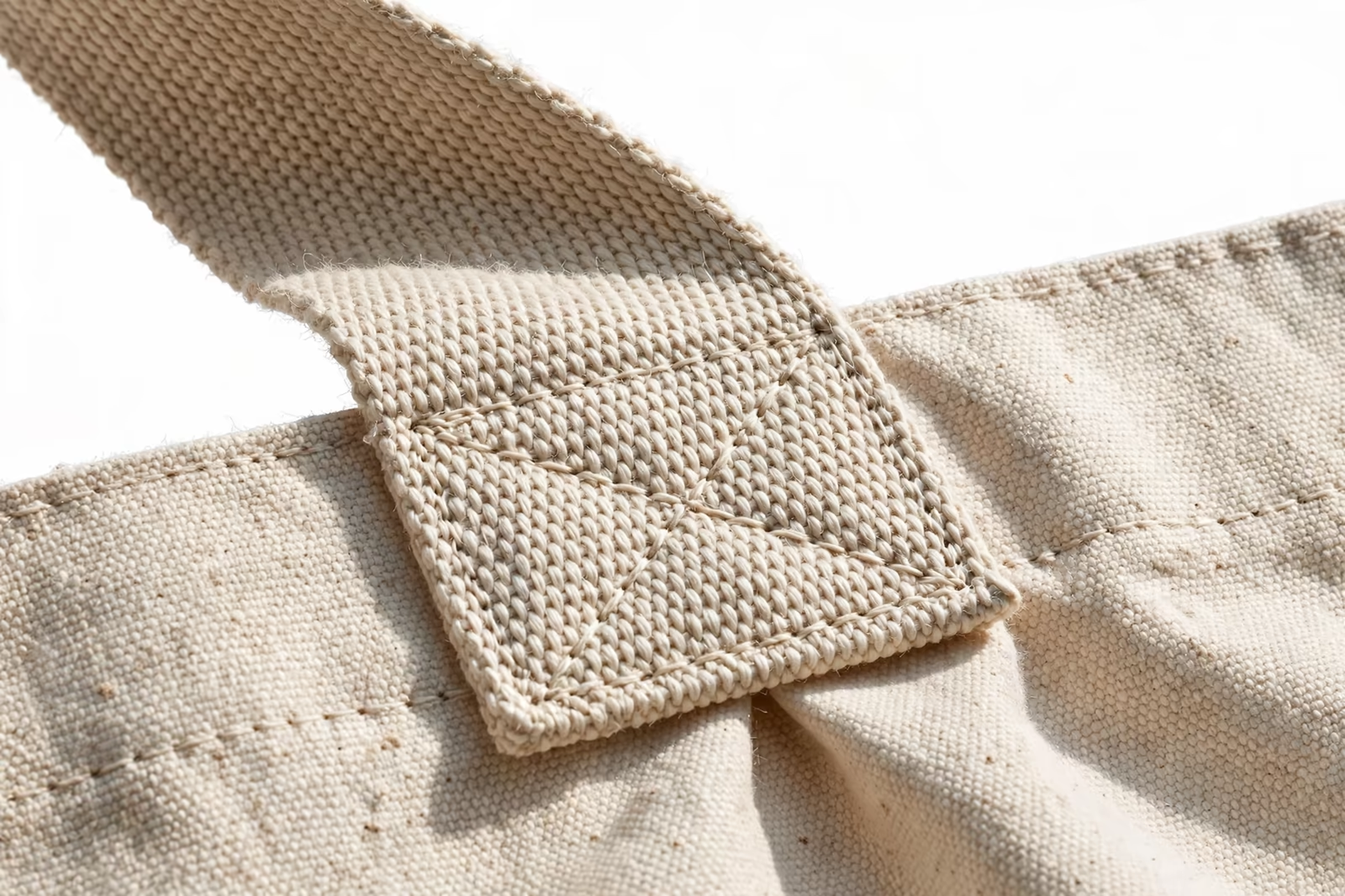
Handles fail more tote bags than fabric ever does, and handle construction has three parts: material, length and attachment. Self-fabric handles, cut from the bag’s own canvas and folded, read most premium and suit mid and heavy weights. Cotton webbing handles are stronger per gram, kinder to the hand under load and the workhorse of event programs. Padded and rope handles serve fashion builds at their own price point.
Length decides use: short handles around 35 centimetres carry by hand, long handles around 60 to 70 centimetres carry on the shoulder and over a coat, and a two-length build with both costs little and doubles the bag’s usefulness. Attachment is where strength is truly made: handles stitched into the top hem with an X-box reinforcement pattern, the square with a diagonal cross that spreads load across many stitches, survive loads that pull straight-stitched handles out of the seam. A buyer can test any sample honestly: load it with ten kilograms of books and carry it around the office for an afternoon.
Gussets and Bag Sizes: Flat, Bottom and Full Gusset Builds
A gusset is the folded panel that gives a flat bag a three-dimensional base, and it decides what the bag swallows. Flat totes with no gusset suit documents, garments and conference materials. A bottom gusset lets the bag stand and take boxed goods; a full gusset, bottom and sides, builds the true shopper that takes a weekly grocery run without bulging at the seams.
Sizes cluster honestly around use: small gift and retail sizes near 30 by 35 centimetres, the standard shopper near 38 by 42, and oversize beach and market builds beyond that. Every centimetre of size and gusset is fabric, print area and freight, so the spec should start from the largest object the bag must carry, not from the biggest bag the budget allows.

Print Areas and Methods for Canvas Tote Bags
The printable area is set by construction: the flat panel between seams and handle attachments, usually a generous centred field on both faces of the bag. Screen printing is the tote’s native method, bold flat colour with total coverage on natural canvas, and it remains the sharpest and most economical choice for one to three colours at program quantities.
Full-colour artwork moves to digital print or transfers, each with its own hand feel on canvas that sampling reveals. Embroidery serves premium small marks on heavy canvas, priced per design rather than per bag’s worth of ink. The print position deserves the same respect as the method: centred by the panel’s true dimensions, not by eye, and proofed on the actual bag size, because a design that fills a small tote politely can look lost on a shopper.
Natural, Dyed and Laminated Canvas: Finish Choices
Natural unbleached canvas is the classic tote finish, warm, forgiving of print registration and honest about its material. Dyed canvas carries brand colours across the whole bag, with the dye lot discipline that repeat orders demand: named standards and retained masters, or wave two arrives a shade proud of wave one. Black and navy dyed totes hide city dirt best and dominate urban retail programs for that reason.
Laminated and coated canvases add water resistance and wipe-clean behaviour for grocery and market use, at the cost of a stiffer hand and a different print conversation. Inside finishes matter too: a bound or overlocked seam reads quality every time the owner opens the bag, which is thousands of small impressions across the bag’s life.
Reinforcement Details: Seams, Corners and Base Boards
Beyond the handles, three reinforcements separate durable totes from disposable ones. Seam allowances stitched with a proper margin and finished so they cannot fray into the load area. Corner and gusset junctions bar-tacked or double-stitched where stress concentrates when the bag is lifted by one handle, as bags always eventually are.
A removable base board, fabric-covered card or plastic, turns a mid-weight shopper into a bag that stands open at a checkout and protects boxed contents, a retail detail customers notice without ever naming it. None of these details photographs well in a catalogue, and all of them are why one tote is still working in five years and another is a story about a torn bag.
Tote Bags for Retail, Events and Grocery Programs
Programs sort themselves by the load they carry. Retail totes are brand objects first: mid to heavy canvas, considered handles, print or embroidery executed like apparel. Event totes are logistics: lighter canvas, one strong print, sizes set by the conference pack they must swallow, and handles long enough for a shoulder crowded with a coat and a lanyard.
Grocery and market programs spec for weight and washing: heavy canvas or laminated finishes, full gussets, handles tested under real loads and colours that forgive a leaking carton. Subscription and gift programs split the difference, premium enough to feel like a present, practical enough to be kept. Naming the program type in the brief saves the sampling round from testing the wrong virtues.
Care, Storage and Honest Longevity Claims
A canvas tote’s care story is part of its value: washable, repairable and free of the guilt that follows a plastic bag. Natural and dyed canvas wash cold to protect print and colour; heavy canvas softens with age in a way owners read as character. Programs making longevity claims should make them honestly, tested loads and wash cycles rather than adjectives, because the tote is the one promotional product whose claims get tested daily by its owner.
Storage in distribution matters more than buyers expect: bags folded hard in bales for months arrive with creases that steaming mostly forgives, and print stored against print in heat can offset. A packing spec, folded size, interleaving for printed faces and carton weight limits, protects the product the spec worked to create.
Buyers comparing quotes should also check what a quoted price quietly assumes: print on one side or two, handles in webbing or self-fabric, and whether the gusset is included in the stated size or added beyond it. Three quotes that look far apart often describe three different bags. The same written spec, priced by every factory, is the only fair comparison.
Specifying Canvas Tote Bags for Your Brand
Specify from the load backwards: the heaviest typical carry sets the canvas weight and handle build, the largest object sets size and gusset, the artwork sets the print method, and the program type sets everything else. Quantities follow our standard minimum of 1,200 pieces per style in up to two colours, with print colours counted separately from bag colours in the quote.
Approve the sample under load and after a wash, with the real print at the real size. A tote is judged by its owner every single day it survives, and the sample that carries ten kilograms gracefully in the buying office is the one that will still be advertising the brand in three years.
Frequently Asked Questions
What GSM canvas is best for tote bags?
For most retail and everyday programs, 220 to 280 GSM canvas is the honest middle: strong enough for real loads, stable for printing and pleasant to carry. Light 140 to 180 GSM suits single-event giveaways; 300 GSM and above builds premium shoppers meant to last for years. The load the bag must carry should choose the weight, not the price list.
How strong are tote bag handles, really?
Strong handles are a construction, not a material claim: webbing or folded self-fabric, attached into the top hem with an X-box stitch pattern that spreads the load across many stitches. That build carries ten kilograms without complaint. Straight-stitched short attachments are where cheap totes fail, which is why a load test on the sample, books will do, tells a buyer more than any specification sheet.
Can tote bags be printed on both sides?
Yes, both faces of a tote carry a full print field, and many programs run the main artwork on one side and a secondary message, web address or pattern on the other. Each side is printed and priced as its own pass. Gusset panels can also carry small prints or woven labels, though the flat faces remain the honest canvas for anything detailed.
Are canvas tote bags washable?
Yes, canvas totes wash well in cold water, which protects both the fabric colour and the print. Heavy canvas softens pleasantly over its life rather than wearing out. Printed faces should be washed inside out, and a sample wash before bulk confirms the print method and the dye hold together under the program’s real care conditions.