

An apron is the only uniform item a customer watches for the entire meal. It takes the splashes, carries the tools, holds the logo at chest height and gets washed more often than everything else in the building combined. Fabrics, straps and pocket layouts sound like small choices until a service shift proves otherwise, which is why hospitality buyers who spec aprons properly rarely have to reorder in a hurry.
This guide is built around our apron range, the embroidery that carries most hospitality logos and the MOQ and production terms behind a program.
Why Apron Specs Matter in Hospitality
A restaurant apron works three jobs at once. It protects the clothing underneath through a full shift of heat, oil and water. It carries what the wearer needs, order pads, pens, corkscrews, thermometers, without a trip back to the pass. And it presents the brand at the exact height a seated customer’s eyes rest at, which makes it the most-seen branded surface in the room.
Each job pulls the spec a different way. Protection wants weight and coverage, carrying wants pockets in the right places, presentation wants a fabric that still looks crisp after two hundred washes. Buyers who treat the apron as a printed afterthought get one season from it; buyers who spec it like equipment get years, and this guide follows the equipment route.
Apron Styles: Bib, Waist, Cross-Back and Cobbler
The bib apron is the hospitality default: full chest coverage, the logo at reading height and protection where kitchen splashes actually land. It suits chefs, baristas and front-of-house staff who face the customer across a counter. Neck strap design decides whether it is comfortable for a whole shift, which is why the strap section below matters as much as the style itself.
Waist aprons free the chest and read more casual, the choice for servers, bar staff and retail counters where movement matters more than coverage. Cross-back aprons hang the weight on the shoulders instead of the neck, a Japanese-derived build that staff genuinely thank buyers for on long shifts. Cobbler aprons cover front and back with side ties, serving cleaning, care and production teams. Most venues run two styles, one for the kitchen, one for the floor, and spec them as a family.
Apron Fabrics for Hospitality Buyers Who Wash Daily
Poly-cotton twill is the hospitality workhorse: it washes hot, dries fast, holds colour and releases stains better than pure cotton, which is why most chains standardise on it. Pure cotton canvas builds a heavier, more artisanal apron that softens beautifully with washing and suits bakeries, coffee roasters and open kitchens selling a craft story.
Denim aprons carry the same story further, with indigo character that fades honestly and hides stains gracefully between washes. Lighter poplin and drill serve deli and retail counters where heat is lower and movement higher. The honest test is always the wash cycle the venue actually runs: a fabric that is perfect at forty degrees can be the wrong choice for a kitchen laundering at seventy-five.
Fabric Weights: Light, Mid and Heavy Duty Aprons
Weight follows the work. Light aprons around 180 to 220 GSM suit front-of-house and retail, where the apron is mostly brand and pocket. Mid weights around 240 to 280 GSM are the all-round hospitality standard, enough body to protect and to embroider cleanly, not so much that the wearer cooks alongside the food.
Heavy canvas at 300 GSM and above belongs to butchers, bakers, roasters and workshop hospitality, where protection is the point and the weight reads as quality. Weight also decides how an apron hangs in photographs and on the body: light fabrics cling, mid weights drape, heavy canvas holds an architectural line that premium venues pay for deliberately.
Straps: Neck Loops, Waist Ties and Cross-Back Comfort
Straps are where aprons succeed or fail at hour six. The classic neck loop is cheapest and simplest, fixed or adjustable with a slider or buckle, and an adjustable loop is worth its tiny cost on any team of mixed heights. The failure mode is known to every chef: a fixed loop sized for nobody, riding up or hanging low all shift.
Waist ties should wrap and tie at the front for most service roles, long enough for the full size range the venue employs. Cross-back straps remove the neck entirely, spreading the load across the shoulders, and split-leg bib builds add a centre vent so the apron moves with a stride instead of against it. Strap material should match or deliberately contrast the body, webbing for workwear honesty, self-fabric for a tailored read, leather-look details where the brand wants them and the wash cycle allows.
One more strap detail earns its place here: removable straps, buttoned or clipped rather than sewn in, let a venue replace a worn strap instead of a whole apron, and let laundry services wash straps separately where their process demands it. On long programs the saving is real.

Pocket Layouts: Split, Kangaroo and Tool Pockets
Pockets are the apron’s working memory. The split centre pocket, one wide pocket divided by a stitched seam into two, is the hospitality standard for bib and waist aprons: order pad on one side, pen and tools on the other, nothing migrating. Kangaroo pockets, entered from both sides at an angle, suit waist aprons and casual service, relaxed and quick.
Tool pockets are narrower and deeper, built for thermometers, tweezers and bottle openers that must not fall out when the wearer bends. Placement is ergonomics, not decoration: pockets sit at hand height when the wearer stands naturally, clear of the waist tie knot, and reinforced at the top corners where every pocket eventually tries to tear. A pen slot sounds trivial until a shift loses three pens a day without one.
Logo Work on Aprons: Embroidery, Print and Placement
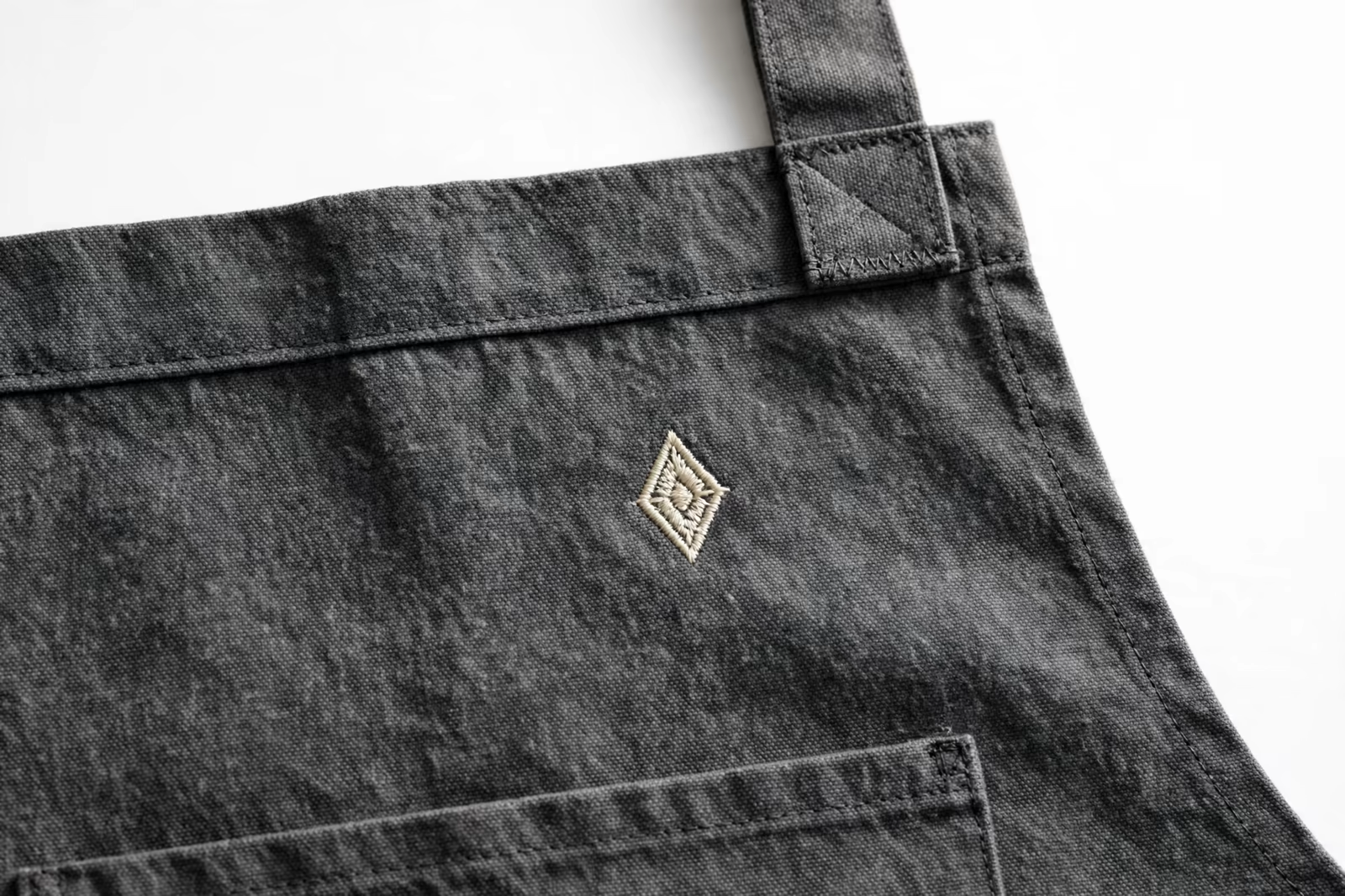
Embroidery is the hospitality default for logos, and the reasons are practical: it survives industrial washing, reads as quality at two metres and sits naturally at chest height on a bib apron where the customer looks. Flat embroidery handles most wordmarks and crests; small text has a size floor, below which print or a woven label does the job more honestly.
Print serves large back pieces, bold single-colour marks and promotional runs where cost per unit leads. Placement choices follow the style: centre chest on bibs, right chest for a quieter corporate read, thigh height on waist aprons, and a small hit at the pocket for brands that prefer understatement. Sample the logo at the real size on the real fabric, because apron twill and canvas take thread and ink differently.
Colours and Branding Consistency Across Venues
Hospitality brands live or die on consistency, and aprons are bought in waves across seasons and sites. The spec that protects consistency is boring and essential: a named fabric, a named dye standard and a retained master sample at both the factory and the head office, so wave three matches wave one under restaurant lighting, not just daylight.
Colour choice is also stain strategy. Charcoal, navy, black and deep green forgive a service shift; white and pale stone show craft and cleanliness where the concept demands it and the laundry can honour it. Two-tone builds, dark body with contrast straps and stitching, give photographers something to find and give venues a signature that survives trend cycles.
Sizing and Fit for Mixed Teams
Aprons are the most forgiving garment in the uniform program, which is exactly why their fit gets neglected. Length is the main variable: bib aprons typically run 70 to 90 centimetres, and the right length for a chef at the pass is wrong for a barista behind a counter. Width and tie length decide whether one size honestly covers the whole team’s range.
Two sizes cover almost every real workforce, and the cost difference against one-size complaints is small. Cross-back and split-leg builds widen the comfortable range further. The sampling rule matches every uniform: dress the tallest and shortest team members available, not the two people nearest the meeting room.
Care and Laundering: Built for Daily Washing
A hospitality apron may be washed three hundred times in its life, so care performance is a construction spec, not a label afterthought. Seams are stitched to survive agitation, bar tacks reinforce strap joins and pocket corners, and thread is chosen for hot washing and the detergents commercial laundries actually use.
Buyers should wash-test the approval sample through at least ten cycles of the venue’s real process and check three things: colour hold, strap hardware behaviour and logo condition. Embroidery that puckers, ties that twist into rope and canvas that shrinks out of proportion all announce themselves early in an honest wash test, while there is still time to change the spec.
Specifying Custom Aprons for Your Venue or Brand
Specify in working order: style for the role, fabric and weight for the wash cycle and the work, straps for the shift length, pockets for the tools the role actually carries, then logo method and placement. Quantities follow our standard minimum of 1,200 pieces per style in up to two colours, with venues commonly splitting one style across two colourways for kitchen and floor.
Approve the sample worn, loaded with the real tools and washed, not folded on a table. An apron is equipment the brand wears in public, and the hour spent testing it properly is repaid on every shift it serves.
Frequently Asked Questions
Which apron fabric is best for restaurants?
Poly-cotton twill suits most restaurants: it washes hot, dries quickly, holds colour through hundreds of cycles and releases stains better than pure cotton. Kitchens wanting a craft look choose cotton canvas or denim and accept a softer, more characterful fade. The deciding factor is the laundry process the venue actually runs, so the approval sample should be washed the same way before bulk.
Bib apron or waist apron for front of house?
Bib aprons present the logo at chest height and protect more clothing, which suits counters, coffee bars and open kitchens where staff face customers directly. Waist aprons read more relaxed and suit table service and bars where movement matters most. Many venues run both, bibs for the counter team and waist aprons for the floor, in matching fabric so the brand still reads as one family.
How many pockets should a hospitality apron have?
Two to three useful ones beat five decorative ones. The standard working layout is a split centre pocket, giving two compartments for a pad and tools, plus a slim pen slot. Chefs may add a narrow tool pocket for a thermometer. Every pocket should sit at natural hand height, clear of the waist tie, with reinforced top corners, because pockets fail at the corners first.
Can an embroidered logo survive industrial washing?
Yes, embroidery is the most wash-durable logo method for aprons when it is stitched at proper density with suitable backing and colourfast thread. It routinely outlasts print under hot, frequent laundering. The proof is a wash test: the approval sample should come through at least ten cycles of the venue’s real process with the logo flat, tight and unchanged before bulk is authorised.