

Ask a factory how long a bulk screen printing order takes and you will usually hear a single number, confidently given, that conceals everything that actually consumes the calendar. The printing itself is rarely the slow part. Lead time is eaten in the chain around it: approvals, screens, queues, curing, inspection and the quiet days when an order waits for a decision that only the buyer can make. Understanding the chain is how a buyer plans a season instead of chasing one.
Lead times quoted in Bangladesh are built around buyers in the USA, the UK and the Middle East, counting screens, sampling and curing honestly from the day artwork is approved.
This guide breaks the timeline open inside our screen printing programs and MOQ and production planning, so buyers can see where the weeks go and where they can be saved, before they send the order through get a quote.
The Timeline Nobody Prints: Before the First Screen
An order’s clock starts before any printing exists. Artwork must arrive final and separated, or be separated and returned for approval; a strike-off must be printed, checked and confirmed; garments or fabric must be ready in the right colours and sizes. Each of these steps is quick in itself, but they run in sequence, and each one waits on a reply, a courier or a decision. A week of lead time can pass with nothing visibly happening, because everything is happening in preparation.
This is the part buyers control most and estimate least. Artwork that arrives print-ready, a decision-maker who answers approvals the same day, and a reference sample already in the factory’s hands can cut the pre-production phase to days. The same phase, fed with revised artwork and weekly replies, stretches past the printing itself, and the factory’s confident number quietly stops being true through no fault of the press.
Sampling and Approval: The Gate Everything Queues Behind
Nothing bulk happens before the strike-off is approved, and rightly: it is the last cheap moment to change anything. The sampling round itself takes days, not weeks, but the approval loop around it is elastic. Print, photograph or courier, wait, comment, reprint: each cycle is short, and three cycles are a season’s margin. Buyers with hard launch dates protect them by limiting cycles deliberately, approving against clear criteria instead of fresh opinions each round.
A photograph approves colour badly and placement well; a couriered sample approves everything and costs days each way. The professional compromise on repeat programs is trust built from history: photo approval for proven designs, physical approval for new ones. On a first order, pay the courier days. They are the cheapest insurance in the entire timeline, cheaper than one reprinted size run by an order of magnitude.
Screen Making and the Production Queue
Once approved, the job joins real physical work: films output, screens coated, exposed and registered, and the order placed in the production queue behind everything approved before it. Screen making for a multi-colour design is measured in days of bench work across the set. The queue is measured in honesty: a factory’s stated lead time is mostly its queue, and a queue can be jumped only by pushing someone else’s order back, which reputable factories refuse to do and disreputable ones do for whoever shouts.
Seasonality rules this part of the calendar. The weeks before major retail seasons fill every good factory’s queue, and lead times quoted in a quiet month do not survive contact with a busy one. Buyers who place print programs season after season learn to book capacity with the artwork still in progress, because the queue respects arrival order, not artwork quality, and the factory cannot print a design that reaches the front of the line unfinished.
Garments First: The Wait That Is Not the Printer’s
Screen printing needs something to print on, and in made-to-order programs the garment itself is manufactured for the order: knitted, dyed, cut and sewn before a screen ever touches it. That garment timeline runs before or beside the print timeline, and it is usually the longer of the two. A buyer asking when printing finishes is often really asking when sewing finishes plus printing, and a quote that separates the two clocks is a quote from a factory that knows where its orders actually spend their time.
Colour and size breakdowns add their own days here: dyeing to an approved shade, cutting across a size range, and sewing that keeps the print program’s sizes in step. Print buyers who supply their own garments remove this whole section from the factory’s clock, and replace it with their own: the printing lead time then honestly begins when the last carton of blanks arrives, not when the order was signed.
The Printing Itself: Faster Than You Think
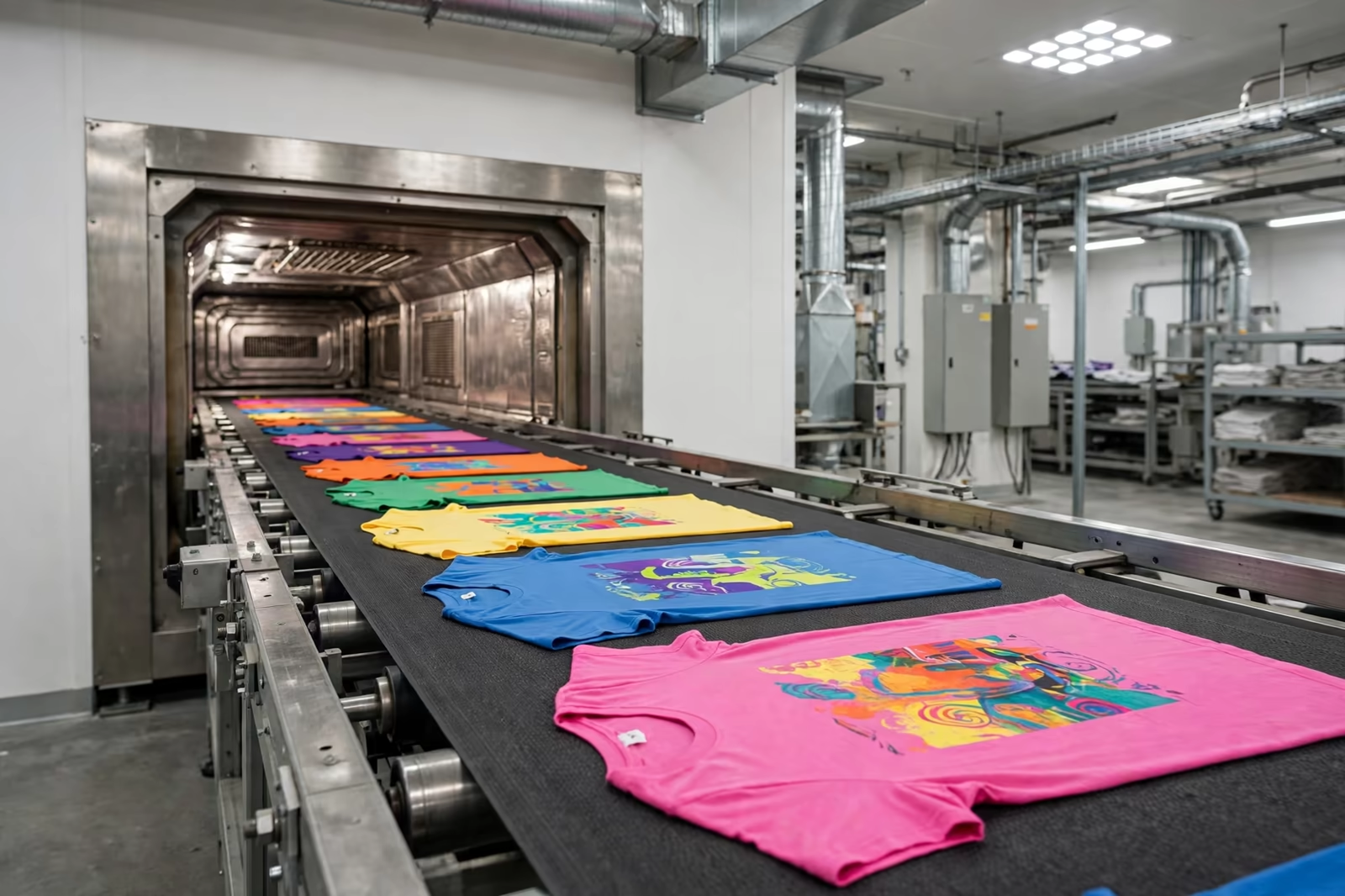
Here is the part that surprises buyers: once screens, garments, approvals and queue align, the printing of a substantial order is often a matter of days. A practised table or press crew moves through garments at a pace that makes the print run one of the shortest blocks in the whole timeline. Multi-colour designs, special effects and water-based routes slow the pace, some considerably, but even the slowest print run is rarely the reason an order is late.
What printing cannot do is start early to compensate for time lost elsewhere. Screens made from unapproved artwork, garments printed before the strike-off returns, these are gambles a factory takes with the buyer’s money, and the professional ones decline them politely. The print days sit where they sit in the chain, fixed by everything upstream, which is why experienced buyers manage the upstream and leave the printers alone.
Curing, Cooling and Why Printed Goods Rest
Printed garments are not packed the hour they leave the dryer. Curing must complete and be verified, prints cool and settle, and packing hot, freshly cured garments into cartons invites blocking, prints sticking to prints in the warmth of a container. The rest is short, a day or so built into honest timelines, but a schedule with no room for it is a schedule planning to ship prints that may arrive married to each other.
This is also where quality time legitimately lives: wash tests on production pieces, cure checks, and the first inspection happen while the goods rest. A factory that waves an order from dryer to carton in an afternoon is not being efficient; it is skipping the only verification window the process offers, and the buyer’s container becomes the inspection department instead.
Inspection, Packing and the Tail of the Order
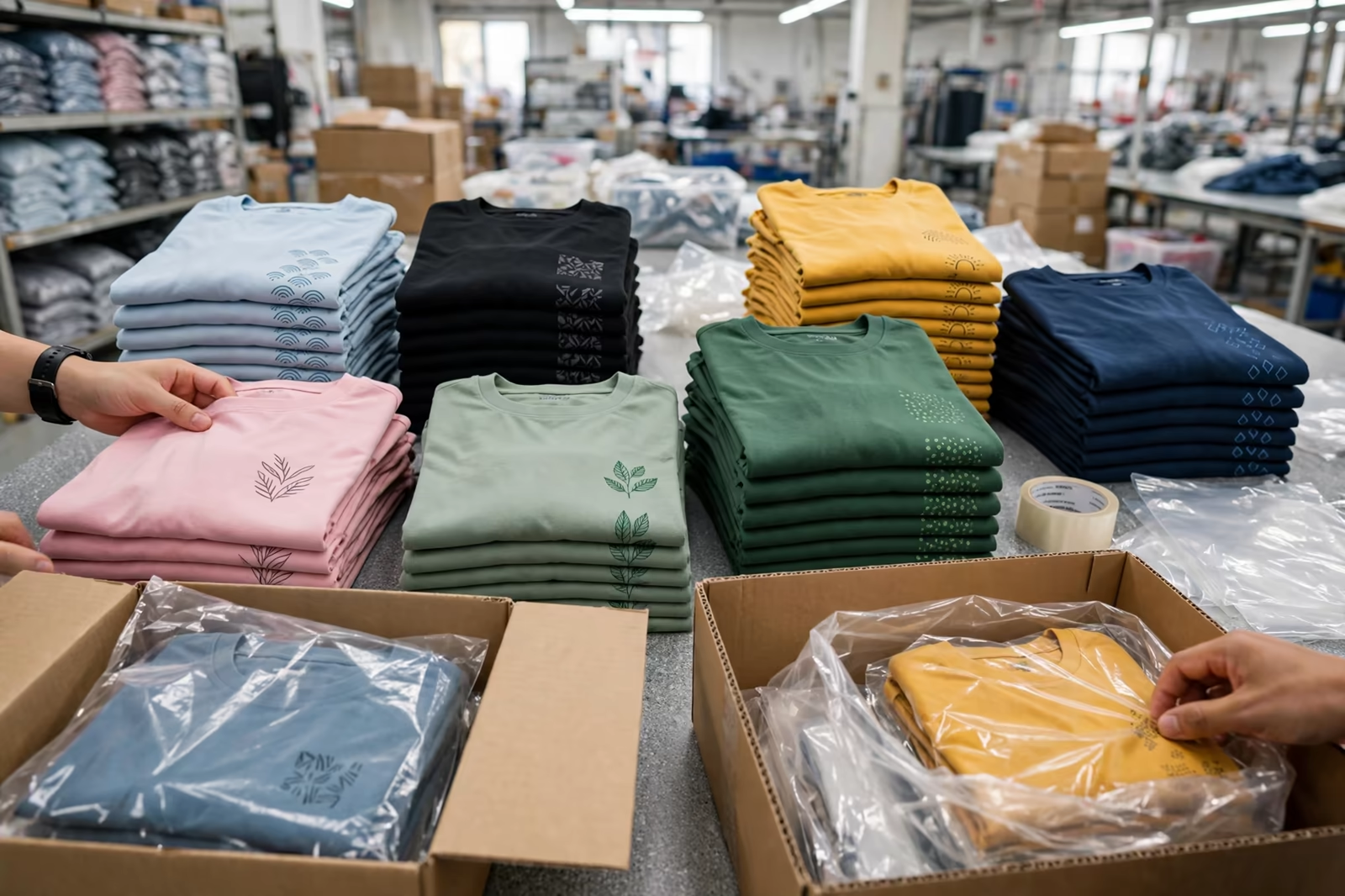
The tail of a print order is longer than its head. Every garment is inspected, prints checked against the approved strike-off, sizes and colours counted into the packing specification, polybagged, labelled and cartoned. On a large program this is days of careful hand work, and rushing it produces the classic bulk disappointments: mixed sizes, a colourway short, prints that should have been rejected folded neatly into the middle of cartons.
Buyers can shorten the tail without starving it: a packing specification settled at order stage, labels and barcodes supplied early and correctly, and carton requirements agreed before the first garment is printed. What cannot be shortened safely is the inspection itself, because it is the buyer’s last representative inside the factory, the moment where the order is still fixable. Lead time saved here is spent later, at the warehouse, with interest.
What Repeat Orders Teach About Time
The second run of a design is a different animal: artwork proven, screens known or remade from saved films, garment program established, approvals reduced to a confirmation. Repeat lead times shrink because the elastic parts, approval loops, artwork correction, sampling doubt, have already been paid for once. This is the arithmetic behind program buying: the first order buys knowledge as well as garments, and every repeat collects the dividend.
It is also why a factory’s lead time for your design and its lead time for a stranger’s are different numbers honestly given. When comparing factories on speed, compare like with like: a first-order timeline against first-order timelines, with the same approval discipline assumed. The factory quoting the shortest first run is often the one planning to skip the steps the others are pricing in time.
Where a Buyer Can Honestly Save Weeks
The savings live in the buyer’s own column: artwork delivered print-ready at size, Pantone references named rather than described, approvals answered within a day by one decision-maker, packing details settled with the order, and capacity booked before the season’s rush rather than inside it. None of these cost money. Together they routinely save more time than any negotiation over the print days ever has, because they attack the elastic parts of the chain where weeks actually hide.
Our programs run at our standard minimum of 1,200 pieces per style in up to two colours, and timelines are quoted per order from the artwork, the garment program and the current queue, stated as the chain they are: sampling, screens, garment readiness, printing, curing and packing. A buyer who sees the chain can plan a launch on it; a buyer quoted a bare number can only hope on it, and hope is not a production method.
Shipping: The Leg Buyers Forget to Count
An ex-factory date is not a delivery date, and the distance between them is the most commonly forgotten block in print buying. Sea freight from Chattogram to Northern Europe or North America runs in weeks, not days, port schedules and cut-off times add their own margins, and the cheapest week to lose is the one spent discovering that the vessel left the day before the cartons reached the port. Air freight buys the time back at a price that should be a decision, not a rescue.
Plan backwards from the selling date: shelf date minus freight, minus customs and warehouse days, minus production, minus approvals, and the day the artwork must be final announces itself. Buyers who do this arithmetic at enquiry stage never have the emergency conversation; buyers who do it at carton stage have it every season. The factory’s lead time is one term in the equation, rarely the largest, and never the only one the buyer controls.
Frequently Asked Questions
What actually takes the most time in a bulk print order?
Usually everything except the printing: artwork preparation and separations, the strike-off approval loop, garment manufacturing or delivery, and the production queue. The print run itself is often only a few days once those align. Ask any factory to split its lead time into the chain, and the honest shape of the order appears.
How can I shorten my order’s lead time?
Send print-ready artwork at final size with colours named, approve samples within a day through one decision-maker, settle packing and labels with the order, and book capacity ahead of the seasonal rush. These steps attack the elastic parts of the timeline where weeks hide, and they cost nothing but discipline.
Why is a repeat order faster than the first one?
Because the first order pays for the knowledge: separations proven, screens and settings known, garment program established and approval standards agreed. A repeat reuses all of it, so sampling shrinks to confirmation and the queue is the main wait left. Program buying collects this dividend every season.
Can the printing start before the strike-off is approved?
It can, but it is a gamble with the buyer’s money: any correction the approval would have caught becomes a reprinted bulk instead of a reprinted sample. Professional factories decline to print unapproved work, and a factory eager to start early is usually planning to skip other steps as well.