
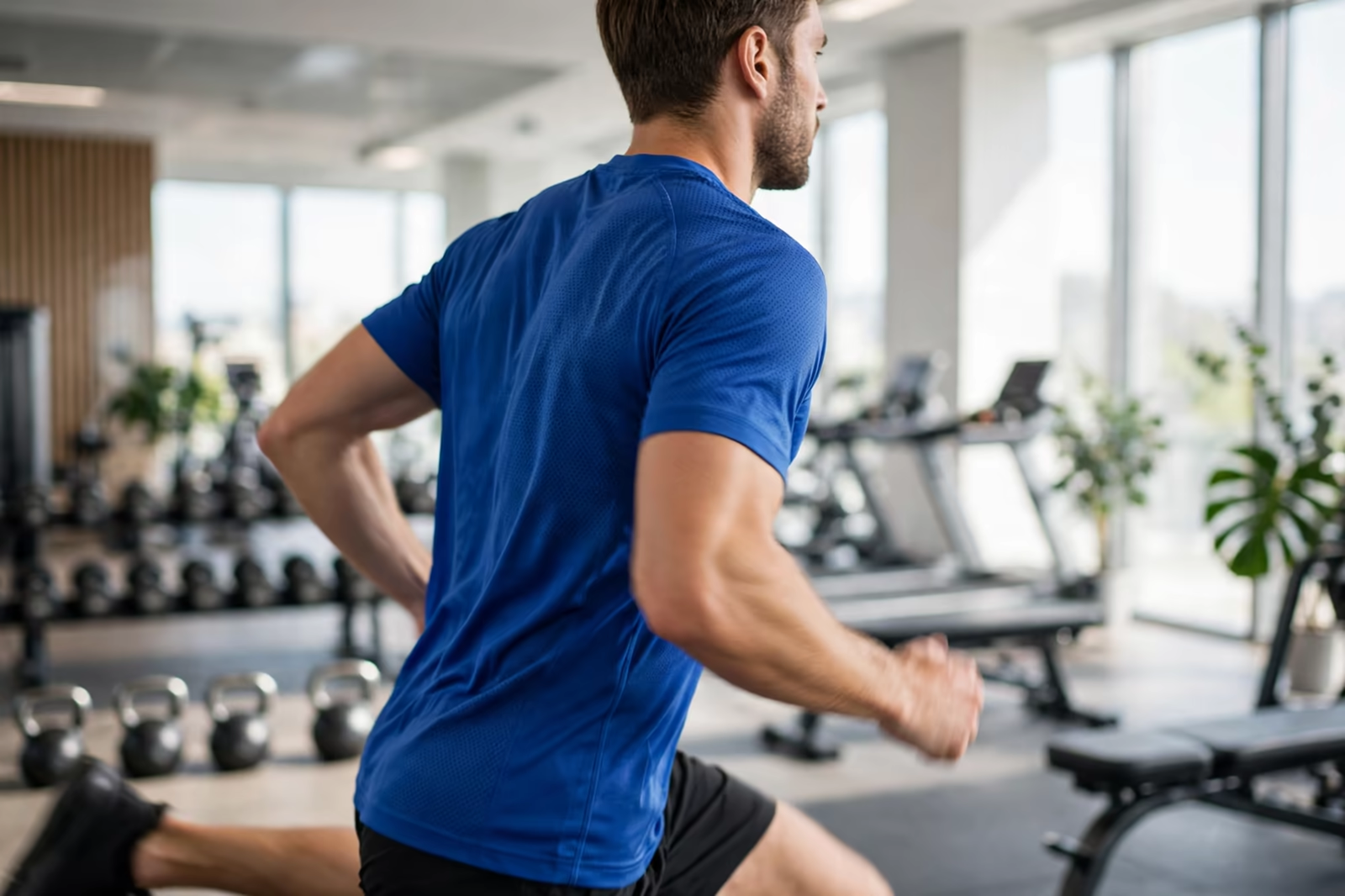
Wicking, breathable, quick-dry: three terms that appear on almost every performance garment specification, and three of the least precisely used words in the trade. They describe three different physical processes, a fabric can excel at one and fail at another, and marketing language routinely blurs all three into a single promise. This guide separates them properly, explains the mechanisms underneath, and shows how each is actually measured, so a performance specification means something testable.
The performance desk behind this guide builds moisture-managed ranges on clothing made in Bangladesh for the USA, the UK, Germany, Canada and Australia.
The anchor product is our performance training t-shirt, built under the constructions inside our services; begin a performance programme at our get a quote page.
Wicking: Liquid Transport Along the Fibre
Wicking is the movement of liquid sweat along and between fibres by capillary action, pulling moisture away from the skin and spreading it across a wider fabric area. It is a liquid-phase process: it begins when sweat is liquid on the skin, and its job is distribution, moving the liquid to where evaporation can dispose of it.
Fibre choice decides the starting point. Polyester and nylon absorb almost no water into the fibre itself, so liquid stays on surfaces and in channels where capillaries can move it; cotton absorbs eagerly into the fibre, holding liquid where it lands, heavy and cold. Channelled and micro-denier synthetic filaments are engineered to give those capillaries more pathways.
Wicking is engineered in three-dimensions too: performance knits often run a push-pull structure, one face moving liquid, the other spreading it, so the skin side stays as dry as physics allows. Denier gradients do similar work, finer filaments on one face pulling liquid toward coarser ones on the other, a pump built from yarn sizes rather than machinery.
Breathability: Vapour Passing Through
Breathability describes water vapour, not liquid: the body’s evaporated moisture passing through the fabric to the air. A garment can wick liquid beautifully yet trap vapour under any coating or membrane sitting in its way, which is why rain shells carry explicit breathability ratings and training tees rely on open knit structures.
The garment-scale reality is mostly construction: knit openness, fabric weight, garment fit and ventilation design, mesh panels, looser cuts, laser perforation in some ranges, move more vapour than any fibre property alone. Fit deserves emphasis: a close performance fit holds the fabric against moving air differently from a relaxed one, and specifiers should judge breathability in the garment as worn.
Breathability also runs in both directions of comfort; it is how heat escapes during effort and how a cooling breeze reaches the skin between efforts.
Quick-Dry: Evaporation Speed, Measured
Quick-dry is the outcome term: how fast a wetted fabric returns to dry. It depends on everything upstream, fibre absorption, wicking spread, fabric weight and structure, plus the environment it dries in. A thin polyester mesh dries quickly partly because it holds so little water in the first place.
Cotton’s place in this picture is instructive: comfortable and absorbent, it is the slowest common apparel fibre to dry, because the water sits inside the fibre, not on it. That is no defect in a leisure tee and a genuine performance flaw in a training garment worn hard for an hour.
Quick-dry claims are therefore comparative and conditional, and buyers should always ask the commercial question: quicker than what, dried where, tested how. Environment rewrites results overnight: a fabric that flashes dry in a dry gym creeps in tropical humidity, which is why test conditions belong inside the specification rather than in the small print of a laboratory report nobody reads until a claim fails.
Finishes, Yarns and Honest Limits
Moisture-management finishes add a chemical assist, making synthetic surfaces more water-friendly so liquid spreads faster, and they work: until they wash out. Durable versions survive many care cycles; budget finishes fade noticeably within a season of laundering, which is why serious programmes test performance after repeated washes, not only ex-factory.
Yarn engineering offers the permanent route: channelled cross-section filaments and engineered knit structures do not wash away, because their mechanism is geometry. The cost sits in the yarn and knitting rather than the finishing bath, and the performance sits there for the garment’s whole life.
Honest limits matter in specifications: no fabric makes sweat vanish, antimicrobial treatments address odour rather than moisture, and a waterproof membrane trades breathability for weather protection by physics, whatever the hangtag claims. Specifiers also meet phase-change and cooling finishes marketed as temperature regulation; some deliver a brief cooling touch, none repeal the three mechanisms in this guide.
How Laboratories Measure the Three
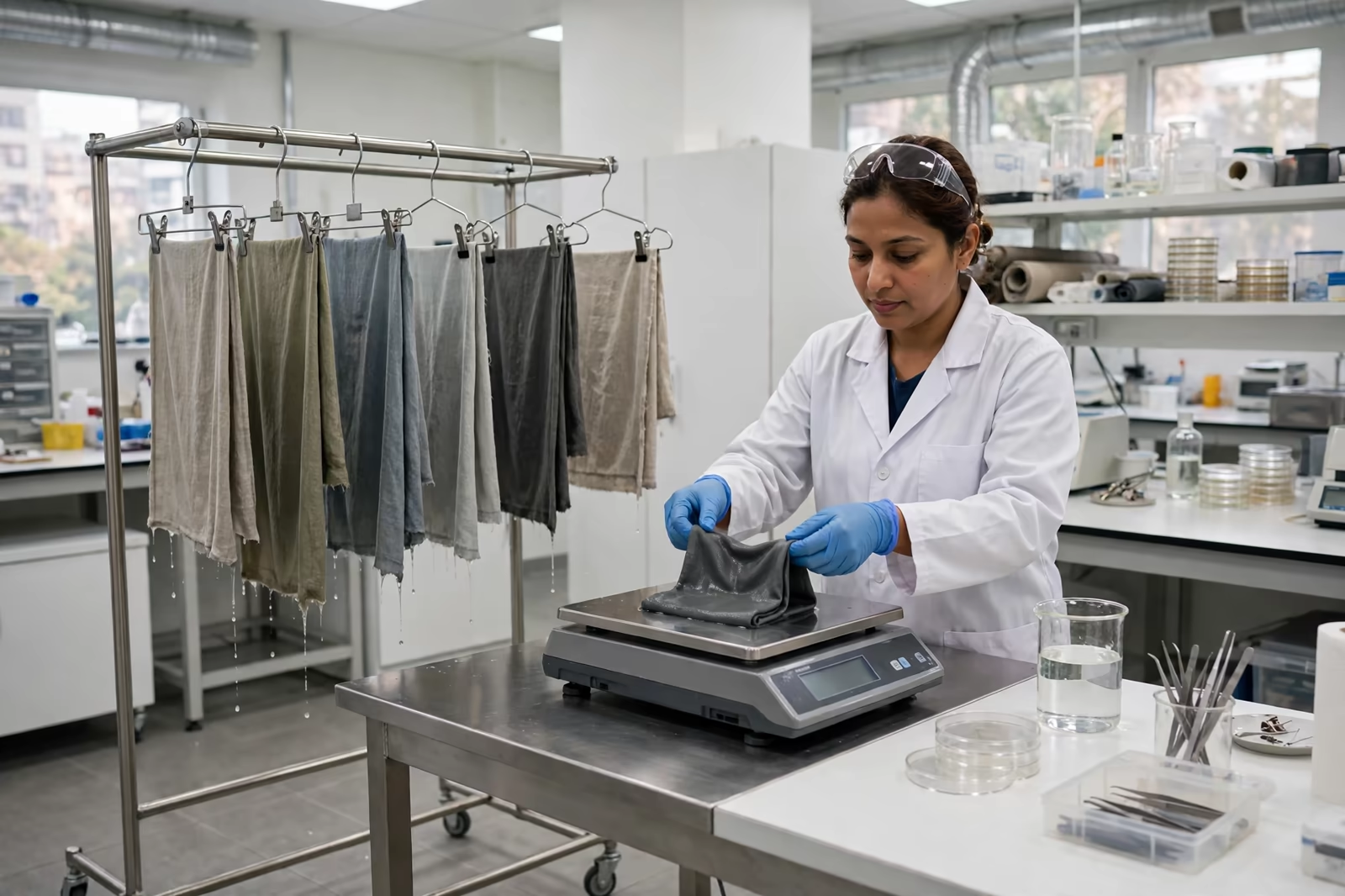
Each term has its instruments. Wicking is measured vertically and horizontally: a fabric strip or disc takes up dyed liquid, and the distance or area covered in a set time is the score. Breathability is measured as vapour transmission through a fabric sample under controlled humidity, commonly reported as a rate per area per day. Drying is weighed: a wetted sample loses water on a balance until dry, and the curve is the claim’s evidence.
Modern moisture-management testers combine the picture, grading how liquid moves from one face to the other and spreads on each. The methods differ between laboratories and standards houses, which is why specifications must name the method as well as the target.
A number without a method is a mood, and buyers who pin both get fabrics that behave the same in every shipment.
Mesh, Weight and Construction Choices
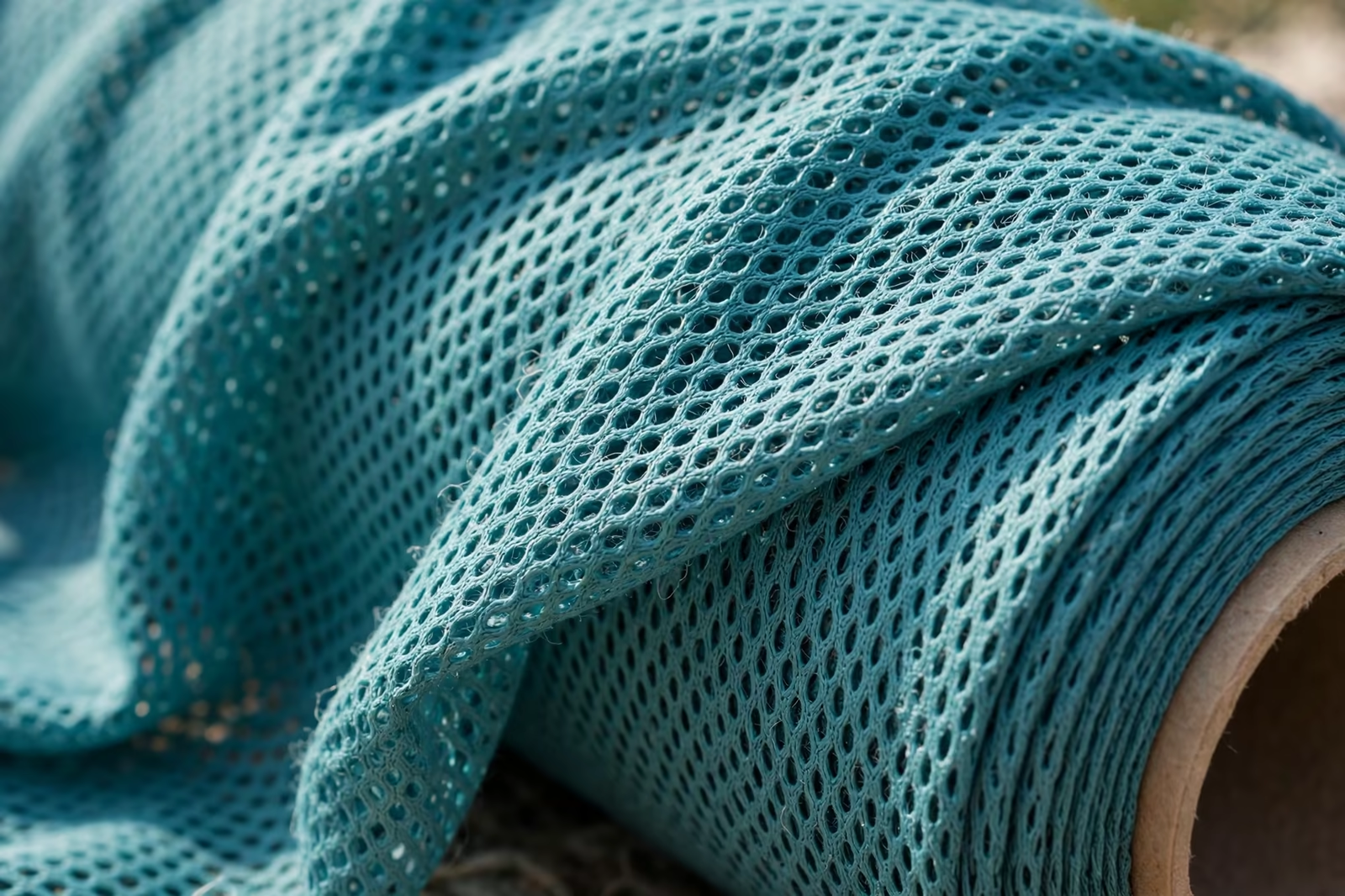
Construction is where moisture performance is won cheaply. Mesh zones at the back, underarms and sides vent vapour where the body produces most of it; lighter body fabric holds less water and dries faster; birdseye, interlock and jacquard knits each move liquid and air in their own pattern, which is why performance ranges sample several structures before choosing.
Garment engineering multiplies fabric choices: raglan sleeves free the shoulder’s movement and its sweat zones, gussets open the underarm, and flatlock seams stop wet fabric ridges from chafing skin that is already working hard.
Our performance sampling puts candidate constructions through wear trials in real training conditions, because laboratory scores and human verdicts occasionally disagree, and the human is the customer.
Natural Fibres and Blends in This Picture
Merino wool is the natural exception worth knowing: it absorbs vapour inside the fibre while its surface stays relatively dry to the touch, manages odour well and regulates temperature across conditions, at a price that confines it to premium programmes. Cotton-rich blends with polyester split the difference for teamwear and leisure performance: better drying than pure cotton, a familiar hand, a friendlier cost than full synthetics.
Bamboo-derived viscose absorbs well and feels cool, with drying behaviour closer to the cellulosic family than to polyester. Each fibre’s moisture personality is fixed by its chemistry; blending averages personalities rather than replacing them.
The buyer’s question is therefore never which fibre is best, but which moisture profile the garment’s actual use demands.
Specifying Moisture Performance in an Order
A workable specification names the fibre and construction, the target performance with its test method for the properties that matter, wicking height or drying rate or vapour transmission, and the durability point: performance after a stated number of washes. It also names the claim the garment will carry, so laboratory evidence and hangtag language cannot drift apart.
Care instructions belong inside the same clause, because the wrong wash quietly rewrites performance, as the next section explains. Reference fabrics help enormously: an approved performance sample retained by both sides settles most arguments before they begin.
On our side the specification travels to the knitting and finishing instructions in the same words, since translation between buyer language and mill language is where performance claims usually die.
Care: Keeping Performance Alive
The most common way wearers kill a performance garment is kindness: fabric softener coats filaments with a waxy film that blocks capillary channels and kills wicking, which is why performance care labels commonly warn against it. High heat damages elastane partners in the same garments, and tumble drying choices decide how long finishes survive.
Buyers who sell performance should print the care guidance as part of the product’s promise, on the label and the listing alike: a garment returned as faulty is often a garment laundered against its physics.
Our care specifications for performance ranges therefore state the softener warning explicitly rather than hoping the wearer guesses it, and the garment’s own hangtag repeats it in plain words.
Reading Performance Claims Like a Buyer
Three questions decode most hangtags. Which process is being claimed, liquid, vapour or drying? Against what comparison and by which method? And does the claim survive the care cycles the garment will actually live through? A supplier who answers all three precisely is describing engineering; one who answers with more adjectives is describing advertising.
Season the reading with garment sense: claims concentrate where construction supports them, mesh where heat gathers, wicking faces against skin, and a range whose samples demonstrate the claims on the body has done the honest work.
That is the standard this guide’s own products are written to, and the one we invite buyers to hold us to in sampling. A performance range specified this way survives its second season of reviews, which is where moisture claims are actually judged.
Frequently Asked Questions
Can a fabric be breathable but not wicking?
Yes, the two describe different phases of moisture. An open cotton mesh passes vapour freely yet absorbs liquid sweat into its fibres and holds it, so it is breathable without meaningful wicking. Performance fabrics are specified for both: vapour escape through the structure, and liquid transport along engineered filaments away from the skin.
Why does cotton feel comfortable but perform badly in training?
Because absorption is the comfort and the problem at once. Cotton drinks sweat readily, which feels dry for the first minutes; then the fibre saturates, the garment grows heavy, clings, chills the wearer between efforts and dries slowly. Synthetic performance knits move the liquid instead of storing it, which is why the training category is built on them.
How should a buyer test quick-dry claims?
By requiring the comparison and the conditions: drying time against a named reference fabric, on a stated method, ideally repeated after a set number of washes. Weight-based drying tests in the laboratory are straightforward and repeatable, and a supplier confident in the claim will share results rather than adjectives.
Do moisture finishes survive washing?
It depends on the finish’s durability class, which is exactly the question to ask. Topical finishes wash away progressively; durable finishes and yarn-level engineering last far longer. Programmes should specify performance after a stated number of care cycles, so the claim is tested at the point in the garment’s life where the wearer actually judges it.