
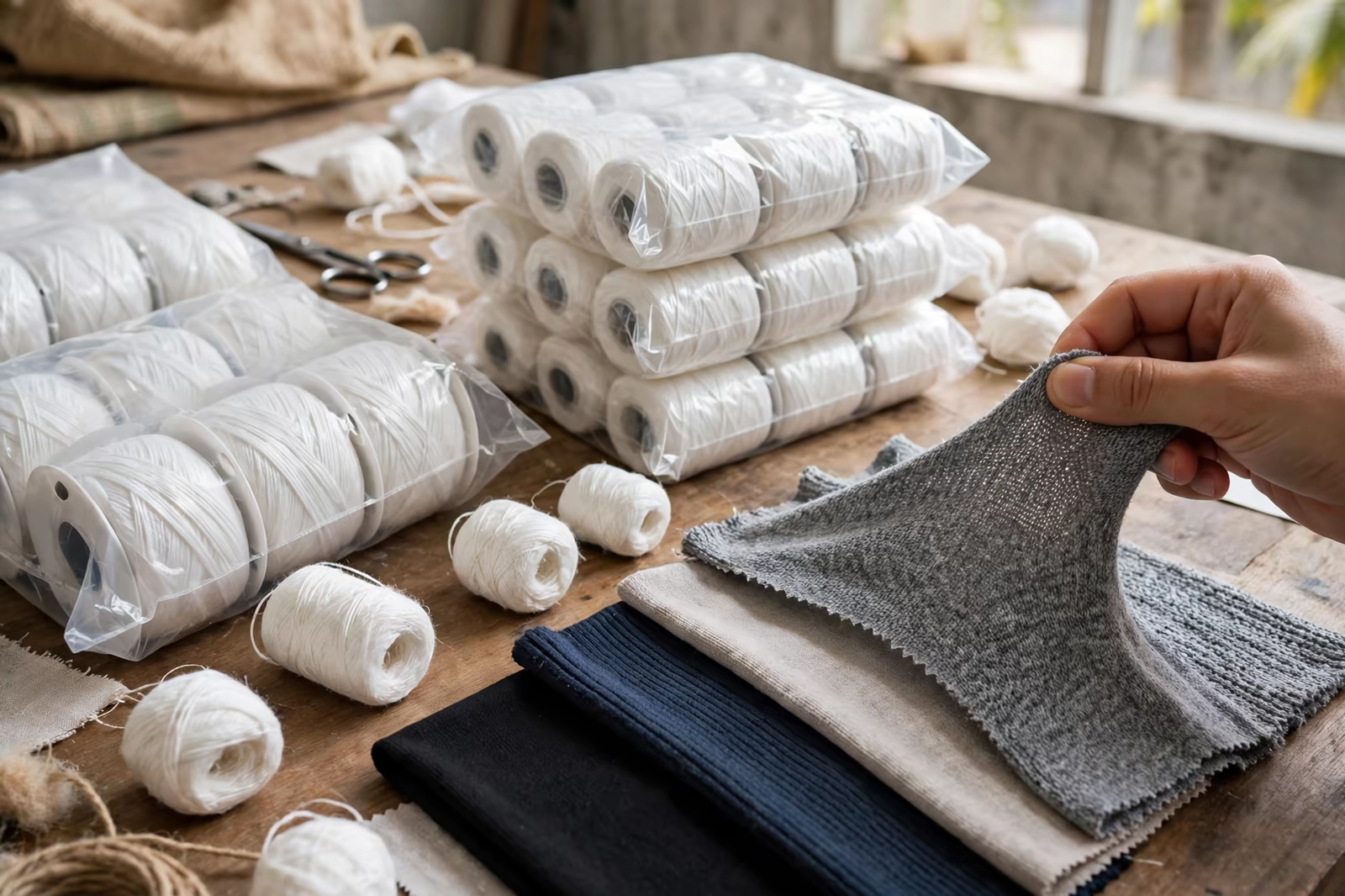
Elastane is the smallest ingredient with the loudest effect in modern clothing: a few percent decides whether jeans forgive lunch, whether leggings survive a squat, whether a t-shirt keeps its neckline. Too little and the garment feels like a costume; too much and it clings, bags and ages early. This guide sets out the percentages the trade typically uses by garment family, and the reasoning behind each band, so buyers can specify stretch with intent rather than habit.
The stretch desk behind this guide builds elastane programmes on clothing made in Bangladesh for the USA, the UK, Germany, Canada and Australia.
The stretch anchors are our leggings and our denim jeans, with the full construction picture inside our services.
How Elastane Works Inside a Fabric
Elastane, the generic name behind brand names like Lycra and Spandex, is a filament that can stretch to several times its length and snap back. In clothing fabrics it almost never appears alone: it is wrapped or core-spun with the main fibre, cotton, polyester or nylon, and knitted or woven through the fabric so the whole cloth gains controlled give.
The percentage on the label is by weight, which understates the effect: a small weight of fine elastane filament spreads through every course of a knit. What the wearer experiences is governed by three things together: the percentage, the fabric’s construction, and the garment’s fit. The same fabric reads as gentle comfort in a relaxed fit and as compression in a skin-tight one.
Elastane also brings a weakness to manage: heat, chlorine and some finishing chemistries degrade it, so stretch garments carry their own care and process rules, which the percentages conversation should never ignore. Throughout this guide the percentages are the working bands the trade typically builds to, stated as ranges because construction and fit move the right figure inside them.
Leggings and Activewear: The High Band
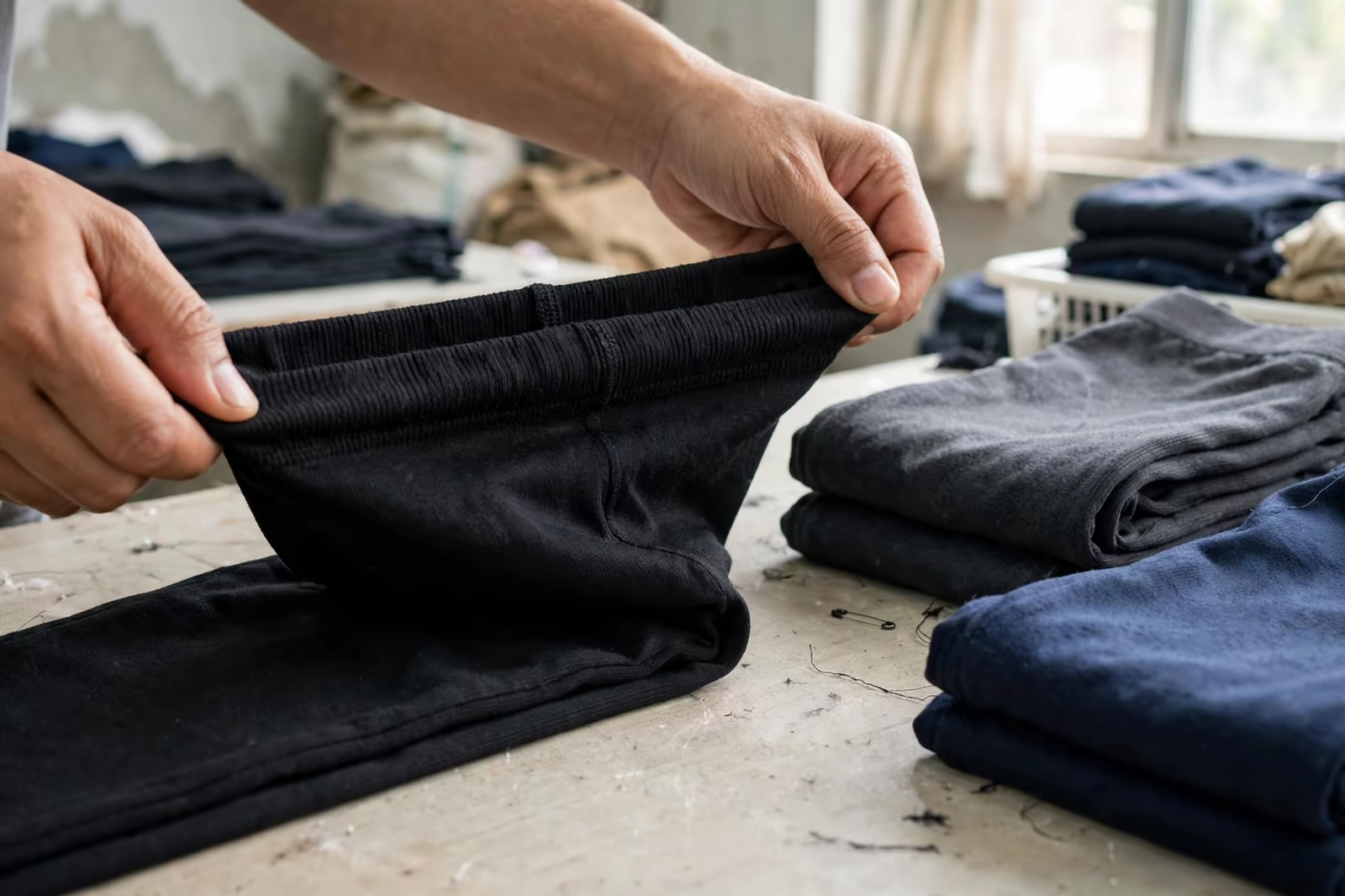
Leggings, tights and fitted activewear live at the top of the range, typically somewhere in the high teens to the mid twenties percent by weight, in nylon or polyester blends. The garment is essentially engineered fabric tension: it must stretch across knees and hips through a full movement range, recover instantly, and stay opaque at maximum extension.
Below that band, leggings feel like trousers and bag at the knee by lunchtime; above it, cost rises, the hand turns rubbery and the fabric can feel punishingly tight. Compression sportswear deliberately works the upper part of the band with graduated pressure designed in, a specialist category with its own testing.
Recovery matters more than raw stretch here: the test that counts measures how completely the fabric returns after repeated extension, because a legging that grows a size by the third wear is a returns statistic.
Denim: One or Two Percent Changes Everything
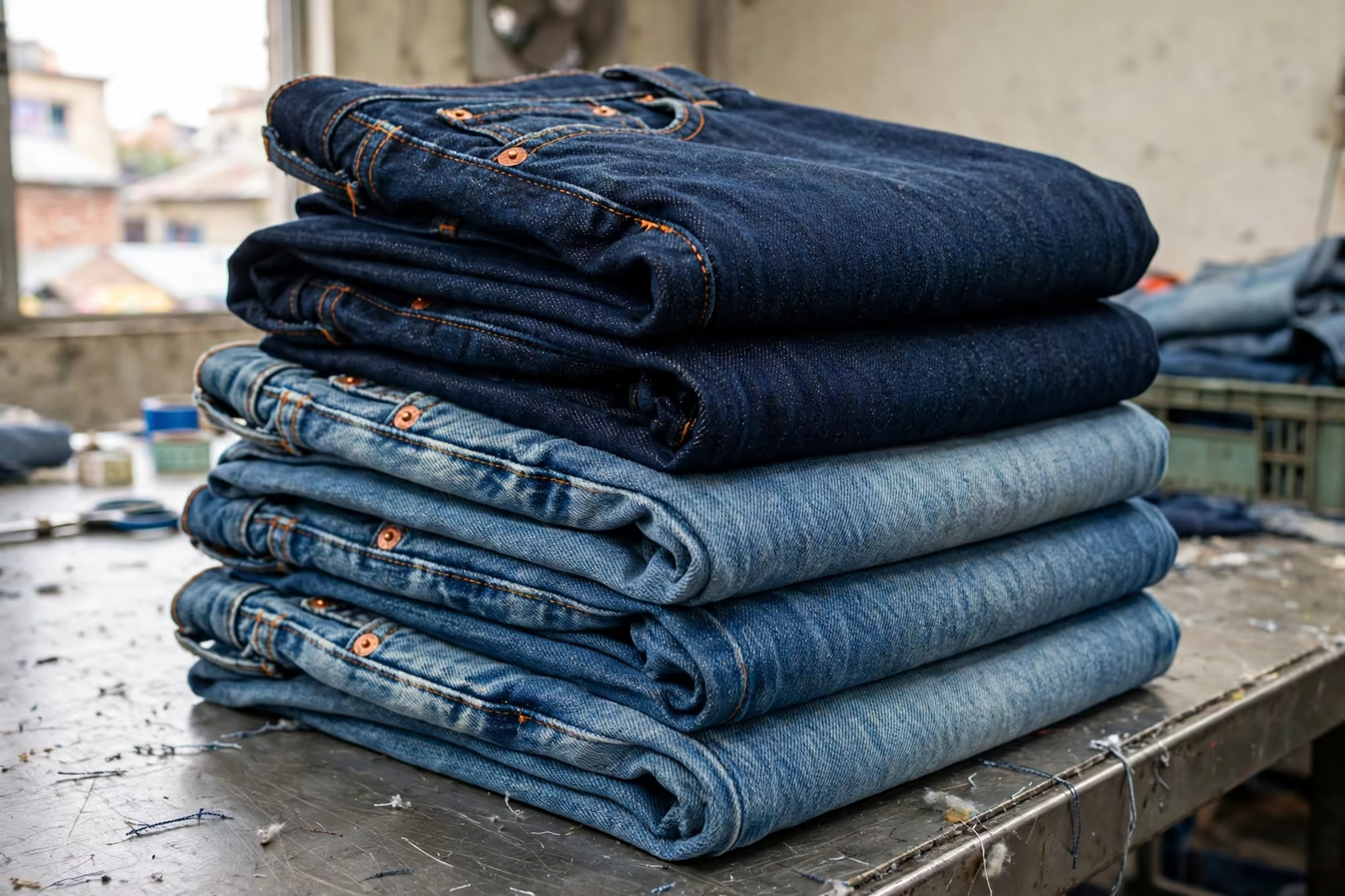
Stretch denim typically carries only one to two percent elastane, a figure that surprises buyers until they wear both versions. Rigid denim shapes the body by pattern alone; that small elastane dose lets a skinny or slim fit move, sit and bend without a break-in week, and helps the knee and seat recover their shape between wears.
Push denim higher and it stops behaving like denim: the cloth loses its structure, grows at the waist and reads as jegging rather than jeans, which is a legitimate product but a different promise. The percentage is therefore a design identity decision as much as a comfort one.
Weft direction does the work in most stretch denim, the elastane running across the body where movement demands it, while the warp stays rigid cotton for the classic denim hand.
T-Shirts, Shirts and the Low Band
Jersey basics typically carry zero to about five percent elastane. A pure cotton tee stretches mechanically through its knit loops and recovers modestly; a few percent of elastane, often in the region of three to five, sharpens recovery, keeps necklines and cuffs honest and lets fitted women’s styles hold their line through a day and a wash cycle.
Woven shirts borrow the idea more cautiously: one to three percent in the weft is a common comfort-stretch recipe, enough to ease reach and sitting without changing the shirt’s tailored character. Knitted polo shirts sit between the two worlds, with small elastane doses in collars and bodies where the brand wants shape retention.
The low band is also where elastane quietly protects quality: ribbed cuffs, collars and waistbands with a small elastane share outlast pure-cotton versions that relax into waves.
Underwear, Socks and Swimwear: Specialist Bands
Underwear splits the difference: body fabrics often carry five to ten percent for close fit that survives a day, while elastic components, waistbands and leg openings, do the heavier mechanical work as separate engineered elements. Socks use small percentages through the body and more in the cuff, which is why a sock’s label lists several compositions for its parts.
Swimwear occupies the high band alongside leggings, commonly in the high teens, in nylon or polyester blends built for chlorine resistance, because a swimsuit is a garment worn at full stretch in an elastane-hostile environment. The elastane type specified for swim is itself a specialist choice.
Workwear borrows modestly: a few percent across trousers and shirts for bending and lifting comfort, kept low to preserve durability and the garment’s structured appearance through industrial laundering.
Stretch and Recovery: The Tests Behind the Numbers
Two measurements turn a percentage into a promise. Extension testing records how far the fabric stretches under a defined load; recovery testing records how completely and quickly it returns after being held stretched, once and repeatedly. A fabric can boast spectacular extension and miserable recovery, which is the recipe for baggy knees.
Testing follows the fabric’s working direction, usually the weft or course direction where the elastane runs, and is repeated after washing, because elastane performance and fabric structure both shift in laundering. Fit trials on bodies then validate what the instruments began.
Buyers should ask for both figures on bulk fabric, against the labelled care method, before approving a stretch programme; a percentage on a label is a claim, and these are its proofs.
Cost, Handle and the Life of the Garment
Elastane is expensive fibre bought by the kilogram and used by the gram, so percentages move fabric cost noticeably at the high band and barely at the low. Its other costs are subtler: stretch fabrics demand gentler dyeing and finishing temperatures, careful cutting and sewing settings, and trims, elastic, thread, that move with the cloth.
Garment life is the honest limit. Elastane degrades with heat, ultraviolet light, chlorine and time itself; a high-stretch garment is a performance product with a service life, and brands that say so, with care instructions that protect it, earn fewer angry reviews than brands that promise forever.
Warranty and returns policies for stretch categories should be written with that physics in mind, on both sides of the purchase order, before the first complaint arrives to teach the lesson.
Elastane and the Sustainability Conversation
Elastane complicates end-of-life: blended fabrics are harder to recycle mechanically, and even a few percent of elastane can disqualify a fabric from some recycling streams. Buyers running circularity programmes increasingly ask for the lowest percentage that does the garment’s job, mono-material design where possible, and honest labelling.
Recycled and bio-based elastane variants are entering the market at the premium end, and regenerated-fibre programmes in our recycled fabrics guide face the same design tension from the other direction. None of it changes the physics: specify the band the garment needs, no more.
Durability remains the strongest sustainability argument in stretch: a garment worn for years at five percent beats a disposable one at zero.
Specifying Stretch in the Order File
A complete stretch specification names the fibre composition with its tolerance, the fabric construction and weight, the extension and recovery requirements with their test methods, and the care labelling the elastane demands. It also names where the percentage applies, body fabric only or trims too, because labels must describe the whole garment lawfully.
Label composition is verified by fibre analysis on bulk where programmes are serious, and the artwork should not be printed until the bulk composition is confirmed; relabelling a container of garments is a special kind of afternoon.
Our order files carry the composition from the mill confirmation forward, so the garment, its tests and its ticket all describe the same cloth.
Where Buyers Get Stretch Wrong
The classic errors repeat: copying a competitor’s percentage without its construction, because percentage without fabric weight and fit block means little; demanding high stretch in a garment whose pattern has no negative ease to use it; and forgetting the trims, so a stretch body meets a rigid waistband and the argument happens at the wearer’s waist.
The mirror error is fear: removing elastane from a fitted women’s style to save cost, then paying the saving back in returns for a garment that fits nobody by the second wear.
Fit sessions with the actual bulk fabric, worn and washed, catch all of these cheaply, which is why they are built into our sampling rhythm for stretch styles. The buyer’s one-page summary is worth pinning: choose the band by garment family, prove it with recovery testing, protect it with the right care label, and never let a percentage travel without its construction.
Frequently Asked Questions
Why does the label percentage look so small for jeans?
Because elastane is measured by weight and spread as fine filament through the whole fabric, one to two percent is enough to transform how denim moves and recovers. Wearers feel the effect out of all proportion to the number. Higher percentages change denim’s character entirely, producing jegging-style cloth rather than classic jeans behaviour.
Does more elastane always mean more comfort?
No. Past each garment family’s working band, extra elastane raises cost and tightness, can make fabric feel rubbery, and shortens garment life because elastane is the first component to degrade with heat, washing and chlorine. Comfort comes from the percentage, construction and fit working together, not from maximising one number.
How is the right percentage chosen for a new style?
By starting from the garment’s job: the movement it must allow, the fit block it uses and the recovery it must show after wear. The fabric is then built or sourced to that band and proven with stretch and recovery testing on the bulk fabric and fit trials on bodies, before the percentage is locked into the specification and the label artwork.
Does elastane change care labels?
Usually, yes. Elastane-bearing garments commonly carry cooler wash and dry instructions and warnings against chlorine bleach and high tumble heat, because those conditions attack the filament. Swimwear and activewear add chlorine-specific guidance. The care label is part of the stretch specification, not an afterthought, and testing should follow the labelled care method.