
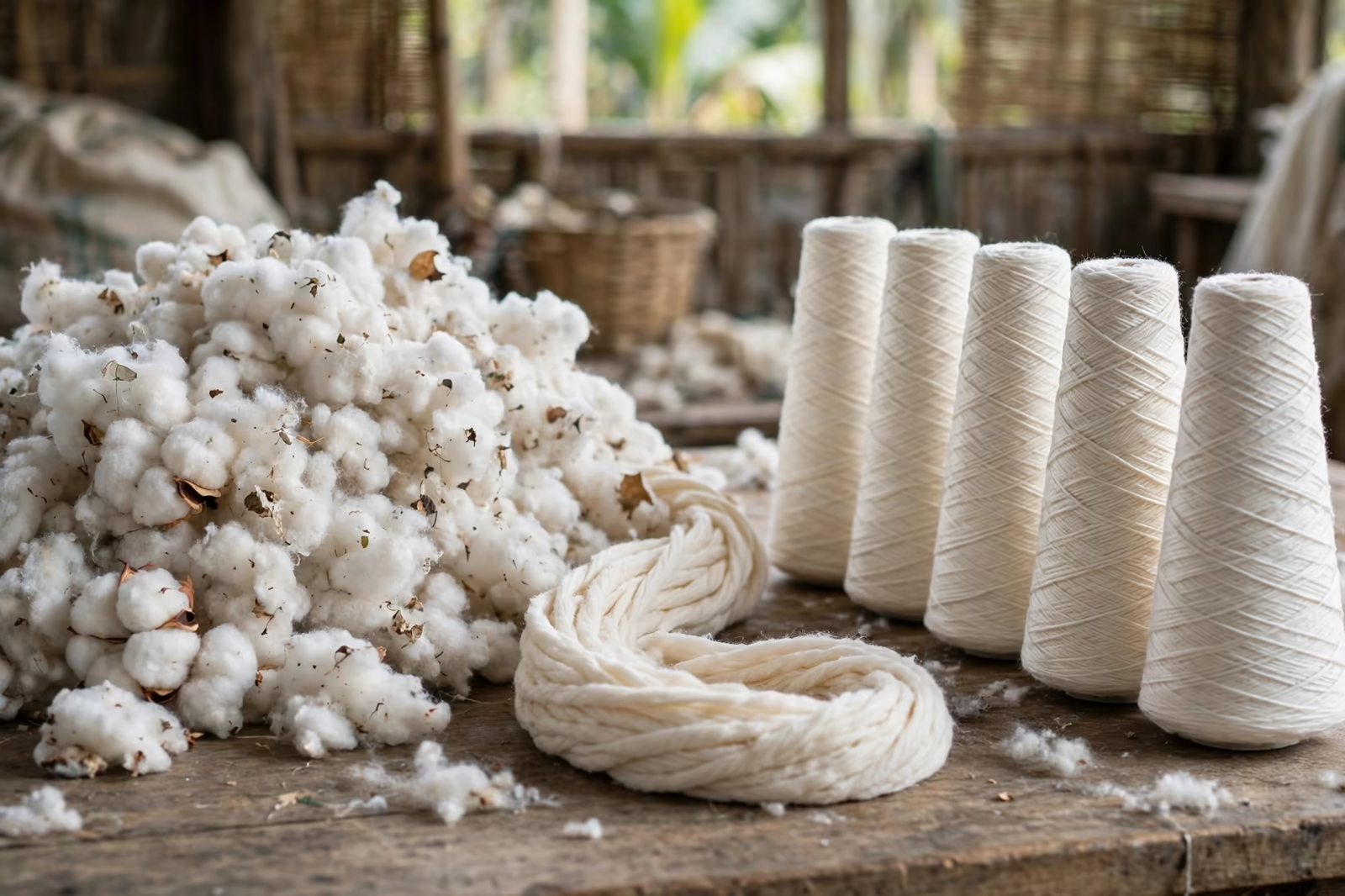
Three cotton words decide how a t-shirt feels, prints and ages: carded, combed and ring-spun. They describe two different stages of yarn making, which is exactly why they confuse buyers, and why garments carrying the same fibre content on the label can behave like different species. This guide separates the terms properly, explains what each process changes in the yarn, and shows how the choice flows into hand feel, print quality, durability and price.
The cotton desk behind this guide spins these choices into programmes on clothing made in Bangladesh for the USA, the UK, Germany, Canada and Australia.
The range runs from our classic crew-neck t-shirt to our premium heavyweight t-shirt, with the wider options inside our services.
Carded Cotton: The Honest Baseline
Carding is the stage every cotton yarn passes through: raw cotton is opened, cleaned and drawn through carding machines that disentangle the fibres and align them roughly into a continuous strand. Carded yarn keeps the fibre mix largely as harvested: longer and shorter fibres together, with more of the natural variation of the crop left in.
The result is a serviceable, economical yarn with a slightly rougher, more textured hand feel and a surface that pills and fuzzes sooner than its refined cousins. For workwear, promotional volume and budget basics, that trade is often the correct commercial answer rather than a failure.
What carded cotton is not is defective: it is the standard against which the upgrades charge their premium, and millions of perfectly satisfactory garments prove it weekly. Buyers should also know that carded quality itself varies with the cotton crop and the carding machinery’s condition, so a carded specification still deserves an approved swatch and bulk checks rather than blind trust in the word.
Combed Cotton: The Short Fibres Removed
Combing adds a further stage after carding: the strand passes through fine combs that strip out the shortest fibres and remaining impurities, leaving a yarn built from the longer, straighter share of the crop. The process discards a meaningful slice of the raw material, which is where the cost goes.
The yarn that emerges is smoother, more even and stronger for its weight, and the fabric knitted from it shows the difference everywhere: a cleaner surface for printing, less pilling and fuzz in wear, a softer and more consistent hand feel, and better behaviour across repeated washing.
Buyers meet combed cotton most often in mid and premium basics, underwear and baby clothing, anywhere the surface touches skin all day or carries a print that must stay sharp.
Ring-Spun: A Spinning Method, Not a Fibre Grade
Ring spinning answers a different question: not which fibres, but how they are twisted into yarn. In ring spinning, the fibre strand is drawn out and twisted continuously on a rotating ring frame, producing a yarn where the fibres wind tightly and uniformly along its length. The common alternative, open-end or rotor spinning, twists fibres differently and faster, making a bulkier, coarser yarn at lower cost.
Ring-spun yarns are finer, stronger and smoother than open-end yarns of the same count, and they knit into fabric with a noticeably softer, more refined surface. Most premium t-shirts are ring-spun, and the very best combine both upgrades: combed fibre, ring-spun yarn.
Open-end yarn keeps its own honest territory: heavy, hard-wearing budget garments where softness is not the selling point and cost per piece rules.
What the Differences Feel Like in a Finished Garment
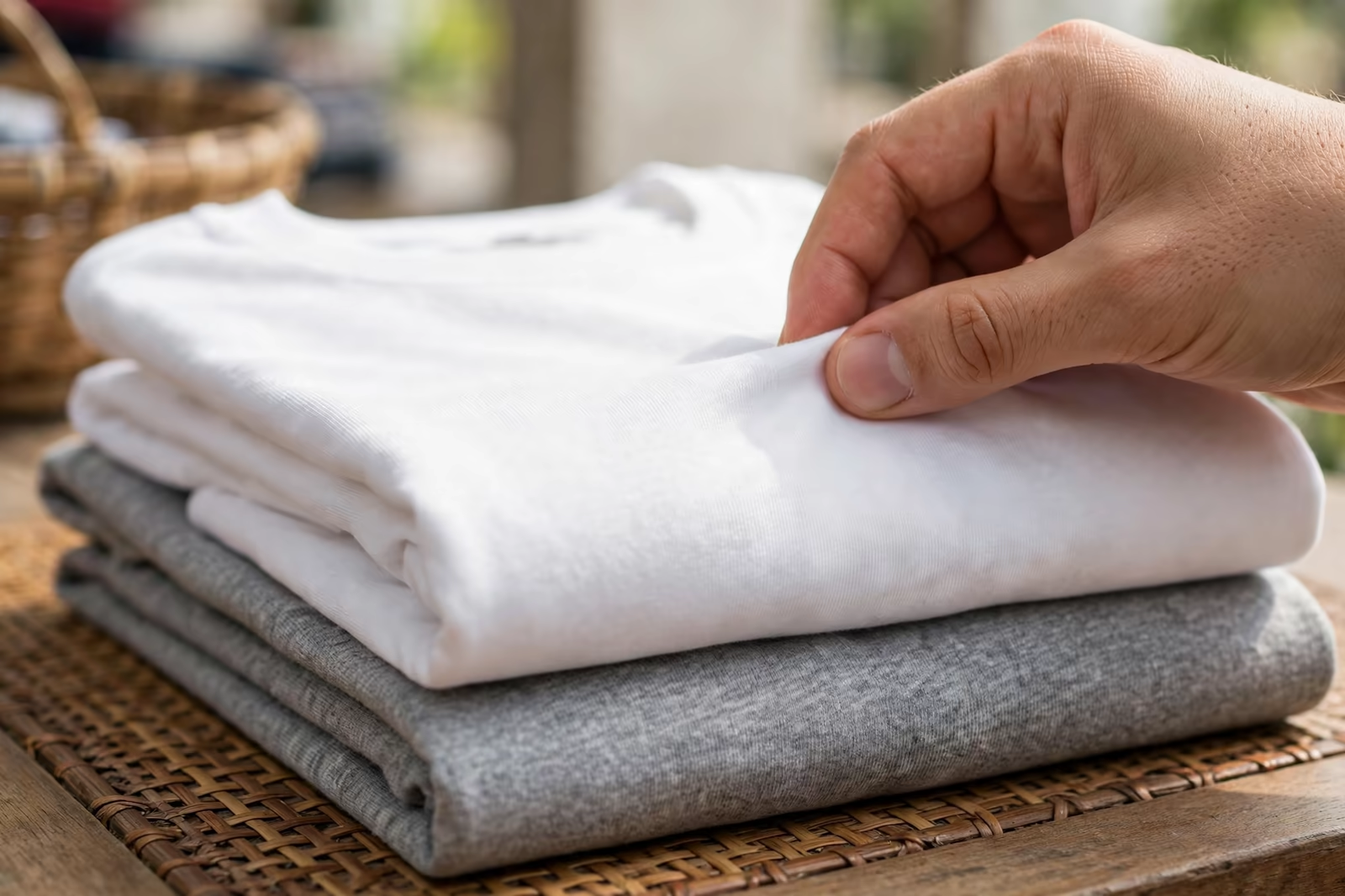
Side by side, the ladder is easy to read by hand. A carded open-end tee feels dry and slightly coarse, with a matte, fibrous surface; a combed ring-spun tee feels smooth and almost cool, drapes closer, and shows a cleaner knit face with less stray fuzz. Printing follows the surface: fine detail and soft-hand prints sit best on the combed ring-spun face, while bold graphics forgive almost anything.
Durability climbs the same ladder, because longer fibres and tighter twist resist the abrasion that thins elbows and underarms. Washing behaviour follows too: refined yarns shed less lint, hold their surface longer and keep a garment looking newer deeper into its life.
None of this makes the top of the ladder the right buy for every programme; it makes the choice a conscious one, priced against the garment’s job. The differences also compound with finishing: enzyme washing and softeners can lift a mid-ladder fabric’s hand considerably, though they cannot give short fibres length, nor an open-end yarn a ring-spun yarn’s evenness, which is why finishing is a polish, never a substitute for the yarn decision.
Yarn Count: The Number Beside the Name
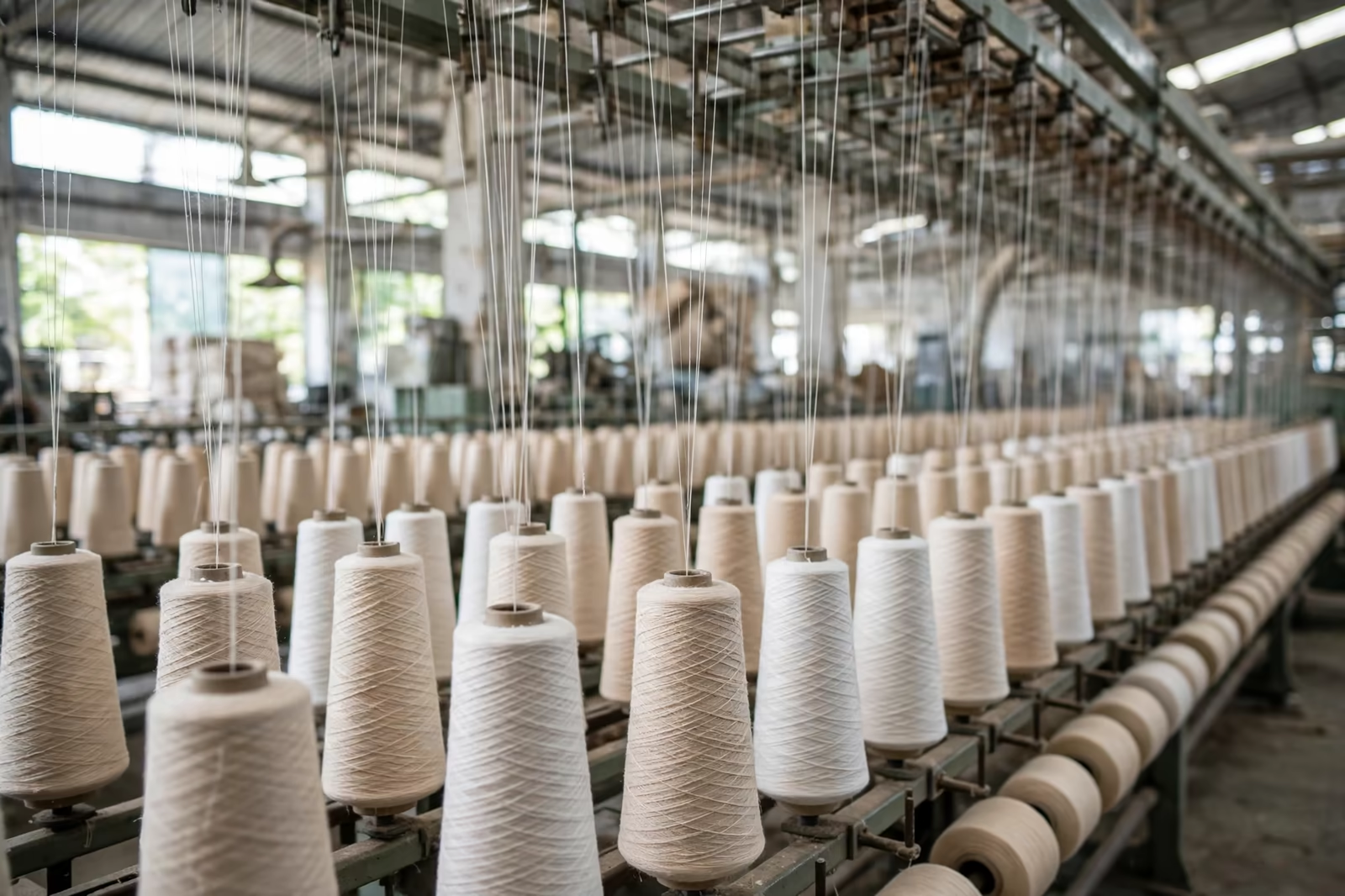
Cotton yarns are also graded by count, an inverse numbering in which a higher count means a finer yarn. Fine counts knit the smooth, light fabrics of premium tees and underwear; coarse counts build heavyweight and workwear cloth. Count and preparation interact: combing makes fine counts possible, because short fibres cannot survive fine spinning, while carded yarns live mostly at the coarser end.
Buyers reading a specification should therefore see three coordinates, not one word: fibre preparation, spinning method and count, together with the knitted weight they produce. Two fabrics both sold as ring-spun can differ entirely because their counts and weights differ.
Our specifications state all three coordinates plus the finished weight, so the conversation compares like with like. A specification that reads simply “cotton t-shirt fabric” invites every mill to answer a different question, and the cheapest answer tends to win tenders it should never have entered.
The Price Ladder, Honestly
Each upgrade costs money for physical reasons: combing discards fibre, ring spinning runs slower than open-end spinning, fine counts consume more processing per kilogram. The ladder from carded open-end to combed ring-spun is therefore a ladder of real inputs, not branding, and quotes that collapse it usually do so by quietly descending it.
The buyer’s craft is matching the rung to the product’s promise. A giveaway tee at a festival is honestly served by the bottom rung; a retail basic sold on softness must stand on the top one, because customers will run the comparison by hand in the shop.
Mid-ladder combinations, carded ring-spun or combed open-end, exist precisely for programmes balancing both, and a good merchandiser will price them openly rather than letting the choice happen by default.
Blends: Where Cotton Hands Over
Much of the world’s cotton clothing is not pure cotton. Polyester-cotton blends trade a measure of cotton’s breathability for strength, colour retention and price stability; cotton-elastane adds the stretch fitted styles need. The preparation ladder still applies to the cotton share: a combed cotton blend feels and prints better than its carded twin.
Blend ratios are legal label content and commercial reality at once, and testing verifies them, because fibre analysis can read a blend’s true composition regardless of what the paperwork hoped.
Specifications should therefore name preparation, spinning, count and blend together; each control a different property, and none substitutes for another.
How to Specify Cotton in a Purchase Order
A workable specification names the garment’s fabric completely: fibre and blend, preparation (carded or combed), spinning (ring or open-end), yarn count, knitted construction and finished weight, plus the performance tests from the buyer’s standard package with their limits. Anything left unnamed will be decided by the cheapest available interpretation, by somebody, somewhere in the chain.
Reference samples help: an approved fabric swatch retained by both sides turns arguments about hand feel into comparisons. Approval should be of the bulk fabric’s first production, re-verified against that swatch, not of a sample-room special.
On our side the specification is repeated into the mill order in the same words, because translation losses between buyer language and mill language are a classic source of quiet downgrades.
Verifying What You Actually Got
Some verification is sensory and quick: the surface evenness, fuzz level and hand of the bulk against the approved swatch catches most downgrades. Some is instrumental: weight checks, construction counts and the performance tests in our fabric testing guide, shrinkage and pilling above all, behave differently across the ladder and expose substitutions.
Fibre analysis settles blend disputes outright, and spinning or preparation disputes can be evidenced from yarn and fabric microscopy where a claim justifies it. The realistic deterrent is simpler: a buyer who tests bulk fabric gets the specified fabric.
Claims about premium cotton that arrive without any test evidence should be priced as carded until proven otherwise; the market rewards that scepticism, and honest suppliers welcome it because it prices their real investment correctly.
Matching Cotton Type to Product Families
Retail basics, underwear, babywear and premium promotional lines justify combed ring-spun on skin contact and surface quality alone. Fashion tees with heavy print coverage usually justify it for the print face. Workwear and utility garments often favour carded or open-end constructions where abrasion resistance and price dominate, sometimes in blends for strength.
Heavyweight streetwear cuts both ways: coarse open-end yarns give the dry, structured hand many brands want, while premium heavyweight programmes choose ring-spun for a cleaner surface at the same weight. The fabric meeting, not the marketing meeting, should settle which.
Our product pages state the fabric construction of each style so the matching conversation starts from the garment’s actual build. Programmes that span several families often standardise on two cotton specifications, one premium for skin-contact and retail styles, one workhorse for volume and utility, which keeps mill ordering simple and the quality conversation honest across the whole range.
Frequently Asked Questions
Is ring-spun the same as combed?
No, they describe different stages. Combing is a preparation stage that removes short fibres before spinning. Ring spinning is the spinning method itself, an alternative to open-end spinning. A yarn can be combed or carded, and ring-spun or open-end, in any combination; premium t-shirt yarn is typically combed and ring-spun together.
Why does combed cotton cost more?
Because the combing stage throws material away: the short fibres and impurities removed are a real percentage of the purchased cotton, and the extra processing adds time and machinery. The buyer is paying for the discarded fraction as surely as for the yarn delivered, which is why the premium is structural rather than negotiable.
Which cotton is best for printed t-shirts?
For fine detail, photographic work and soft-hand finishes, combed ring-spun cotton gives the smoothest, most consistent print surface and the least fibrillation over the print’s life. For bold one or two colour graphics on promotional volume, carded cotton prints perfectly acceptably, and the saving usually matters more than the surface difference.
Does the label have to say which type was used?
Fibre content labels must declare the fibre, cotton in this case, but the carding, combing and spinning route is generally commercial description rather than legal labelling. That is why buyers specify the yarn type in the purchase specification and verify it through fabric hand, surface and performance testing rather than relying on garment tickets.