
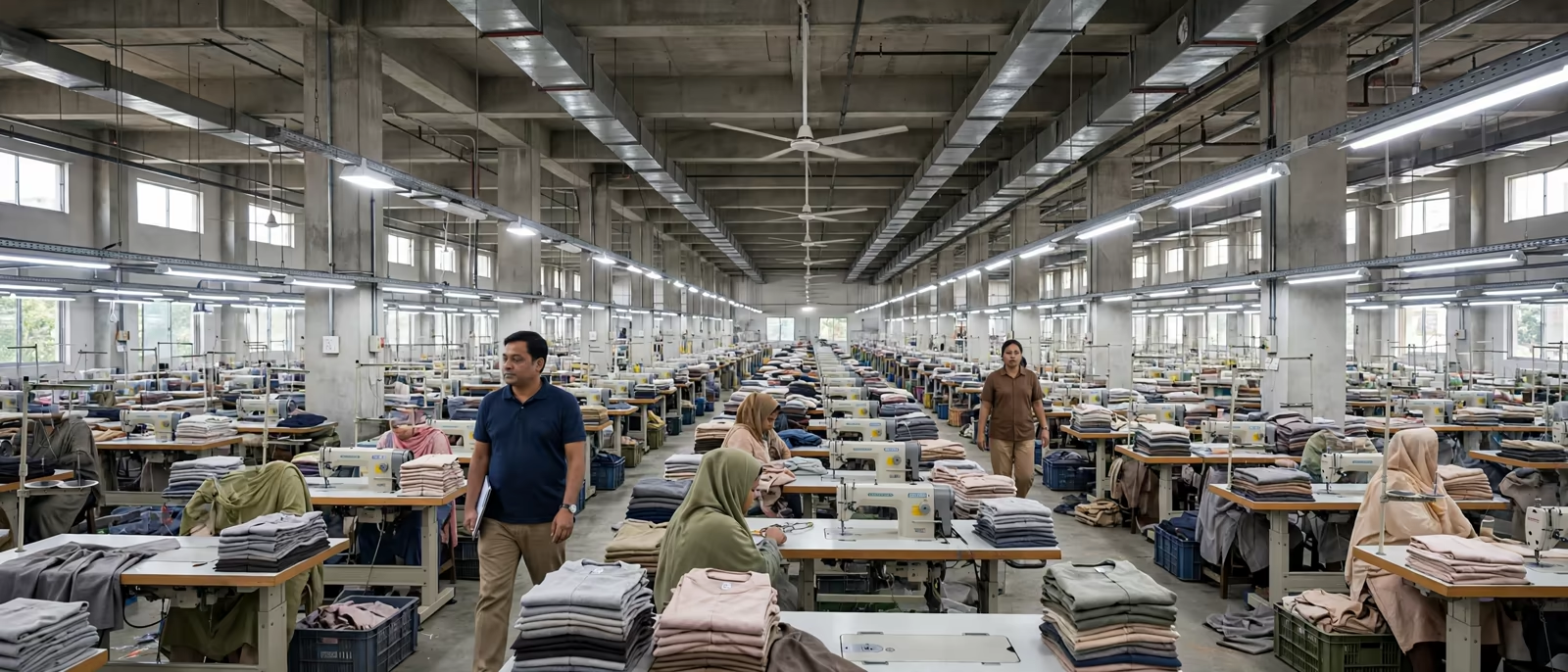
Ask experienced buyers where the world’s basic apparel is made, and one country is named first so often that it can sound like a reflex. Bangladesh earned that position over four decades: an industry built on knitwear and woven basics, scaled to serve the largest retail markets on earth, and refined season after season by the world’s most demanding customers.
The teams behind this guide work in Bangladesh, producing export apparel for buyers in the USA, the UK, Germany, Canada and Australia, alongside programmes across Europe, the Middle East and East Asia. This is the honest case for sourcing here, strengths stated plainly, limits included, because buyers planning real programmes need both.
The case connects with the regions on our market area page, the company on our about us page, and a first conversation through our get a quote page.
An Industry Built at World Scale
Bangladesh stands among the largest apparel exporting countries in the world, and garments are the backbone of its export economy. That scale is not an abstraction for buyers: it means deep pools of skilled operators, supervisors, pattern makers, merchandisers and technicians, and an entire supporting economy of mills, dye houses, trim suppliers, printers and embroiderers within reach of the factories.
Scale also brings specialisation. Districts and factories focus by product family, knitwear here, woven shirts there, denim elsewhere, so a buyer’s programme lands where the accumulated craft for that garment already lives. Experience concentrates, and quality shows it.
Perhaps most importantly, scale brings resilience. When one mill is full, another exists; when a line frees, a programme moves. Buyers sourcing from small industries feel every local shock personally; buyers here borrow the depth of a national industry.
Skills Built Over Decades
The industry’s craft story begins in knitwear: t-shirts, polos, fleece and jersey basics produced in volumes that taught generations of makers their trade. That depth shows in the details buyers feel, consistent sizing across huge orders, stable colours repeat after repeat, stitching that survives the wash and the season.
Woven capability grew alongside: shirts, trousers, workwear and outerwear sewn in factories that learned from European and American technical standards. Printing and embroidery matured into industries of their own, from high-volume screen printing to fine logo work, giving buyers decoration options inside the same sourcing trip.
Every generation of buyers added its lessons, American mass-market discipline, European compliance culture, Japanese precision, and the industry absorbed them all. Sourcing here today means buying from that accumulated education.
Where the Value Comes From
The cost case is real but should be understood properly. Bangladesh offers competitive production costs built on a large skilled workforce and efficient factories, and for basics programmes the landed economics remain among the strongest available anywhere. Buyers are not choosing between cheap and good here as often as the stereotype suggests; they are buying practised efficiency.
Vertical depth supports the value: local spinning, knitting, dyeing and finishing capacity for cotton and blended fabrics means many programmes source their cloth inside the country, shortening supply lines and stabilising fabric costs. Where a programme needs imported fabric, established trade routes bring it in routinely.
The industry’s maturity also removes hidden costs buyers pay elsewhere: fewer failed orders, deeper replacement capacity when something slips, and factories fluent in the paperwork, testing and packing standards of each destination market.
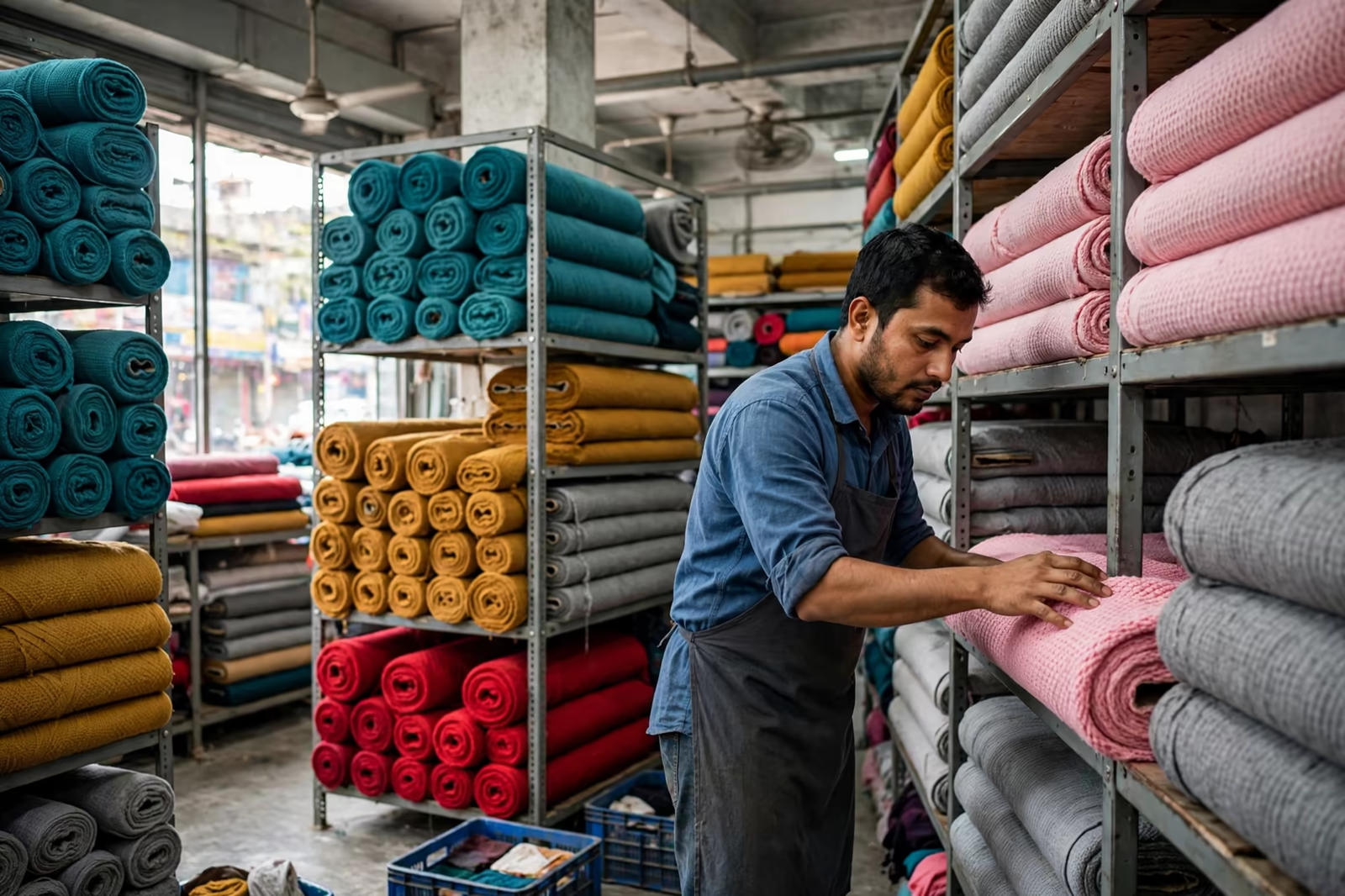
The Fabric Ecosystem Up Close
A sourcing country’s fabric base decides how programmes behave day to day. Bangladesh spins, knits, dyes and finishes cotton and blended fabrics at national scale, so the cloth for a tee or hoodie programme commonly travels a short domestic route to the sewing factory, ordered against the buyer’s programme and developed to the buyer’s shade and hand feel.
That closeness buys responsiveness: shade corrections cycle in days rather than in shipping weeks, replacement fabric for an approved programme can be re-dyed domestically, and fabric testing happens where the garments will be sewn. Buyers feel the difference most on repeat programmes, where the fabric route becomes a known road travelled faster each season.
Woven fabrics run a similar pattern for the country’s shirt and trouser strengths, and where a design asks for something the local base does not make, established import channels fill the gap as a routine, not an adventure.
The Markets Bangladesh Serves
Europe takes the largest share of the industry’s output, with Germany among its most important destinations, followed by the United Kingdom and programmes across the continent. The United States and Canada anchor the North American trade, Australia grows steadily, and buyers in the Middle East and East Asia source basics and uniforms here in rising volumes.
That spread matters to an individual buyer in practical ways. Factories here already know your market’s labelling law, testing expectations, carton and pallet conventions, and documentation habits, because they serve your neighbouring brands every season. The learning curve your first order might otherwise pay for has been paid by the industry already.
Preferential trade arrangements strengthen several of these routes further, a topic this blog treats in its own guide to duty-free access for European programmes.
Compliance and the Modern Factory
The modern Bangladeshi export factory operates under scrutiny that would surprise buyers whose picture of the industry is decades old. International buyers audit working conditions, building and fire safety, wages and hours, and environmental practice, and factories serving serious programmes treat those audits as a cost of keeping their customers.
Certification culture followed: social and environmental standards, product safety testing regimes and chemical management systems are routine vocabulary in export factories. Buyers should still verify for themselves, audit, ask, check certificates against issuers, but they verify against a system that expects verification.
The direction of travel continues: greener dyeing, better energy practice, more transparency. Buyers building long programmes are buying into an industry investing in remaining buyable.
What Bangladesh Does Best
Every sourcing country has a centre of gravity, and honesty helps buyers match programmes to it. Here it is knit basics and fleece at volume, polos and jersey programmes, woven shirts and trousers, workwear and uniforms, and private label basics for retail and promotional markets, all produced to order under the buyer’s own label and specification.
Decoration is a strength in its own right: screen printing, embroidery, heat transfers and garment washing all exist here at production scale, so embellished programmes do not travel between countries or contractors. A printed hoodie programme, fabric to finished garment, can live its whole life inside one sourcing relationship.
Programmes needing exotic fabrics or very small test quantities may fit other countries better at the edges, and a good factory here will say so. Matching the programme to the country’s strengths is the first sourcing skill.
The Honest Limits, and Managing Them
Distance is the real limit: Bangladesh sits far from its largest markets, so sea freight stretches the calendar and planning must respect it. Buyers manage this with earlier confirmations, forecast sharing and buffer thinking in their own warehouses, and in return they receive the cost and capability case the previous sections describe.
Peak-season congestion is the second limit, shared with every major sourcing country: festival periods and global shipping peaks tighten capacity and ports. Programmes planned with the factory’s calendar in hand sail through periods that strand improvised orders.
Neither limit is a secret or a scandal; both are simply planned around, exactly as buyers plan around the limits of every alternative, nearer countries with higher costs, cheaper countries with shallower skills. The case for Bangladesh is that its limits are the manageable kind.
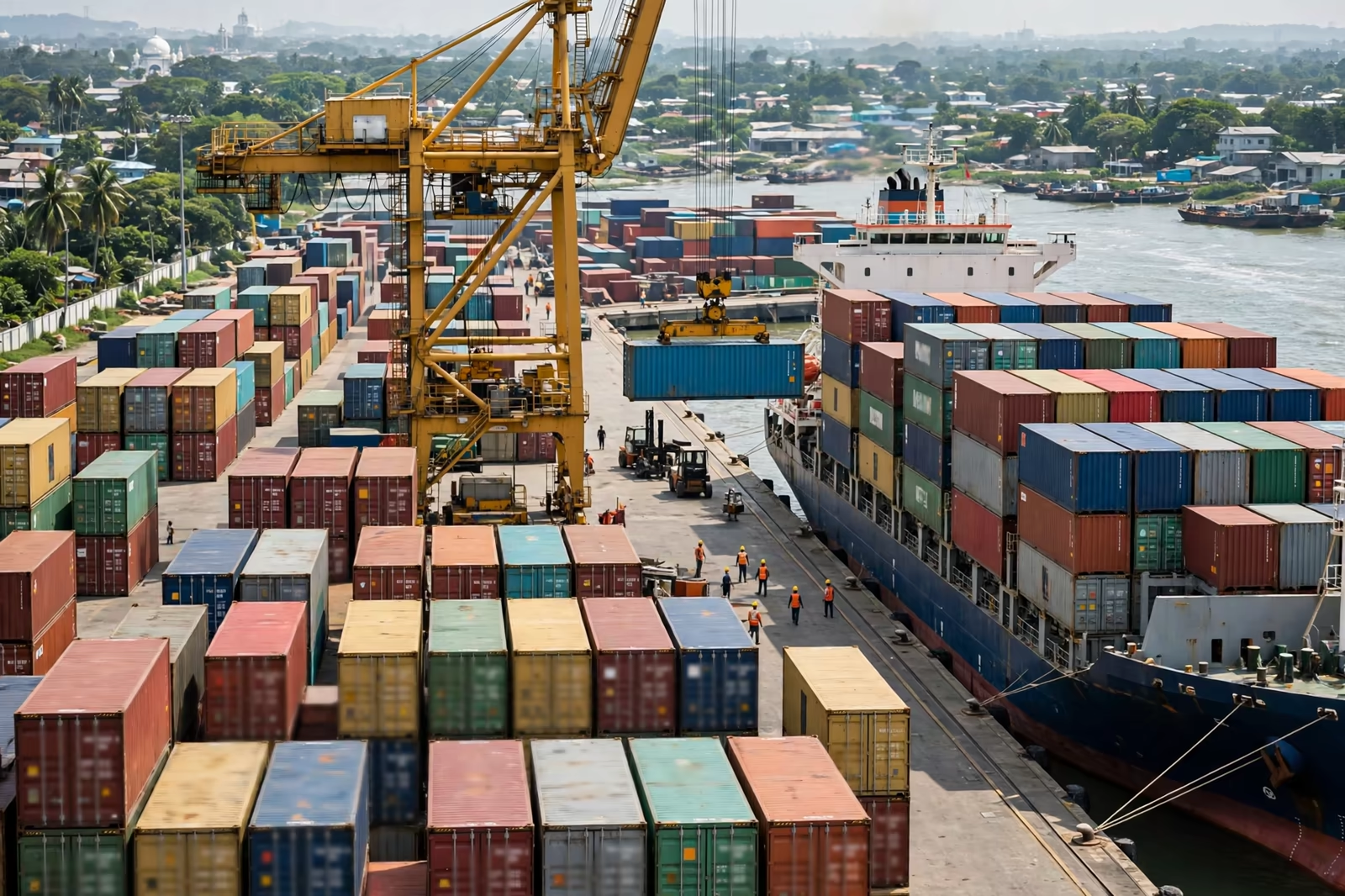
Ports and the Export Machine
Behind the factories runs an export machine practised by volume: the seaport at Chattogram handles the country’s garment outflow, freight forwarders and buying-house logistics teams work the routes to Europe and North America daily, and air freight serves the urgent and the high-value from the capital’s airport.
Documentation is part of the machine’s polish. Invoices, packing lists, certificates of origin and preference documents are produced by teams who prepare them for the same destination markets every week, which is why experienced buyers find the paperwork from here unusually predictable. Errors still get checked, but they start from a lower base.
For the buyer, the machine’s maturity shows as calm: bookings made, containers loaded, documents couriered, season after season. Drama in logistics is a cost; Bangladesh’s scale has engineered much of it out.
Starting a Programme Here
Begin with clarity: specification, quantities, target timing and the standards your market demands, shared openly with a factory whose product strengths match your programme. A sample round follows, judged against your own reference standards, and the first order is sized to teach both sides the relationship.
Use the systems this industry runs on: approvals in writing, milestone updates, final inspection, clean documents. Bangladesh’s export machinery is practised at every one of these steps, and a buyer who works the system receives its full benefit.
Grow deliberately. The buyers happiest here are those whose second order was planned while the first was sewing, forecast shared, capacity held, lessons applied. That rhythm, repeated across seasons, is what sourcing from Bangladesh looks like when it works, which for much of the world’s basic apparel is most of the time.
Frequently Asked Questions
What products is Bangladesh best known for?
Knit basics lead the list: t-shirts, polos, fleece, hoodies and jersey programmes at volume, followed closely by woven shirts, trousers, workwear and uniforms. Screen printing and embroidery are production-scale industries here too, so decorated and private label apparel is a natural strength. The common thread is basics and mid-range programmes made to order, where deep practised skill meets competitive cost.
Is Bangladesh suitable for small and mid-sized buyers?
Yes, with the right factory match. The industry serves global retail groups, but it also contains manufacturers whose programmes suit independent brands, promotional buyers and growing labels, with standard minimums that fit mid-sized orders. The key is matching your product and quantities to a factory built for your scale, and being clear about both from the first conversation.
How do buyers manage the distance and lead times?
By planning rather than hoping: confirm orders with the shipping calendar in view, share forecasts so capacity and fabric are prepared, approve samples and artwork promptly since approval delays consume the same calendar as production, and hold sensible buffer stock for continuity lines. Buyers who work this way find the economics of sourcing here comfortably outweigh the extra planning the distance asks for.
What should I check before placing a first order?
Verify the factory’s product strengths against your programme, its audit and certification position with the issuing bodies, and its experience with your market’s labelling and testing rules. Judge a sample round against your own standards, agree specifications, quality levels and documents in writing, and size the first order so both sides learn the relationship before volume grows.