
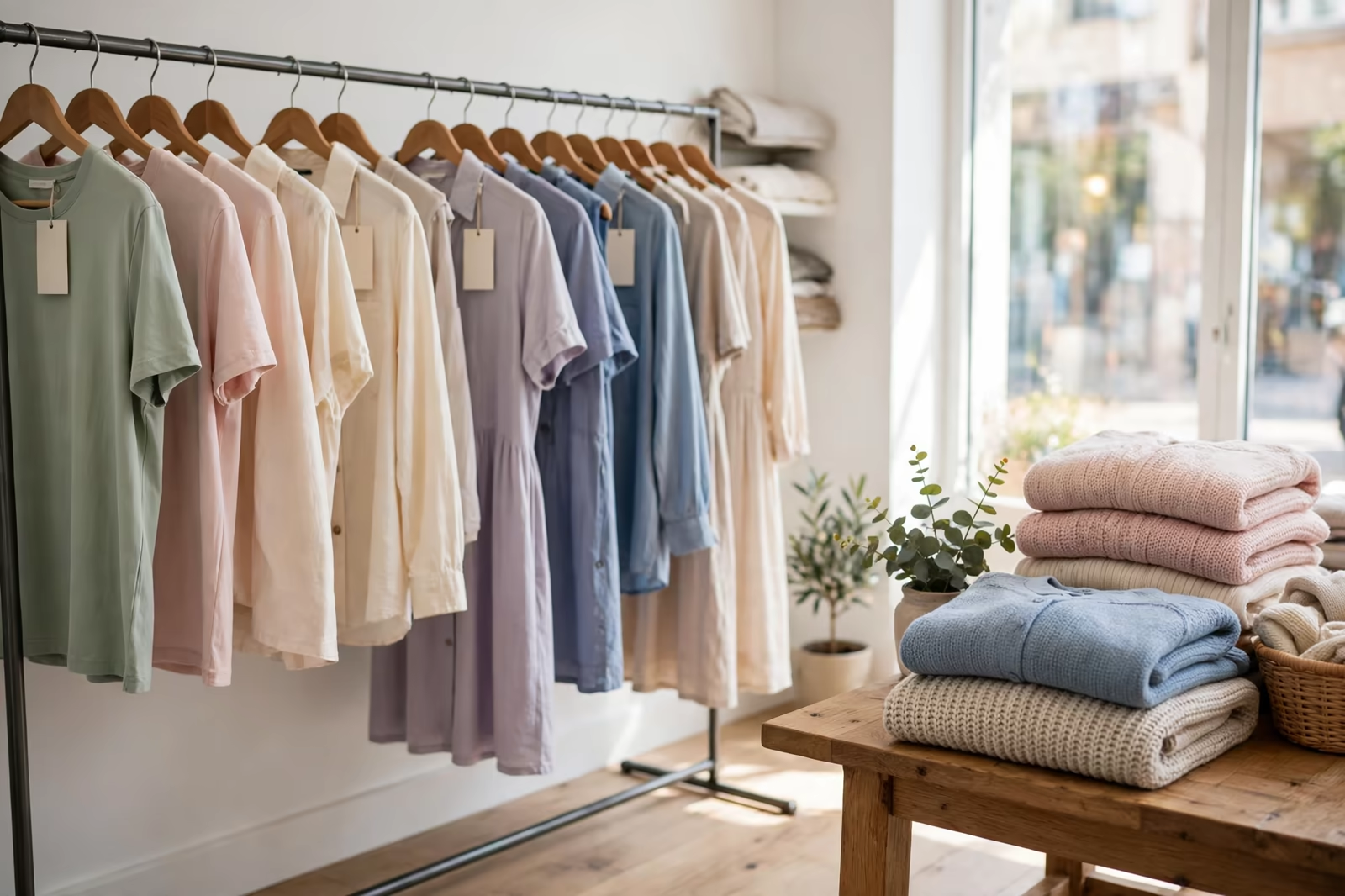
Every growing clothing store reaches the same fork in the road. Down one side sits wholesale: ready designs, ordered from a supplier’s range, on your rails within weeks. Down the other sits private label: your own styles, your own labels, produced for your store alone. Both routes fill a shop. They build very different businesses, and choosing between them on habit rather than arithmetic is how stores stall.
This comparison comes from the production side of the fence. We manufacture private label apparel in Bangladesh for retailers and boutiques in the USA, the UK and Europe, and we watch stores arrive at this decision every season. Some should stay wholesale longer than they planned. Some should have switched a year earlier. The honest answer depends on margin, exclusivity, restock speed and risk, and this guide takes each one in turn so you can place your own store on the map.
Our brands and private label programmes exist for the second route, while our wider services support stores that are still testing which route fits. When you want the numbers for your own range, get a quote against a real style rather than guessing from a guide.
The Two Routes, Defined Honestly
Wholesale means buying finished designs that a supplier has already developed. You choose from a catalogue or a showroom range, order in packs, and sell under the supplier’s label or no label at all. The designs are proven sellers somewhere, the development cost sits with the supplier, and your job is buying well and selling fast.
Private label means the garment is made for you. You choose the fabric, the fit, the colours and the details, and the finished clothing carries your brand’s labels, tags and packaging. The development work sits with you and your manufacturer, and in exchange the product exists nowhere else. A store’s own label is an asset that grows with every sale, because the customer who loves the fit can only return to one place.
The routes are not rivals in principle. Most established retailers run both, with wholesale filling gaps and private label carrying the core. The real question is proportion: which route holds the styles your store depends on, and which holds the experiments.
Margin: Where the Money Actually Sits
A wholesale price contains everyone else’s margin before yours. The brand or importer who developed the design, the agent who sold the range and the wholesaler who holds the stock all take their share inside the price you pay. Your markup is calculated on what is left. The garment may still sell profitably, but the ceiling on your margin was set by other people’s costs.
Private label removes the middle layers. You pay a production price for the garment itself, plus freight and duty, and the margin between that landed cost and your selling price belongs to your store. The same retail price that earned a thin wholesale margin can earn a substantially healthier one when the garment was made for you, because nobody upstream priced in their own profit first.
That does not make private label automatically cheaper per unit. Development, sampling and your own time are real costs, and they are spread across the order. On a small run they can eat the advantage entirely. Margin is where private label wins at volume; wholesale wins when the volume is not there yet.
Exclusivity and Why It Compounds
A wholesale bestseller is available to every store your supplier serves, including the one across town and the marketplace seller undercutting you both. When a design is everywhere, competition collapses to price, and price competition is a race independent stores rarely win against volume sellers.
A private label style cannot be comparison-shopped. The fit block is yours, the fabric choice is yours and the label inside is yours. Customers who come back for the same trouser in a new colour are returning to your product, not to a design they can search for cheaper. Over seasons this compounds: your range becomes a reason to visit your store specifically, which is the most durable advantage a retailer can build.
Exclusivity also protects your marketing. Every pound or dollar spent promoting a wholesale design partly promotes it for every other stockist. Money spent promoting your own label promotes only you.
Speed to First Sale
Wholesale wins the start easily. Stock exists, packs ship quickly, and a new store can be full and trading within weeks of ordering. For a shop testing a location, a category or an audience, that speed is worth real money, because the lesson arrives before the rent has eaten the budget.
Private label is slower to the first rail. Sampling, approval and production take a season’s lead time, and rushing the stages is how fit problems get manufactured at scale. A store that needs stock now should buy wholesale now and develop private label in parallel, not wait empty for its own range to arrive.
The speed question reverses once the range exists, which is the subject of restocking. First-sale speed is a loan; restock speed is the interest rate.
Restock Speed and the Winner Problem
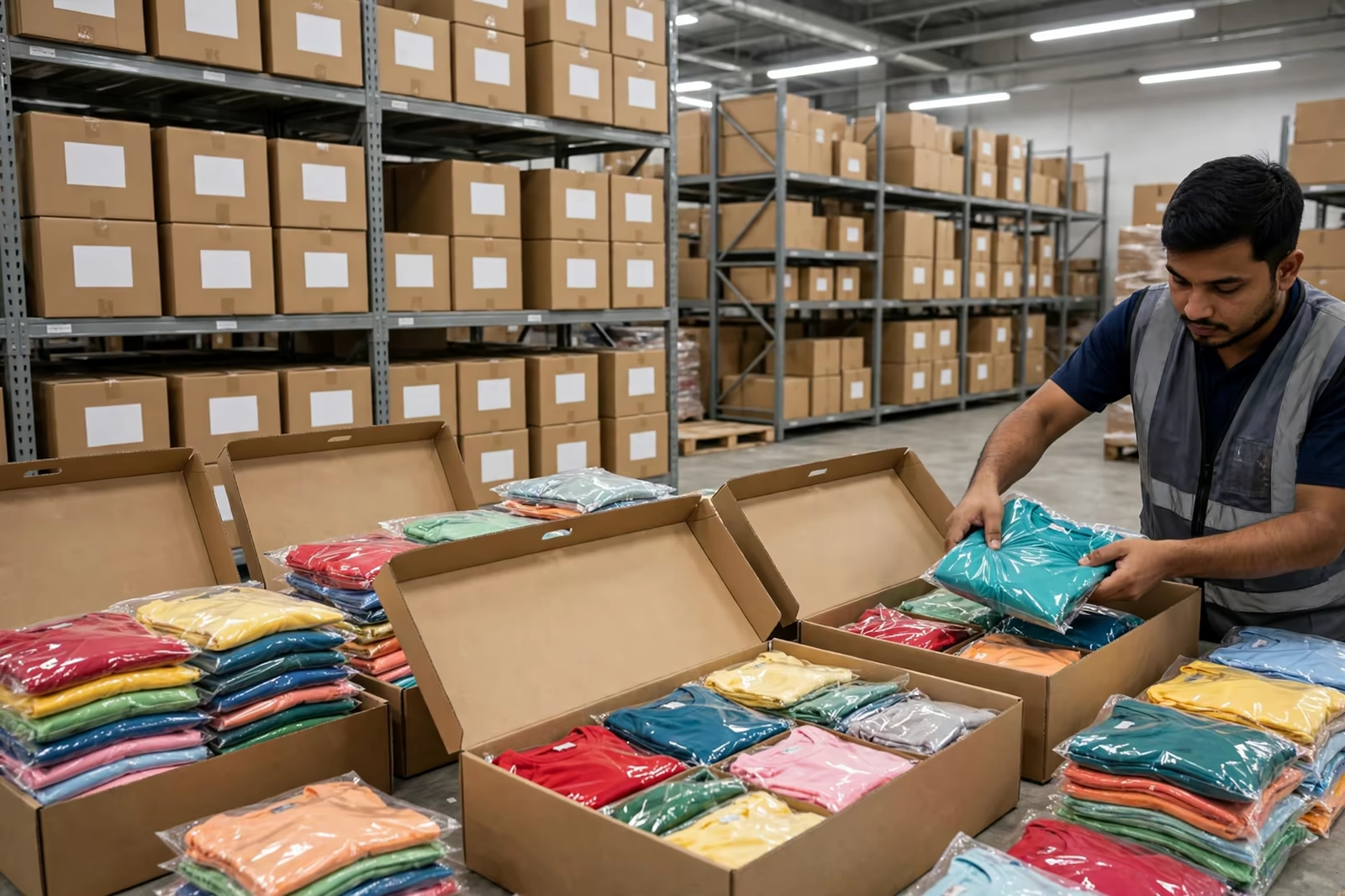
Every retailer knows the winner problem: a style sells out in ten days, and by the time more arrive the moment has passed. With wholesale, your restock depends on the supplier’s remaining stock of a design they may already be discontinuing. If the range has moved on, the winner is simply gone, however well it sold for you.
With private label, the winner is yours. The pattern, the fabric specification and the approved sample are on file, so a repeat order reproduces the same garment without new development. Repeat production is also where a manufacturer’s consistency matters most, because the second run must match the first in fit, colour and hand feel, or the customers who loved the original will notice.
This is the quiet arithmetic behind most switches. Stores rarely move to private label because wholesale failed; they move because a wholesale winner could not be restocked, and the lost sales taught them what owning the design is worth.
Risk: What Each Route Asks You to Carry
Wholesale risk is low per style and high per range. Small pack orders limit the damage from any single mistake, but you carry the strategic risk of building a store on products you do not control, at prices you do not set, with availability you cannot guarantee.
Private label risk is the mirror image. You commit to a production minimum per style, our standard minimum of 1,200 pieces per style in up to two colours, so a style that misses is a larger mistake than a wholesale pack that misses. The control is yours, and so is the consequence. Careful sampling, honest fit approval and starting with your proven categories rather than your wildest ideas keep that risk proportionate.
Neither risk is a reason to avoid a route. They are reasons to sequence them: wholesale to learn what your customers buy, private label to own what they have already proven they want.
Control Over Fit, Fabric and Quality
Wholesale fit is take it or leave it. If the block runs long in the body or the fabric pills after three washes, your choices are to sell it anyway or return to the range and pick something else. Your store’s reputation absorbs the quality either way, because the customer bought it from you.
Private label hands the specification to you. Fabric weight and composition, fit measurements, stitch quality, trims and finishing are all set in a tech pack and proven on samples before production. When a customer writes that your trousers fit better than anyone else’s, that is private label doing its work.
Control also means responsibility for decisions. A manufacturer will advise on fabric behaviour and construction, and a good one will push back on a specification that will not survive washing, but the final call on your product is yours. Stores that enjoy that control build better ranges every season.
When Wholesale Is the Right Answer
Wholesale is right when you are testing. A new store, a new category or a new price point should be proven with stock you can buy in small packs and drop without ceremony. It is right for trend pieces whose moment is short, where development time would outlast the trend itself. It is right for filling size or colour gaps while your own range is in production.
It is also right when your volumes per style are genuinely small. A boutique selling forty pieces of a style a season should not manufacture it; the development cost per garment would swallow the margin advantage whole. Honest arithmetic protects boutiques from private label as much as it promotes it for larger stores.
When Private Label Takes Over
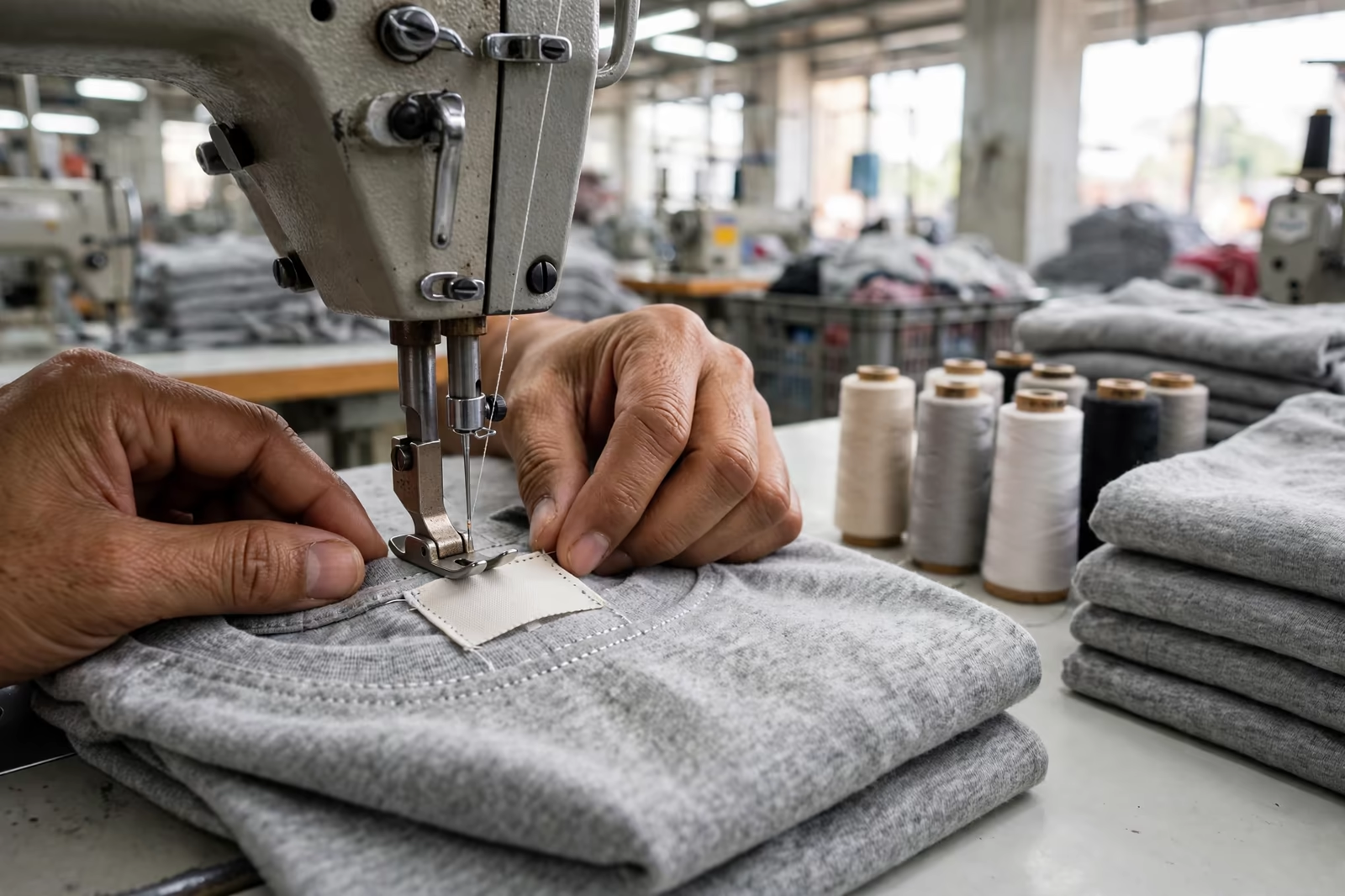
Private label takes over when the same categories sell for you season after season. Proven demand is the signal: the fits your customers rebuy, the fabrics they compliment, the price points they accept without discounting. Those styles are paying rent to someone else’s margin inside a wholesale price, and they are the first candidates to bring in-house.
It also takes over when competitors stock your winners, when restocks fail you twice, or when your store’s name is stronger than the labels you sell. At that point the wholesale route is no longer the safe option; it is the ceiling.
The switch is usually gradual. One category moves first, most often the one with the most repeat purchases, and the rest follow as each proves itself. A single season of one private label category selling through will teach you more than a year of reading comparisons like this one.
Running Both: The Hybrid Most Stores Grow Into
The mature answer for most retailers is a deliberate mix. Private label carries the core: the trousers, tees or dresses your store is known for, restocked from your own files at your own margin. Wholesale carries the edges: seasonal colour stories, trend tests and categories you have not yet earned the volume to make.
The discipline is in the boundary. Core styles should migrate to private label as soon as their demand is proven, and experimental styles should stay wholesale until they are. Stores get into trouble when the boundary blurs, manufacturing experiments and wholesaling their proven core because a supplier’s rep made it easy.
Reviewed once a season, the mix keeps itself honest. Whatever sold through twice belongs to you. Whatever sold once belongs to the test rail.
Frequently Asked Questions
Is private label worth it for a small boutique?
Only where a style sells in real depth. A boutique moving a few dozen pieces of a design is usually better served by wholesale, because sampling and development costs spread over a tiny run erase the margin gain. One proven category with repeat demand can still justify a first private label order.
Can I run wholesale and private label in the same store?
Yes, and most established retailers do exactly that. Private label carries the proven core range under your own brand, while wholesale fills trend pieces, tests and gaps. The mix works when the boundary is deliberate and reviewed each season, not when it happens by accident.
How long does private label take from order to shelf?
Plan on a season’s lead time. Sampling and approval come first, then production of the approved style, then freight to your market. Stores that develop one season ahead never feel the wait; stores that start when the rail is empty feel every week of it.
What do I give up when I stay wholesale only?
Exclusivity, restock control and the middle margins inside the wholesale price. Your bestsellers remain available to competitors, your winners can vanish from the range before you have finished selling them, and the margin ceiling is set by other businesses. For a young store those are fair trades; for an established one they grow expensive.