

Selling apparel on Amazon looks, from the outside, like a listing problem: good photographs, the right keywords, a competitive price. Sellers who survive learn it is a production problem wearing a listing’s clothes. The marketplace punishes exactly the things weak manufacturing produces: inconsistent sizing between deliveries, colours that drift, packaging that fails barcode and suffocation-warning rules, stock that arrives after the selling window it was bought for. Private label production, done with a real manufacturer rather than a trading intermediary, is how serious sellers take control of those variables. This guide explains how the model works for Amazon apparel, and where sellers usually get it wrong.
The sellers who last on the marketplace manufacture in Bangladesh and sell in the USA, the UK and across Europe, and their listings survive because their production does.
Amazon-focused production runs inside our brands programs for the markets mapped on our market area page, under our MOQ and production framework.
Why Private Label Suits the Marketplace
Amazon rewards brands, not commodities. A private label product carries the seller’s own brand registry position, its own listings that competitors cannot simply climb onto with the same garment, and its own review history accumulating on an asset the seller owns. Wholesale goods, by contrast, place the seller in a queue of identical offers where the only lever is price, and the queue always contains someone willing to earn less.
Production control is the second advantage. The seller who owns the specification owns the sizing chart, the fabric, the shade standards and the packing specification, which means the second and fifth deliveries can be made identical to the first, and on Amazon, consistency is not a virtue; it is the difference between a listing that compounds reviews and one that collects returns and sizing complaints.
Barcodes, Labels and Amazon’s Packaging Rules
Marketplace logistics have their own compliance layer, and apparel trips on it often. Each unit needs its scannable barcode applied correctly, FNSKU labels for inventory in Amazon’s fulfilment network, suffocation warnings on polybags of the required wording and size, and packaging that survives the network without bursting or shedding. None of this is difficult, but all of it must be specified to the factory precisely, because a container of perfect garments with non-compliant bags is a container of unsellable inventory plus a relabelling bill.
The discipline is to fold marketplace requirements into the production specification from the first order: bag type and warning print, barcode placement, carton labelling, unit folding dimensions. Factories experienced with marketplace sellers treat these as ordinary line items; sellers who remember them at the shipping stage pay for the lesson in delays.
Sizing Consistency: The Review Killer You Control
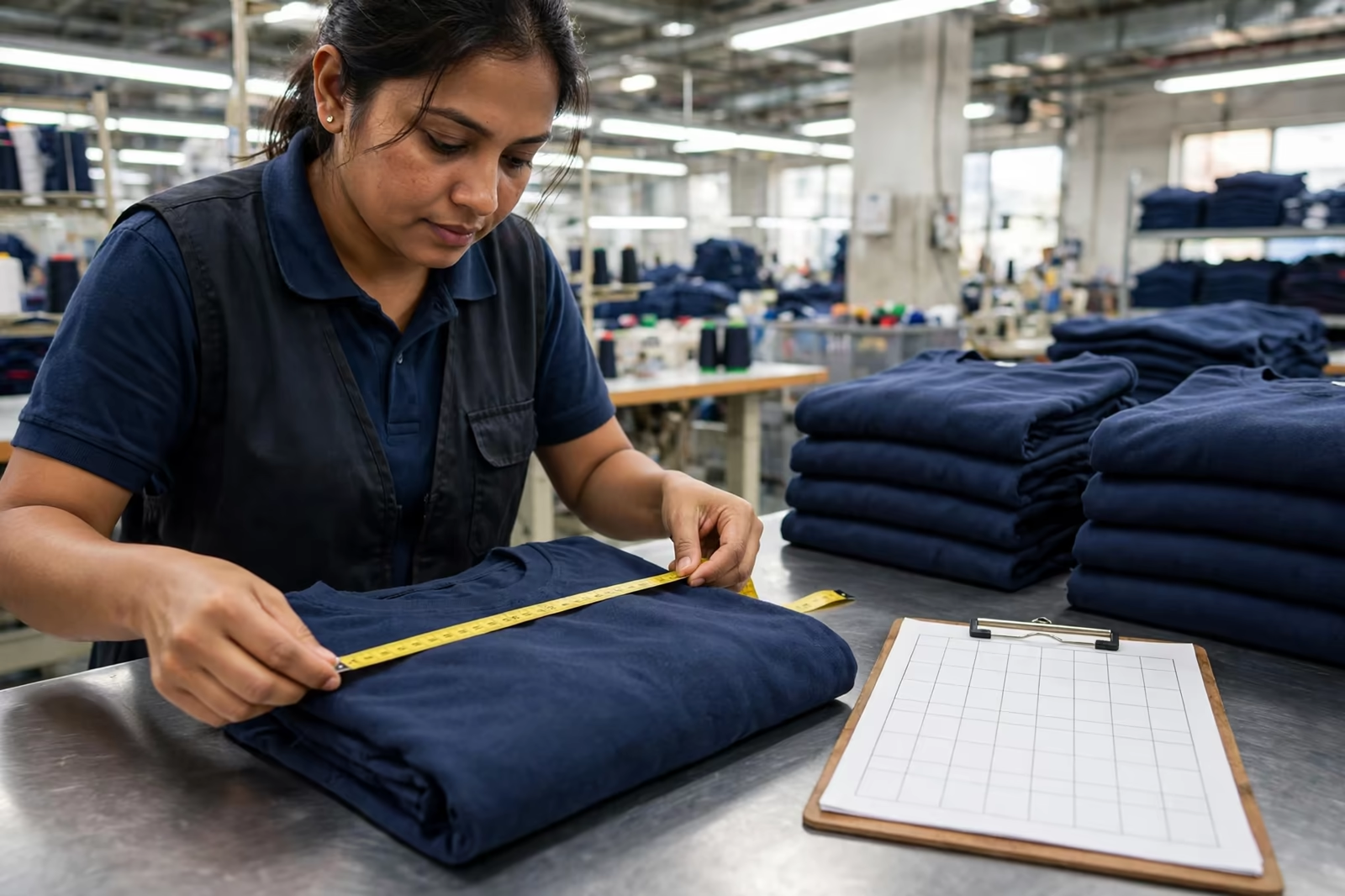
Apparel returns on Amazon concentrate on fit, and fit complaints concentrate on inconsistency: the medium from delivery two fitting like the large from delivery one. The cause is rarely malice; it is specification drift, a pattern adjusted without the chart being corrected, a fabric change whose shrinkage behaves differently, grading applied loosely at the extremes of the range. Every one of those is a production discipline issue, which is why this guide keeps returning to files: a controlled tech pack, a published measurement chart with tolerances, and checking against both at every delivery.
Sellers protect themselves further by measuring delivered stock against the listing’s chart before it ships to the fulfilment network, sampling sizes from the actual cartons. The cost is an afternoon; the saving is the review profile of the listing, which on Amazon is the business.
Photography and Listings Fed by Production
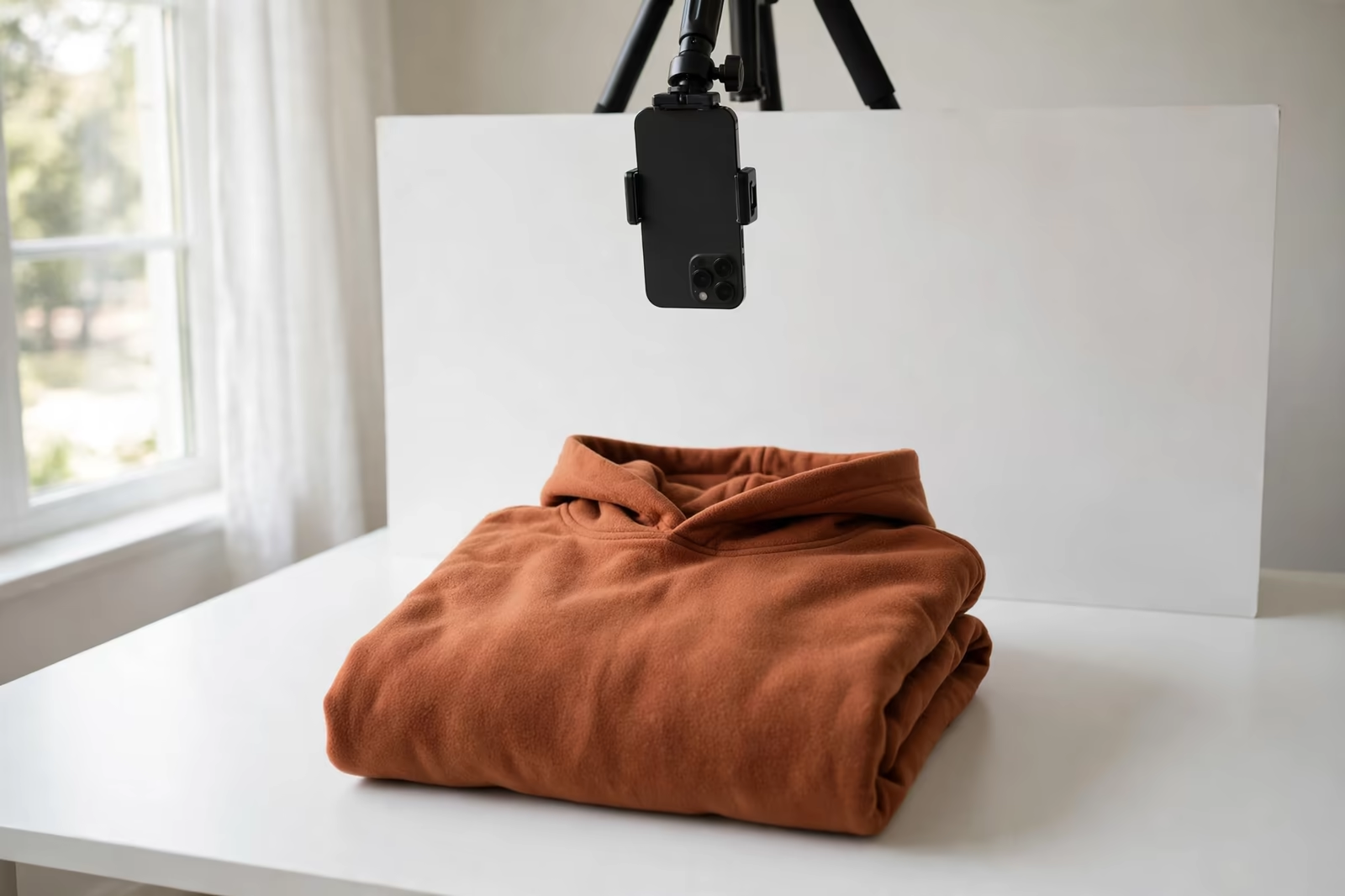
A listing can only photograph what production made. Colour accuracy in images depends on shade discipline in dyeing; the size chart in the listing depends on grading discipline in the pattern room; the fabric story in the bullets depends on a specification the factory actually followed. Sellers who treat the listing and the factory as separate worlds end up marketing promises the cartons cannot keep, and the marketplace’s review system grades the difference publicly.
The productive order is specification first, photography second: shoot the sealed approved samples, publish measurements taken from production-representative pieces, and let the listing describe the garment the factory is contracted to repeat. When the product improves later, through the change-controlled route, the listing updates in step, and the reviews stay honest because the product stayed honest.
Inventory Planning: Lead Times Against Selling Windows
Amazon selling is seasonal and unforgiving: a style that lands after its event, its season or its trend window converts a warehouse problem into a storage-fee problem. Private label production runs on real lead times, sampling, materials, production, freight, and the seller’s calendar must be built backwards from the selling window with those durations inside it, including the reorder cycle, which is where successful sellers separate from hopeful ones: the first order tests, the reorder, placed on evidence while the window is still open, is where the profit concentrates.
Our programs run at a standard minimum of 1,200 pieces per style in up to two colours, a shape that suits marketplace economics: test depth in the launch styles, reorder the winners at the same honest specification, and let the listing’s history compound on products that do not change underneath it.
Compliance Beyond the Barcode: Product Rules
Marketplaces sit inside national law, and apparel carries its own: fibre content and care labelling for the destination market, flammability rules for children’s sleepwear, restricted-substance expectations that responsible sellers meet through their material specifications. Amazon enforces documentation for categories it watches, and a seller whose factory cannot produce fibre and care information accurately, or whose labels contradict the listing, discovers compliance at the worst moment, with inventory already shipped.
The professional habit is boring and complete: labels specified to the destination market’s rules at the tech pack stage, fibre content verified against the fabric actually used, and listing claims written from the specification rather than from optimism. Compliance done at the desk costs sentences; compliance done at the warehouse costs shipments.
Samples and Sign-Off Before Bulk
Marketplace sellers sometimes skip stages that ordinary brands treat as sacred, because the listing calendar is pressing and the sample rounds feel like delay. The shortcut collects its fee later, in the currency sellers can least afford: reviews written against a garment nobody approved in its final form. The disciplined route is the same one used offline: a proto for shape, a pre-production sample in the real fabric with the real labels and bags, and one sealed unit retained by both sides as the standard the bulk is judged against.
Sign-off matters doubly on Amazon because the sealed sample is also the photography sample and the listing’s evidence. Measurements published on the page should be taken from it, colours matched against it under daylight, and its packing photographed for the listing’s what’s-in-the-box honesty. When bulk arrives, the seller compares cartons against the sealed unit before anything travels to a fulfilment centre, and discrepancies are settled with the factory while the goods are still in one place.
Returns Data Is a Production Report
Every apparel return on the marketplace arrives carrying a reason, and the reasons, collected over a season, form the most honest quality report a seller owns. Fit returns concentrated in one size point at a grading decision. Colour complaints point at shade control or at photography that promised a different garment. Seam and construction failures point at the line, not the listing. Sellers who read this data as production feedback, and send it back into the specification, improve the product every cycle without guessing.
The loop only works when the specification can absorb the lesson: a measurement adjusted through change control, a chart corrected on both the factory file and the listing, a fabric swapped with its shrinkage behaviour retested before bulk. Sellers who simply reorder and hope are running the same experiment twice, and the marketplace charges full price for the second sitting.
Choosing the Production Partner
The partner question decides most of what follows. A seller needs a manufacturer who is accountable for the whole garment, sampling, materials, sewing, finishing and packing, rather than a chain of intermediaries each holding one piece and none holding the standard. Evidence is ordinary and checkable: samples that match their own paperwork, honest answers about what is made and what is bought in, packing benches that already handle barcode and bag rules, and references among sellers in the USA, the UK or Europe whose marketplaces run on the same compliance rails.
Communication is the other half of the evidence. The partner who answers a sizing question with the measurement, a delay with the revised date and a problem with photographs is the partner whose production a distant seller can actually manage. Silence at the sampling stage is a preview of silence at the shipping stage, and on a marketplace calendar, silence is the most expensive answer there is.
From One Style to a Range
A successful first style creates the temptation to scatter: new fabrics, new categories, new suppliers. The sellers who compound instead extend from strength: the winning garment in further colours cut from the same dye discipline, sizes deepened where the data shows demand, and one adjacent style at a time sharing the proven fabric and the proven partner. Each extension inherits the specification system rather than starting a new one, so quality stays boring while the range grows interesting.
Range discipline also protects the listing estate. Every new product launched under the brand carries the reviews standard set by the first, and a weak extension taxes the whole store’s credibility. Growing slowly from a garment the factory already makes well is not caution; on a review-driven marketplace it is the fastest route that does not have to be walked twice.
Frequently Asked Questions
Is private label better than wholesale for Amazon apparel?
For sellers building an asset, yes: private label gives you brand registry standing, listings competitors cannot share, and control over the specification that decides your returns and reviews. Wholesale is faster to start and may suit a test of the channel itself, but it competes on price alone with identical goods. Many sellers test with wholesale and build with private label once the category proves itself.
Who applies the FNSKU labels and bag warnings, me or the factory?
Either is possible, but the efficient answer is the factory, inside production, to your written specification: bag type, warning print, barcode and placement all defined in the packing instructions, checked at final inspection. Relabelling after arrival costs more, delays the inventory and introduces errors at exactly the point the marketplace is least forgiving of them. Put the marketplace layer in the tech pack, not in a later email.
How do I stop sizing drifting between deliveries?
Freeze the specification and govern changes: one controlled tech pack with the measurement chart and tolerances, a retained approved sample from the first delivery, fabric held to the same standard so shrinkage behaviour repeats, and delivered stock sampled against the chart before it ships onward. Drift is almost never a single large error; it is small unrecorded changes compounding, and records are the cure.
What quantity should a first Amazon order be?
Enough to test the listing properly across sizes and to survive the reorder gap if the style succeeds, without betting the business on an unproven product. Our standard minimum of 1,200 pieces per style in up to two colours is shaped for exactly this: a real test with real depth, in the colour discipline a launch can sell through, with the reorder route already proven when the evidence arrives.