
Uniform programmes fail financially in a predictable place: the budget was built on the first order and forgotten. The garments wear, staff join and leave, and sizes run out in the middle of the range.
The second year then costs more than the first because nobody modelled it. This guide builds the per-employee cost model that employers and their suppliers use to budget a uniform programme properly, across the first issue, the replacements and the growth, for organisations buying from a clothing manufacturer in Bangladesh.
The model works in garments and rates rather than currency, because the structure is universal while prices are local. Build the structure once and any quotation can be dropped into it.
The Unit of the Model: One Employee, One Year
Every figure in a uniform budget becomes clearer when it is expressed per employee per year. The purchase order shows cartons and totals; the model shows what each member of staff costs the programme to keep dressed, which is the number management actually decides on.
- Start headcount: the staff in uniform on day one
- Kit per employee: the garments one person is issued
- Issue cycles: how often the kit, or parts of it, renew
- Churn: joiners and leavers moving through the year
- Spares: the stock held between issues for instant replacement
- Loss and damage: the honest allowance every programme needs
With those six inputs, the whole programme can be forecast. Without them, each order is a surprise negotiated from an empty stock shelf.
Building the Kit Cost
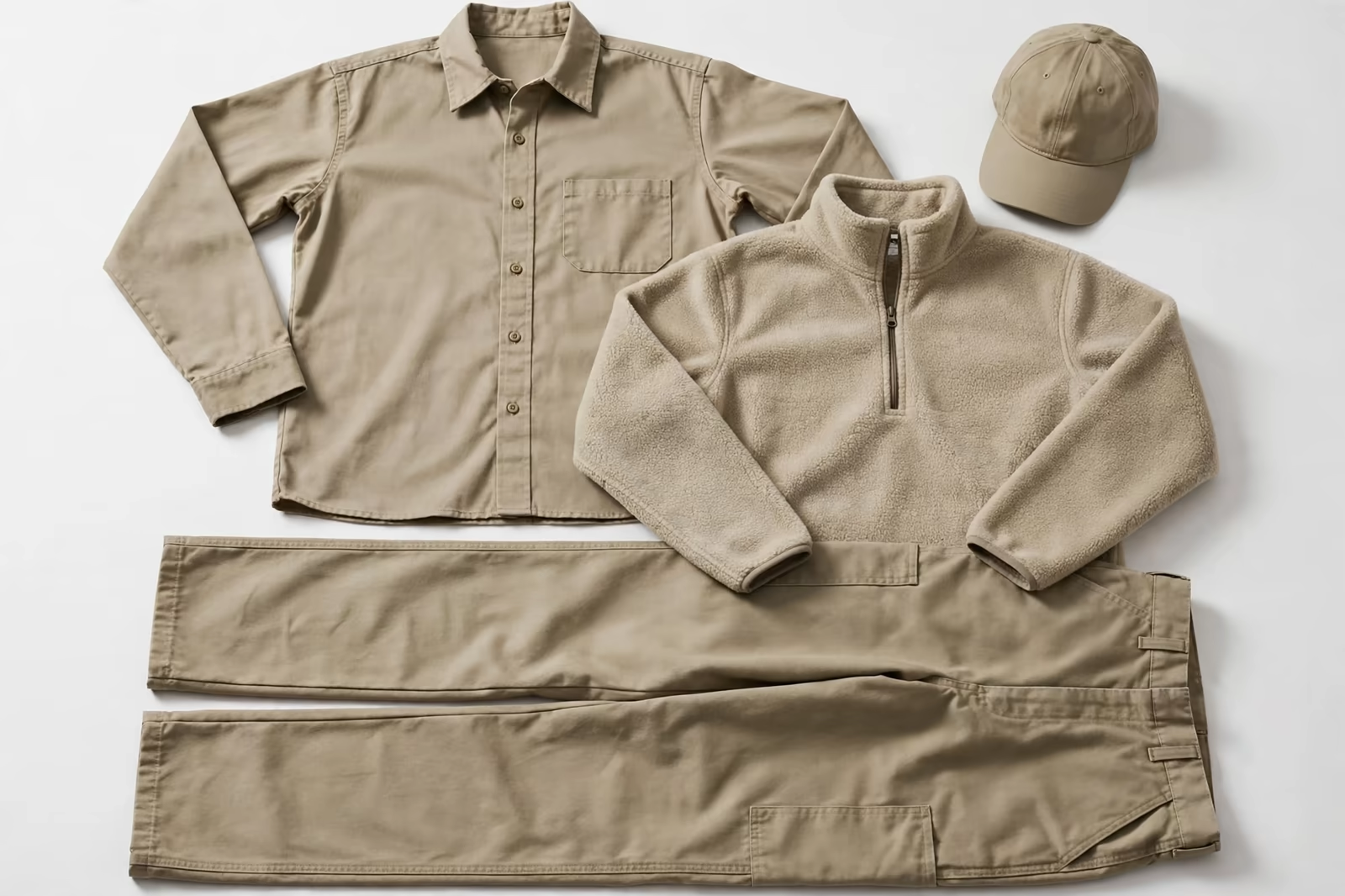
The kit is the model’s atom: the set of garments one employee receives. Price it as a set, garment by garment, including the branding each piece carries, because a programme buys kits, not items.
- Core garments: the shirts, polos or tunics worn daily
- Bottoms: trousers, skirts or aprons matched to the role
- Layers: fleece, knitwear or jackets for season and setting
- Identity pieces: embroidered or printed branding on each item
- Accessories: caps, ties, belts, scarves where the role requires them
- The workhorse reference: a programme built on a classic work shirt prices differently from one built on knitwear
Sets per employee matter as much as the set’s contents. A kit that allows a clean garment every day while others are in the wash is a different budget from a kit that assumes daily laundering, and the wear rate changes with it.
Sets, Rotation and Wear
How many sets each employee holds decides both the laundry rhythm and the garment lifespan. More sets per person means each garment is worn and washed less often, lives longer, and presents better; fewer sets mean faster wear and earlier replacement.
- Daily-wear roles need enough sets to cover the wash cycle plus a margin
- Each set’s expected life is measured in wears and washes, not months
- High-friction roles, kitchens, warehouses, field work, consume kits faster
- Customer-facing pieces are replaced on appearance before they wear out
- The rotation decision is a budget decision disguised as a laundry decision
Model both patterns before choosing. The cheaper-looking option, fewer sets, routinely costs more across a year because replacements arrive early and all at once.
Replacement: The Budget Line That Decides Everything
First issues are easy to fund because they are visible and approved once. Replacement is where programmes succeed or quietly decay, because garments retire individually, all year, at rates set by the work itself.
- Grade condition honestly: presentable, worn, retired
- Replace on condition for public-facing pieces, not on calendar alone
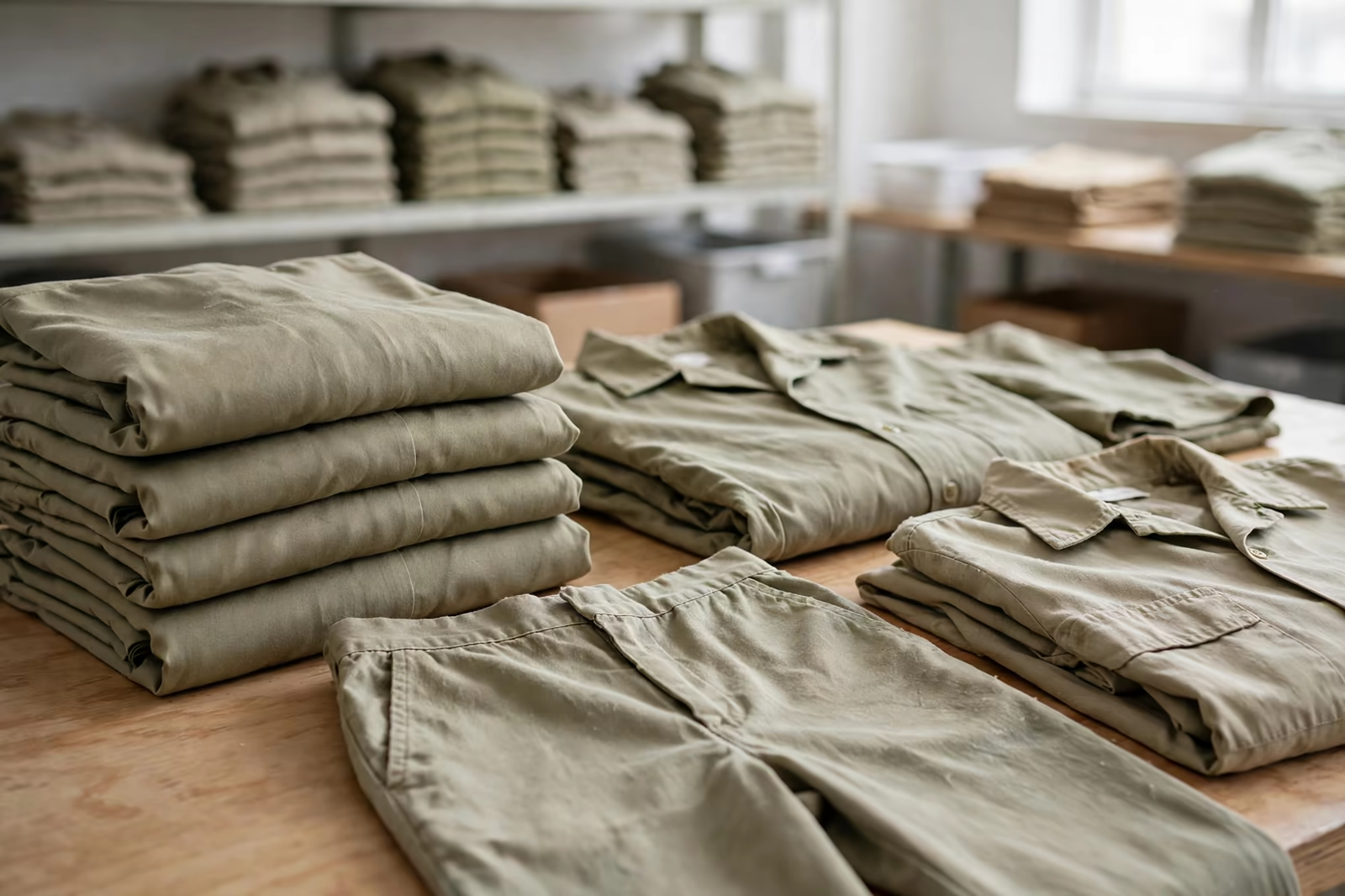
- Hold spares by size curve so a replacement ships the same week
- Track issues per employee; unusual consumption usually has a cause
- Budget replacement as a rolling rate across the year, not an annual event
A programme with a funded replacement rhythm always looks intentional. One without it drifts into mismatched shades, mixed old and new branding, and emergency orders at the worst prices of the year.
Churn: Joiners, Leavers and the Size Curve
Staff movement is a garment flow. Every joiner needs a full kit in a specific size; every leaver returns garments in conditions from unworn to finished. Programmes in high-turnover sectors, hospitality, care, logistics, retail, spend as much on movement as on wear.
- Forecast joiners from your real turnover, not from hope
- Hold new-starter kits in the common sizes, ready to issue
- Recover, grade and reissue returned garments where condition allows
- Watch the size curve: stockouts cluster in the middle sizes
- Order against the curve your issues actually draw, not a standard ratio
Our standard minimum of 1,200 pieces per style in up to two colours, explained on the MOQ and production page, frames the manufacturing side; the employer’s side is this flow, planned with the same care.
Laundering: The Hidden Half of the Cost
A uniform’s cost does not end at issue. Washing it, whoever washes it, is a programme cost that belongs in the model, because the laundering model chosen changes garment life as surely as the fabric does.
- Employer laundry: controlled temperatures and chemistry, longer garment life
- Employee home laundry: no direct cost, variable care, shorter life
- Rental and laundry services: cost per piece per cycle, garments as a service
- Industrial soils need industrial processes home machines cannot give
- Replacement rates in the model must match the laundry model chosen
Compare programme options on the full picture: a cheaper issue price with home laundering and fast replacement can cost more per employee per year than a stronger garment under controlled laundry. The model exists to make exactly that comparison visible.
Putting the Model Together
The full forecast is now simple arithmetic. Multiply the kit cost by the sets per employee and the headcount for the first issue.
Add the year’s joiners with their kits. Add the replacement flow at the rate your roles and laundry model produce. Add spares to the level that keeps issues instant, and the honest loss allowance. Divide the total by headcount and the per-employee annual cost appears, ready to defend in any budget meeting.
Quote the programme against that model and the numbers become stable enough to plan a business on; the payment shape that supports it sits on the payment terms page. Programmes budgeted this way stop surprising their owners, which is the entire point of having a model.
Keep the model with the programme’s other documents and hand it over when staff change. Uniform knowledge walks out of businesses in people’s heads every year; a written model is how the next manager inherits a working programme instead of a stockroom mystery and a pile of unexplained invoices.

A Programme Taking Shape
Picture a hotel group dressing its housekeeping, kitchen and front-of-house teams. The model starts with kits: housekeeping carries more sets because the work is physical and the laundry cycle daily, front-of-house carries fewer sets of higher-presentation pieces, and the kitchen kit prices in heat-resistant practicality and fast replacement.
Churn does the next part of the maths, because hospitality hires all year. The spares pool is built deepest in the housekeeping sizes that turn over fastest, and the replacement allowance is set by role rather than averaged across the group, so the kitchen’s honest consumption stops quietly taxing the front desk’s budget. By the second year the group is no longer guessing: issue records have replaced assumptions, and the per-employee figure they defend to their finance team is measured, not hoped.
The same structure serves a care group, a logistics fleet or a retail chain unchanged. Only the inputs move: the kits follow the roles, the churn follows the sector, the laundry follows the soil. That portability is what makes the model worth building once and keeping, rather than reinventing the budget from a blank page every time a uniform order comes around.
Reviewing the Budget Each Cycle
A cost model is a living document, and the programmes that stay accurate share one habit: a short review at every order cycle, comparing the forecast with what the stockroom actually issued.
- Issues per employee against the model’s assumption
- Replacement rate by role, and where it is drifting
- Size curve movement as the workforce changes shape
- Spares depth: where the pool ran dry and where it gathered dust
- Laundry outcomes: garment life against the model’s expectation
- Next cycle’s order shaped by evidence, not by last year’s copy
Half an hour of this turns each order into a correction of the last, and within a few cycles the forecast and the warehouse agree so closely that budgeting stops being an argument and becomes a signature.
The Conversation With Finance
Every uniform budget eventually faces the same meeting, where finance asks why clothing costs what it costs. Programmes with a model answer that meeting in minutes, because every number in the request has a parent: a kit, a rate, a flow.
- The kit cost, garment by garment, with branding shown
- The sets logic, tied to the laundry cycle the business runs
- The replacement rate, evidenced by last cycle’s issues
- The churn flow, taken from the company’s own turnover
- The spares policy, and the cost of the day it fails
Programmes without a model face the same meeting armed with a total and a hope, and usually leave with a cut that lands on quality, where it does the most damage. The model is not paperwork. It is the programme’s defence.
Frequently Asked Questions
How many sets should each employee receive?
Enough to cover the working week against your laundry cycle, with a margin for delays and damage. Daily-wear roles with weekly laundry need the most; roles wearing uniforms occasionally need fewer. The test is simple: no employee should ever choose between a clean uniform and doing the laundry at midnight.
What replacement rate should I budget?
Your own rate, measured from your issues, because it depends on the work, the garments and the laundering. Start with a planned allowance by role, light for office-facing pieces and heavier for physical work, then correct it with real issue data after the first cycle. A measured rate beats any industry guess.
Is it cheaper to buy more sets or replace more often?
Usually more sets, up to the point the laundry cycle is comfortably covered. Each garment then wears and washes less often, lasts longer and looks better for longer. Beyond that point extra sets sit in lockers earning nothing, which the model will show you as clearly as the saving. That balance point is different for every workforce, which is exactly why the model earns its keep.
How do I handle sizes for new starters between bulk orders?
Hold a spares pool built on your real size curve, weighted to the middle sizes where demand concentrates, and replenish it inside each repeat order. New starters should be kitted from the pool on day one; a programme that makes a joiner wait weeks for a uniform has announced its standards to exactly the wrong person.