

Every buyer who has lived through a supplier failure asks the same question afterwards: why was everything riding on one factory? A second supplier is the obvious insurance, and the obvious objection is workload, two relationships, two sampling rounds, two sets of problems. This guide shows how to build the resilience without doubling the work, by splitting smartly instead of duplicating everything.
The sourcing team behind this guide helps buyers in the USA, the UK, Germany, Canada and Australia build two-track supply as a normal safeguard, with apparel made in Bangladesh managed as one accountable programme from this side rather than left to chance.
The production structures this strategy uses sit in our services, the order sizes behind the splits are on our MOQ and production page, and a second-source conversation starts on our get a quote page.
Why One Supplier Is a Risk Position
A single source concentrates every risk the previous guides in this series catalogued: capacity crunches in peak season, a quality drift discovered late, a compliance finding that pauses orders, a fire, a flood, a machinery failure, or the simple commercial risk that a factory with no competition slowly stops earning the programme.
The failure rarely announces itself with time to shop around. Finding, auditing, sampling and trial-ordering a new factory takes a season done properly, which is precisely the season a buyer in crisis does not have. The two-supplier strategy is therefore built in calm weather or not at all.
The goal is not distrust of the primary supplier. The best primaries welcome a structured second source, because it caps the pressure they are asked to absorb in peak weeks and proves their pricing against the market continuously.
Choosing the Second Source
The second source can sit in the same country or a different one, and the choice trades simplicity against diversification. Same-country pairing keeps logistics, documents, duty treatment and working culture identical, so the management template transfers whole, and it is the right answer when the risk being covered is factory-level: capacity, quality, continuity.
A second origin hedges country-level events instead, weather, politics, port disruption, energy supply, at the price of a second trade lane to learn and run. Buyers whose nightmare is a factory fire choose the first; buyers whose nightmare is a national disruption choose the second, and larger programmes eventually hold both shapes across their families.
Either way, the second source passes the same audit, sampling and payment-safety gates as the primary did. A backup held to lower standards is a liability wearing a strategy’s clothes.
Split by Product Family, Not by Percentage
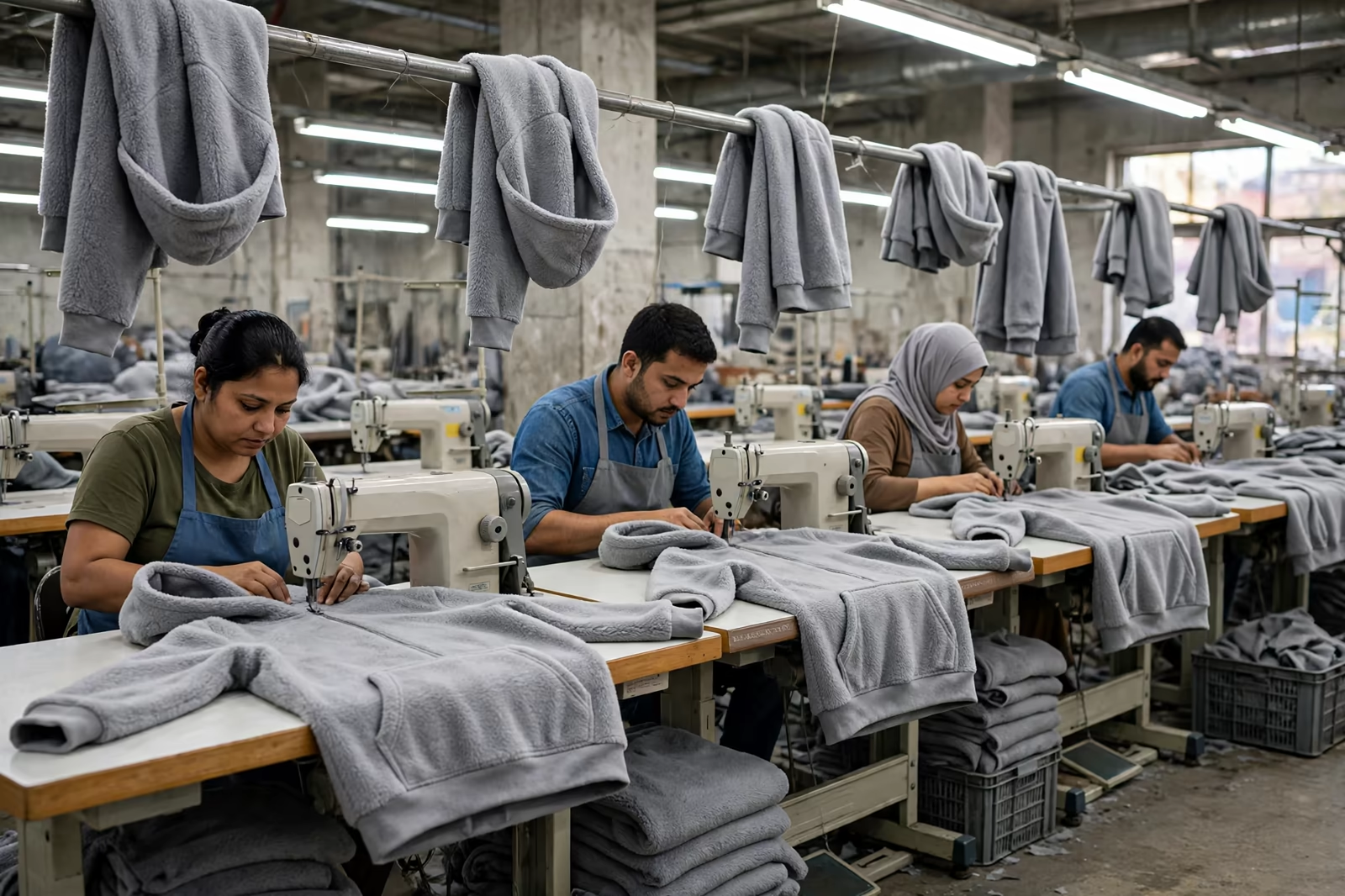
The workload fear assumes every style must run in two places. It should not. The efficient split assigns whole product families to each source by strength: knits with the knit specialist, woven shirts with the woven house, fleece and outerwear where the machinery and experience sit deepest. Each factory stays inside its competence, and the buyer manages two specialists rather than two generalists.
Within a family, the split can follow the calendar instead: the primary takes the season’s launch volume, the second source takes reorders and overflow, which keeps its lines warm and its team practised on your standards without a parallel launch burden.
Percentage splits of identical styles across two factories are the worst structure for quality consistency and the heaviest to manage; reserve them for the few core styles where genuine dual production is the point.
The Warm Second Source
A second supplier that receives nothing for a year is not a backup; it is a stranger with old samples. Keep the supporting source warm with a modest, steady flow: a smaller family, regular reorders, or a fixed slice of the calendar, enough that its merchandisers know your specs, its lines know your construction, and its paperwork muscle stays exercised.
Warmth also keeps the commercial relationship honest in both directions: the second source stays motivated because it is a real customer relationship, and the primary stays sharp because a credible alternative demonstrably exists.
Sizing the warm flow is a balance: too small and the factory deprioritises you in its own peak; too large and you have simply built the workload you feared. Programmes differ, but the flow should be meaningful to the smaller factory, not a token, and it should be reviewed whenever the total volumes change materially in either direction.
Commercial Balance Between the Two
Two sources let the market discipline your pricing continuously, provided the comparison is honest: identical specification, quantities and terms quoted by both, compared on the full landed picture rather than the headline unit price. Quote both factories on the same new style occasionally even when you know where it will land; the information is worth the small courtesy cost.
Resist squeezing the pair against each other on every order. Factories that feel permanently auctioned respond by shading quality or deprioritising your peaks, and the strategy’s real economic value, resilience plus a standing price reference, is larger than the last cent of any single negotiation.
Pay both with the same reliability. Payment reputation is shared gossip in every industrial cluster, and the buyer known for clean payment gets the capacity when the season tightens.
One Specification, Two Factories
The workload halves when the documentation does the managing. A single master specification per style, tech pack, measurement chart, approved sample and packaging standard, version-controlled by you, is issued identically to both sources. Neither factory receives a private interpretation; both build to the same paper, and deviations are visible against one reference.
Shared tools multiply the saving: the same inspection checklist, the same reporting rhythm, the same document pack per shipment. Your team’s process becomes a template applied twice rather than two crafts maintained separately, which is the difference between a strategy and a second job.
Where the factories legitimately differ, machinery-driven construction details, for instance, record the variation inside the master spec as an approved annex per source, never as folklore in an email thread.

Sampling Once, Approving Twice
Development is the expensive stage, so develop centrally: patterns, lab dips, strike-offs and pre-production samples approved once against the master standard. Each factory then produces its own production sample from the approved pack, checked against the sealed reference rather than re-developed from scratch.
This keeps design intent singular while still proving each floor’s execution, which is the only part of sampling that genuinely needs duplicating. Fit sessions, fabric approvals and print development stay single-track, and the calendar keeps most of its speed.
Keep both factories’ approved samples sealed and stored with the spec version they belong to; in a dispute or a switch, that sealed set is the fastest restart in sourcing.
Keeping Quality Consistent Across Two Floors
Where the same style genuinely runs in both factories, consistency is engineered, not hoped for: the sealed approved sample is the physical standard, measurement points and tolerances come from the one chart, and both outputs are inspected against identical AQL rules, ideally with reports landing in the same format on your desk.
Cross-check the pair deliberately: swap an inspector between the two for a season, or have one shipment from each measured side by side in your own warehouse. Small drifts, a collar a shade narrower, a shade band drifting warmer, are cheap to correct when caught as comparisons and expensive when discovered as customer complaints.
Share each factory’s quality data with the other in summary. Nothing concentrates a production team like knowing the sister line’s defect rate, and the gentle competition improves both floors without a single difficult conversation.
Switching Volume Without Drama
The strategy pays out on the bad week: the primary hits a capacity wall, a quality finding pauses a line, a shipment must move. Because the second source is warm, documented and sampled, volume shifts by instruction rather than by emergency sourcing project, and the buyer negotiates from stability instead of desperation.
Agree the escalation logic in advance, in writing, with both sides: what triggers a shift, how much notice each factory gets, and how the primary earns volume back. Factories accept swing arrangements they helped design; they resist surprises that feel like punishment for honesty about a problem.
After any shift, run the post-mortem while it is fresh and update the split. The strategy is a living allocation, reviewed each season against performance data, not a treaty signed once.
And when no shift is needed for a whole season, that quiet is the strategy working, not evidence it can be dismantled.
The Seasonal Review
Once a season, sit the strategy down with its data: on-time performance, inspection results, claim history, communication quality and price movement for each source, family by family. Reallocate the coming season’s families toward the evidence, promote the warm source where it has earned more, and address decline while it is still a conversation rather than a crisis.
The review is also where a third candidate occasionally enters sampling, keeping the whole structure honest. Suppliers who know the bench is real and the review is fair tend to perform like it.
Document the decisions and the reasons, and share the relevant half with each factory. A supplier that understands exactly how volume is won and lost becomes a partner in the system rather than a subject of it.
Frequently Asked Questions
Why should I use two suppliers for the same clothing programme?
Because a single source concentrates every operational risk, capacity, quality, compliance, disaster and commercial drift, into one point of failure, and replacing a factory properly takes a season you will not have in a crisis. A warm second source converts an emergency into an instruction: volume shifts to a factory already audited, sampled and documented on your standards.
Does a two-supplier strategy double the buyer’s workload?
Not when it is structured properly. Split by product family or calendar rather than duplicating every style, run one master specification issued identically to both factories, develop and approve samples centrally, and let each factory prove execution with its own production sample. The shared documentation and checklists turn management into a template applied twice.
How much volume should the second supplier receive?
Enough to stay genuinely warm: a smaller product family, regular reorders or a fixed calendar slice that keeps its team practised on your standards and your business meaningful to them. A token order once a year leaves a stranger, not a backup, while an even split of identical styles creates the consistency and workload problems the strategy exists to avoid.
Should both factories make the same styles?
Generally no. Assign families by each factory’s strength and keep identical dual production only for the few core styles where it is deliberately wanted, because matching quality across two floors on the same garment is the heaviest structure to manage. One master specification with approved per-factory annexes keeps both sources aligned without pretending the floors are identical.