
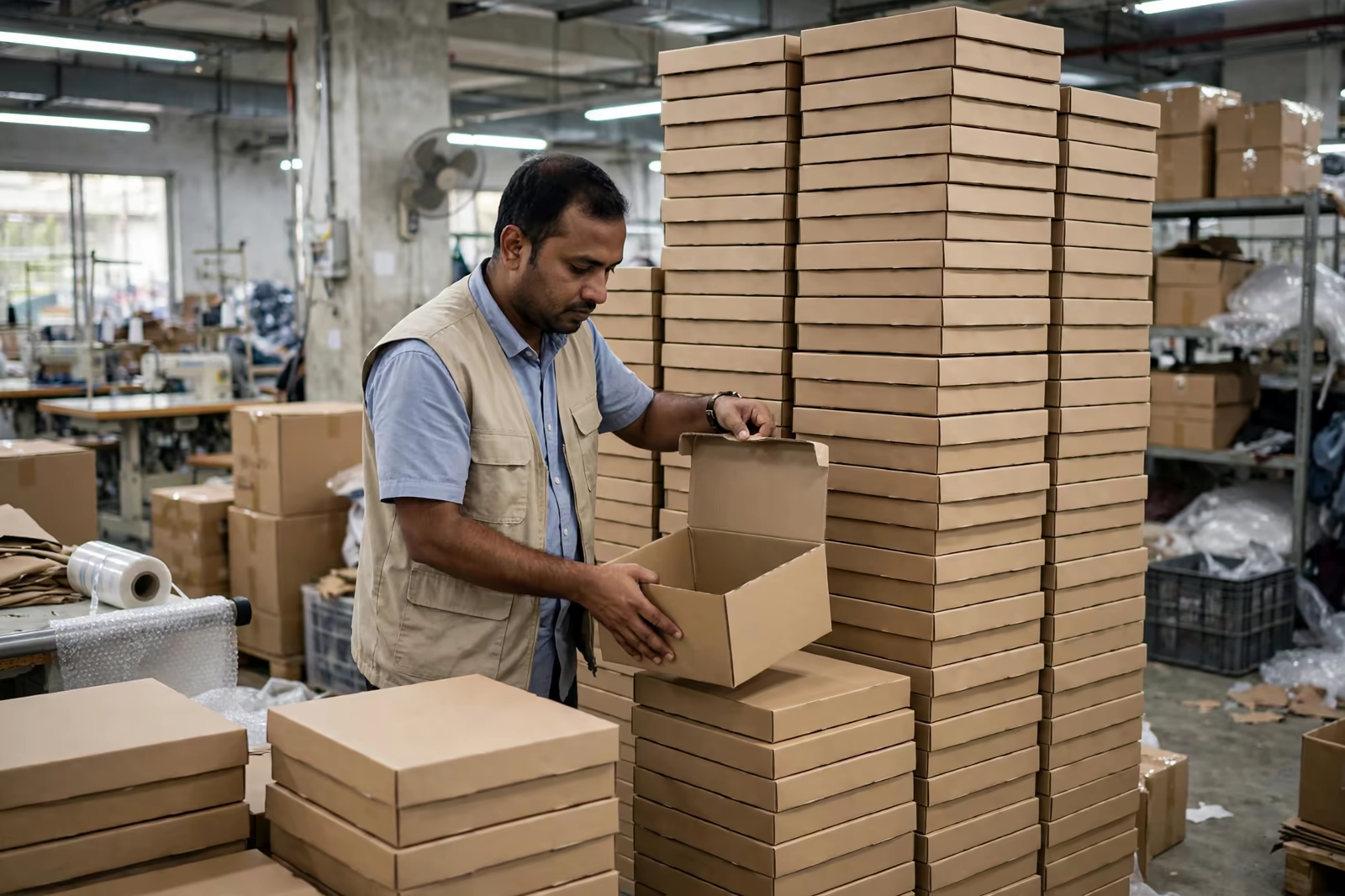
A factory’s own quality team knows its garments best, and also has the most reason to see them kindly. That tension is why third-party inspection exists: an independent company, paid by the buyer, sends its own inspector to examine the goods against the buyer’s standard and report what it finds, loyal to the evidence alone. For the right orders, it is money very well spent.
The teams behind this guide work in Bangladesh, hosting third-party inspectors on export orders bound for buyers in the USA, the UK, Germany, Canada and across Europe. A good factory does not fear the independent inspector; it uses the visit as a second pair of eyes and a report its buyers can trust in a way no self-assessment ever quite earns.
Third-party inspection connects with the outcomes on our return policy page, sits across the range on our services page, and covers orders across our market area.
What a Third-Party Inspector Actually Does
The inspector arrives with the buyer’s order file: specification, approved sample reference, packing instructions and defect definitions. Working to a sampling plan, they draw cartons at random, open them, and examine garments for workmanship, measurements, labelling, packing and quantity, recording defects by class and counting against the acceptance limits the buyer set.
The report that follows carries photographs, measurements, counts and a verdict. Its power is procedural: random selection, standard method, written evidence. A buyer reading it from another continent can reconstruct what the inspector saw closely enough to decide, release the shipment, hold it for rework, or send it back for sorting.
Inspection companies also offer earlier services, inline checks during production and fabric inspections, but the final random inspection before shipment is the classic engagement, and the one this guide centres on.
During-Production Checks: The Earlier Net
Final inspection is the last net, not the only one. Many buyers also book a during-production inspection once a meaningful share of the order is sewn, when a systematic fault, a drifting measurement, a print sitting slightly off, can still be corrected across the remaining production instead of being counted across all of it.
The earlier visit reads the order’s trajectory rather than its result: first outputs measured, line practices observed, materials verified against approvals. Its report is usually advisory in tone, findings and recommendations, and factories value it for the same reason buyers do, because surprises discovered at the final stage help nobody.
On long orders the pattern extends naturally, an early check, perhaps a mid-order check, and the final random inspection, each cheaper than the failure it exists to prevent. On short simple orders one final visit usually carries the whole case.
When Independence Earns Its Fee
New relationships top the list. A buyer who has not yet learned a factory’s habits buys verification while trust is being built, and many long relationships began with a year of third-party inspections that gradually became lighter as confidence grew.
High-consequence orders argue for independence on arithmetic alone: children’s products with safety requirements, garments carrying licensed branding, orders whose failure would empty a retailer’s promotion. Where a rejected shipment or a recall costs a fortune, an inspection fee is a rounding error wearing a hi-vis vest.
Distance and dispute complete the case. Buyers who cannot visit, buying offices answering to headquarters that demand independent evidence, and relationships recovering from a failed order all use third parties as neutral ground, a report neither side wrote.
When the Factory’s Own Team May Be Enough
Established relationships with a record of passed audits often run on the factory’s reports plus the buyer’s own spot checks, because the evidence of history outweighs the ceremony of independence. The factory’s data has been verified enough times, by enough arrivals, to be believed.
Simple, low-risk products in modest quantities sit at the other end of the scale: the inspection fee can approach the margin on the order, and a buyer may rationally choose the factory’s report with photographs and a shipment sample instead. The decision should be conscious, sized to the risk, not habitual in either direction.
What never makes sense is paying for an inspection and then ignoring its findings under schedule pressure. The fee buys information; overriding it casually converts the whole exercise into decoration.
Choosing an Inspection Company
Reputation and method matter more than price. Established inspection firms publish their procedures, train inspectors against standard defect classifications, rotate assignments so no inspector becomes a factory’s friend, and stand behind reports with a review process when results are challenged.
Local presence matters practically: a company with inspectors in the production country can attend at short notice and knows the local industry, while a distant firm flying inspectors in adds cost and delay. Buyers should also ask how the company handles the grey areas, borderline defect calls, measurement method disputes, because professionalism shows exactly there.
References from other buyers in the same product category are worth more than any brochure. Garment inspection is a specialism; a firm brilliant at electronics may be ordinary at apparel.
Booking the Visit Well
The inspection is booked for when goods are fully finished and packed, or at the packing stage the buyer specifies, and the factory confirms readiness honestly: an inspector who arrives at half-packed goods wastes everyone’s day and fee. The booking carries the full order file, quantities, carton plan and the buyer’s requirements, sent in advance, not handed over in the corridor.
Buyers should name their non-negotiables in the booking: the sampling level, the defect limits, any points to photograph, any measurements to emphasise. Inspectors follow instructions; unspecified sensitivities get standard attention, which may not be the attention the buyer needed.
Factories help by staging goods properly, cartons accessible, lighting adequate, a table and the reference sample ready. None of this influences an honest inspector’s findings, and all of it influences whether the day finishes.
The Inspector’s Day at the Factory
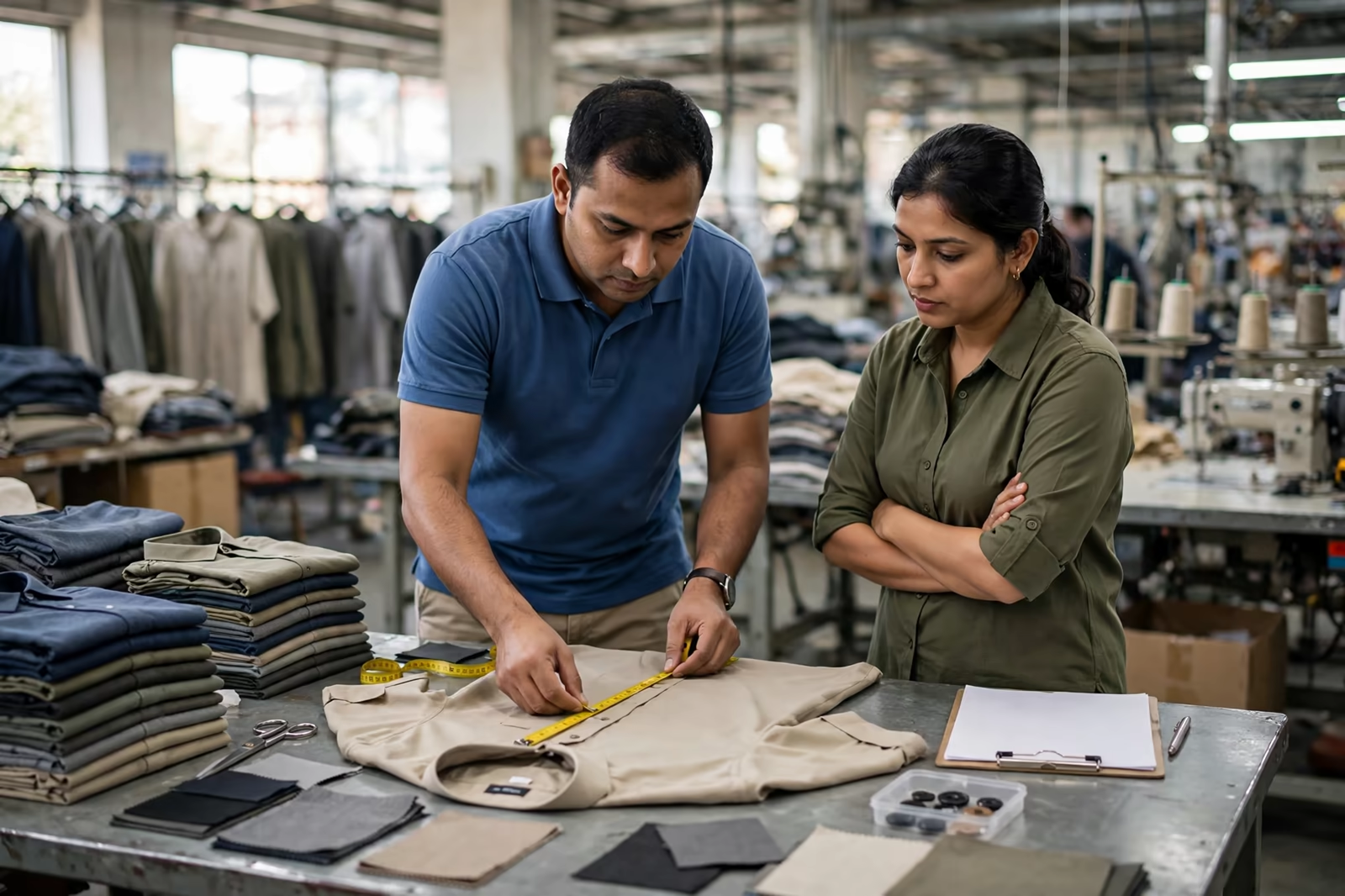
The day runs to a rhythm both sides know. The inspector verifies quantities and carton counts first, selects cartons by random draw rather than by the factory’s suggestion, and opens them at the inspection table. Garments come out in sample order: appearance and workmanship under good light, measurements at the specified points, labels and markings checked against the file, then packing and carton condition judged as the sample is restored.
Findings are recorded as they are found, defect by defect, with the factory’s quality representative present and able to see every fault the inspector records. That presence matters: a defect both sides watched being found is a defect nobody later disputes, and borderline calls can be discussed against the buyer’s definitions while the garment is still on the table.
The verdict is delivered before the inspector leaves or within the company’s reporting cycle, and the factory knows its position the same day. Whatever the result, the day ends with information, which is what everyone paid for.
Reading the Report Like a Professional
Read the numbers before the verdict: sample size, defects by class against limits, measurement results, quantity and packing findings. A pass with majors near the limit tells a different story from a comfortable pass, and a fail driven by one repairable fault differs from a fail spread across every category.
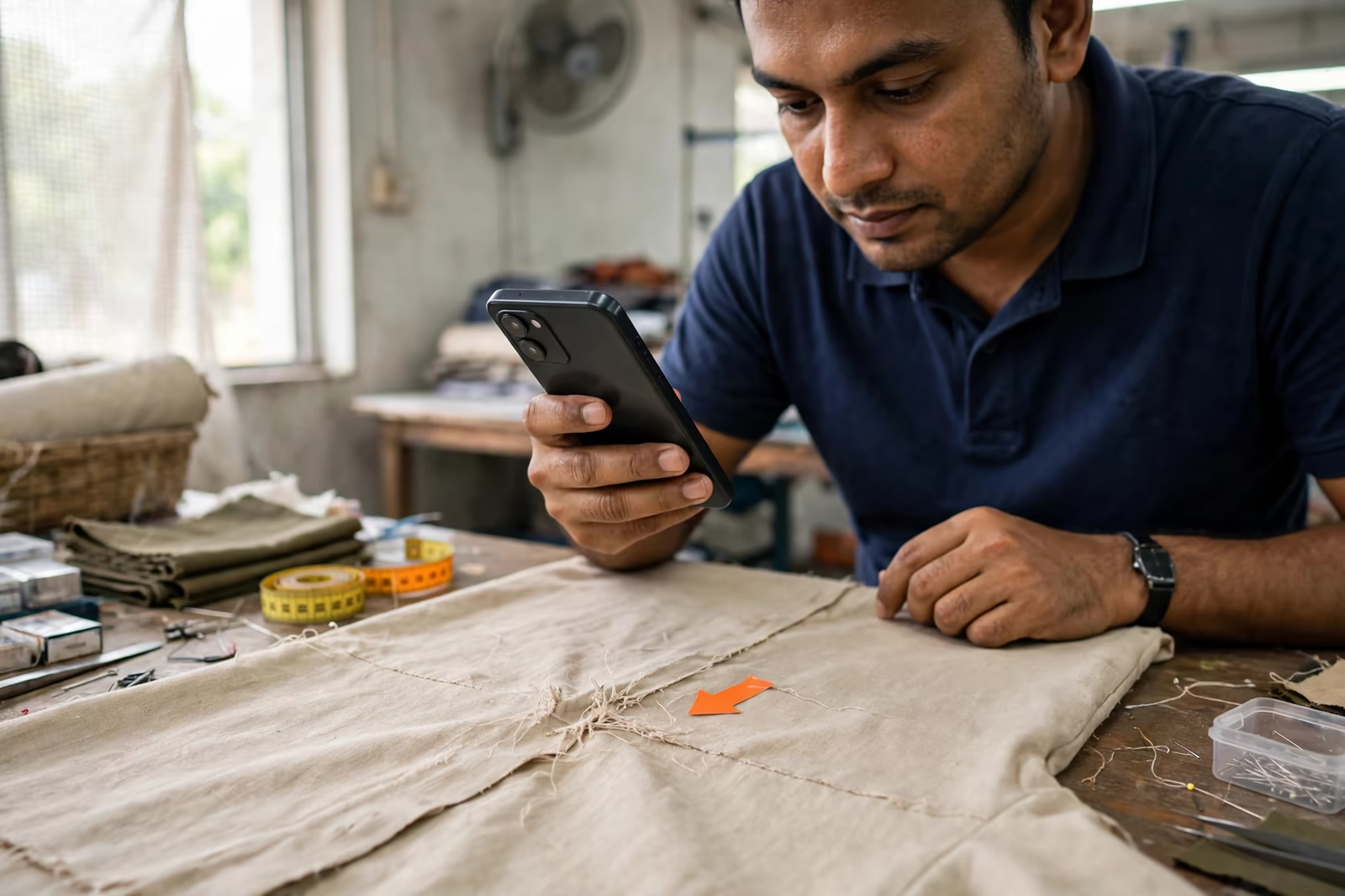
Photographs deserve the same care: they show the inspector’s examples, not a beauty contest, so judge them against the defect definitions rather than first impressions. Where a photograph and a tally seem to disagree, ask, because the question itself teaches both sides.
The professional response to a bad report is a plan, not pressure: rework, sorting, re-inspection, with dates. The professional response to a good report is a short thank-you and the release, because factories remember which buyers read reports fairly.
What It Costs and Who Pays
Inspection is normally the buyer’s cost, engaged and paid directly between buyer and inspection company, which is what keeps the inspector’s loyalty pointed the right way. Fees are usually charged per inspector-day, varying by country and scope, and a factory visit for one order typically takes a day.
Re-inspections after a failed first visit are also the buyer’s cost in most arrangements, which is one more reason factories prefer to pass first time and buyers prefer factories that do. The fee structure makes quality a shared financial interest, quietly and effectively.
Buyers running many orders negotiate programme rates and standing arrangements, and the relationship with a good inspection partner becomes an asset of its own, a second quality department rented by the day.
When the Two Sides Disagree
Disagreements happen at borders: a defect one side calls major and the other minor, a measurement taken by a different method, a shade judged under different light. The professional handling is procedural, recheck against the buyer’s written definitions, remeasure by the buyer’s published method, and where the inspection company’s review process exists, use it.
What both sides should resist is re-litigating the standard itself at the table. The standard was set in the order documents; the inspection applies it. A buyer who believes the standard proved wrong can change it for the next order, and a factory that believes a call was unfair can present the garment and the definition to the company’s reviewers calmly.
Handled this way, a dispute occasionally improves the shared documents both sides work from. Handled by volume and pressure, it merely decides who shouts, and teaches the inspector nothing except to dread the address.
Frequently Asked Questions
Is third-party inspection a sign of distrust?
No. It is verification, used most heavily at the start of relationships, on high-risk products, and wherever a buying organisation needs independent evidence for its own governance. Good factories welcome it: a passed independent report is the strongest marketing document a factory can send a buyer it hopes to keep. Distrust would be refusing to ship without it forever; using it wisely is professionalism.
When in production should the inspection happen?
The standard engagement is a final random inspection when goods are finished and packed, so the inspector samples the shipment exactly as it will travel. Inline inspections during sewing exist for catching drift early on long or sensitive orders, and some buyers combine both. Booking before goods are ready wastes the visit, so the factory’s readiness confirmation matters.
What happens if the inspection fails?
The report states the findings and the shipment waits. The usual path is rework or sorting by the factory, then a re-inspection of the corrected goods, booked the same way. Costs follow the arrangements between buyer, factory and inspection company, with re-inspection fees normally on the buyer’s account and rework on the factory’s. A clear report makes the correction precise, which is the point of having one.
How do I choose between inspection companies?
Look for garment specialism, local inspector presence in the production country, published methods and defect standards, inspector rotation policies, and references from buyers in your product category. Price matters last: an unreliable cheap report costs more than an honest standard one the first time it waves through a bad shipment or fails a good one.