

Every fabric story in the trade now wears a green adjective, and the adjectives have quietly stopped meaning the same thing to the people writing them and the people buying them. Recycled, organic, sustainable, eco, responsible: each word can describe a certified chain of custody, a single true fact stretched across a range, or nothing at all beyond a design meeting. This guide gives buyers the working machinery to separate proof from marketing, claim by claim.
The desk behind this guide writes its own fabric claims conservatively on clothing made in Bangladesh for the USA, the UK, Germany, Canada and Australia.
The claim language across our brands work follows the discipline inside our services; challenge any of it through our contact page and expect documents in reply.
The Evidence Ladder: What Proof Actually Looks Like
Claims stand on a ladder. At the top sit third-party certifications with transaction certificates following the material batch by batch, audited by bodies whose business is saying no. Below them sit laboratory test reports from named laboratories, dated, tied to the actual fabric. Below those, supplier declarations and mill certificates of the self-issued kind. At the bottom, marketing copy with no artefact behind it at all.
The buyer’s first skill is simply asking which rung a claim stands on, and requesting the artefact: the certificate with its scope and validity dates, the transaction certificate for this shipment, the test report for this fabric. Genuine supply chains produce these documents routinely, because their other customers ask too.
A claim that cannot produce its rung is not necessarily false; it is unpriced risk, and it should be bought, if at all, at the unproven price. The ladder is also seasonal: certificates expire, scopes change and last year’s impeccable evidence becomes this year’s historical document, which is why the check belongs in every order cycle.
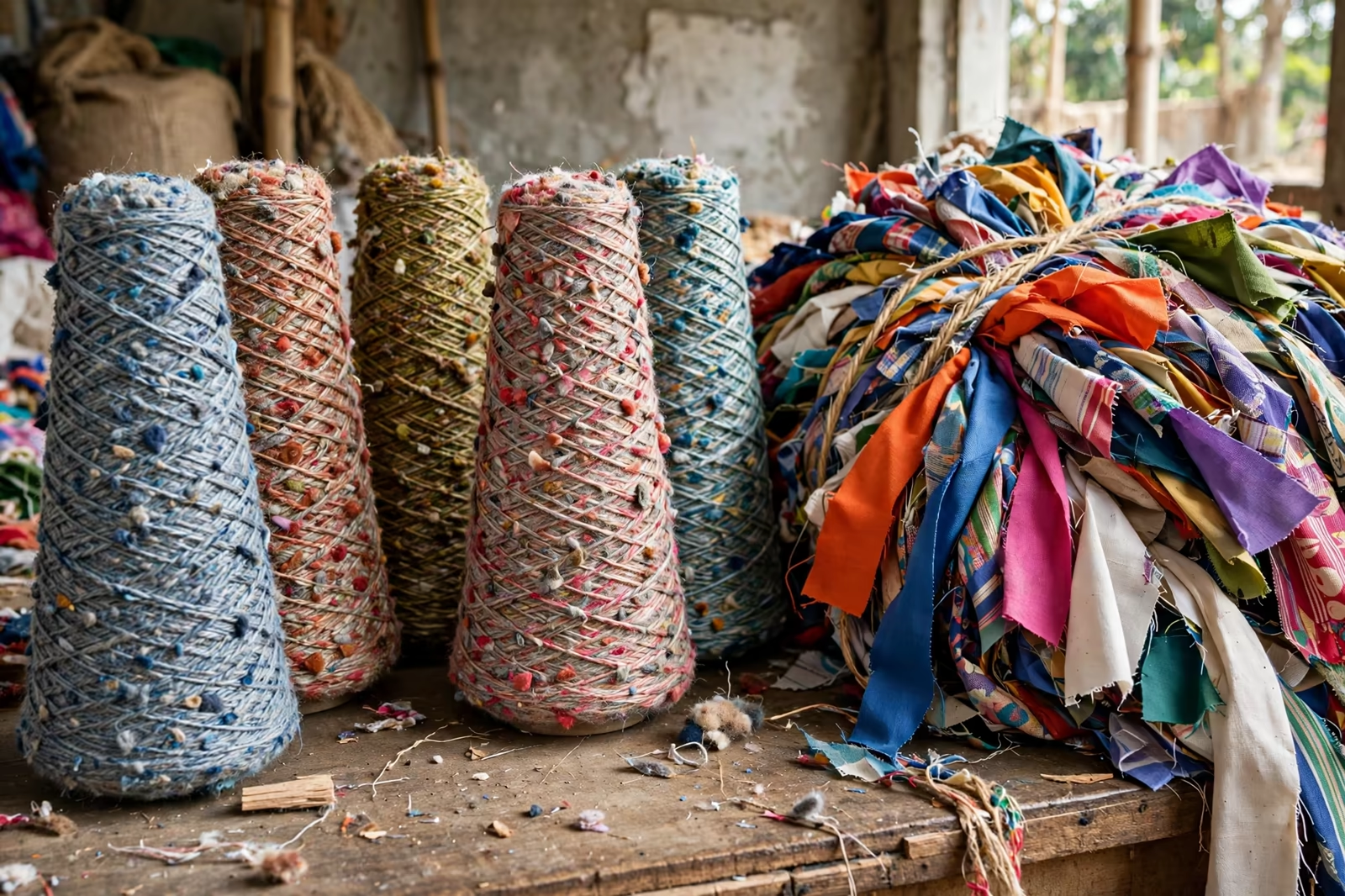
Recycled: Percentages, Sources and the Fine Print
Recycled claims hide three questions. What percentage of the product is actually recycled content, since blends wearing a minority share often carry the loudest labels? What was recycled, pre-consumer cutting waste or post-consumer material, which carry different environmental weight? And recycled into what, because a bottle becoming a t-shirt and a bottle becoming a bottle close different loops.
Certification schemes in our recycled fabrics guide exist precisely to answer these on paper, with chain-of-custody percentages that claims can be checked against. The marketing failure mode is the unqualified word: a garment that is partly recycled, described as recycled, full stop.
Buyers should also ask what the virgin remainder is and why, since the honest answers, strength, dyeing behaviour, cost, are usually reasonable, and the unreasonable ones hide.
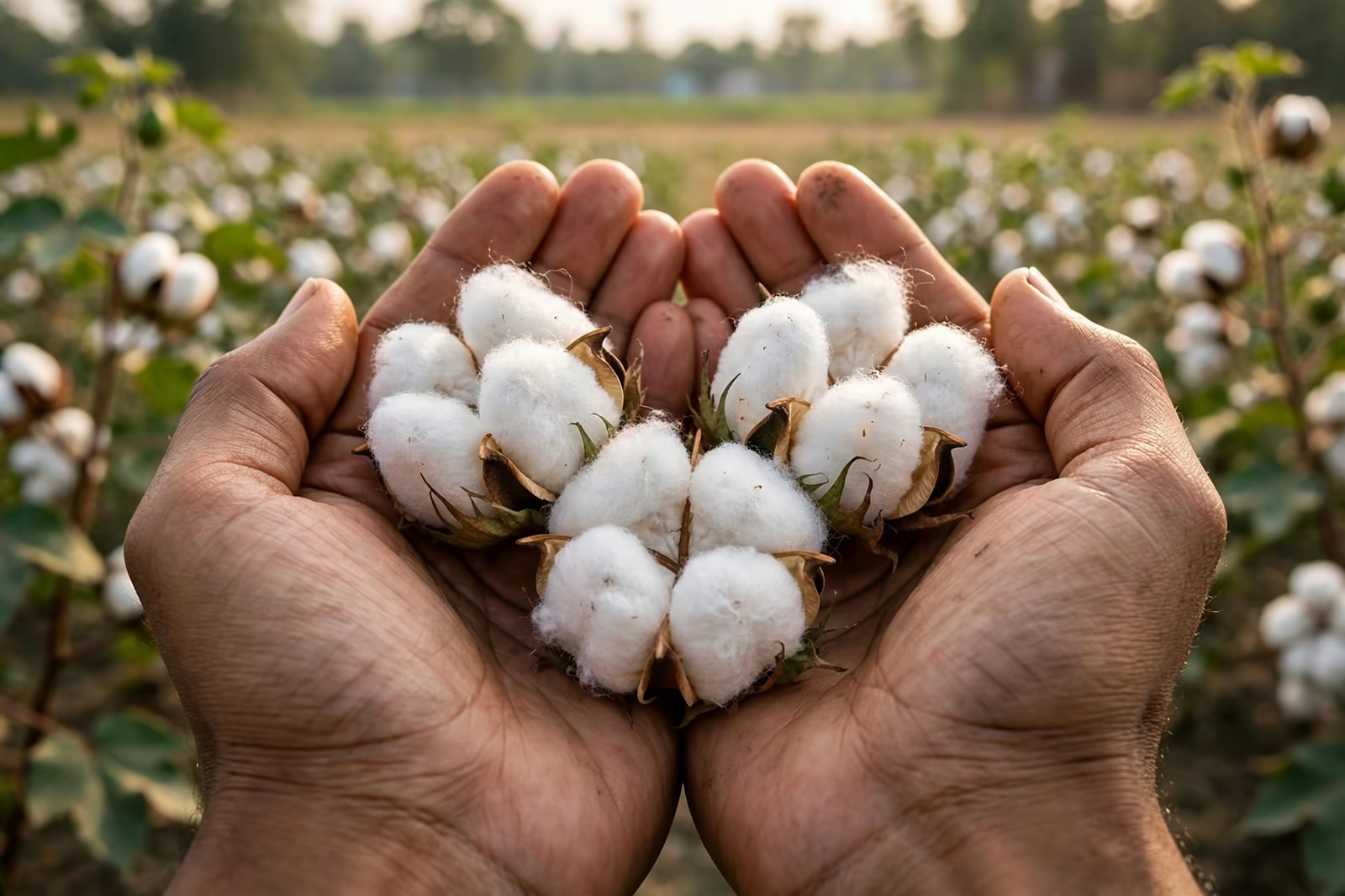
Organic: A Farming Claim With a Paper Trail
Organic describes how the fibre was grown, no synthetic pesticides or fertilisers, no genetically modified seed, under standards our GOTS explainer walks through. Its proof is a chain: farm certification, transaction certificates at each change of ownership, and a product-level claim that matches the fibre percentage actually present.
The weak imitations cluster around vocabulary: natural, pure, green cotton, none of which are organic claims in law or in fact. A second weak spot is scope drift, where one certified capsule line lends its halo, in photography and layout, to a store full of conventional product.
Percentages discipline this claim too: certified-organic product labels distinguish garments made mostly of organic fibre from those carrying a smaller share, and buyers should read for the share before repeating the word.
The Vague Words: Eco, Green and Sustainable
Unqualified umbrella words are where marketing lives most comfortably, because they assert everything and commit to nothing. Regulators in the big buying markets have noticed: green-claims rules in Europe, the UK and North America increasingly demand that environmental claims be specific, substantiated and about the product actually sold, with enforcement and retailer policies tightening behind them.
The practical translation for buyers is simple: ask what the word means on this product, in one sentence, with its evidence. A supplier doing real work answers with a mechanism: less water in dyeing by a named process, recycled content at a stated percentage, a certified factory standard. A supplier selling adjectives answers with more adjectives.
Our own rule when writing product copy is that every environmental word must be able to point at its document within one question, or come out of the copy. The rule costs us some lovely adjectives and buys something better: a catalogue a buyer’s compliance team can approve without a follow-up meeting.
Carbon and Water Numbers: Handle With Care
Impact numbers, litres saved, kilograms of carbon avoided, look like the hardest proof and are often the softest: most rest on lifecycle studies whose boundaries, baselines and assumptions decide the answer before the arithmetic starts. A claim comparing a product against an unnamed conventional baseline, by an unstated method, is marketing wearing a lab coat.
Serious numbers name their study, their scope, whether the comparison covers fibre only or the whole garment’s life, and who verified them. Buyers repeating such figures on their own labels inherit them, which argues for reading the study rather than the summary.
Where our copy uses an impact figure at all, it travels with its source and scope attached, or it does not travel.
Biodegradable and Compostable: The Conditions Clause
Biodegradable sounds absolute and is anything but: almost everything degrades eventually somewhere, and the claim only means something with its conditions attached, in soil, in marine water, in industrial composting, over what period, leaving what behind. Blends and finishes complicate the story further, since a biodegradable fibre inside a garment with synthetic thread, prints and elastane is a system claim, not a fibre claim.
Certifications exist for compostability claims in defined conditions, and they, not the dictionary, are the proof. Buyers should also ask the disposal question honestly: if the product’s real end of life is landfill, a compostable claim is a story about a journey the garment will never take.
The durable environmental wins, longer wear, repairability, honest fibre choices, are less photogenic and considerably more real.
Auditing a Claims File: A Buyer’s Routine
A workable routine fits on one page. List every environmental claim the programme makes, product by product. Beside each, record the evidence artefact, its issuer, its dates and the product scope it covers. Flag every claim whose artefact is missing, expired or scoped to something else. Refresh the file at each season and each supplier change, because claims decay silently as supply chains move.
The second half of the routine is linguistic: read the customer-facing copy against the file and strike any word the file cannot support, including the soft drift of photography and layout that lets one certified line bless a whole range.
Buyers who run this routine once usually keep running it; the first pass finds something every time.
What Retailers and Regulators Now Demand
The direction of travel in the big markets is uniform: environmental marketing is becoming a substantiation exercise. Marketplace and retail gatekeepers increasingly ask for claim evidence at listing; regulators consult publicly on green-claims codes and act on complaints; and the cost of a withdrawn claim, relabelling, delisting, publicity, dwarfs the premium the claim was chasing.
For factories and suppliers the same discipline arrives as paperwork requests: certificates, transaction documents, fibre compositions verified by analysis. Houses that keep clean claims files win this business precisely because their customers sleep better.
Our documentation habits, order files carrying compositions and certificates forward, were built for quality; they turn out to be the same files the claims era asks for.
Our Own Claims Discipline
Three rules govern the copy on this site. First, percentages before adjectives: a material claim states its share of the garment. Second, named standards only where the programme genuinely runs under them, described as the buyer’s specification being followed, never as decoration. Third, every claim must be able to produce its document within one request, from the order file, or the sentence is rewritten until it can.
Where a buyer’s programme requires a certified chain, the certification documents travel with the goods as part of the delivery file; where it does not, our copy says what the garment is made of and stops there.
That restraint is commercial, not just ethical: in a market learning to audit claims, the modest sentence that survives audit is worth more than the grand one that cannot, every single season.
Red Flags: A Pocket Checklist
The patterns repeat often enough to list. Nature imagery doing the work of evidence. Percentages absent from percentage-shaped claims. Certificates without numbers, dates or named certifiers. One certified product photographed across an entire range. Baselines unnamed in savings claims. Words like eco and pure standing alone. And urgency: claims that grow vaguer the closer a document request gets.
None of these prove dishonesty alone; several together describe a programme built in the marketing department. The checklist takes ten minutes against a new supplier’s claims and repays it the first time it matters.
Buyers are welcome to run it against this site’s claims as well; the contact page at the top of this guide is the audit door, and it is genuinely open.
Frequently Asked Questions
What is the single best question to test a sustainability claim?
Ask for the artefact behind it: the certificate, the transaction certificate for the shipment in question, or the test report, with names and dates. Real programmes hold these documents as routine paperwork and share them without drama. Evasion, delay and documents that turn out to cover a different product, factory or year are the answer, whatever the words around them say.
Is a self-declared claim worthless?
Not worthless, but weaker: a supplier’s own declaration is a statement the buyer must verify by other means, testing, audit, reputation and the commercial consequences of being caught. The market prices this correctly when it can: certified claims carry premiums because they transfer the verification cost to an auditor. Self-declared claims should be priced, and repeated, as what they are.
What does a transaction certificate prove that a scope certificate does not?
A scope certificate proves a site is certified to handle a standard. A transaction certificate follows a specific batch of certified material through a specific sale, tying the claim to the goods actually shipped. Programmes have failed on exactly this gap: certified factories shipping uncertified goods under certified language, which only the transaction document exposes.
How should buyers write claims on their own products?
Specifically and modestly: name the material and its percentage, the standard and certifier where one applies, and the mechanism behind any broader claim, then keep the evidence file behind the wording for as long as the product sells. Claims written this way survive regulator questions, retailer audits and journalist phone calls, which is the actual test in the current market.