
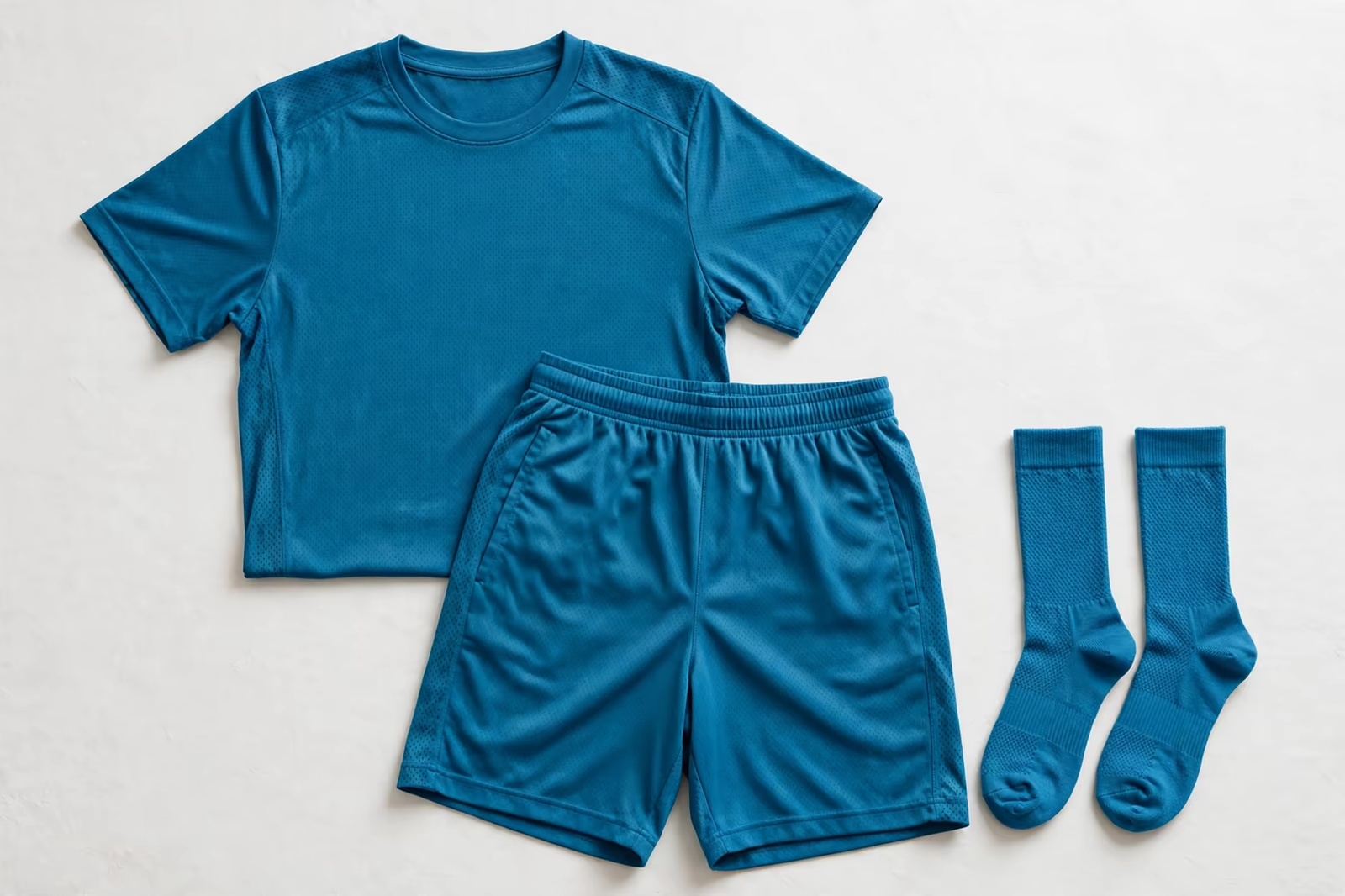
Tournament kits fail in the same few places every season: the sizes were guessed, the names were spelled from a spreadsheet nobody checked, the goalkeeper’s shirt matches the opposition, and the whole order was placed against a fixture list that moved. None of it is bad luck.
Team kit ordering is a known discipline with known traps, and this guide walks through it for clubs, schools and tournament organisers sourcing from a clothing manufacturer in Bangladesh for the USA, the UK, Germany, Canada and Australia.
The promise of the system below is modest and real: the chaos is optional. Every failure it prevents is one that experienced kit managers have already paid for.
Start With the Squad List, Not the Catalogue
Every kit error begins with ordering before the squad exists on paper. The disciplined order starts from a verified roster: names, positions, sizes measured rather than remembered, and the staff who dress with the team.
- Collect sizes by measurement session, not by asking players to guess
- Record goalkeepers, coaches and physios in the same list, marked apart
- Freeze the roster on a stated date; late joiners enter the spares plan
- Check name spellings with the players themselves, character by character
- Confirm numbers against the league’s registration, not last season’s shirt
That frozen page is the order. Everything the factory produces traces back to it, which is why an hour spent on it saves the entire season’s embarrassment budget.
The Kit Itself: What a Tournament Demands
Tournament play is harder on clothing than league play: multiple matches compressed, travel between them, washing done in hotels and laundrettes by whoever has time. The specification answers that reality.
- Lightweight breathable shirts that wash and dry overnight
- The workhorse is the performance training t-shirt class of garment
- Shorts with a drawcord and pockets that survive a full match
- Socks planned as consumables, several pairs per player
- A training or warm-up layer in the same identity for travel days
- Two full sets per player where the schedule compresses matches
Our standard minimum of 1,200 pieces per style in up to two colours, set out on the MOQ and production page, frames the production side; a multi-team tournament or a school system reaches it naturally by ordering as one programme.
Colours, Clashes and the Second Kit
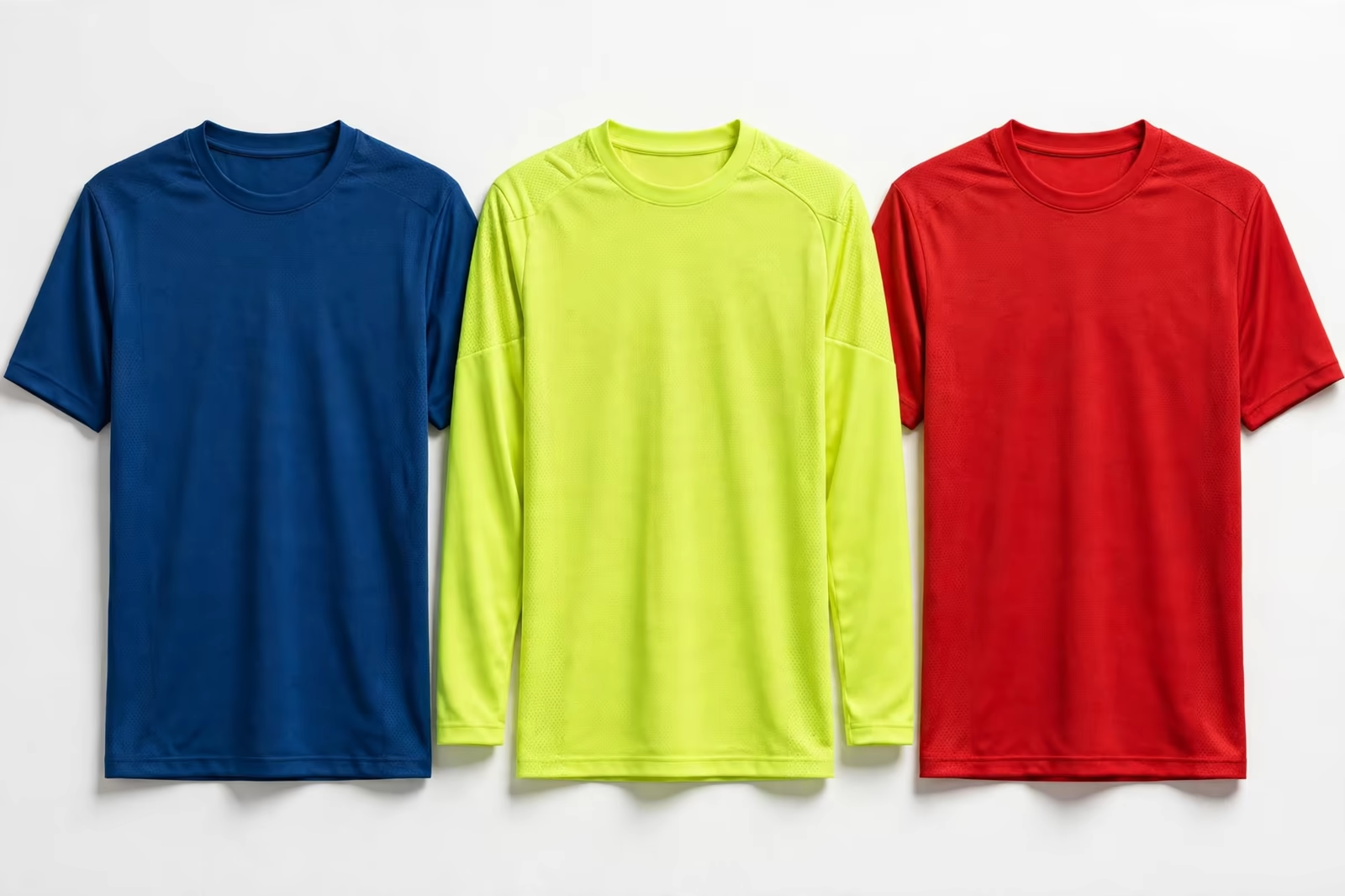
The most humiliating kit failure is the colour clash: two teams, one shade, and a referee asking who brought the bibs. The second kit exists for this moment and is planned with the first, not after the draw.
- Register your colours with the tournament before production, not after
- Choose the change kit from the opposite end of the colour wheel
- Goalkeeper colours must clash with nobody, including the officials
- Check the likely opposition colours in your draw where they are known
- Carry training bibs anyway; humility is cheaper than forfeits
Bibs deserve their line honestly: they are the universal insurance policy of amateur sport, and the team that packs them is the team that never needs them in anger. Pack them in a shade opposite to both kits; even the insurance policy should respect the identity it exists to protect.
Names, Numbers and Personalisation
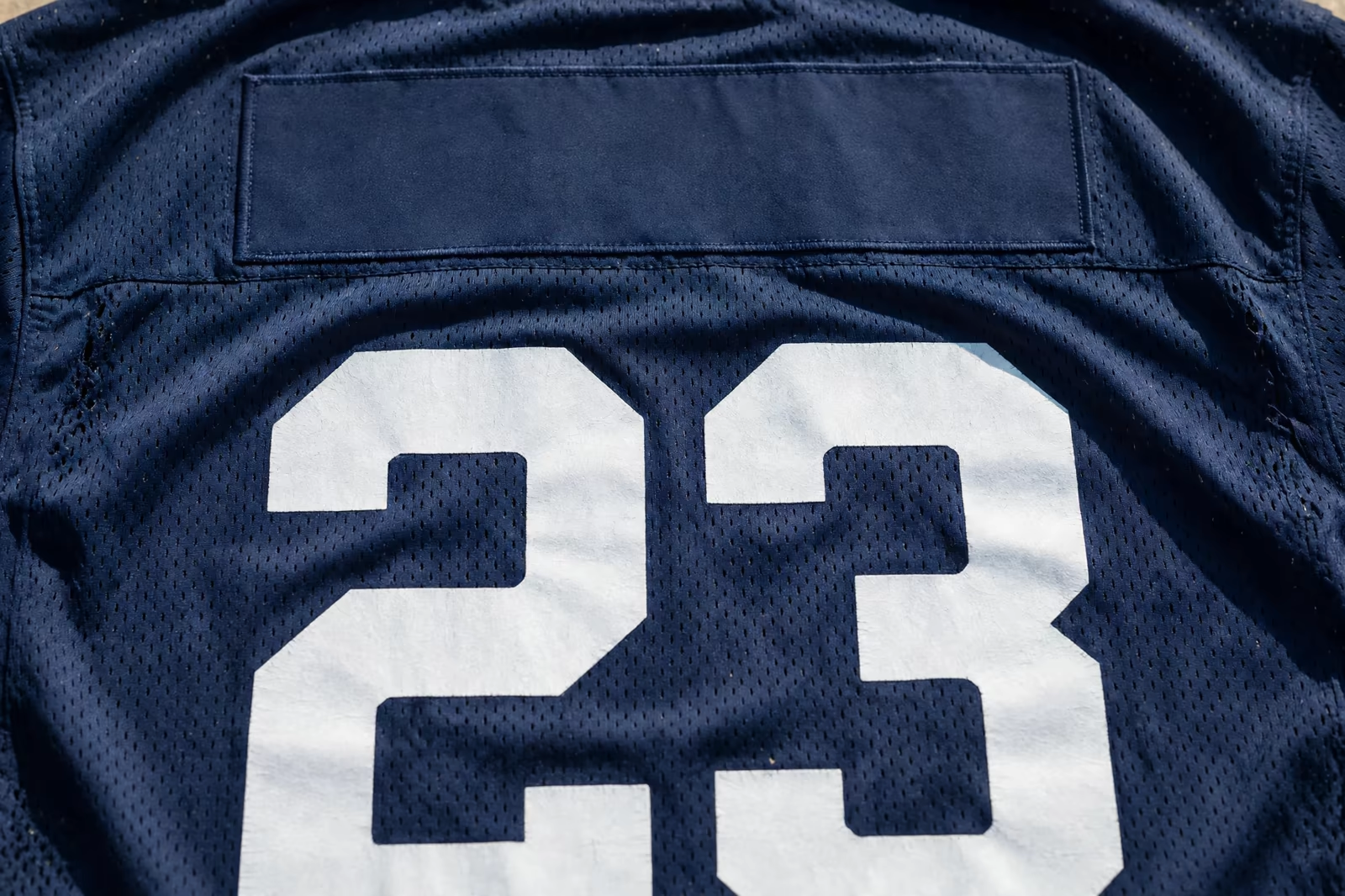
Personalisation is where kit orders go to be wrong in public. A misspelled name is worn all season and photographed at every match, and the responsibility sits with whoever approved the list, not with the printer who followed it.
- Players proof their own name and number in writing
- One master list, versioned, with changes tracked and re-approved
- Number sizes and positions standardised across the whole squad
- Sponsor and league marks placed to the tournament’s own rules
- The print method matched to the volume: screen printing disciplines the details
- A printed sample of one full name set approved before the run
The sample rule is the cheapest in this guide. One shirt, checked by three people, against the master list, prevents the error class that no discount can compensate.
Spares, Late Joiners and the Growth Problem
Squads are not stable. Players join mid-season, teenagers grow out of a kit between ordering and the final, and the best shirt of the set meets a slide tackle in week one. The order that assumes a frozen world is wrong by design.
- Order spare shirts unnumbered in the common sizes for instant issue
- Hold a small blank stock with the print partner for late personalisation
- For youth teams, size for the season’s end, not its beginning
- Record every issue against the roster so losses have a history
- Budget the replacement flow inside the season, not as an emergency
Unnumbered spares are the professional’s signature move. They convert every squad emergency into a five-minute errand, and they cost a fraction of one panicked express reorder.
The Order Calendar, Backwards From the First Match
Tournaments publish their dates and then, occasionally, move them. The kit calendar respects both facts: built backwards from the first fixture with buffer for the freight and the fixture list alike.
- Roster freeze date set before production is quoted
- Artwork and personalisation proofs approved before the run starts
- Delivery aimed at a training session, not the match-day morning
- A full dress rehearsal: kit issued, tried, exchanged while time remains
- The exchange stock staged before the first match, not after it
The dress rehearsal sounds ceremonial and is purely practical. Every sizing mistake in the squad is cheapest in the training hall, where it is a swap, rather than at the venue, where it is a story.
Washing on the Road
Between the matches, the kit has a second life that decides whether the team looks professional on day three: the wash. Tournament laundry is improvised by nature, done in hotel sinks, laundrettes and club machines, and garments chosen without it in mind fade, shrink or simply never dry.
- Quick-dry fabrics forgive the overnight turnaround
- Dark or soil-hiding colours carry the away days gracefully
- Print that tolerates frequent washing at varied temperatures
- A named laundry owner in the travelling party, not a shared hope
- Mesh bags per player keep the squad’s kit from becoming communal
The mesh bag detail deserves respect: half of tournament kit loss is laundry loss, garments returning to the wrong room, the wrong bag, the wrong team. Kit that travels named and bagged comes home. The same discipline protects the colours: whites washed apart from the strong shades, prints turned inside out, and one agreed routine the whole party follows, written on the inside of the kit bag lid where nobody can claim they never saw it.
The Kit Manager’s Season
Behind every calm tournament sits one person whose season started months earlier: the kit manager, volunteer or professional, holding the roster, the spares and the grudges against every supplier who ever shipped late. Their method, when you watch it closely, is this entire guide performed as habit.
They measure instead of asking. They freeze the list and defend the freeze. They approve one printed shirt with their own eyes before a thousand follow, they stage the exchanges before the first match, and they write down what the season taught before the memory fades. Clubs that honour this role, with time, a budget line and a say in the ordering, stop having kit stories. Clubs that treat it as an errand keep collecting them.
Their other signature is the season file: last year’s roster annotated with what ran out, what clashed, what shrank and what the laundry ate, carried into this year’s order as evidence. A club with three years of that file orders kit the way professionals do, from records instead of from memory.
Looking Like a Team Before Playing Like One
Kit does psychological work that coaches understand instinctively. A squad that arrives dressed identically, correctly and well walks differently from one assembled from leftovers, and opponents read the difference during the warm-up.
- Travel dress in the team identity, not only match kit
- Warm-up layers matching, so the bench photographs as one unit
- Staff dressed inside the same identity, marked by role
- Spare kit at the venue identical to the issued kit, no substitutes
- The team photograph taken in the new kit, early, while it is perfect
None of this wins a match by itself. All of it removes the small frictions and doubts that lose them, which is most of what preparation means in any sport.
The Money Conversation
Finally, the budget, because kit fails financially before it fails physically when nobody owns the numbers. Tournament programmes draw money from entries, sponsors and the club, and the kit line competes with travel, venues and officials for all of it.
- Price the programme whole: two sets, spares, spares’ personalisation, freight
- Sponsor marks agreed in the sponsorship, not negotiated at artwork stage
- Players’ contributions, where they exist, collected against the frozen roster
- The replacement flow budgeted inside the season, openly
- One person accountable for the kit budget, named in the plan
Kit bought this way is rarely the cheapest on the first invoice and almost always the cheapest by the final. The chaos this guide exists to prevent is, in the end, a cost, and it is the only line in the budget that buys nothing at all.
Frequently Asked Questions
How do we get the sizes right for a whole squad?
Measure, do not ask. Run one sizing session with sample garments or a tape, record the results against the roster, and let players confirm their own entry. Guessed sizes fail at the extremes and the middle alike; measured sizes fail almost nowhere, and the session takes an hour.
How many kits does each player need for a tournament?
Two full sets where matches compress into consecutive days, because washing and drying between games cannot be guaranteed on the road. One set suffices for spaced fixtures with home laundry, provided the spares pool is real. The honest test is the second match of a compressed weekend: whatever the team wears then is the true depth of the kit, and it should be planned, not improvised. Socks and the most-worn pieces should always be multiplied beyond the shirt count.
What is the safest way to handle names and numbers?
One master list, proofed by each player in writing, versioned when it changes, and proven on a single printed sample before the run. Every personalisation disaster in kit history traces to skipping one of those steps, usually the sample, usually to save a day. The sample also proves colour, placement and print size in one physical object, three approvals for the price of a single shirt.
Can a small club meet factory minimum quantities?
By ordering as a programme rather than as a single team: several age groups, the staff kit and the spares pool inside one order, or several clubs ordering together. The structure is explained on the MOQ page linked above, and it turns a minimum into an organising tool.