
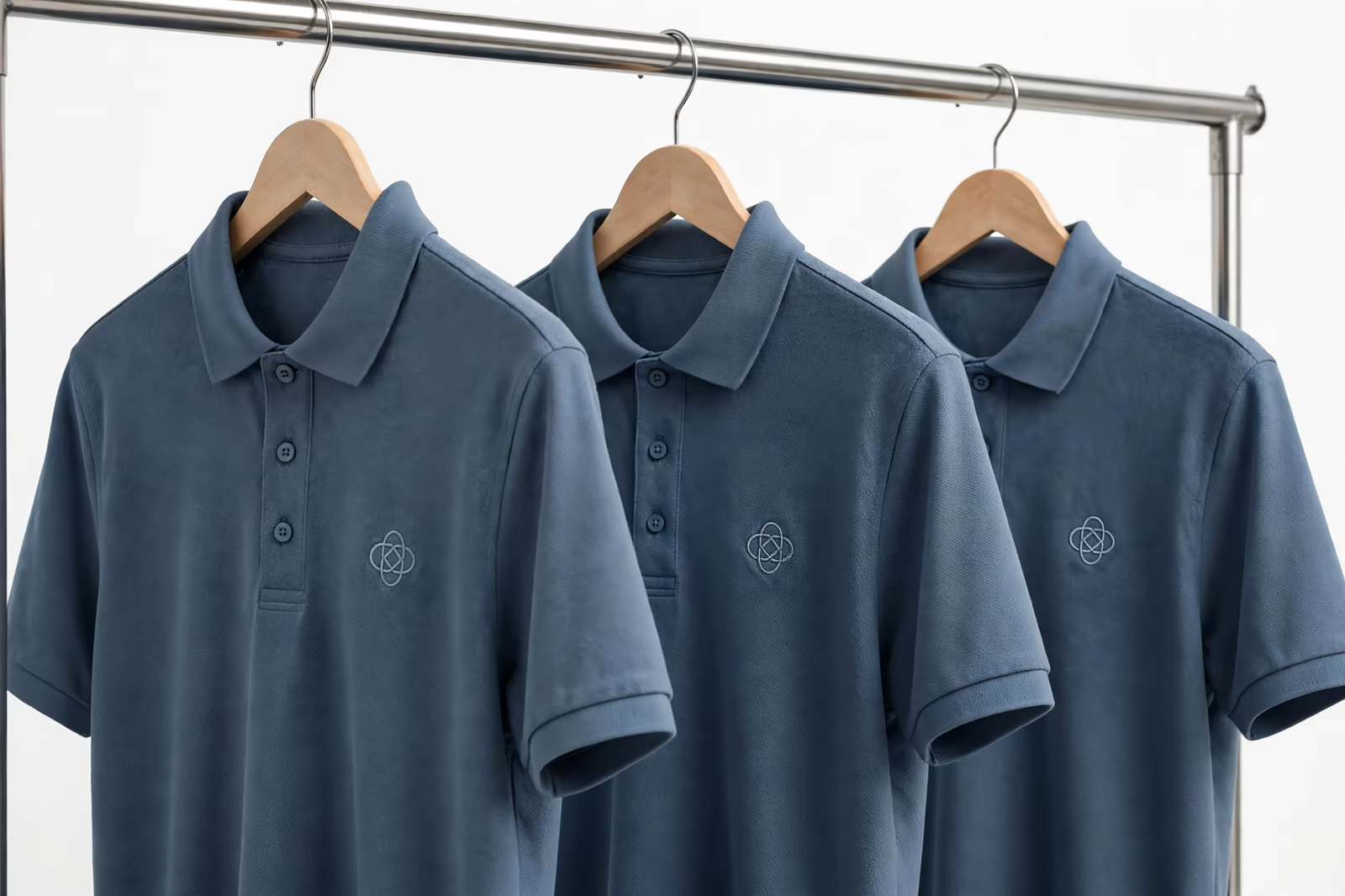
A conference dresses two populations at once, and confuses them at its peril. The staff kit says “we work here, ask us”; the giveaway tee says “take us home and remember who gave you this”.
Both are printed by the thousand, both are judged in photographs, and both are usually ordered in the same rushed week. This guide separates the two wardrobes and plans each properly, for organisers and exhibitors sourcing from a clothing manufacturer in Bangladesh for events in the USA, the UK, Germany, Canada and Australia.
The governing idea is simple: staff apparel is a uniform system, giveaway apparel is a marketing product. They share a supplier and a deadline and almost nothing else.
Two Wardrobes, Two Jobs
Confusing the two jobs produces the familiar conference failure: staff in the same tee as the freebies, unfindable in the crowd they are meant to serve, and a giveaway so cheaply made that it advertises the brand’s standards backwards. Separate them on paper before anything is ordered.
- Staff kit: identification, authority and consistency across every day
- Giveaway tee: reach, goodwill and a walking reminder after the event
- Speaker and VIP pieces: a third, small wardrobe with its own dignity
- Sponsor marks appear on both, under different rules for each
- Different garments, different fabrics, deliberately different colours
With the separation made, each wardrobe can be specified honestly instead of compromised jointly. That single page of clarity, written before any quotation is requested, prevents most of the failures this guide describes.
The Staff Kit: A Uniform in Miniature
Conference staff are found by their clothing before they are found by their badges. The kit must read instantly across a hall, survive three days of wear, and flatter a team of every shape the workforce actually contains.
- The polo is the staff standard: structured, presentable, unmistakable
- The reference garment is the classic pique polo shirt, embroidered, not printed
- Two to three per person across a multi-day show, plus spares by size
- One colour reserved to staff alone, never sold and never given away
- Role variants for registration, stage, AV and floor teams where scale allows
- A layer for cold halls: venues air-condition like they mean it
Embroidery carries the staff mark because it survives the week and photographs as quality. The giveaway can be printed; the people running the event must look permanent.
The Giveaway Tee: Marketing That Gets Worn
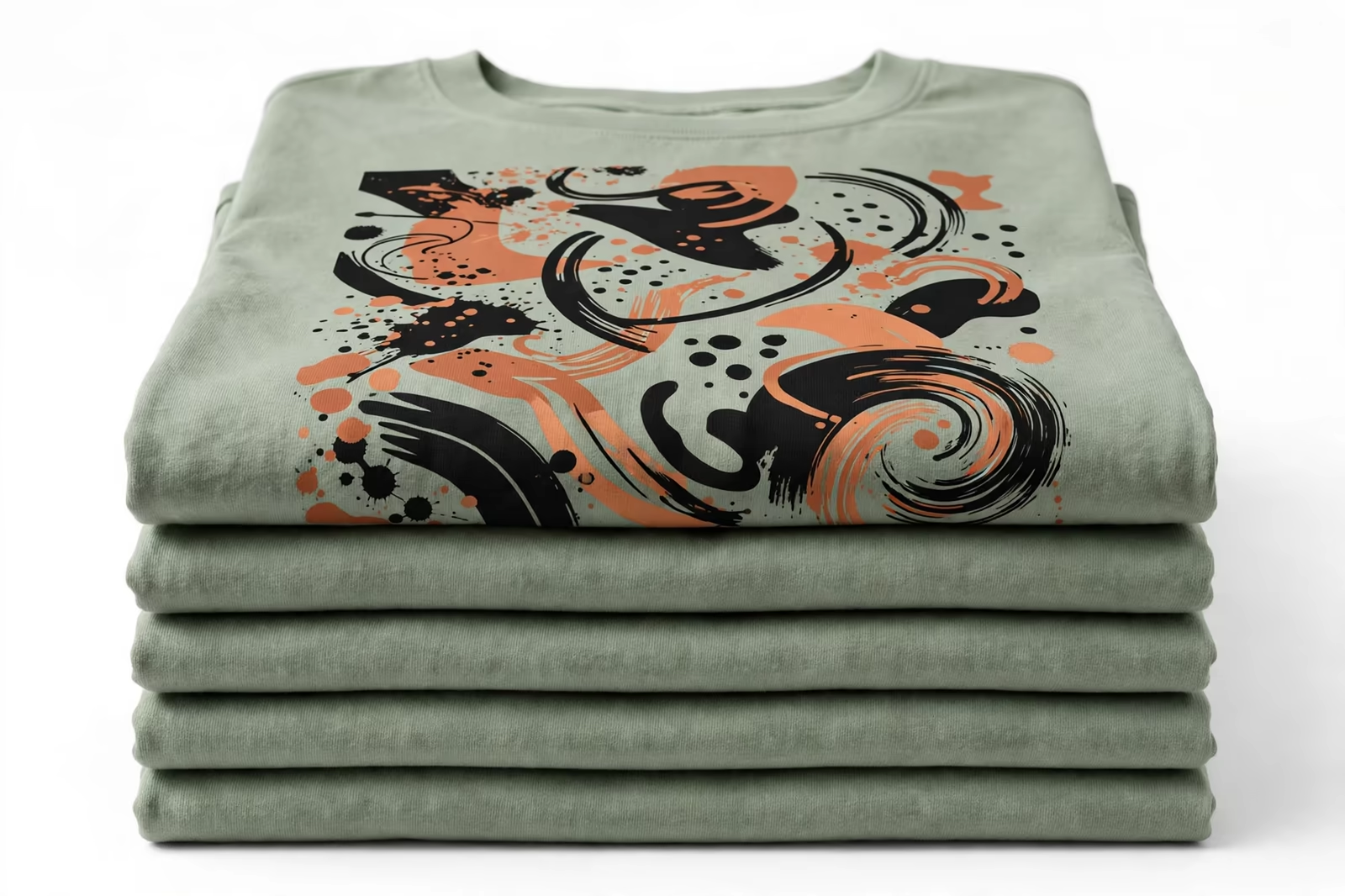
The giveaway tee is judged by one test: does it get worn after the event? A shirt worn fifty times is media; a shirt worn never is landfill with a logo, and attendees can tell the difference the moment it leaves the bag.
- Design for the wearer’s taste, not the sponsor wall
- A wearable colour and a print people would choose in a shop
- Fabric with enough substance to survive the wash cycle at home
- The classic crew neck t-shirt carries the slot in most programmes
- Sizes planned for strangers: the curve weighted to the middle
- Our standard minimum of 1,200 pieces per style in up to two colours suits show scale exactly
The bravest giveaway decision is restraint: one strong mark, well placed, on a shirt worth keeping. Attendees have drawers full of sponsor collages; the plain, confident tee is the one that gets worn.
Sizing for People You Have Never Met
Staff sizes are knowable; giveaway sizes are a forecast. Exhibitors guess this wrong in both directions, ending the show with boxes of extremes and a memory of turning away the middle of the crowd by day two.
- Build the curve from the audience profile: industry, age, region
- Weight medium and large heavily; they clear first at every event
- Offer unisex cuts sized honestly, and say so on the stall signage
- Stage sizes in reach order so the queue never waits on a search
- Count what cleared each day; day three’s stall can be steered by day one’s data
The curve is a hypothesis the event tests in real time. Programmes that record the result own next year’s forecast; programmes that do not, guess again at full price.
Branding That Survives the Photographs
Conferences are photographed professionally and socially at once, and the apparel appears in both records forever. Branding decisions should be made for the camera as much as for the hall.
- Chest marks sized for photographs, not for arm’s-length reading
- Back prints carry the message across crowded hall shots
- Staff colours chosen to separate from the venue’s own palette
- Sponsor logos disciplined by a hierarchy agreed before artwork
- Hashtags and handles printed only where they will genuinely be used
The test is simple: look at last year’s event photography and ask whose clothing you can identify. Then make sure the answer, next year, is yours.

Getting It All to the Venue
Event apparel logistics end at a loading dock on a date that cannot move, which makes them a freight problem wearing a design problem’s clothes. The plan is built backwards from doors-open, through the venue’s delivery windows and the freight route’s honest timetable.
- Split the shipment: staff kit early, giveaways can follow closer
- Label cartons by wardrobe, day and size for the venue floor
- Carry the irreplaceables in hand luggage: one full staff set per key role
- Confirm the venue’s receiving hours and dock rules in writing
- Hold a small buffer stock off-site for the day that consumes everything
Start the whole conversation, through get a quote or directly, with the show dates in the first line. In event apparel the calendar is the specification everything else hangs from. Work it backwards on paper, week by week, and the plan will show you its own danger points while they are still cheap to fix.
After the Show: The Wardrobe’s Second Life
When the hall empties, the apparel remains: leftover giveaways, the staff kit, the data. Programmes that plan the second life recover value from all three.
- Undated giveaway designs roll to the next event or the online shop
- Staff kits laundered and stored become next year’s base stock
- The cleared size curve is filed with the artwork for the next order
- Sponsor reports carry the photographs the kit was designed to earn
- Failures are named honestly while the memory is fresh
A conference wardrobe run this way compounds: each show starts from the last show’s evidence, the kit sharpens, the curve tightens, and the apparel stops being an annual panic and becomes an asset the event owns.
The Registration Desk Test
Judge any conference wardrobe at the registration desk at nine on the first morning, because that is where it either works or visibly does not. The queue is long, the questions are basic, and every attendee is scanning the room for a human being who is obviously in charge.
If the staff kit works, the eye finds help instantly: the reserved colour, the embroidered mark, the team distributed along the queue like punctuation. If it does not, the desk dissolves into a crowd of identical tees, half of them attendees holding coffee. No signage budget repairs what the wardrobe failed to do, which is why the kit is specified as a uniform and not as merchandise with extra steps.
The desk test has a second sitting at the show’s end, when the same team, in the same kit, fields the complaints, the lost property and the rebooking conversations. A wardrobe that still looks disciplined at that hour, on day three, has earned whatever extra its embroidery cost.
The Small Wardrobes: Speakers and Sponsors
Between the staff hundreds and the giveaway thousands sit the small runs that carry disproportionate weight: speaker gifts, sponsor team kits and the pieces produced for the people whose names sell the tickets.
- Speaker pieces: premium, restrained, sized from real data given in advance
- Sponsor teams: their own branding rules inside your garment discipline
- VIP and press variants kept few, deliberate and never sold
- Names and personalisation only where the data is certain
- Presented boxed or folded as gifts, not handed over like stock
Small runs are where programmes cut corners, because the quantities feel trivial. Resist it: the speaker photographed in your garment reaches more people than the entire giveaway run, and she will not wear a shirt that feels like an afterthought.
Where the Budget Earns Its Keep
Conference apparel money is finite like everything else at a show, and its allocation is a statement of priorities. The programmes that look expensive rarely spent more; they spent in the order the audience actually judges.
- First, the staff kit’s fabric and embroidery: permanence is visible
- Second, the giveaway’s design restraint and base fabric quality
- Third, the small wardrobes, because their wearers are photographed most
- Fourth, spares and sizing depth, the invisible insurance
- Last, novelty extras, which history says the audience forgets first
The reverse order is the common failure: gimmicks funded, staff dressed in the cheapest garment on the quote, and a giveaway whose fabric announces its budget to every hand that touches it. Audiences cannot see your spreadsheet, but they can feel exactly where it was cut. The organiser’s rule is therefore simple: if a saving would be visible in the photographs or palpable in the hand, it is not a saving. It is a downgrade performed in public, at the one moment the brand is being watched most closely.
Frequently Asked Questions
Should staff and giveaway shirts be the same design?
No. Staff must be findable, which requires a colour and garment the crowd is not wearing. Use the same design language so the event reads as one family, but give staff the polo, the embroidery and the reserved colour, and let the giveaway be its own product.
How many staff shirts does each person need?
Two as a working minimum for a multi-day show, three where no laundry is possible and the days are long. Add spares by size at team level for the accidents every show produces. A team that looks fresh on day three is a planning outcome, not luck. Collect sizes from the team early, privately and without a public chart on a noticeboard; how the question is asked decides whether the answers are honest.
What makes a giveaway tee get worn afterwards?
A design the wearer would choose, on a colour that suits ordinary life, in a fabric that survives washing. Restraint beats the sponsor collage every time: one confident mark, honestly made. The drawer test is the only market research that matters here.
How do I forecast giveaway sizes for a public audience?
From the audience profile, weighted heavily to the middle sizes, then corrected live by counting what clears each day. Record the final curve and file it with the artwork; next year’s forecast then starts from evidence instead of from the same guess repeated at the same price in front of the same disappointed crowd.