
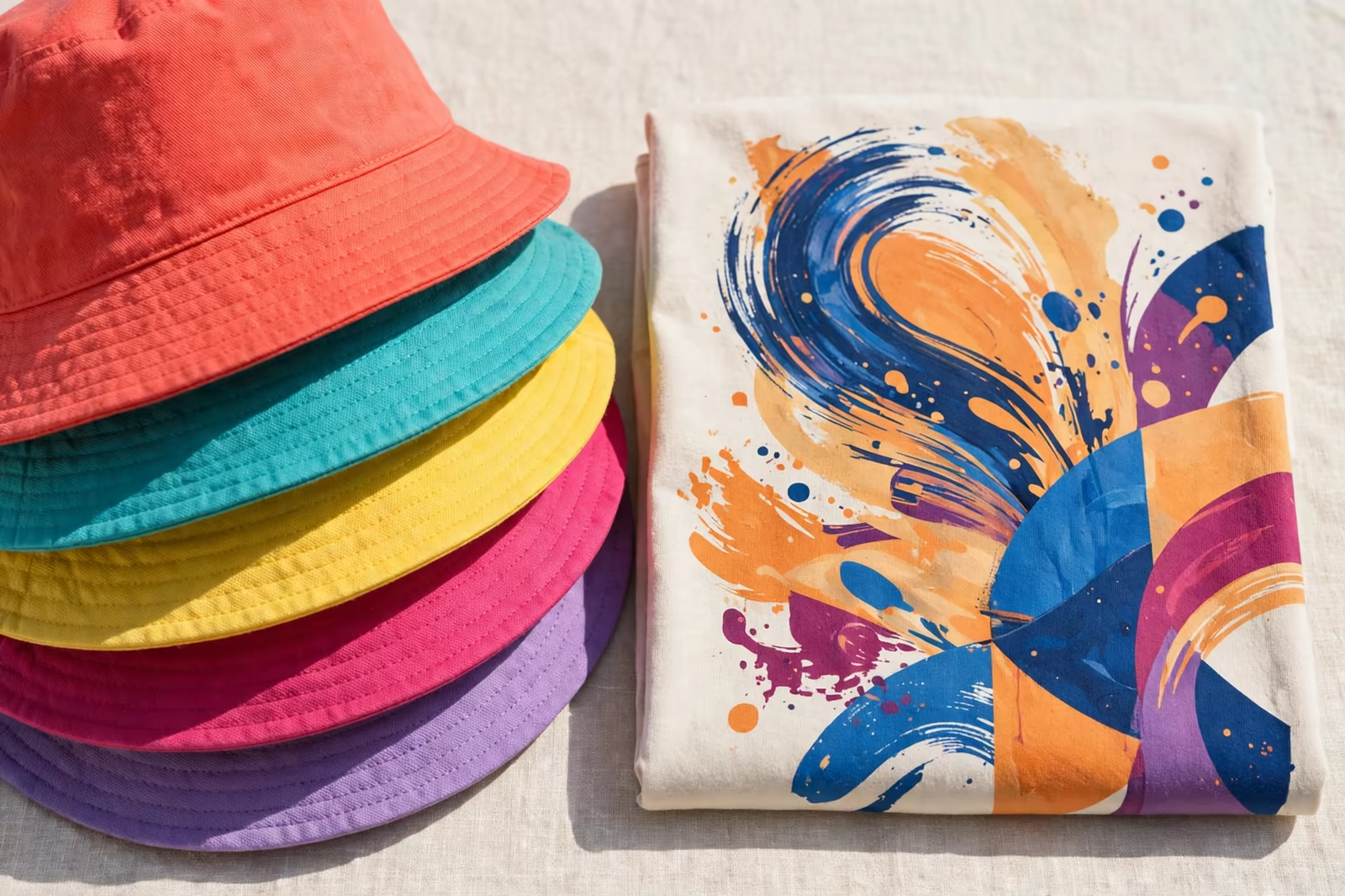
A festival is a temporary city with a strict dress code of its own invention. The merch stall is its high street,
The organisers who programme it well sell identity by the armful: the hat shading ten thousand faces in the crowd shots, the tote carrying programmes and water bottles, the hoodie that comes out when the headline act plays into the cold. This guide builds a festival merchandise programme properly, from the anchor garments to the small goods around them, for organisers sourcing from a clothing manufacturer in Bangladesh for the USA, the UK, Germany, Canada and Australia.
Festival merch has one unforgiving feature: the selling window is measured in days. Whatever the crowd wants and cannot find is revenue lost forever, and whatever remains unsold on Monday morning is a warehouse problem wearing this year’s artwork.
The Anchor Pieces
Every successful range hangs on a few anchor garments that carry the event’s identity at scale. Festivals choose anchors by what a crowd actually wears outdoors, in photographs, for twelve hours at a stretch.
- The bucket hat: shade, silhouette and the most photographed item at any summer event
- The event tee: the core seller, in the year’s artwork
- The hoodie: the evening garment and the premium price point
- The tote bag: carried all weekend, seen in every crowd photograph
- The long-sleeve or sweatshirt: the weather insurance of the range
- Crew and staff kit: visually separate, never part of the retail range
The bucket hat deserves its anchor status honestly: one size largely fits the crowd, it cannot be sized wrong, and it turns a sea of heads into a branded landscape. It is usually the first item in the whole range to sell out and the last one anyone throws away.
Designing for a Field, Not a Rail
Festival garments live outdoors and are judged at distance, in motion, in sun and in mud. Design decisions that work on a shop rail fail in a field, so the artwork is built for the environment first.
- Bold marks readable at twenty metres, not fine detail at twenty centimetres
- Colours chosen against grass, dust and grey skies, not studio backdrops
- Prints that survive sunscreen, rain and three days of wear
- The year worn proudly on collectable pieces, kept off the evergreen ones
- Line-up artwork licensed and finalised before production is discussed
Screen print is the field’s natural medium, bold, durable and economical at event volumes; the techniques and their limits live on the screen printing page.
The Premium Layer
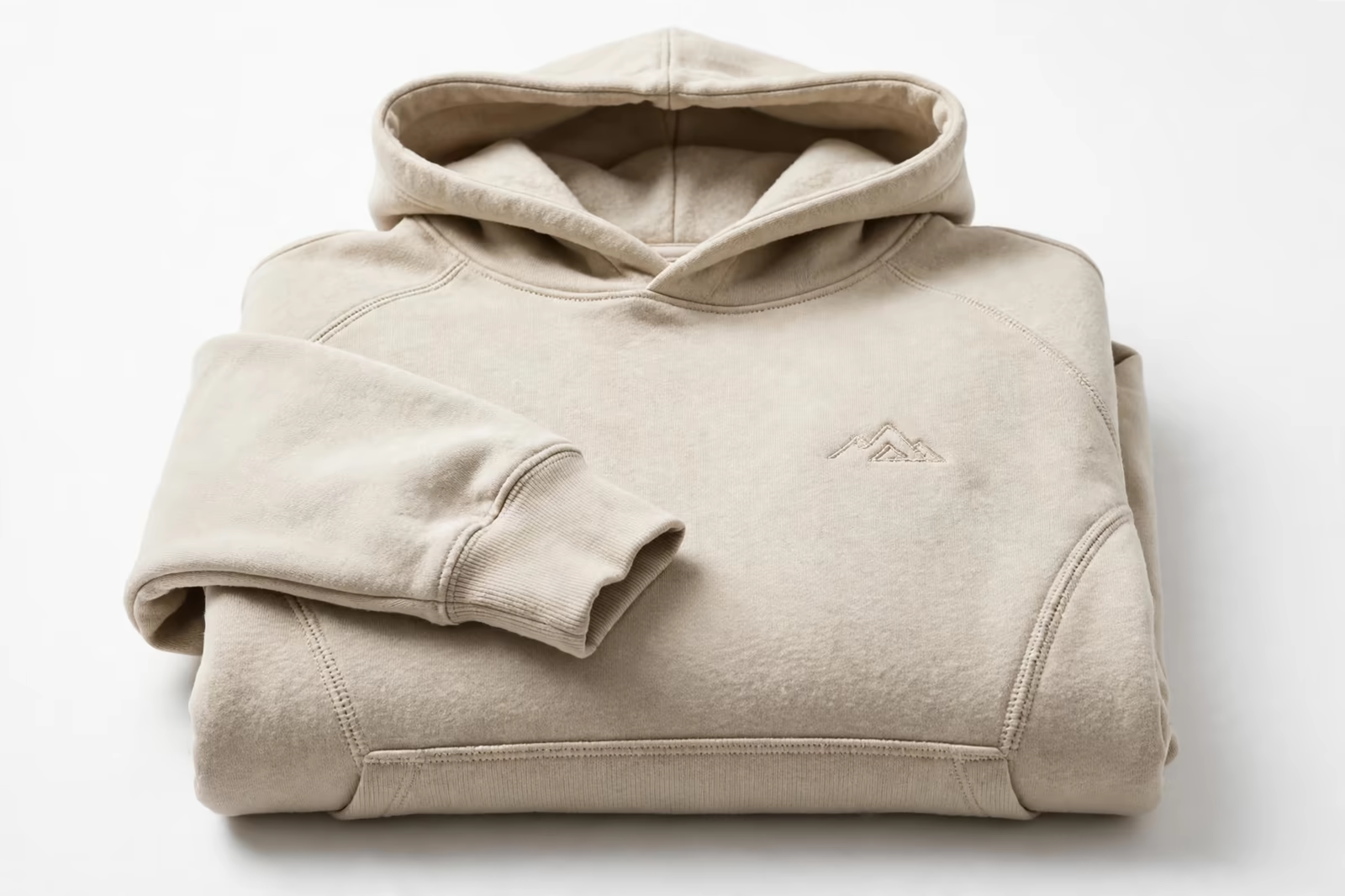
Above the anchors sits the piece the crowd buys when the music is good and the mood is generous: the premium garment. At most festivals this is the hoodie, worn the same night and kept for years.
- A proper weight of fabric; a thin hoodie betrays the price instantly
- Embroidery or a restrained print rather than the loudest artwork
- The pullover hoodie carries the premium slot in most ranges
- Colourways beyond the event tee’s, so owning both makes sense
- Priced as a keepsake, because that is what it becomes
Our standard minimum of 1,200 pieces per style in up to two colours sets the production reality: premium pieces are planned in real quantities, which is why their forecasting section below matters.
Forecasting a Three-Day Selling Window
Retailers reorder; festivals cannot. The forecast is the business, and it is built from attendance, weather expectation, the line-up’s pull and the evidence of previous years rather than from optimism.
- Start from expected attendance, then apply your historical capture rate
- Weight the anchors by last year’s sell-through, garment by garment
- Hold the size curve from real sales data, not from entry demographics
- Plan the weather swing: a cold year doubles hoodie demand overnight
- Decide in advance what unsold stock becomes on Monday morning
- Price to the plan, so a strong weekend is not given away by panic discounting
The Monday question deserves its answer before the gates open. Undated designs roll to next year or the online shop; dated designs become staff kit, charity donations or archive, and each fate has a cost that belongs in the forecast.
Crew, Artists and the Inner Rings
Inside the public range sits a second wardrobe: crew, security, medics, artist liaison and the performers’ own pieces. It is smaller, more functional, and just as visible in the photographs that define the event.
- Crew tees in a colour the public range never uses
- Role-marked hi-vis for build, show and breakdown days
- Artist and backstage pieces kept exclusive; scarcity protects their meaning
- Weather layers for the teams who cannot leave their posts
- Spares by the stage door, because show days consume clothing
The boundary matters commercially as well as visually. The moment crew kit can be bought, it stops identifying the crew, and the moment retail designs dress the staff, the photographs blur into one another.
Selling After the Gates Close
The modern festival range lives twice: once in the field and once online, before and after the weekend. The online life changes the production plan, softening the three-day cliff into a season.
- Pre-sales with entry tickets reveal demand while production can still adjust
- The online shop carries the range to fans who never reached the field
- Post-event drops of the undated designs clear stock at full dignity
- Next year’s announcement reopens the shop and the conversation
- Data from both lives feeds the only forecast that matters: next year’s
None of this rescues a badly planned range, but it rewards a good one twice. The field creates the photographs and the desire; the shop gives both somewhere to go.
The Small Goods Around the Garments
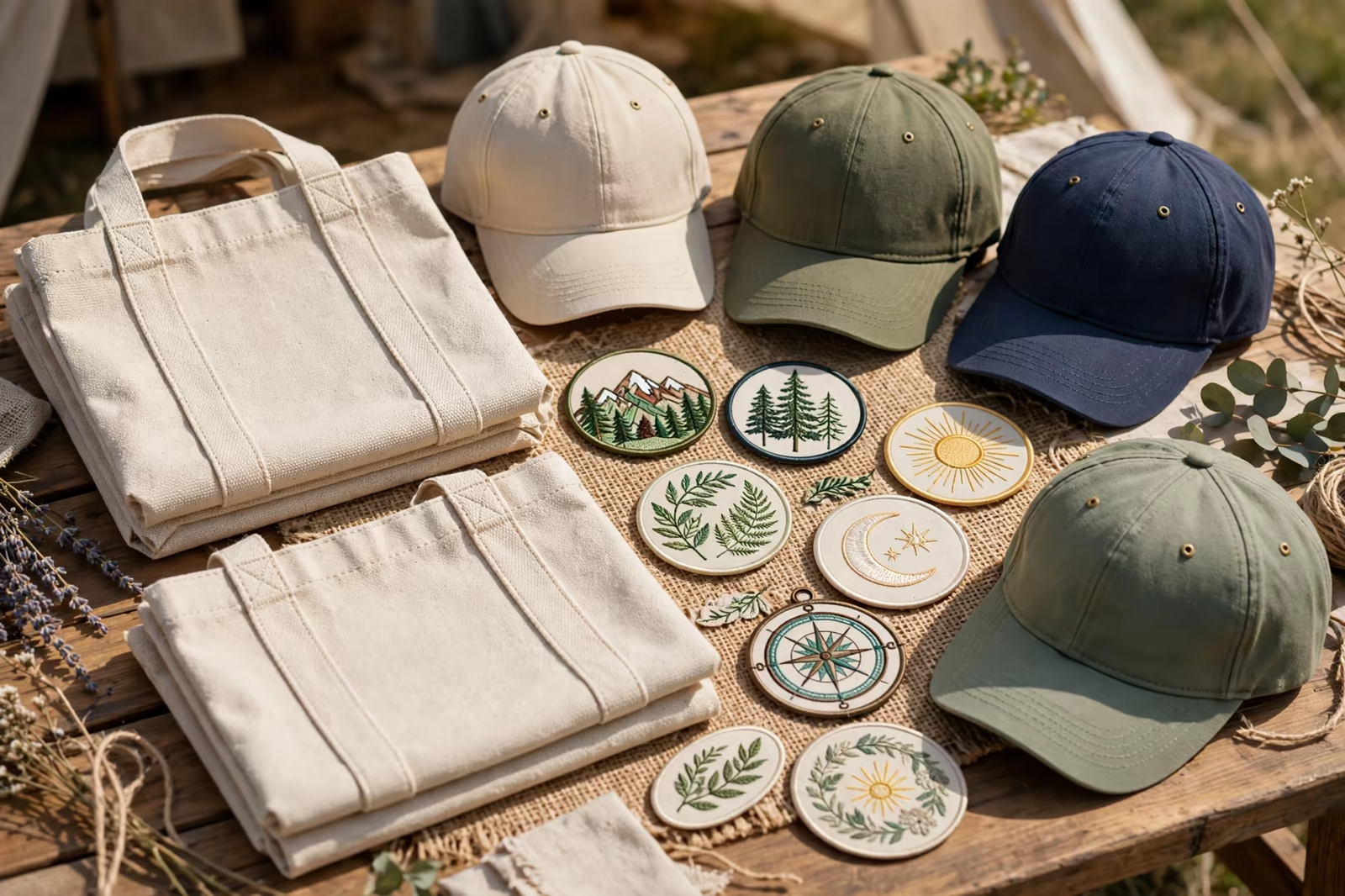
Around the apparel sits the family of small goods that completes the stall: wristbands in their grades of access, lanyards, patches, badges and the canvas pieces that blur the line between accessory and garment. They are planned with the clothing, not after it, because the crowd reads them as one identity.
- Wristband colours carry the access system; apparel must never imitate them
- Patches and badges let fans customise the garments they already own
- Lanyards belong to staff and media systems, kept distinct from retail
- Bandanas and caps extend the range at gentle price points
- Small goods forgive forecasting errors that garments cannot
That last point is commercial gold. A patch that misses its forecast is a small box in a warehouse; a hoodie that misses is a season of margin. Ranges weighted sensibly toward small goods carry their mistakes more lightly. They also carry their successes further, because a five-pound patch on a jacket advertises the event in every street its owner walks for years afterwards.
Leaving the Field Cleaner Than the Range Found It
Festival audiences are the most environmentally literate crowd in retail, and they audit merchandise with their values as well as their wallets. A range that ignores this sells less and apologises more.
- Fibre choices stated honestly on the label and the stall
- No garment designed to be disposable; quality is the sustainability claim
- Plastic-free packing across the range, planned at production
- Unsold stock with a declared second life, never a secret skip
- Print methods chosen for durability, so the design outlives the weekend
The strongest claim any festival range can make is a garment still being worn at next year’s event. Durability photographs better than any promise, and the crowd wearing last year’s hoodie in this year’s field is the only audit that matters.
The Stall Itself: Selling in a Field
The last design problem is the shop: a stall in a field, staffed by volunteers, selling to a queue that can see the stage from where it stands. Presentation that works in retail fails here, and the range must be planned for the conditions it will actually be sold in.
- One garment of each design displayed high and visible over the queue
- Sizes pre-sorted and reachable; nobody folds in a rush and survives
- Price boards readable at distance, in the event’s own graphics
- Card payment rehearsed; field connectivity fails exactly at peak hour
- End-of-day counts reconciled nightly, so the last day can be steered
Steering the last day is where experienced operators earn their fee. Knowing by Saturday night which sizes and designs are running out lets the final day push what remains, feature the deep stock and quietly retire what has gone, instead of discovering the truth as the gates close.
One Festival, Year After Year
The deepest advantage in festival merchandising belongs to the recurring event: it sells to the same crowd annually, and its range can behave like a collection rather than a gamble. Returning audiences collect, compare and arrive expecting this year’s chapter of a story they already own pieces of.
That changes design discipline. A consistent identity with annual variation rewards the collector and photographs as a family across the years, while a total redesign every summer throws away the recognition the event has already paid for. Keep the marks, evolve the artwork, mark the year on the pieces meant to be collected, and let the crowd’s own wardrobes become the archive of the event’s history. Few ranges anywhere in apparel are handed an audience this loyal; the programme that respects it sells out for the right reasons.
Frequently Asked Questions
What sells best at a festival?
The anchors: hats, the event tee, totes and the hoodie when evenings cool. They succeed because they are useful during the event itself, shade, warmth and carrying capacity, before they are souvenirs afterwards. Programme those four well and the range has a spine; everything else is garnish. The order inside the four matters too: the hat and tote sell from the first hour because they solve the day itself, the tee sells on identity all weekend, and the hoodie sells when the temperature drops and the headliner starts. A range sequenced to the crowd’s day outsells a range sequenced to the organiser’s taste.
How do I avoid being left with unsold festival stock?
Forecast from attendance and your own sell-through history, keep dates off the designs you may need to carry forward, plan the Monday fate of every line in advance, and let pre-sales test demand while production can still respond. Leftovers planned for are inventory; leftovers unplanned for are losses.
Should crew clothing match the retail range?
No. Crew kit must identify its wearers instantly, which requires colours and marks the public range never uses. Keep the design language related so the photographs feel like one event, but the garments themselves belong to different systems with different jobs.
When should a festival order its merchandise?
Working backwards from the gates with honest allowances for artwork approval, production and freight, and with line-up artwork locked early because it gates everything. Festivals that begin the merch conversation when tickets go on sale are rarely the ones discounting hoodies in the rain.