
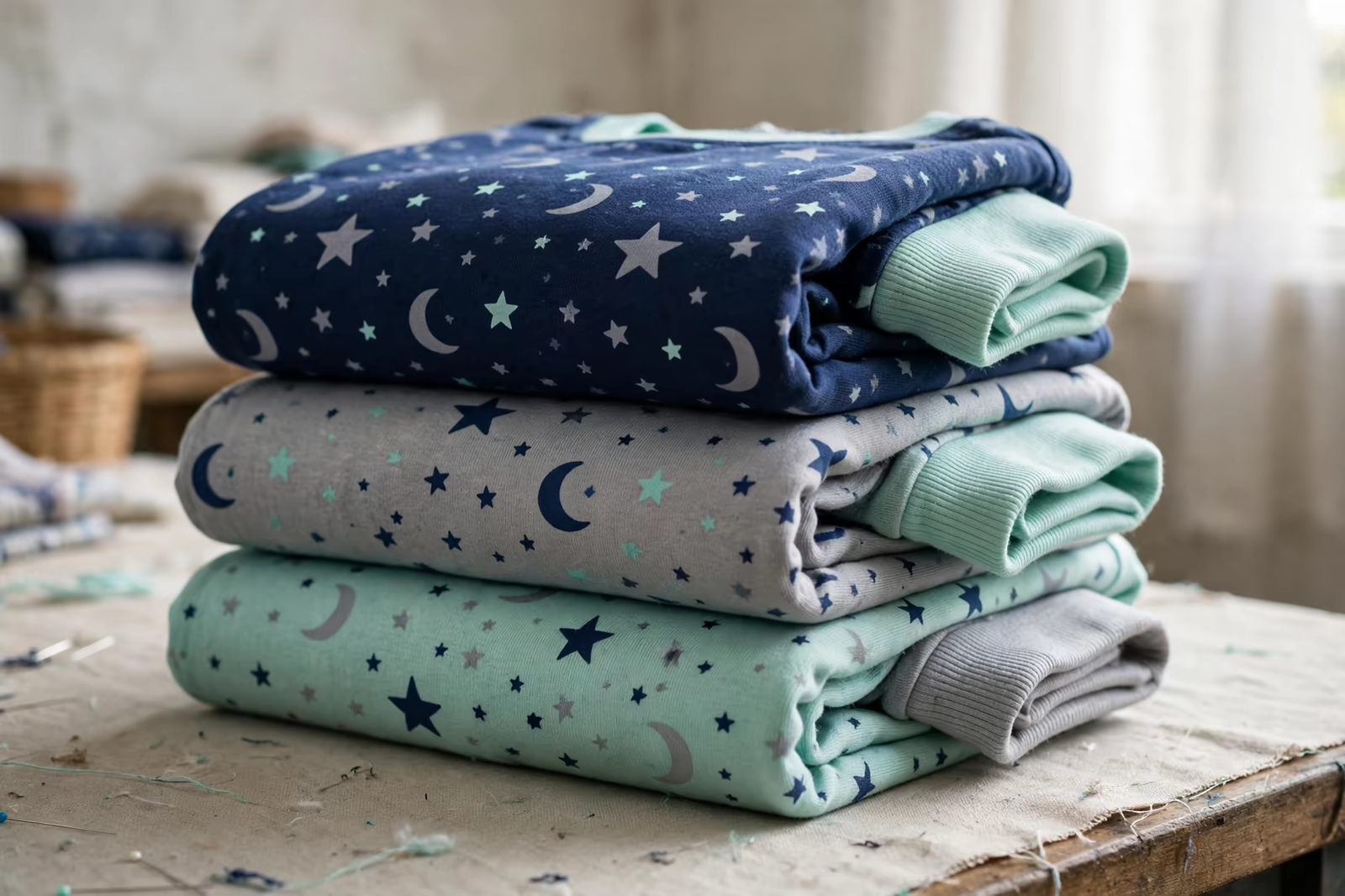
Sleepwear is the most heavily regulated corner of the clothing rack, because it meets fire at the wearer’s most defenceless moment. The United States, the United Kingdom and Europe each police the burning behaviour of nightwear, children’s above all, but they do it with different instruments, different labels and different ideas about what a safe pyjama is. This guide lines the three regimes up so a buyer can design one range that survives all of them.
The sleepwear desk behind this guide builds compliant nightwear programmes on clothing made in Bangladesh for the USA, the UK, Germany, Canada and Australia.
The product at the centre is our pajama set range, the destination map is our market area page, and a regulated programme starts on our contact page.
The United States: Two Standards and a Snug Fit
American clothing starts under the general flammability standard for wearing apparel, which sorts textiles by burning behaviour and bans the dangerously flammable. Children’s sleepwear then graduates to its own, far stricter pair of federal standards, written after the accident history of loose sleepwear meeting heaters and stoves made ordinary rules look insufficient.
The children’s standard tests the fabric and the finished garment’s components against char-length criteria after laundering, and it applies across the children’s sleepwear size range. Fabric that cannot pass must be made to pass by construction or finish, or the style must leave the sleepwear category honestly rather than cosmetically.
The system’s famous release valve is the snug-fitting exemption: sleepwear that hugs the body, within defined maximum garment dimensions for each size, and carries the prescribed snug-fit labelling, is exempt from the stricter standard because close cloth carries less air and less flame risk. Much of the modern children’s pyjama market is designed inside that exemption.
The United Kingdom: Regulations, Red Labels
Britain regulates nightwear through its own long-standing nightwear safety regulations, which set flammability performance requirements for adult and children’s nightwear and govern the famous labels: warnings to keep away from fire, and the red-lettered low-flammability labelling where the standard’s conditions are met.
Children’s nightwear sits at the strict end, and the UK approach leans on fabric performance tested against the British and European test methods alongside the labelling discipline. A pyjama legal in construction can still be unsellable with the wrong label set, because in the UK system the labels are not marketing, they are part of the compliance instrument.
Buyers used to the American exemption should note the systems rhyme without matching: snug design helps everywhere, but each market’s garment must be checked against its own rulebook, label by label.
Europe: A Standard Without a Single Law
The European picture is patchwork by design. There is no single EU flammability law for clothing; instead, the European standard for the burning behaviour of children’s nightwear provides the technical benchmark, member states reference it in their own market rules to different degrees, and the general product safety framework obliges suppliers to place only safe products on the market.
In practice, serious EU programmes test children’s nightwear to the European standard regardless of the destination state’s current emphasis, because retailers impose it contractually and because “safe product” is judged against the best available benchmark when something goes wrong.
Adult nightwear in Europe is governed more loosely, by general safety duties and national rules, but the commercial gravity of the children’s standard pulls specifications upward across most ranges.

How the Tests Themselves Work
Although methods differ by jurisdiction, the shared grammar is a vertical flame test: specimens of the fabric, and in the stricter regimes finished garment components, are exposed to a controlled flame for a set time, and the damage, char length, after-flame and after-glow, is measured against the standard’s criteria. Laundering comes first in the serious regimes, because a finish that washes out in a month protects nobody in month two.
Sampling follows the production reality: the laboratory tests the bulk fabric of the actual order, in its actual colour and finish where the rule demands, and reports against named criteria so the file can be read without interpretation. Borderline results are retested, not rounded.
Buyers should insist on reports that name the standard, the method, the fabric identity and the laundering applied; a certificate that says merely “flammability: pass” belongs in the same folder as other fiction.
Fibre and Finish: The Physics Underneath
The regulations all chase the same physics. Untreated cotton and viscose ignite readily and burn steadily; wool is naturally reluctant; synthetics such as polyester tend to melt and shrink away from flame rather than sustain it, though melt behaviour brings its own cautions. Loose fit feeds a fire with air and movement; snug fit starves it.
Flame-retardant finishes can bring a flammable fibre inside the limits, but they import the chemical-compliance conversation from our earlier guides: the finish must survive the laundering the standard prescribes, stay inside the destination’s chemical restrictions and remain acceptable against skin all night.
Design teams therefore solve flammability in the fabric meeting, not the test laboratory: fibre, weight, construction and fit chosen with the destination standard open on the table.
Adult Sleepwear: Regulated, Differently
Adults are not outside the system; they are simply governed one tier down. In the US the general apparel standard applies to adult nightwear, banning dangerously flammable fabrics while leaving ordinary materials lawful. In the UK the nightwear regulations reach adult nightwear and dressing gowns with their own performance and labelling expectations, and Europe leans on general product safety plus the market’s retailer specifications.
The commercial consequence is that adult ranges still need a fabric decision: a brushed, raised-fibre surface behaves very differently near a candle than a smooth one, whatever the wearer’s age, and fabric approval for nightwear should always include the destination’s applicable test, not a shrug.
Hotels, care settings and airlines ordering sleepwear at scale add their own institutional specifications on top, which a contract programme should surface at tender stage.
Robes, Nightdresses and the Edge Cases
Category edges are where programmes trip. A dressing gown worn over pyjamas, a nightdress that doubles as a beach cover-up in the catalogue, a onesie marketed as loungewear: the regulators classify by what the garment is and how it is sold, and a marketing label invented to dodge the sleepwear rules tends to fail on inspection of the garment itself.
The safe discipline is to classify honestly at design stage: if a reasonable parent would put a child to bed in it, build it as sleepwear, test it as sleepwear and label it as sleepwear in each destination’s language of compliance.
Where a style genuinely spans categories, take the stricter rule as the design target and keep the classification reasoning in the style file; regulators respect a documented, conservative judgement far more than a creative one.
Testing and Labelling on a Real Order
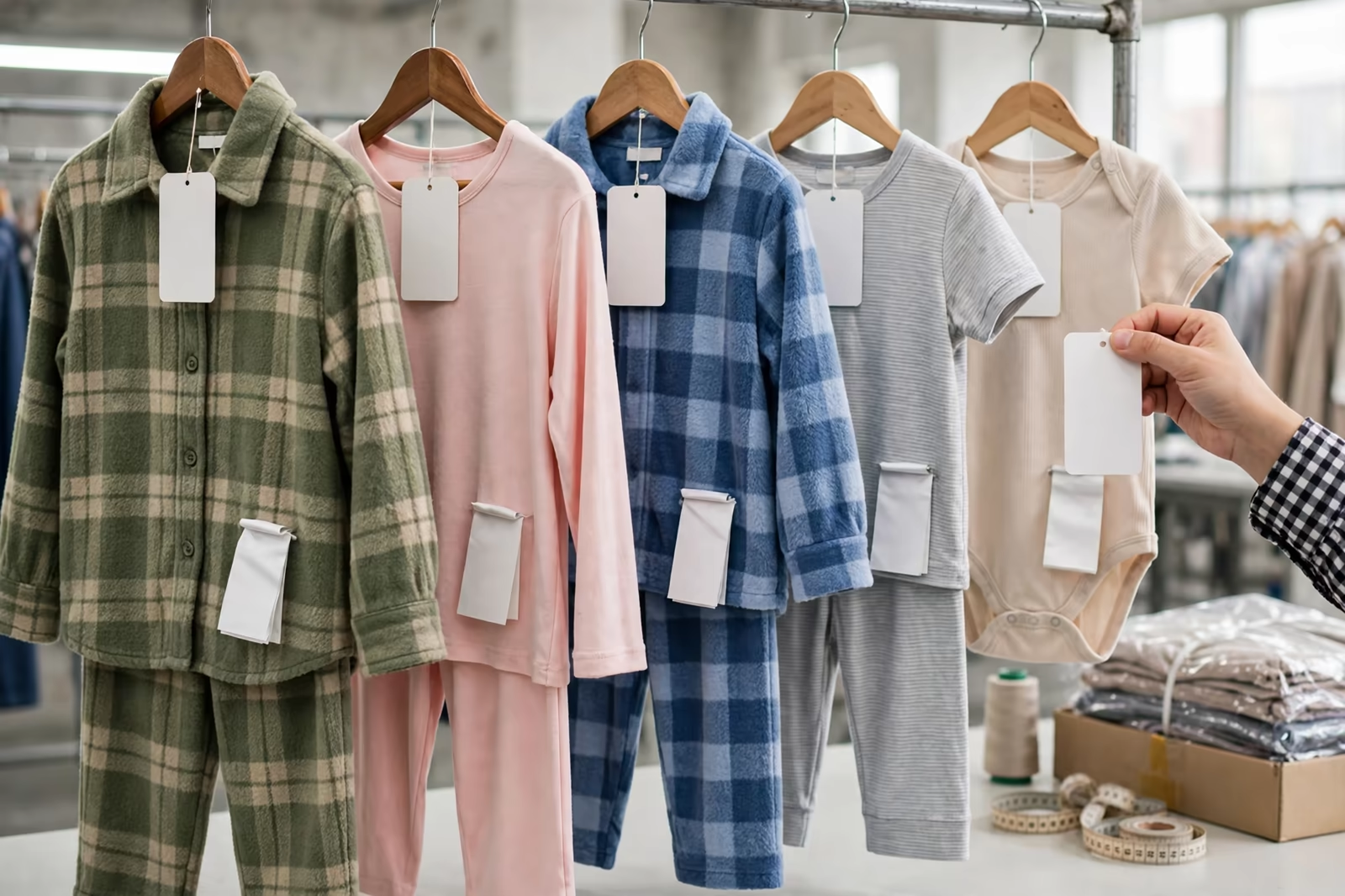
The order file for regulated sleepwear carries its market’s signature: the destination named, its standard applied to the bulk fabric and, where the rule requires, to finished garments with their trims; wash durability proven across the prescribed laundering; and label artwork, warnings, snug-fit statements, fire labels, approved against the destination’s wording before a single label is printed.
Substitution discipline matters more here than almost anywhere in apparel: a fabric re-sourced mid-programme restarts the flammability evidence, because the standard attaches to the material, not to the purchase order’s intentions. Merchandisers who have lived through a port-side failure learn to treat the fabric source as part of the style’s legal identity.
The retained evidence, test reports, approved artwork, lot records, mirrors the children’s-wear documentation habits our CPSIA guide describes, and for the same reason: when the question comes, it comes years later and in writing.
One Range, Three Markets: Designing the Compromise
Brands selling the same pyjama into all three regimes usually standardise upward: fabric tested to satisfy the strictest applicable criteria among the destinations, fit engineered inside the US snug dimensions where the design allows, and label sets produced per market from a single approved master, warnings and statements swapped by destination rather than by memory.
The economy of that approach is administrative as much as technical: one fabric platform, one fit platform, three paperwork skins. The styles that cannot follow it, a deliberately loose children’s nightdress, for instance, become single-market products by conscious decision, with the limitation recorded rather than discovered.
Our sleepwear desk plans exactly this map at range stage, because the expensive version of flammability strategy is the one improvised per shipment.
Records, Recalls and the Long Tail
Flammability failures surface badly: port refusals, retailer withdrawals and recalls that name the brand in public databases. The defence, when it is needed, is the retained file: which fabric, tested to which standard, after which laundering, in which lots, wearing which labels. Programmes that keep that file can bound a problem to a lot; programmes that cannot, lose ranges.
Retention periods should follow the destination rules and the buyer’s protocol rather than the factory’s storage convenience, and samples of bulk fabric and finished garments should be kept with the paperwork they prove.
It is unglamorous administration wrapped around a genuinely physical risk, which is a fair description of most of what compliance departments are for.
Frequently Asked Questions
Why is children’s sleepwear regulated more strictly than daywear?
Because the accident pattern demanded it: loose night garments, open flames and heating appliances, and sleeping children who cannot react. The US answers with dedicated children’s sleepwear standards stricter than the general apparel rule, the UK with its nightwear safety regulations and labelling, and Europe with a specific burning-behaviour standard for children’s nightwear that markets and retailers apply.
What is the snug-fitting exemption in the US?
Children’s sleepwear that fits closely, within defined maximum dimensions for each size, and carries the prescribed snug-fitting labels, is exempt from the stricter US children’s sleepwear flammability standard, because snug garments present less fabric and air to a flame. A large share of modern children’s pyjamas is designed to this exemption, and the garment measurements and labels must genuinely meet its conditions.
Does one flammability test cover the US, UK and EU together?
No. Each regime has its own standards, test methods and labelling rules: US federal standards with the snug-fit labelling, UK nightwear regulations with fire warning and low-flammability labels, and the European children’s nightwear standard applied through national rules and retailer contracts. Test and label each market’s garments against its own rulebook, even when the same fabric passes everywhere.
Are flame-retardant finishes the easy answer?
They are one answer with homework attached. A finish must pass the destination standard after the prescribed laundering, comply with that market’s chemical restrictions, and stay acceptable for prolonged skin contact. Many programmes instead solve flammability by fibre choice, fabric weight and snug construction. Either route is legitimate when the test evidence on the final fabric supports it.