

Children’s clothing sold in the United States lives under the Consumer Product Safety Improvement Act, CPSIA, and its rules are happily specific: drawstrings measured, lead and phthalates limited, flammability tested, and every covered product carrying tracking information and a Children’s Product Certificate. This guide walks through what applies to children’s apparel and how a factory builds to it rather than apologising to it.
The children’s desk behind this guide builds CPSIA-ready programmes on clothing made in Bangladesh for the USA first among the anchor markets, alongside the UK, Germany, Canada and Australia.
The range in question is our kids’ t-shirt and kids’ polo shirt lines, and the wider destination rules sit on our market area page.
Third-Party Testing and the Accepted-Laboratory Rule
CPSIA’s testing is not self-certification in the casual sense: children’s product tests supporting the CPC must be performed by laboratories the CPSC has accepted and listed, using the Commission’s test methods. A beautiful report from an unlisted laboratory is, for this purpose, wallpaper.
Sequencing matters as much as laboratory choice. Test the final construction, the actual fabric, print and trims of the production style, because a component swap after testing, a different print paste, a new snap supplier, can void the evidence the certificate stands on. Change control, again, is the compliance product.
Buyers should hold the full test reports, not summaries, and match each report’s product description against the shipped style before the CPC is signed.
Drawstrings: The Rule Everyone Pictures
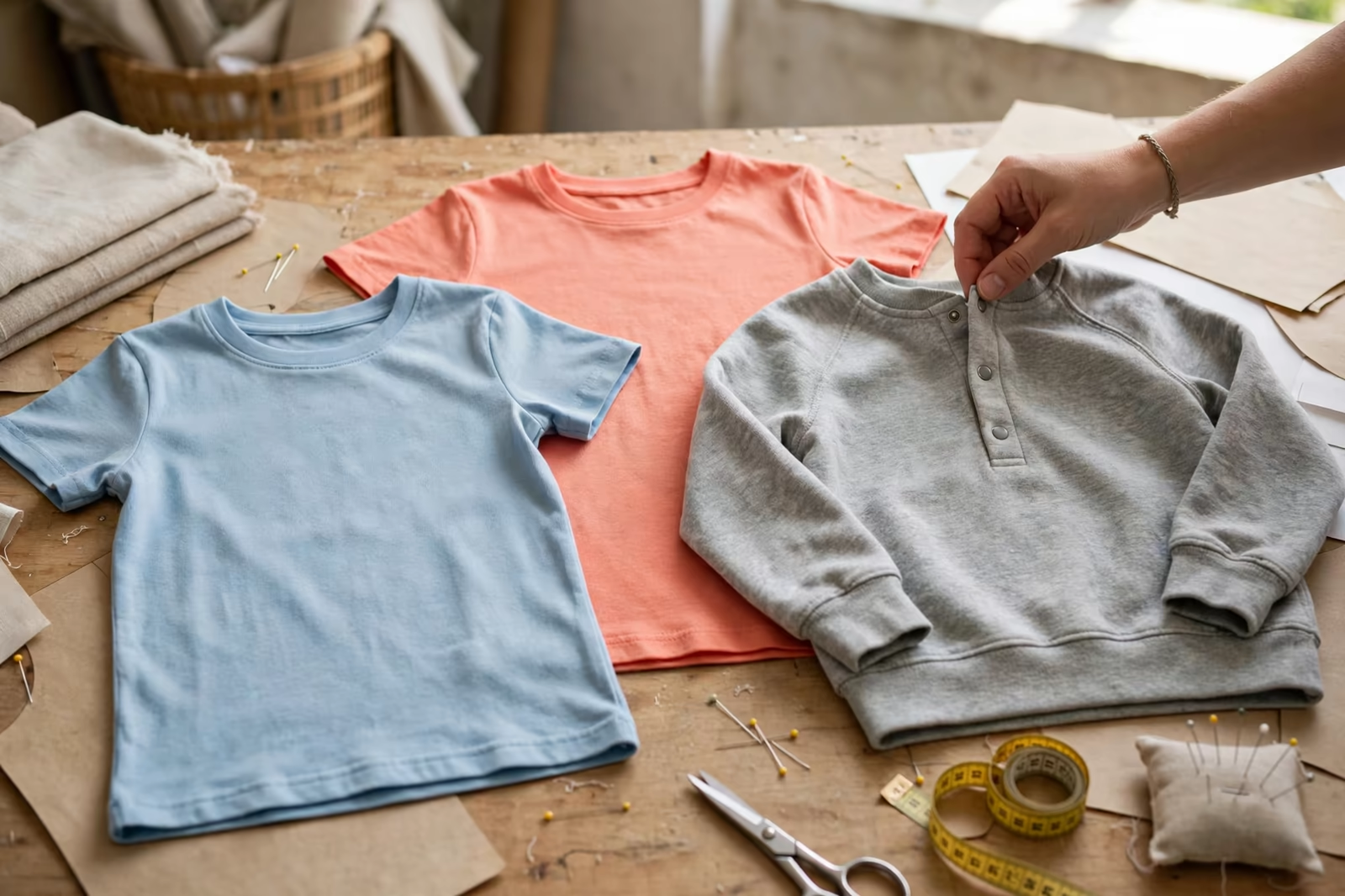
Drawstrings are CPSIA’s most visible apparel rule because the hazard is mechanical: cords in hoods and necks can catch on playground equipment and vehicle doors. The US rules, carried in the CPSC’s drawstring guidelines and treated as a substantial product hazard, effectively prohibit drawstrings in the hood and neck area of children’s upper outerwear, and set strict conditions on waist and bottom drawstrings, no toggles, knots or decorative ends among them.
For garment design the translation is simple: children’s styles for the US are drawn without hood and neck cords, using elastic, snaps or fixed tabs where a grown-up version would have a string. A style sheet that carries the adult design language across unchanged will fail this rule at the drawing board, where failing is cheap.
Buyers should confirm the rule against each style’s size range, because the children’s sizes the rules cover are defined, and a style spanning toddler to teen may cross the boundary mid-range.
Small Parts and Age Grading, Briefly
Most apparel escapes the small-parts rules that govern toys, but garments for the youngest children carry detachable components, snaps, buttons, decorative appliqués, whose attachment strength buyers test as a choking-hazard discipline regardless of a specific garment clause. Pull tests on components are standard children’s-wear practice for exactly this reason.
Age grading runs underneath the range planning: the rules’ application follows the sizes and intended ages, so a brand’s age labels must be honest rather than optimistic. A product styled and sized for a three-year-old does not become a six-year-old’s product by relabelling, and regulators read the garment, not the ticket.
Design reviews for children’s ranges should therefore record the intended age, the size range and the rules engaged, before a single sample is cut.
Lead, Phthalates and the Children’s Product Certificate
CPSIA sets a total lead content limit for children’s products and a stricter surface-coating limit for paint-like finishes, numbers the current regulatory text specifies and every test plan quotes exactly. Separately, specified phthalates are restricted in children’s toys and child care articles, a category that reaches sleepwear and bibs rather than all clothing, and precision about which garments count is part of the discipline.
The compliance instrument buyers will actually handle is the Children’s Product Certificate, the CPC: a document, issued by the importer or domestic manufacturer, certifying that the product complies with every applicable children’s product safety rule and citing the laboratory tests behind the claim. Testing must be done by a CPSC-accepted laboratory, and the certificate accompanies the shipment into US commerce.
No CPC, no lawful sale, however clean the garments are. The certificate system makes the importer the certifier, which is why US buyers’ documentation questions arrive early and in writing.
Tracking Labels: Every Garment Tells Its Story
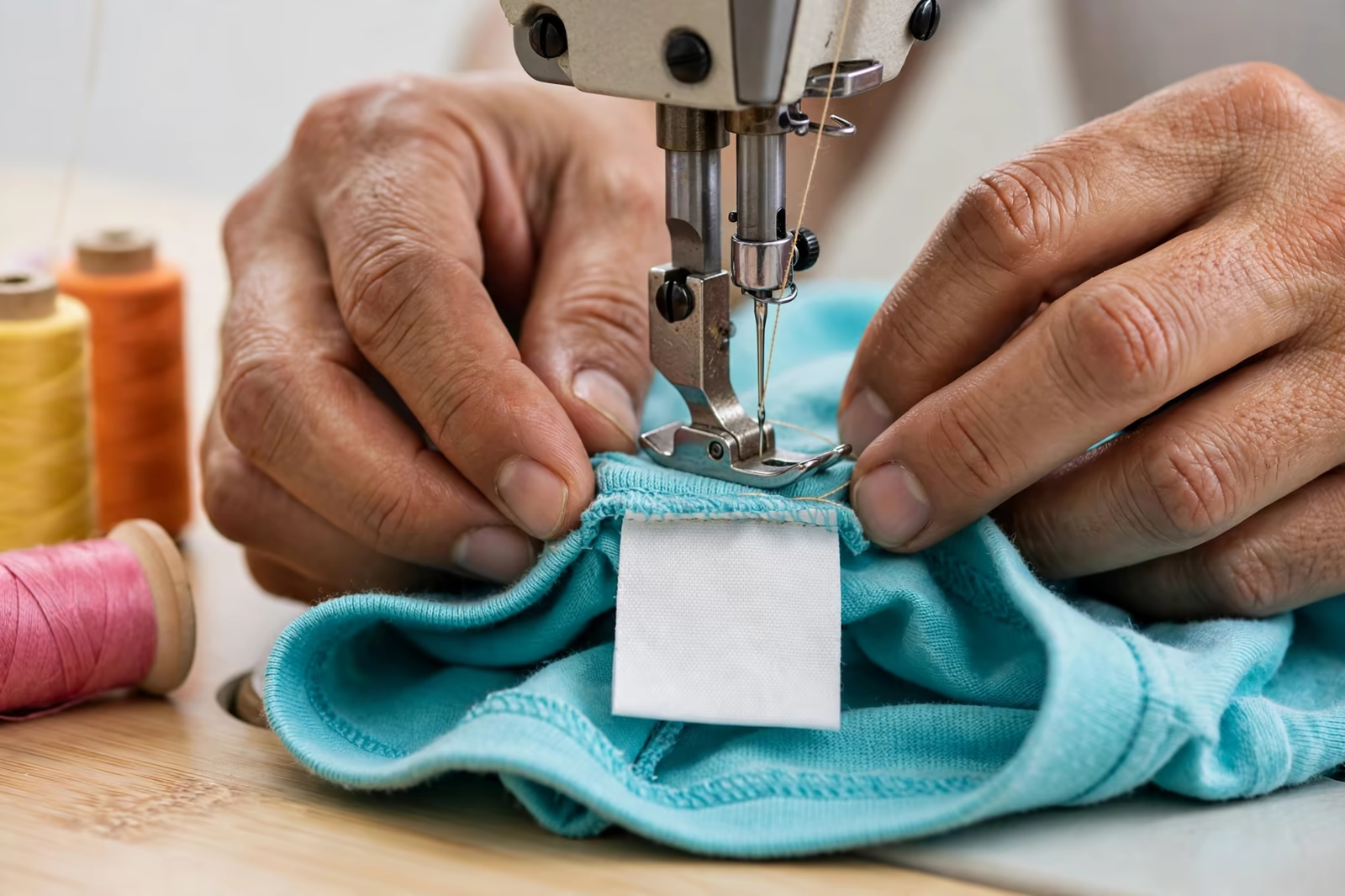
CPSIA also requires tracking labels on children’s products to the extent practicable: permanent, distinguishable marks that let the buyer and the Commission trace the product to its production source, lot and other identifying information. On garments this usually lives on the care label or a companion label woven or printed into the product.
The operational translation is record discipline: production lots must be identifiable per shipment, label artwork must carry the tracking elements the buyer’s system needs, and retained samples and records must let one carton be walked back to its factory run. It is the certified chains’ custody logic wearing legal clothes.
Design tracking into the label set at development stage; a compliant garment with an untraceable label is a recall waiting for its paperwork.
Flammability: The Quiet Baseline
Underneath the headline rules sits general wearing-apparel flammability law, older than CPSIA and applied to all clothing textiles, with a dedicated stricter standard for children’s sleepwear covered in our flammability guide. Ordinary children’s daywear must meet the general standard, and the testing is woven into fabric approval rather than treated as a surprise at the end.
Fibre content interacts with the rules in ways buyers should respect: certain fibre and fabric constructions have historically drawn closer scrutiny, and the laboratory’s classification of the exact fabric, not a cousin of it, is what the file needs.
Treat flammability as a material approval gate in the same family as shade and shrinkage: pass it before the bulk is cut, and the certificate conversation stays calm.
What CPSC Enforcement Looks Like in Practice
The Commission works at the ports and in the marketplace: shipments are screened, samples are tested, and children’s products that fail are refused entry or recalled, with the recall notices published for parents and competitors alike to read. Drawstring violations remain among the most common children’s apparel recalls, which tells you the rule is enforced on real garments, not just written down.
For the factory, enforcement risk is managed upstream: style review against the rules before sampling, component choices, metal snaps, prints and coatings, screened for lead, tests commissioned at CPSC-accepted laboratories on the buyer’s protocol, and the certificate evidence packed with the shipment file.
Buyers auditing a children’s-wear supplier should ask to see the system, not a single certificate: the checklist that catches a hood cord at sketch stage is worth more than any test report issued after one was sewn.
Designing a Children’s Range That Passes First Time
The factories that sail through CPSIA work treat it as a design language: no hood or neck cords in the pattern library for US children’s outerwear, closures chosen from tested component families, prints struck with screened pastes, care and tracking labels composed from a compliant template, and a test plan attached to every style at costing stage.
Substitution is the enemy this language guards against. The mid-production trim change that nobody flags, the print shop switched for capacity, the snap bought locally in a hurry, each silently edits the product the certificate describes. Change control meetings sound dull because their job is to keep the news dull.
Buyers see the result as boring documentation arriving on time, which is the highest compliment a children’s compliance system can earn.
State Rules and Retail Protocols on Top
Federal law is the floor, not the ceiling. Individual states run their own chemical reporting and restriction regimes touching children’s products, California’s warning system among them, and the large retail and marketplace programmes layer private protocols, their own restricted-substance lists, test frequencies and certificate formats, over the federal base.
A programme built exactly to CPSIA and nothing else can therefore still fail a customer’s acceptance protocol. Buyers should issue their full requirement set at order stage, naming state and retail layers beside the federal rules, and factories should price and plan testing against that whole stack.
On our side, a US children’s order is opened with the buyer’s complete protocol on the first page of the file, because discovering a retailer’s extra test at shipment stage is a cost nobody budgeted.
The Documentation Pack Behind a US Children’s Shipment
A US children’s order closes with a recognisable bundle: the style’s rule checklist, component screening notes, the accepted laboratory’s test reports matched line by line to the shipped construction, the tracking label artwork, retained lot records, and the data the importer needs to issue the CPC accurately.
That bundle is assembled as production runs, not reconstructed at the airport. The merchandiser’s file discipline is the same custody habit the certified chains teach: every document names the style, the lot and the date, so the importer’s certificate and the physical cartons can be reconciled by a stranger years later.
When the buyer’s compliance team opens the file and finds nothing to ask for, the system has done its work, quietly and completely, the way children’s safety paperwork should, on every single order.
Frequently Asked Questions
Are drawstrings banned on all children’s clothing in the US?
The rules focus on children’s upper outerwear: drawstrings in the hood and neck area are effectively prohibited, and waist and bottom drawstrings carry strict conditions, including limits on protrusion and a ban on toggles, knots and decorative ends. The covered size ranges are defined by the rules. Children’s styles for the US are therefore designed without hood and neck cords from the first sketch.
What is a Children’s Product Certificate?
The CPC is the document by which the US importer or domestic manufacturer certifies that a children’s product complies with all applicable children’s product safety rules, based on tests by a CPSC-accepted laboratory. It must accompany the product into commerce and be furnishable to distributors, retailers and customs. Without it, even a fully compliant garment cannot lawfully be sold.
Do lead limits apply to the whole garment?
CPSIA sets a total lead content limit for children’s products generally and a stricter limit for surface coatings such as paints and similar finishes, which is where prints and coated trims earn laboratory attention. The current regulatory text carries the exact figures, and test plans should quote them from there. Metal components, prints and coatings are the classic screening points on garments.
What must tracking labels show on children’s clothing?
Permanent, distinguishable information that lets the product be traced to its source: who made it and where, the production lot or run, and other identifying details the buyer’s system specifies, to the extent practicable for the product. On garments it usually rides on the care label or a companion label, and the factory’s lot records must let a shipped carton be walked back to its production run.