
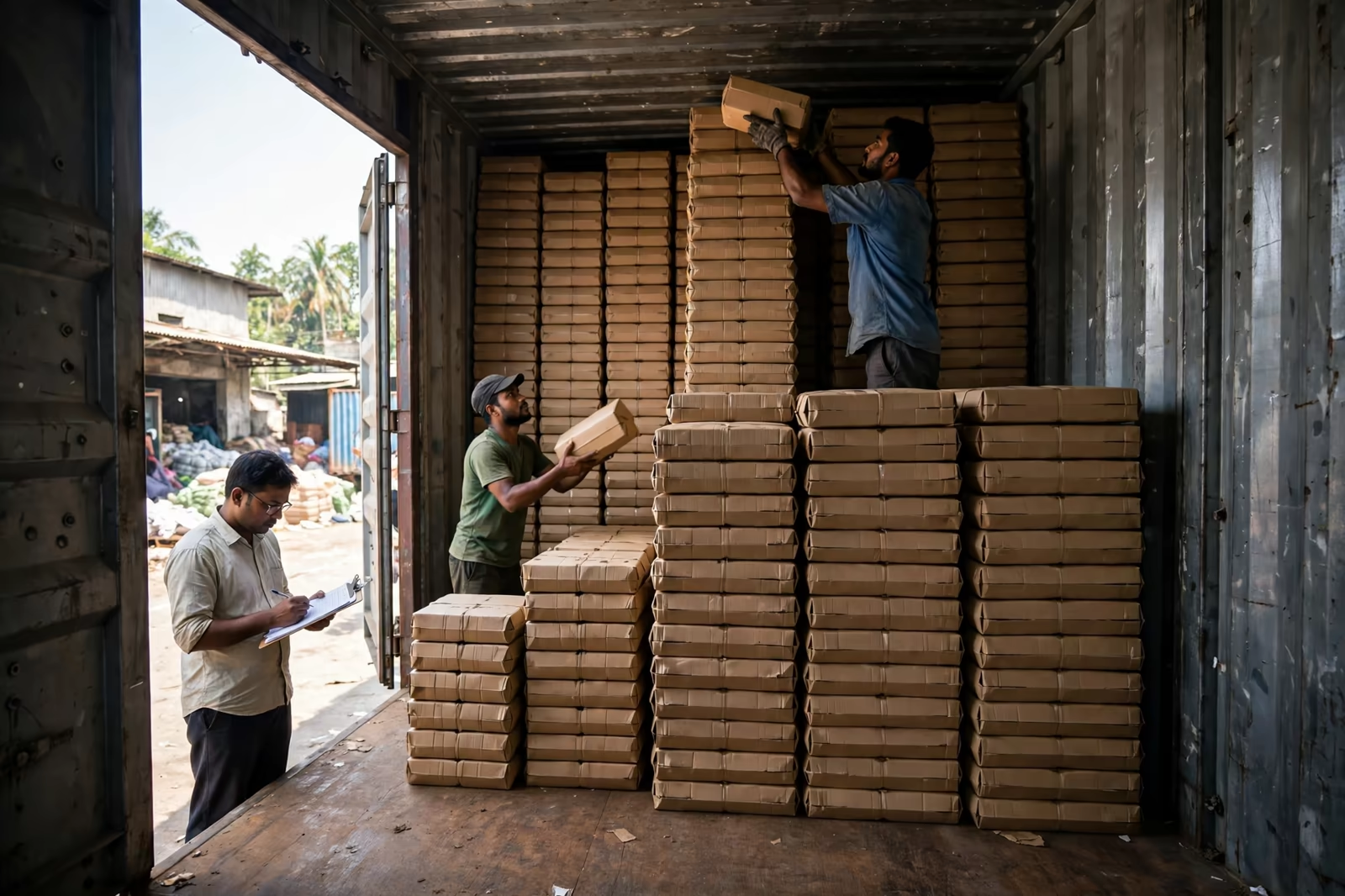
Every clothing programme eventually faces the same fork: the slow ship or the fast aircraft. Sea freight built the apparel trade, air freight rescues it, and the real skill lies in knowing which shipments deserve which mode, because the wrong choice costs either the margin or the season. This guide compares the two honestly on cost, time and carbon, the three axes buyers actually decide on.
The sourcing teams behind this guide move apparel from Bangladesh by both modes to buyers in the USA, the UK, Germany, Canada and Australia. The honest headline is simple: sea is the system, air is the instrument, and a programme designed around that sentence rarely regrets it, season after season.
The comparison connects to the regions on our market area page, the framework on our payment terms page, and the first step through our get a quote page.
Cost: Why the Gap Is Structural
Sea freight moves clothing at a cost per garment so low it nearly vanishes from the unit economics; a full container spreads its price across tens of thousands of pieces. Air freight charges by weight, and clothing, especially fleece and denim, is heavy for its value, so the air bill lands as a visible percentage of the garment’s worth rather than a rounding error.
The gap is structural, not negotiated away: aircraft burn expensive fuel to lift weight through the sky, ships burn cheaper fuel to push volume through water. Forwarders can shave either rate at the margins, but no relationship turns air into sea pricing or sea into air speed.
Volume sharpens the divide. Bulky, low-value basics are the worst air cargo imaginable and the perfect sea cargo; compact, high-value pieces suffer least by air. Your product mix is quietly voting on this question before you ever ask it.
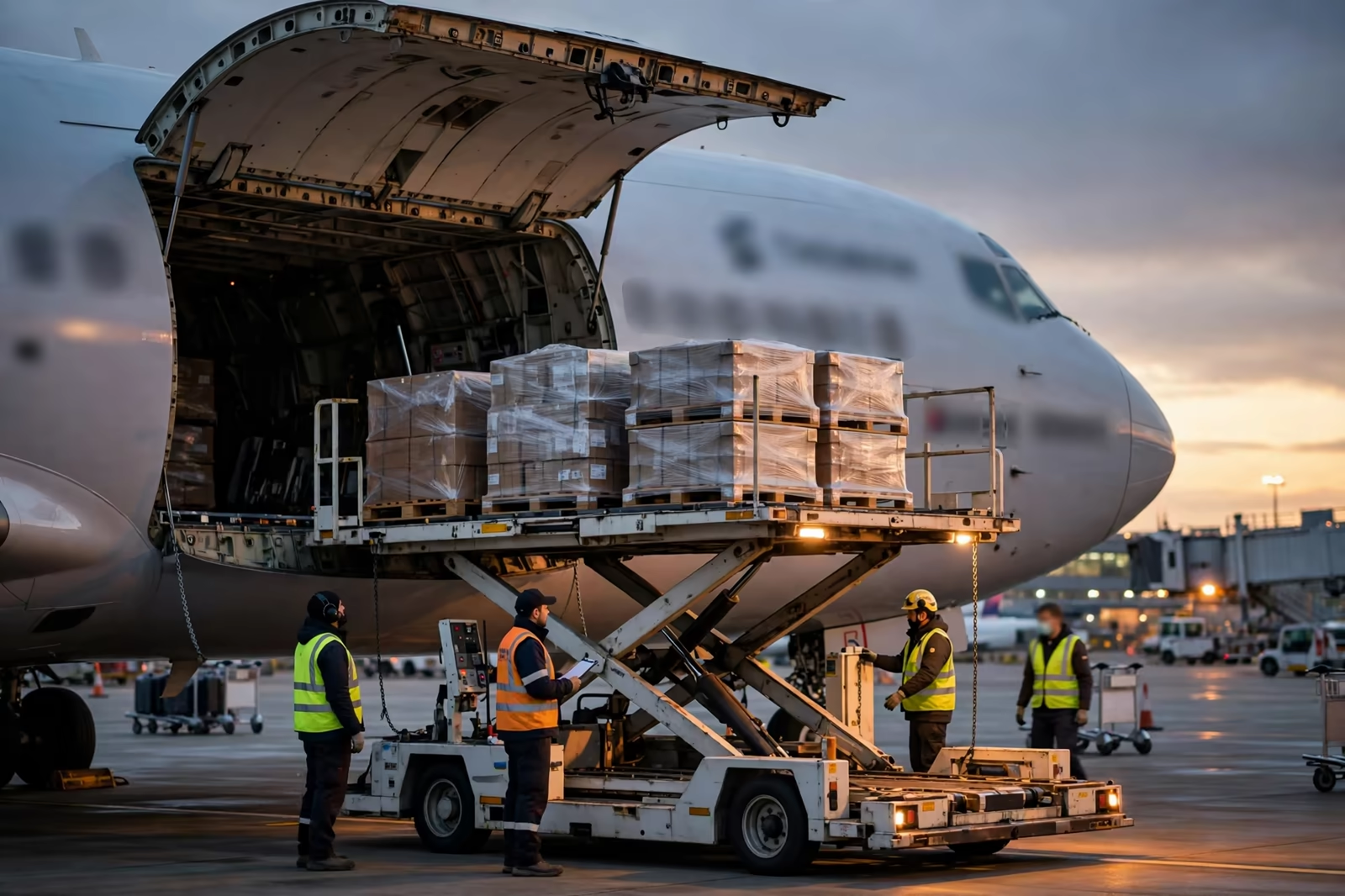
Time: What Each Mode Really Promises
Sea freight from Bangladesh to Europe or North America is measured in weeks on the water, plus the days of handling at both ends. It rewards planning and punishes improvisation: miss a vessel and the programme waits for the next sailing, on the carrier’s calendar rather than yours.
Air freight compresses the international leg to days, with frequent departures and quicker recovery when something slips. For samples, it is effectively the only mode: approvals cannot wait for a vessel, and the whole development calendar leans on flown samples and flown strike-offs.
Judge both modes door to door, not port to port. An air shipment’s speed advantage is real but shrinks once consolidation, customs and delivery appointments are counted; a sea shipment’s slowness is worst in its first and last miles, which good forwarders manage tightly.
There is also a rhythm difference: vessels sail on fixed weekly patterns from origin ports, so sea planning works in whole weeks, while air departures run near daily, letting a finished production lot leave within days of packing. Programmes with rolling production, rather than single drops, often blend the two rhythms naturally across a season.
Reliability and Disruption
Both modes carry disruption risk in different costumes. Sea freight meets port congestion, vessel schedule slips, weather at sea and container roll-overs at transshipment points; its failures arrive as days and occasionally weeks. Air freight meets capacity squeezes, especially in peak seasons when passenger schedules and cargo demand collide, and its failures arrive as bumped consignments and rate spikes.
The buyer’s defence differs by mode. At sea, defence is time: buffer in the calendar and early document readiness. In the air, defence is relationship: forwarders with allocation on the routes you use, booked before the panic week.
Programmes shipping to a fixed retail calendar should hold both defences modestly rather than either one heroically. A buffer week plus a forwarder who answers at midnight covers most of what the ocean and the sky invent.
Carbon: The Third Axis Buyers Now Report
Per kilogram carried, air freight’s emissions are a large multiple of sea freight’s; shipping is among the most carbon-efficient ways to move goods ever devised, and flying is among the least. For brands reporting supply-chain emissions, the freight mode is one of the biggest single levers they control.
That arithmetic is pushing air freight from a habit into a logged decision in many buying offices: every flown shipment justified against the alternative of planning earlier. Sea freight cannot be beaten environmentally by any current alternative at apparel volumes.
Buyers can cut both footprints at the edges, full containers rather than part loads, direct routings rather than meandering ones, but mode choice dwarfs the optimisations. The greenest shipment is the one planned early enough to sail.
How Freight Is Actually Charged
Sea freight is priced by the box: a rate for the container on a route, with surcharges around it, which is why filling the box well is the buyer’s main lever and why part-loads cost disproportionately more per garment. The companion guide on this blog covers container sharing in detail.
Air freight is priced by chargeable weight, the greater of the actual weight and a volumetric weight calculated from the carton’s dimensions. Bulky light garments can therefore be charged as if they were heavier than they are, which is why vacuum packing and carton engineering are real money conversations for anything that flies.
Before choosing a mode for a borderline shipment, have your forwarder price both against the real packed cartons. Guesses based on garment weight alone mislead in both directions.

When Air Freight Earns Its Price
Air freight earns its premium in defined situations. Samples and development pieces, always. Launch-critical capsules where a missed date costs more than the freight. Top-up shipments rescuing a selling style whose shelves are empty while the sea replenishment is mid-ocean. Penalty-bearing deliveries where the contract’s late charge exceeds the air bill.
Notice what unites them: the value at risk is time-shaped, not garment-shaped. Air freight buys dates, not clothing, and should be bought exactly when a date is worth more than the premium.
It also earns its place as insurance during disruption: port congestion, missed vessels, factory delays recovered late in production. A small air bridge for the most urgent portion keeps a programme alive while the bulk follows by sea.
Product Fit: What Flies and What Sails
Some products announce their mode. Heavy, bulky, low-priced basics, fleece, denim, padded jackets, are sea cargo by construction: flying them converts a healthy margin into a freight donation. Light, compact, high-value pieces, fashion capsules, premium knits, embroidered statement styles, absorb air cost with the least damage.
Between the poles sit the judgement calls: mid-weight jersey programmes, team and event orders with hard dates, promotional drops tied to campaigns. Date hardness, not fabric, usually casts the deciding vote in this middle band.
Carton design nudges the boundary. Compression packing, tighter folds and right-sized cartons cut both the volumetric air bill and the number of sea cartons, rewarding the same effort under either mode.
The Hybrid Pattern Most Programmes Settle Into
Experienced buyers rarely choose one mode; they sequence both. Samples fly. The bulk sails. A modest first tranche sometimes flies to open a selling season while the main volume follows on water, and end-of-season rescues fly only when the sales data justifies them.
Factories work to that pattern comfortably: production sequenced so the air portion finishes first, cartons marked by mode, documents split accordingly. Agree the split at order stage and it costs nothing extra in handling; improvise it late and everything costs extra.
The pattern’s discipline is the air decision made in advance with criteria, what flies, how much, triggered by what, rather than in a panic call when a date is already burning.
Planning Backwards From the Selling Date
Mode choice is really calendar design. Start from the date goods must be sellable, subtract selling preparation, inland delivery, clearance and the international leg, and the remainder is your production window under sea freight. If that window is comfortable, the sea decision makes itself, and air stays in reserve.
When the window is tight, the honest options are earlier ordering, split modes, or a smaller first drop flown in, and all three are cheaper decided at order stage than discovered in production. The calendar conversation belongs in the purchase order meeting, with the factory and forwarder reading the same dates.
Build the disruption margin into the sea leg rather than spending it in advance on air. Programmes that hold a buffer week rarely buy emergency freight; programmes scheduled to the hour buy it constantly.
Freight Inside the Landed Cost
However the modes mix, freight belongs inside the landed cost model per style, not averaged across the programme. A capsule flown at premium and a basics range sailed cheaply have genuinely different unit economics; blending them hides which styles earn their shelf space.
Review the model after each season with the actual freight bills. The recurring lesson is usually that one category’s air habit costs more than its speed earns, while another’s missed dates cost more than air would have. Both discoveries pay for the exercise.
Factories help when the mode plan is shared early: packing, sequencing and documentation all bend around it, and a supplier who knows the plan can flag the week it stops being achievable, while options still exist.
Frequently Asked Questions
How much more expensive is air freight for clothing?
Substantially more, and structural rather than negotiable: sea freight spreads a container’s cost across tens of thousands of garments until it nearly disappears per piece, while air freight charges by weight and lands as a visible share of a garment’s value, especially on heavy basics like fleece and denim. Ask your forwarder to quote both modes on your actual carton weights for the true comparison.
When should I fly garments instead of shipping them?
When a date is worth more than the premium: samples always, launch-critical capsules, top-ups for styles selling out mid-season, penalty-bearing deliveries, and rescue portions during disruption. Fly the urgent slice and sail the bulk. If nothing time-critical is at stake, air freight is buying speed the programme does not need.
Which mode is better for the environment?
Sea freight, by a wide margin. Per kilogram carried, flying emits a large multiple of what shipping emits, making freight mode one of the biggest supply-chain emissions levers a brand controls. Many buyers now log air freight as a justified exception rather than a default, and plan programmes early enough that the bulk can always sail.
Can one order travel partly by air and partly by sea?
Yes, and most mature programmes do exactly that. Production is sequenced so the air portion finishes first, cartons are marked and documented by mode, and the bulk follows by sea. Agree the split at order stage with your factory and forwarder, and the handling is routine; decide it late and both halves become more expensive.