
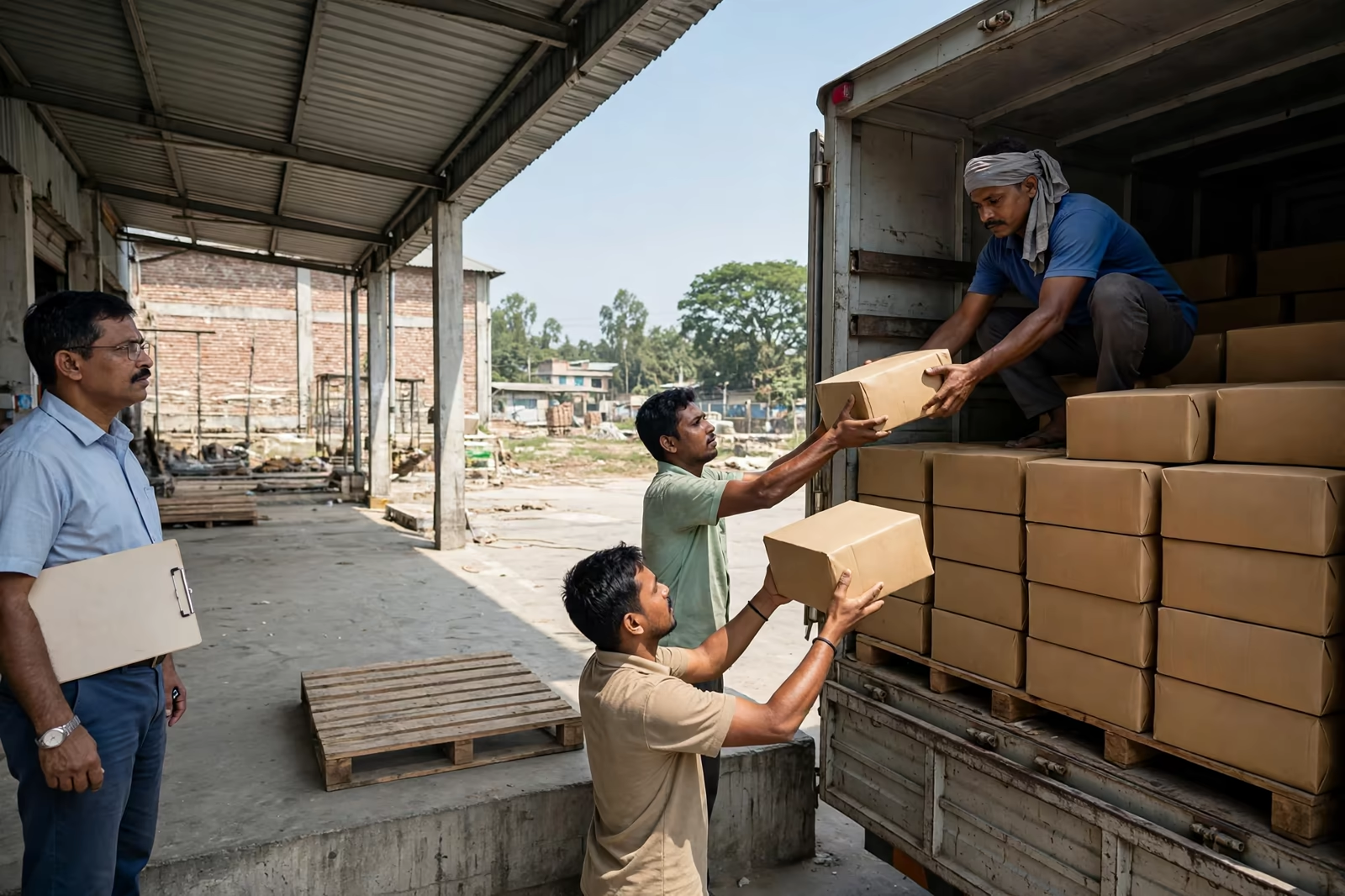
Three little letters decide who pays for the ship, who carries the risk at sea, and whose problem a delayed vessel becomes. FOB, CIF and EXW are the Incoterms garment buyers meet most often, and choosing between them is less about price than about control, capability and where your own organisation’s strength lies. This guide walks each term through a real garment order so the choice becomes practical.
The sourcing teams behind this guide ship apparel from Bangladesh to buyers in the USA, the UK, Germany, Canada and Australia under all three terms. The Incoterms rules are maintained by the International Chamber of Commerce and revised periodically; the current edition is Incoterms 2020, and the version should be named in the contract, since the letters alone do not say which rulebook applies.
The choice connects to the framework on our payment terms page, the regions on our market area page, and the order structure on our MOQ and production page.
What an Incoterm Actually Decides
An Incoterm is a three-way allocation written into the sales contract. It decides who arranges and pays for each leg of transport, at what exact point the risk of loss or damage passes from seller to buyer, and who handles export and import clearance. It does not decide ownership, payment timing or product quality, which live elsewhere in the contract.
That precision is the point: when a container is damaged in transit, the first question is not whose fault it feels like, but where the risk point sat under the chosen term. Buyers who choose terms casually discover their allocation at the worst possible moment.
Every term below follows the same garment’s journey: produced in Bangladesh, trucked to port, loaded on a vessel, carried to the buyer’s market, cleared and delivered. Watch where your responsibility begins under each one.
One Journey, Three Splits
Follow a container of hoodies from factory to warehouse. Under EXW, your forwarder collects at the factory, clears export, books and loads the vessel, insures, clears import and delivers, one chain entirely yours. Under FOB, the factory performs everything up to the loaded vessel, then your chain begins. Under CIF, the factory’s chain extends across the ocean to the destination port, while the risk quietly became yours back at loading.
Read that way, the terms are simply three different hand-over points along one road. The right choice is the hand-over your organisation is genuinely equipped to receive at, with rates and people behind it, not the one that flatters the unit price.
Ask each supplier quote to show its term’s hand-over point in words. Factories state it readily; vagueness at this line predicts vagueness everywhere else.
EXW: Everything Starts at the Factory Gate
Under EXW, Ex Works, the seller’s job ends almost before it begins: the goods are made available at the factory, packed and ready, and from that point the buyer arranges everything, loading, inland transport, export clearance, freight, insurance, import and delivery. The seller carries the least obligation of any term, and the buyer the most.
The quoted price is therefore the lowest and the least comparable: an EXW price excludes every cost of movement, and a buyer comparing it against delivered terms is comparing different products. EXW suits buyers with their own logistics operation or consolidator in the origin country, who genuinely control the chain better than the factory could.
Its hidden friction is export clearance: formally the buyer’s task under EXW, practically awkward from overseas, since export formalities in Bangladesh belong inside the seller’s world. First-time importers are usually steered away from EXW for exactly this reason.
FOB: The Industry Workhorse
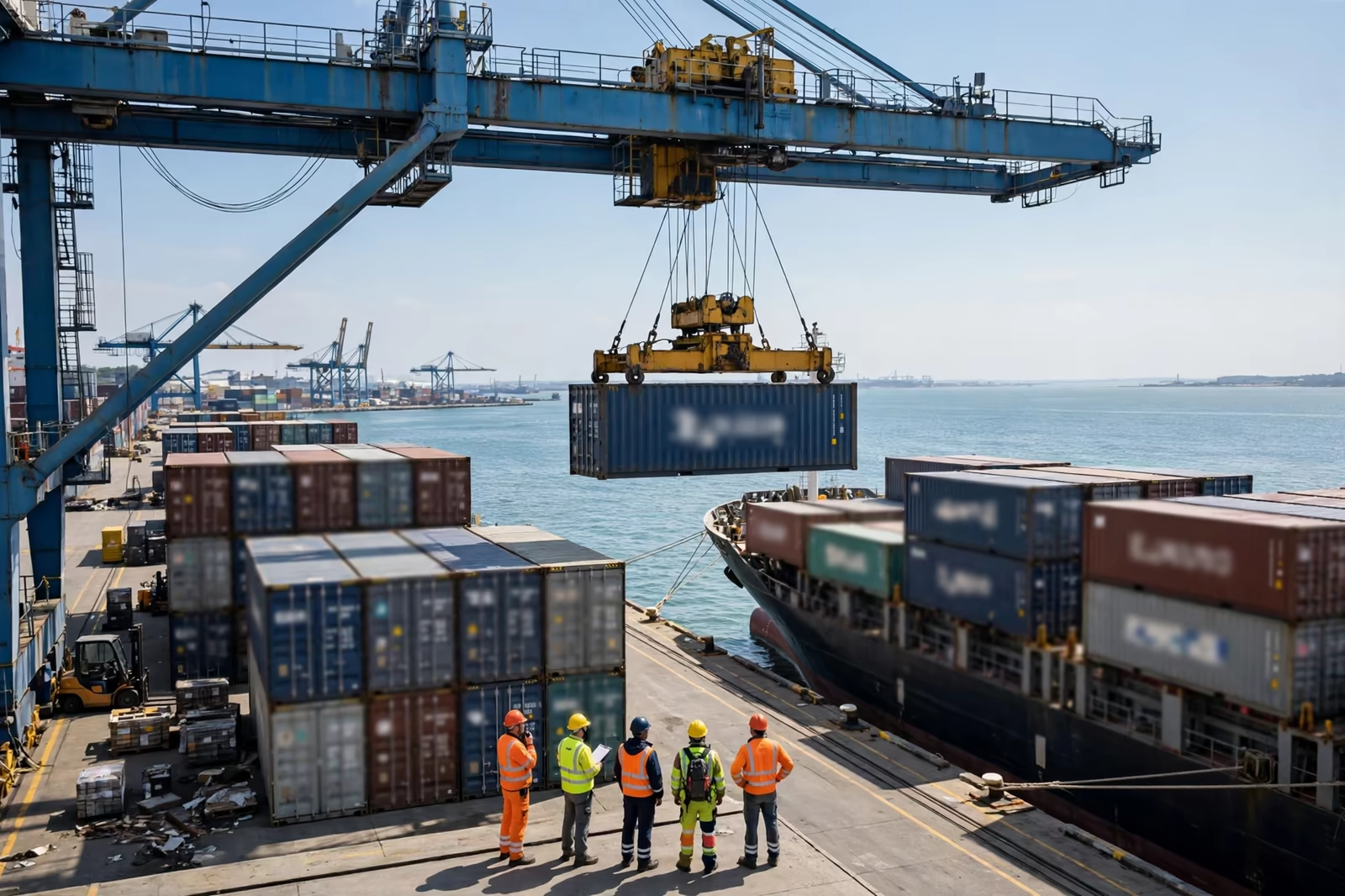
Under FOB, Free On Board, the seller delivers the goods on board the vessel at the named port of shipment, handling production, inland transport, export clearance and loading. Risk passes to the buyer when the goods are on board; from there the buyer arranges and pays the ocean freight, insurance and everything at destination.
FOB is the garment trade’s default for good reasons. The split matches each side’s natural territory: the factory runs the origin leg it performs weekly, the buyer controls the freight through their own forwarder, with their own rates, routing and visibility. Buyers with freight contracts or consolidation programmes protect real money by holding the ocean leg.
The buyer’s duties under FOB start earlier than many realise: the forwarder must be nominated in time, shipping instructions issued, and the vessel window matched to production completion. An FOB order with a passive buyer misses vessels as reliably as a late factory does.
CIF: The Seller Ships, the Buyer Still Watches
Under CIF, Cost Insurance and Freight, the seller contracts and pays for carriage and insurance to the named destination port. The goods travel under the seller’s freight arrangement, and the price includes those costs. It reads like the easy option, and for buyers without freight infrastructure it often is.
One subtlety matters enormously: although the seller pays the freight, the risk still passes to the buyer when the goods are loaded on board at origin, the same risk point as FOB. The seller’s insurance is arranged for the buyer’s benefit, but at the minimum cover level the rules require unless more is agreed, which may not match the value you would choose to protect.
CIF also hides the freight inside the price, which buyers with their own rates should compare carefully: the convenience is real, but so is the margin that freight bundling can carry. Ask any CIF quote to be shown beside its FOB twin before deciding.
The Destination End Nobody Budgets
All three terms end their seller obligations at or before the destination port. Beyond it sits everything buyers forget: port charges, customs clearance, duty and tax, unloading, and the inland leg to the warehouse. Under FOB and CIF alike, that whole destination block is the buyer’s, and its cost belongs in the landed model from the start.
Demurrage and storage are the sharp edges: containers not cleared and collected promptly accrue charges by the day, and first-time buyers are their most frequent payers. Align your broker, documents and warehouse receiving before the vessel arrives, not after.
A buyer’s forwarder or broker quoting the destination block in writing, alongside the ocean rate, turns the forgotten costs into planned ones. Ask for that page explicitly.
Insurance: The Line Buyers Under-Read
Whichever term you choose, one question deserves its own paragraph: if this container is lost or soaked, whose money replaces the goods, and how much of it? Under FOB and EXW the insurance is entirely the buyer’s to arrange from the risk point. Under CIF the seller arranges it, at minimum cover unless the contract upgrades it, and the claim still runs through paperwork the buyer must drive.
Seasonal programmes concentrate risk painfully: a lost container is not one order’s profit but a whole selling window. Buyers who insure deliberately, full value, own policy where volumes justify it, sleep through shipping news that ruins other people’s quarters.
Agree the insurance position in the purchase order itself, naming who arranges it and to what level, rather than assuming the term settled it for you.
Which Term Fits Which Buyer
Established importers with forwarder relationships, consolidated volume or their own freight rates generally choose FOB: control of the ocean leg, transparent factory pricing, and origin operations left to the factory. Most mid-size apparel programmes land here once they run regularly.
Newer or smaller buyers often start on CIF: one price to the destination port, no forwarder infrastructure to build, and the factory’s shipping desk carrying the arrangement. As volumes grow and freight knowledge builds, many migrate to FOB and bank the difference.
EXW fits the minority with real origin-side logistics, buying agents, consolidators, or multi-supplier consolidation in Bangladesh, where pulling everything from the factory gates is the system rather than a burden.
Related Terms You May Be Offered
Two neighbours appear in negotiations. DAP has the seller deliver to a named destination place, bearing the journey’s risk, while the buyer still clears import. DDP goes furthest, seller delivering with import clearance and duty handled too, which sounds effortless and can strand a foreign seller inside your tax system; many factories will not quote it, and their reluctance is healthy.
For containerised cargo, FCA is worth knowing: goods handed to the buyer’s carrier at a named place, often better fitted to how containers actually move than FOB’s on-board point. Forwarders recommend it increasingly, and the ICC’s own guidance points container users toward it.
Whatever the letters, the working questions stay the same: who arranges each leg, who pays, and where exactly does risk pass.

Putting the Term in the Contract Properly
A term only works when it is written completely: the letters, the named port or place, and the rules edition, for example “FOB Chattogram, Incoterms 2020”. The named place is part of the term; without it, the hand-over point that decides money is undefined.
Keep the term consistent with the payment structure: a letter of credit’s document demands, an inspection’s timing, and the bill of lading flow all interact with who controls the shipping. A term chosen in the price negotiation and forgotten in the documents is a dispute in waiting.
Our own orders state the term, place and edition on the purchase order and the proforma alike, so the factory, the buyer and both forwarders read one allocation from one line.
Frequently Asked Questions
What is the difference between FOB and CIF for garments?
Under FOB the seller delivers the goods on board the vessel at origin and the buyer arranges and pays the ocean freight and insurance. Under CIF the seller arranges and pays freight and insurance to the destination port, but the risk still passes to the buyer at loading, exactly as with FOB, and the included insurance is minimum cover unless you agree more.
Which term is cheapest?
The quoted price is lowest under EXW because it excludes all movement, and highest under CIF because it bundles freight and insurance, but neither fact tells you the cheapest landed cost. That depends on your own freight rates and capability: buyers with strong forwarder arrangements usually land cheapest on FOB, while buyers without them may find CIF’s bundled route cheaper in practice.
Why do experienced garment buyers prefer FOB?
Because it splits the journey along natural lines. The factory handles production, export clearance and loading, which it does every week, while the buyer controls the ocean leg with their own forwarder, rates, routing and tracking. The factory price stays transparent, freight stays competitive, and each side runs the part it performs best.
Should a first-time importer use EXW?
Usually not. EXW places everything on the buyer from the factory gate, including export clearance in the seller’s country, which is awkward to perform from overseas and easy to get wrong. FOB or CIF keeps the origin leg with the factory, where the expertise sits. EXW makes sense when you run your own origin logistics or consolidation operation.