
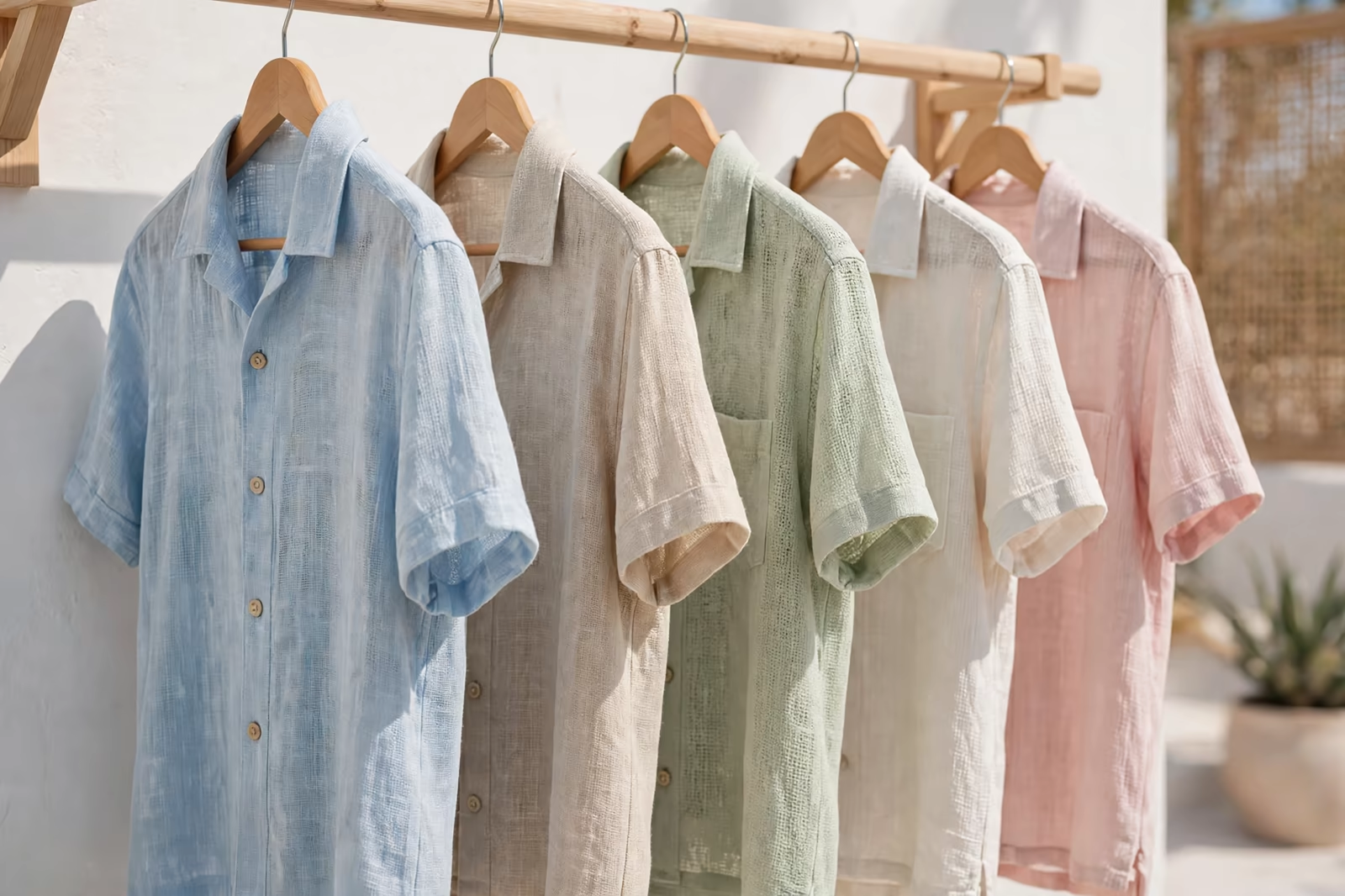
Hospitality at sea and on the sand runs two apparel programmes inside one brand: the staff wardrobe that makes service look effortless, and the guest merchandise that lets a holiday be taken home. They share a logo, a climate and a supply chain,
They fail in opposite directions: uniforms planned like souvenirs wear out in a month, and merchandise planned like uniforms bores the shop. This guide runs both programmes properly, for resorts, cruise operators and their suppliers sourcing from a clothing manufacturer in Bangladesh for guests from the USA, the UK, Germany, Canada and Australia.
The climate is a co-author of every decision below: sun, salt, humidity and relentless laundry write specifications that temperate programmes never meet. Treat the climate as a member of the design team from the first meeting and its contributions stop arriving as surprises.
The Staff Wardrobe in a Hot Climate
Resort staff perform physical work in heat while looking serene in photographs, which is the hardest brief in uniform design. The wardrobe is engineered backwards from that contradiction.
- Breathable, quick-drying fabrics that survive daily industrial laundering
- The relaxed professional core: the casual woven shirt in resort colours
- Light colours that forgive sun and salt, with soil-hiding patterns where needed
- Enough sets per person for the laundry cycle the property actually runs
- Role families: front desk polish, restaurant smartness, beach and pool practicality
- Sun protection designed in for the staff who work outdoors all day
Our standard minimum of 1,200 pieces per style in up to two colours fits resort groups naturally: properties order together, and the depth that minimum demands is the depth a daily-laundered wardrobe needs anyway.
Departments, One Family
A resort is several businesses wearing one name, and its uniforms must distinguish them without fragmenting the brand. Guests navigate by clothing: the blue shirt means concierge, the apron means kitchen, the polo at the pool means help is here.
- One colour family, department shades or accents within it
- Silhouettes matched to the work: polish where guests linger, utility where they do not
- Housekeeping and maintenance dressed for dignity as much as function
- Entertainment and kids-club teams in the joyful end of the palette
- Management variants that signal authority without leaving the family
The guest experience sharpens when the code is consistent: service becomes findable. That findability is a design outcome, planned in the range meeting, not an accident of ordering.
Test the system the way a guest does: stand in the lobby at the busiest hour and count the roles you can identify by clothing alone in ten seconds. Whatever the count misses is what the next order fixes, with accents, aprons or colour deepened until the whole property reads at a glance.
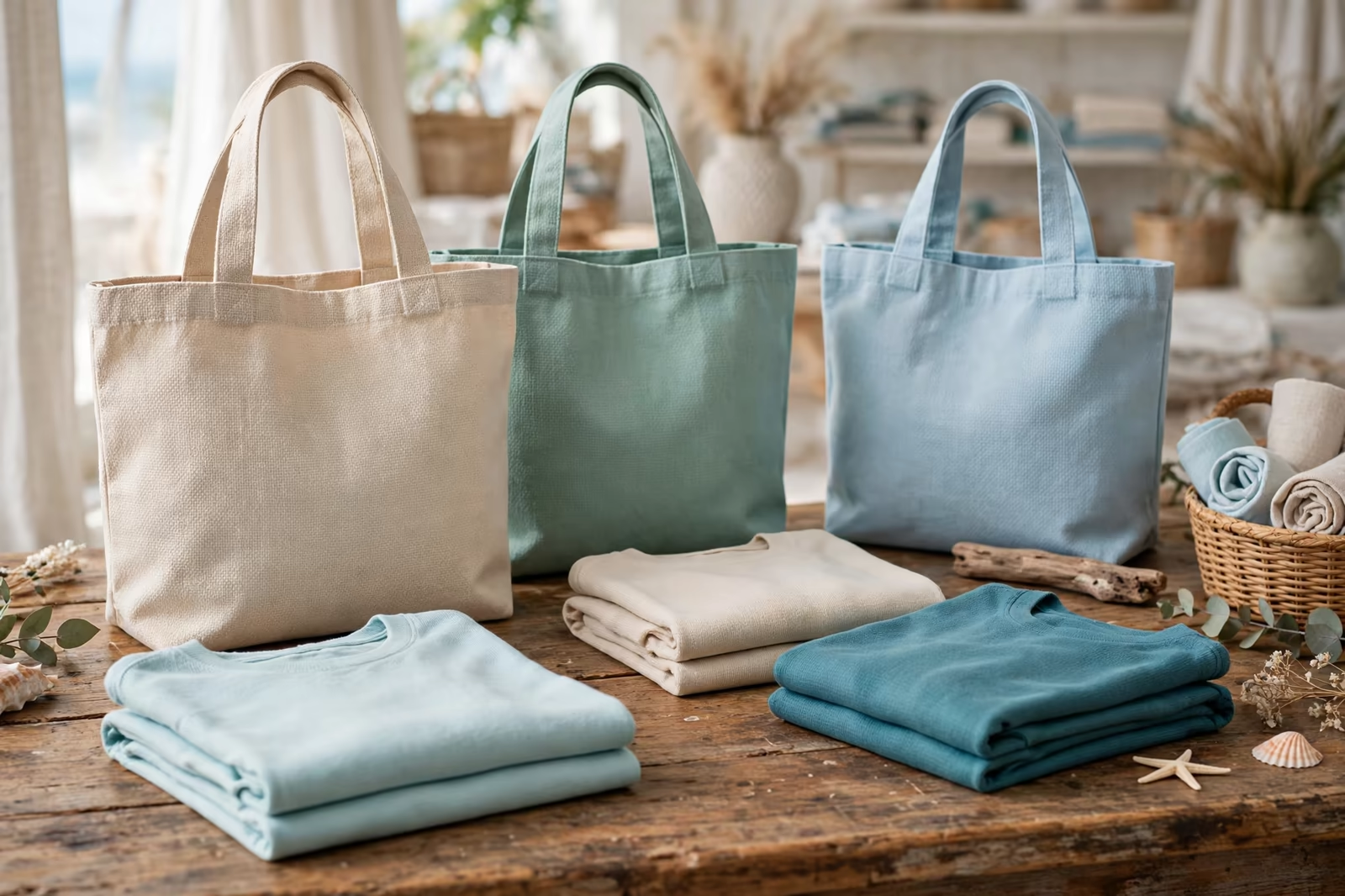
Guest Merchandise: The Holiday, Taken Home
The resort shop sells one product in many forms: proof of the holiday. Its apparel succeeds when it carries the place rather than merely the logo, wearable at home precisely because it remembers somewhere better.
- Tees and shirts in the destination’s palette, not the corporate one
- The tote as the flagship: used on the beach all week, kept for years
- The reference carrier is the tote bag, printed with place before brand
- Kids’ pieces sized for the souvenir grandparents actually buy
- A premium layer: the embroidered polo, the resort shirt, the keepsake
- Designs refreshed per season so returning guests collect rather than repeat
Place before brand is the whole merchandising secret. Guests buy the island, the bay, the ship; the operator’s name rides along as the signature, not the subject.
Price follows the same logic. A destination garment is compared by the guest with the holiday’s other pleasures, not with the high street, and it earns its place when the memory it carries is stronger than the number on its tag. Quality is what makes that trade feel fair a full year later.
Cruise Specifics: A Moving Resort
Cruise apparel adds the ship’s peculiar physics: storage measured in cubic metres, laundry running around the clock, ports changing the weather weekly, and a crew living in uniform for months at a stretch.
- Crew sets multiplied for the contract length, with mid-contract replenishment planned
- Compact, crease-tolerant garments that store and issue efficiently
- Department colour codes that hold across a fleet, ship to ship
- Guest merch themed by itinerary, produced before the season sails
- Shore-side warehousing feeding the ship at planned ports, not emergency ones
The markets a fleet serves rotate with its itineraries; the sourcing map on the market area page is how operators keep guest expectations and crew standards aligned across all of them.
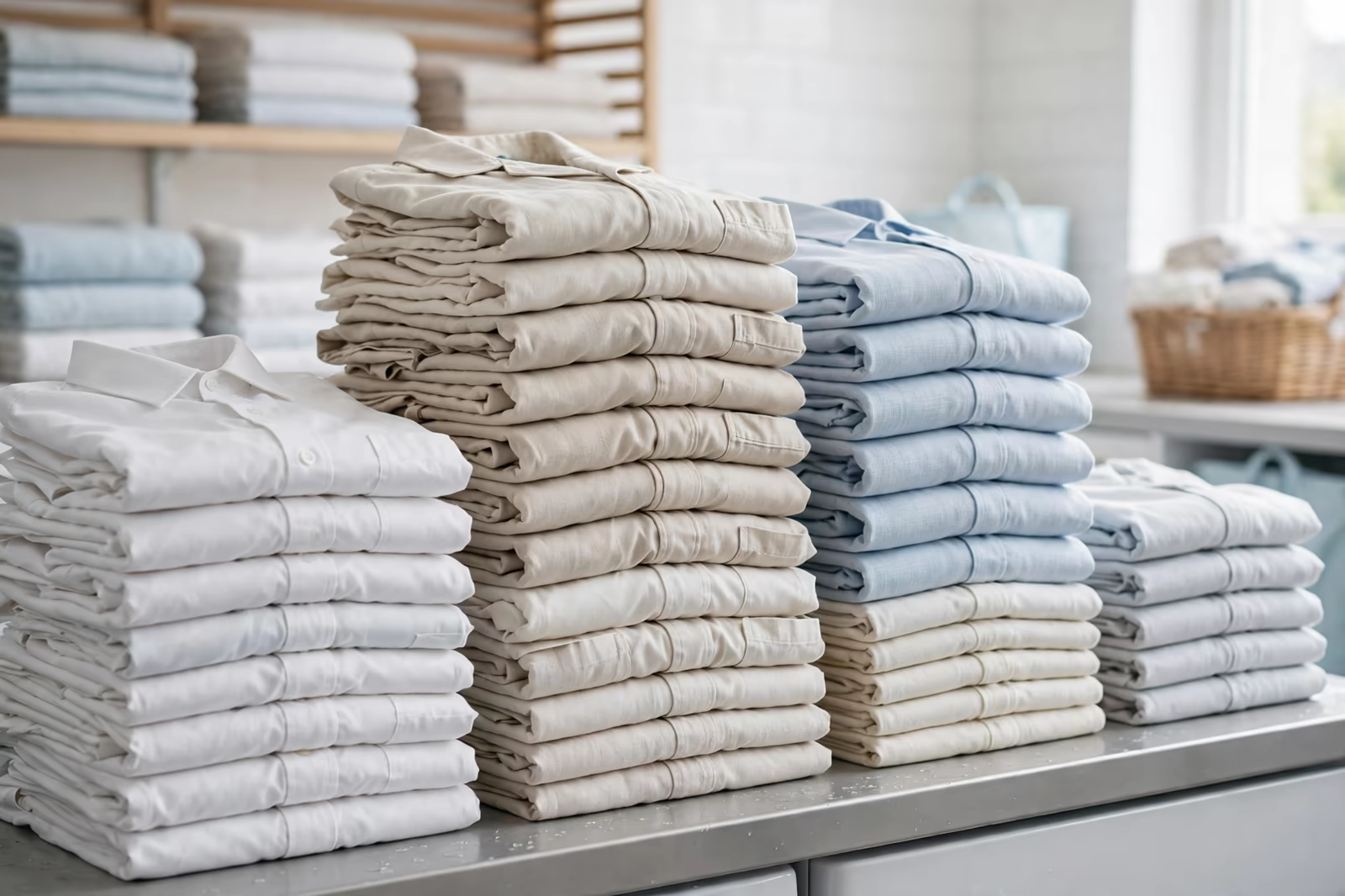
Laundering: The Programme’s Hidden Engine
Resort apparel is laundered more in a month than office clothing in a year, and the laundry is where its real cost and real lifespan are decided. Programmes are specified for the wash they will actually receive.
- Fabric and colour chosen against industrial temperatures and chemistry
- Colourfastness verified for the property’s process, not a domestic one
- Replacement rates modelled on laundry reality, by department
- Guest merch washed by guests: care labels honest and simple
- Spare depth held where the laundry cycle is longest
Uniforms that fail at a resort almost never fail from wear. They fade, they grey, they lose their press, in the wash, on schedule, exactly as an honest specification conversation would have predicted.
Seasonality and the Returning Guest
Resorts live in seasons and in repeat visits, and the apparel programme compounds across both: staff kits renewed against the calendar, guest designs collected across the years, evidence accumulating in the shop’s own tills.
- Peak-season stock staged before the guests, not chased during it
- Designs dated subtly where collecting is the behaviour being built
- Staff wardrobe refreshes timed to the property’s quiet weeks
- Sell-through read by nationality and party type, because both shop differently
- Next season’s programme drafted while this season’s guests are still wearing it
The returning guest is the programme’s examiner. Dress the staff recognisably, refresh the shop honestly, and the second visit converts recognition into loyalty that no brochure can buy. That loyalty, measured in repeat bookings and returning families, is the return on every apparel decision this guide describes.
The Wardrobe as Employer Brand
Resorts recruit in competitive labour markets, often housing staff on site, and the uniform is part of the employment offer whether management intends it or not. Staff judge employers by the kit they are handed on the first day, and they compare it, photograph it and describe it at home.
- Fit and comfort treated as respect, not as extras
- Female and male cuts designed properly, not scaled from one pattern
- Replacement issued without argument when kit wears out in service
- Personal presentation supported: laundry done well, lockers and changing space respected
- Staff consulted on the wardrobe’s failures before the next order copies them
The properties with waiting lists of applicants rarely advertise the fact that their uniforms are good. They do not have to: their staff are visible in every guest photograph, looking like people who are looked after, which is the most credible recruitment material in hospitality.
Reading the Shop’s Evidence
Guest merchandise generates the cleanest retail data in the industry: a captive audience, a short season and a till that records exactly what a holiday crowd wanted. Programmes that read it plan next season from evidence instead of from taste.
- Sell-through by design, size and guest segment, reviewed at season’s end
- The tote and tee curves compared: what guests carry versus what they wear
- Price resistance mapped by what stalled, not by what staff assumed
- Returning-guest behaviour watched for collecting patterns
- Failures kept and studied rather than quietly written off
A resort shop’s evidence is a portrait of its guests drawn by their own wallets. The operator who reads it annually builds a range that sharpens every season, while competitors re-order their guesses at full price.
Weddings, Groups and the Resort’s Second Wardrobe
Beyond the daily programmes sits the event layer: destination weddings, conferences, reunions and celebrations that dress parties of guests in the property’s identity for a day and photograph it forever. It is small volume and outsized visibility, and it deserves its own planning line.
- Group pieces in the resort’s palette, personalised with the event’s mark
- Produced with the main programmes so colours and quality match exactly
- Sizes gathered from the organiser with the same discipline as staff issues
- Keepsake quality assumed: these garments are kept like photographs
- The property’s shop credited in every piece’s story, quietly
A wedding party in matching resort shirts is a brochure the guests paid to appear in. Properties that make it easy, one conversation, one order, one delivery to the venue, sell it again at every celebration they host.
Sustainability Where Guests Can See the Sea
Resorts sell nature, which makes their apparel choices unusually visible: guests who chose the property for its reef and its beach audit its shirts and bags with the same eyes. The programme’s environmental discipline is therefore commercial as well as ethical.
- Durable garments first: longevity is the claim guests can verify
- Single-use promotional items designed out of the programme entirely
- Natural and recycled fibres used where their performance honestly fits
- Retired staff kit channelled to declared second lives, never quietly dumped
- The shop’s story told factually, with evidence guests can check
Coastal properties carry one more duty: what their apparel sheds and where it ends up is a local question, answered in the same waters their guests swim in. Programmes planned with that in mind are simply better neighbours, and better neighbours get rebooked.
Frequently Asked Questions
How many uniform sets does resort staff need?
Enough to cover the property’s real laundry cycle with margin, which in daily-laundered departments means several sets per person. Count the cycle honestly, including turnaround at peak occupancy, and size the spares pool to the departments that can never be seen waiting for clean kit. Front-of-house roles should hold the deepest pool of all, because their presentation is the product the guest photographs.
What makes resort merchandise sell?
Place, quality and collectability: designs that carry the destination, garments good enough to wear at home, and a reason for returning guests to buy again. The operator’s brand signs the piece; the destination is what the guest is actually purchasing.
How do cruise programmes differ from resort programmes?
Scale of sets, storage discipline and logistics: crew live in uniform for whole contracts, replenishment must meet the ship at planned ports, and guest merchandise is themed by itinerary. The design logic is the same family system; the calendar and the cupboards are not.
Why do resort uniforms fade so fast?
Industrial laundering: hot, frequent and chemical, in properties that wash daily. The defence is specification, fabrics and colours chosen and tested against that process, with replacement rates modelled on it honestly rather than on domestic washing assumptions.