
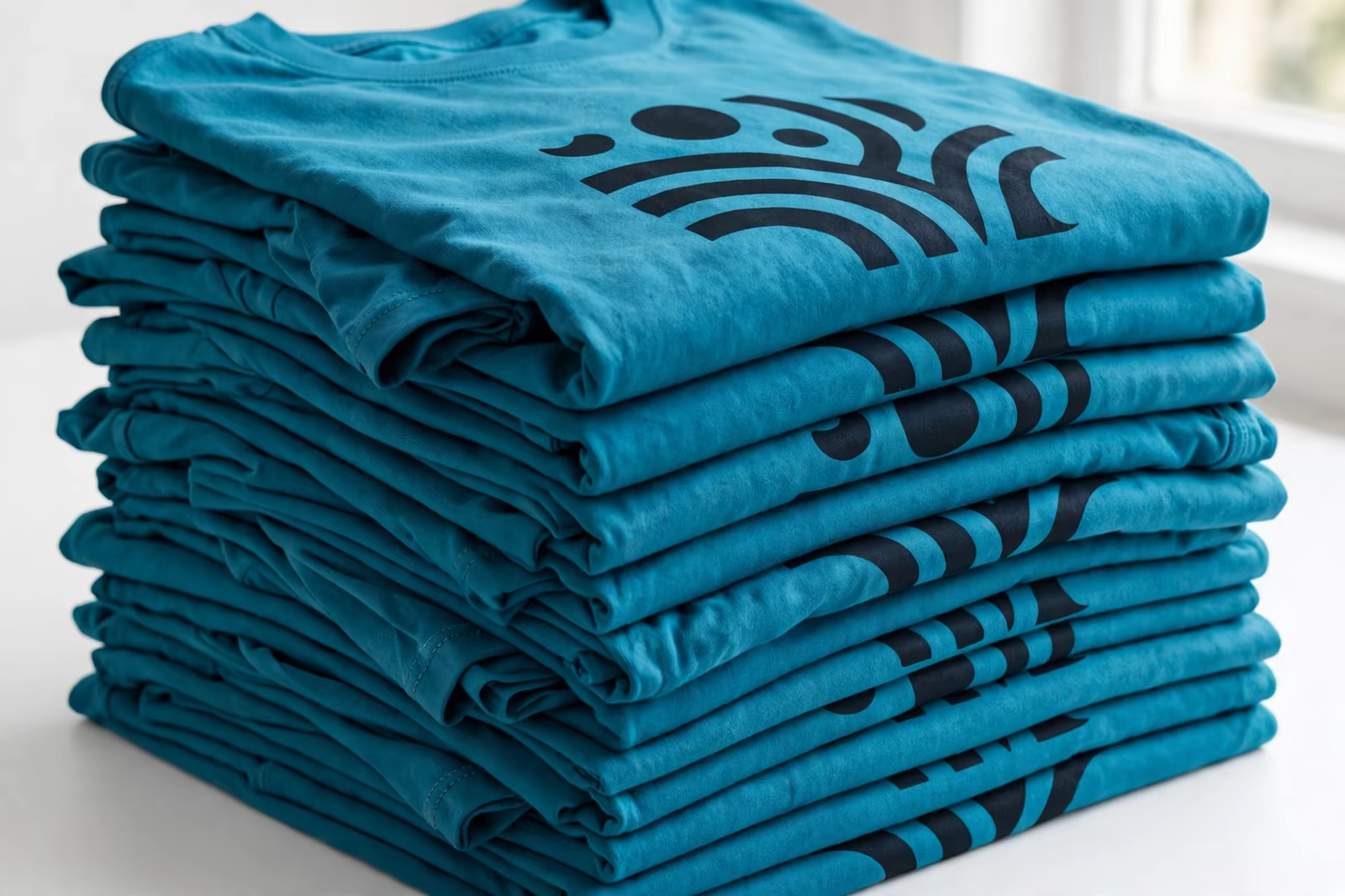
Campaign apparel is clothing with a deadline set by history: an election, a launch, a protest, a fundraising drive. It must arrive before the moment it exists for, speak clearly in a crowd and a photograph, and be produced at a scale that turns individual supporters into a visible movement.
Getting it right is a logistics discipline as much as a creative one. This guide covers bulk ordering for causes and campaigns, for organisations sourcing from a clothing manufacturer in Bangladesh and shipping to supporters in the USA, the UK, Germany, Canada and Australia.
The stakes are asymmetric in a useful way: nobody remembers the campaign whose shirts arrived on time, but everybody remembers the rally where they did not. Apparel is one of the few campaign systems entirely within the organisers’ control, which is precisely why its failures are remembered so unforgivingly by everyone involved.
The Campaign Wardrobe
A campaign does not need many garments; it needs the right garments in the right depth. The wardrobe is small because its job is recognition, and recognition is built by repetition of a few strong pieces rather than by variety.
- The core tee: worn by everyone, photographed everywhere
- The cap: visible above every crowd, in every aerial shot
- The staff and organiser layer: distinct, so the team can be found
- The volunteer kit: issued, counted and recovered like equipment
- Weather pieces for the outdoor calendar campaigns actually live by
- One premium piece for donors, patrons and the merch table
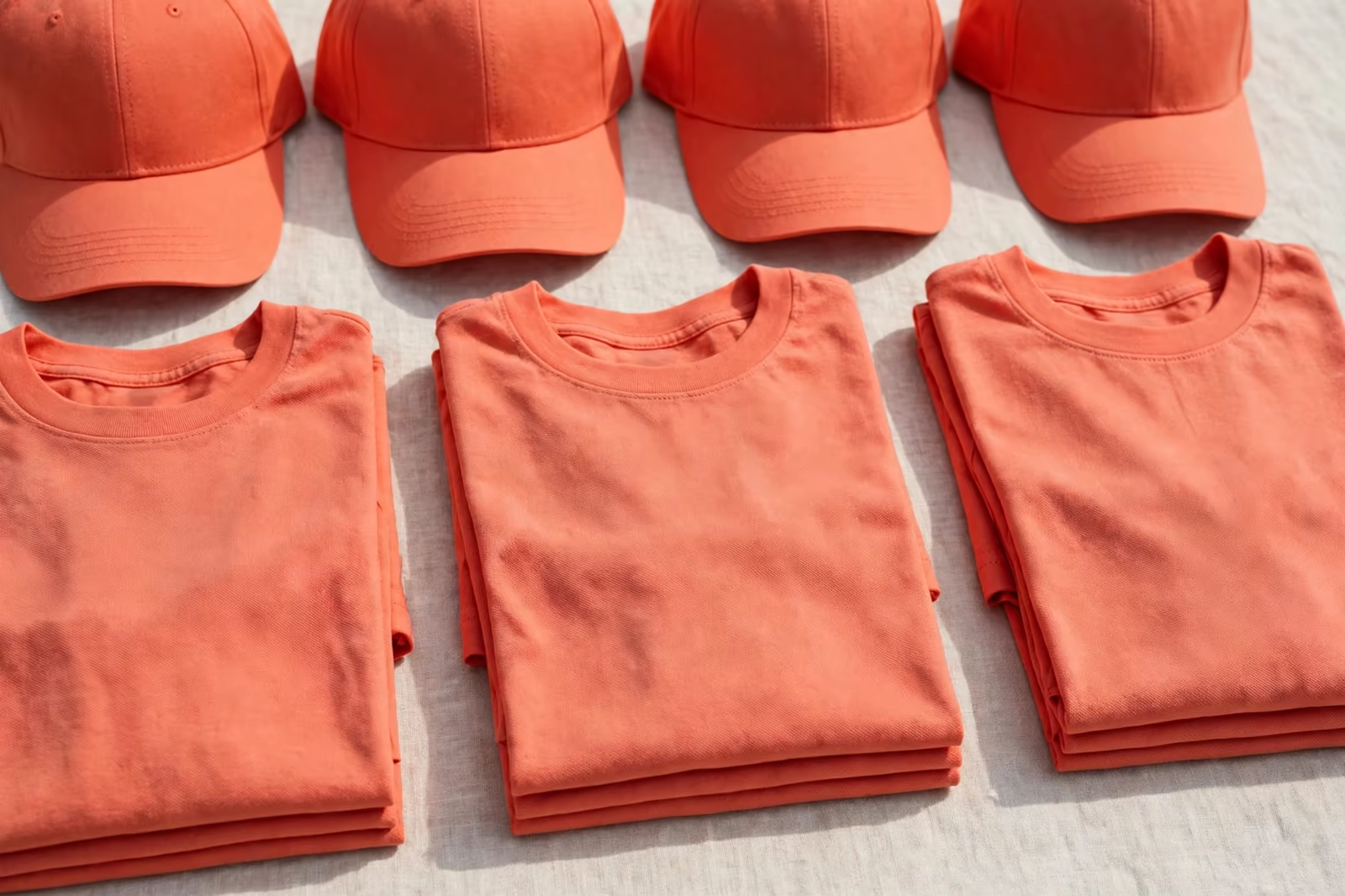
The anchor garments are the classic crew neck t-shirt and the baseball cap: the two most democratic pieces of clothing ever made, and still the movement uniform everywhere.
Depth beats breadth because cameras aggregate. A thousand people in one tee read as a single statement; a thousand people across ten designs read as a crowd that happens to be shopping. Campaigns buy the first picture on purpose and the second one by accident.
One Message, Worn Ten Thousand Ways
Campaign design obeys the physics of crowds: a message read at thirty metres, in motion, in poor light, on bodies of every shape. The artwork that wins is built for those conditions and disciplined about everything else.
- One slogan, one mark, one colour discipline across every garment
- Type sized for distance, tested on a wall before it is tested on cloth
- Contrast chosen for photography, including phone photography at night
- Local language versions produced as equals, not afterthoughts
- Artwork locked before production; campaigns die by late design changes
- Negative space respected: the crowd supplies the rest of the picture
Our standard minimum of 1,200 pieces per style in up to two colours shapes this discipline well: the message must survive being one design in depth, which is what a movement looks like anyway.
Forecasting a Crowd You Cannot Count
Campaign quantities are the hardest forecast in apparel, because demand follows events: a speech, a headline, a moment of weather on the day. The professional approach orders in layers, so the programme can respond without starting again.
- Base layer: the committed core, sized to the confirmed organisation
- Surge layer: pre-agreed production capacity held against the spike
- Regional splits planned before the freight, not after the news
- Size curves from the support base’s real demographics
- Undated core designs that survive a result either way
- The merch and fundraising channel counted as demand, not as leftovers
The undated design is the campaign manager’s wisdom in garment form. A slogan tied to a date is a souvenir with a fuse; the movement’s core message, undated, serves the next campaign too.
Speed Layers: When the Moment Moves
Campaigns generate moments nobody scheduled, and apparel is asked to answer them at news speed. The honest answer is a pre-built system: artwork frameworks approved in advance, production slots understood, and freight options priced before they are needed.
- Template designs with the variable element isolated and ready
- A standing conversation with production about surge capacity
- Regional fulfilment where the support base actually lives
- Air freight reserved for the pieces the moment cannot wait for
- Clear rules for what will not be rushed, stated before the crisis
Nobody builds this system during the moment. It is built in the quiet months, by campaigns that have been embarrassed before and intend not to repeat the experience.
The system’s other half is restraint: a clear, written line about which moments justify the surge and which are noise. Campaigns that rush everything eventually rush nothing well, and the supplier relationship that the surge depends on is spent carefully, like the credibility it is.
Volunteers and Staff: The Issued Wardrobe
Inside the public range sits the issued one: organisers, stewards, canvassers and crew, dressed to be found and trusted. It is a uniform programme in miniature and borrows all of its discipline.
- A reserved colour or garment the public range never uses
- Role identification that reads at distance: organiser, steward, medic
- Sizes collected from the actual team, with spares by size
- Enough sets for the campaign’s real calendar of long days
- Recovery and laundering planned where the campaign runs long
Trust is the currency here. A doorstep, a rally entrance and a count centre all run on the public’s instant judgement of who looks official, and the issued wardrobe is that judgement made visible.
After the Campaign: Stock With a Conscience
Campaigns end, and their apparel remains: boxes of undated core stock, dated pieces whose moment has passed, and a movement deciding what its material legacy should be. Movements are remembered by what they leave behind, and a warehouse of wasted shirts is a poor monument to a cause that asked people to care about waste. The endgame deserves the same planning as the launch.
- Undated stock inventoried and kept for the movement’s next chapter
- Dated pieces retired with dignity: archives, supporter gifts, recycling
- Nothing landfilled quietly that supporters paid to create
- Records kept: quantities, curves and costs for the next campaign’s plan
- The supplier conversation closed with the evidence shared both ways
Start the whole programme through get a quote with the campaign’s fixed dates in the first line. Movements forgive many shortages; they do not forgive the empty table on the day that mattered.
The Fundraising Arithmetic
Campaign apparel usually has to pay for itself, and often for the campaign besides. That makes its economics different from a brand’s: the margin is a donation the supporter chooses to make, and it is earned by transparency and quality rather than by discounting.
- Unit economics calculated whole: garment, print, freight, fees, fulfilment
- Pricing that treats the supporter as a donor, not a bargain hunter
- Unsold-stock risk priced honestly into the plan from the start
- Premium pieces carrying the margin; core pieces carrying the message
- Results reported to supporters where the campaign’s culture expects it
The fastest way to destroy that arithmetic is a garment supporters regret buying. One cheap, cracking print converts a thousand donors into a thousand witnesses against the cause, which is why quality sits in the fundraising section and not only in the design one.
Quality at News Speed
Campaign photography is merciless and permanent: the day’s images outlive the campaign, the result and occasionally the cause itself. The apparel inside those images is judged forever at print quality, colour truth and fit on real bodies.
- Print that survives the campaign’s own laundry reality
- Colours proofed in daylight and under flash, not only on screen
- Fits that flatter the actual support base, sampled on real people
- No last-minute supplier switches that reset every approval
- One full sample worn by the campaign’s own team before the run
The sample rule is the campaign version of an insurance policy, and its premium is one garment and one honest afternoon. Campaigns that skip it are betting the archive photographs of their finest day on a screenshot.
Distribution: The Last Mile of a Movement
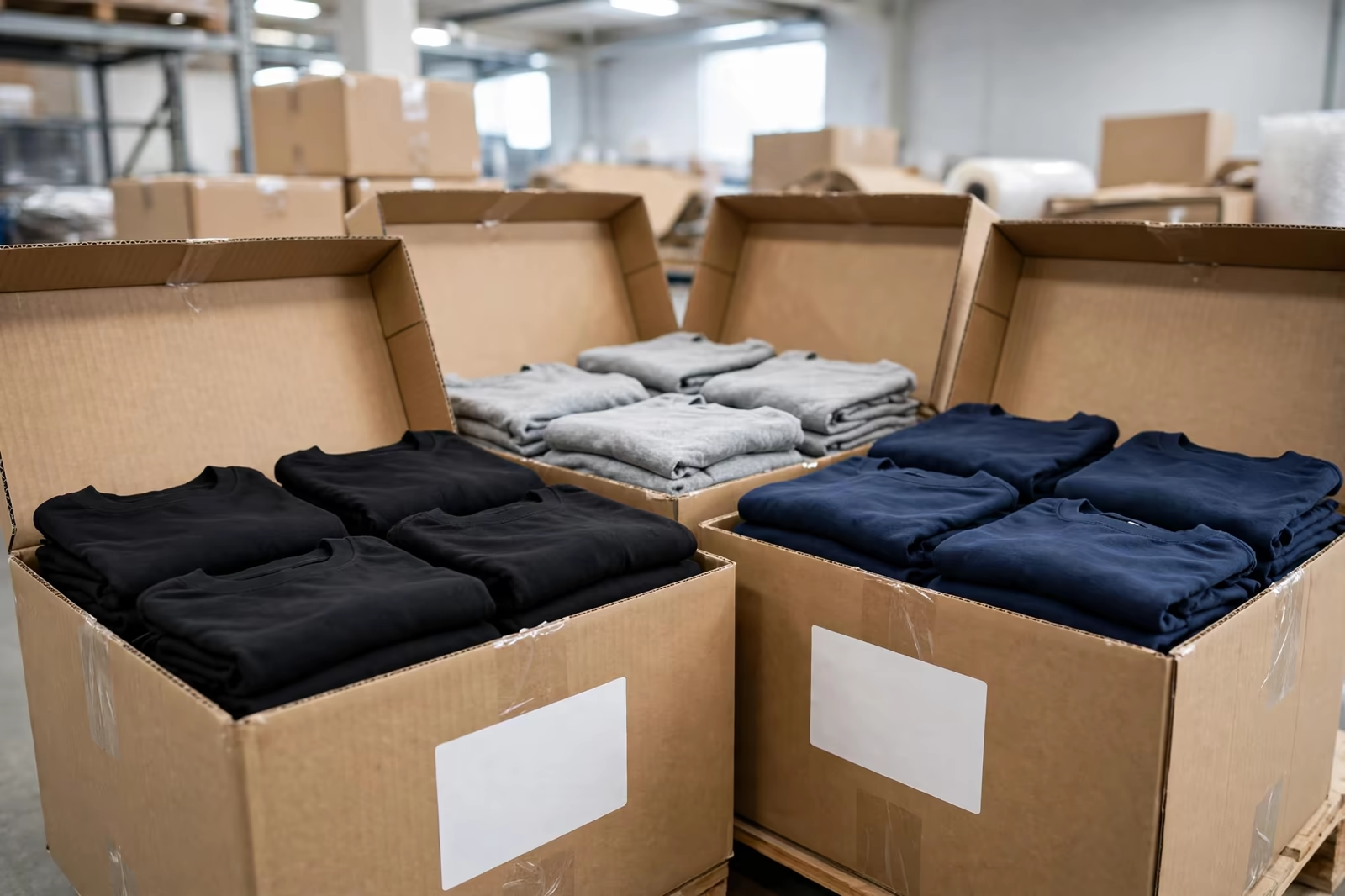
Produced stock is not yet a dressed crowd. Campaign apparel must move from cartons to backs through the movement’s own geography: offices, chapters, events and doorsteps, each with its own sizes, timing and politics.
- Stock allocated by chapter against their real membership, not their enthusiasm
- Event stock travelling as a kit: sizes staged, spares counted, returns logged
- A single inventory truth everyone can see, updated as stock moves
- Exchange routes for the supporter whose size guess failed
- Reserves held centrally against the moments regional stock cannot serve
The inventory point sounds clerical and is strategic. Campaigns that know what they own can promise, surge and fundraise with confidence; campaigns guessing at their own stock discover shortages in public, at microphones, on the record.
Being Copied: The Counterfeit Compliment
Successful campaign apparel gets imitated, by opponents, by opportunists and by the market stalls that appear wherever a crowd gathers. The programme’s defences are boring and effective, and they are built before the design becomes famous.
- Marks and artwork documented, dated and kept with their files
- Official channels named clearly, so supporters can find the real garment
- Quality as the visible difference copies cannot match cheaply
- Supporters told, with humour where possible, why the official piece matters
- Enforcement attention reserved for confusion that actually harms the cause
Most campaigns should treat imitation at small scale as evidence rather than emergency: it means the design is working. The official garment’s answer is to be unmistakably better in the hand, which returns the argument, as always, to production quality.
Frequently Asked Questions
How many designs should a campaign carry?
Very few, carried in depth: one core message on the tee and cap, a staff system apart from it, and at most one premium or moment-specific piece. Recognition comes from repetition. A crowd in one design is a movement; a crowd in nine designs is a market stall, however noble the cause printed across every single one of them.
How do we forecast quantities for an unpredictable campaign?
In layers. Order the confirmed core, pre-agree surge capacity with production, favour undated designs that survive the result, and split stock regionally before events choose for you. The forecast will still be wrong; layering decides whether it is wrong expensively or wrong gracefully. Review the layers after every major moment, while the evidence is warm, and adjust the surge triggers before the next headline writes its own timetable.
What makes campaign artwork work in a crowd?
Scale, contrast and restraint: one message, type sized for distance, colours chosen for photography in bad light, and negative space left for the crowd itself to complete the picture. Test it on a wall at distance before a single garment is printed.
What should happen to leftover campaign stock?
Undated core stock should be kept, inventoried and used by the movement’s next chapter. Dated pieces should be archived, gifted or recycled through declared channels, never quietly landfilled. The records, above all, should be kept: they are the next campaign’s forecast.