
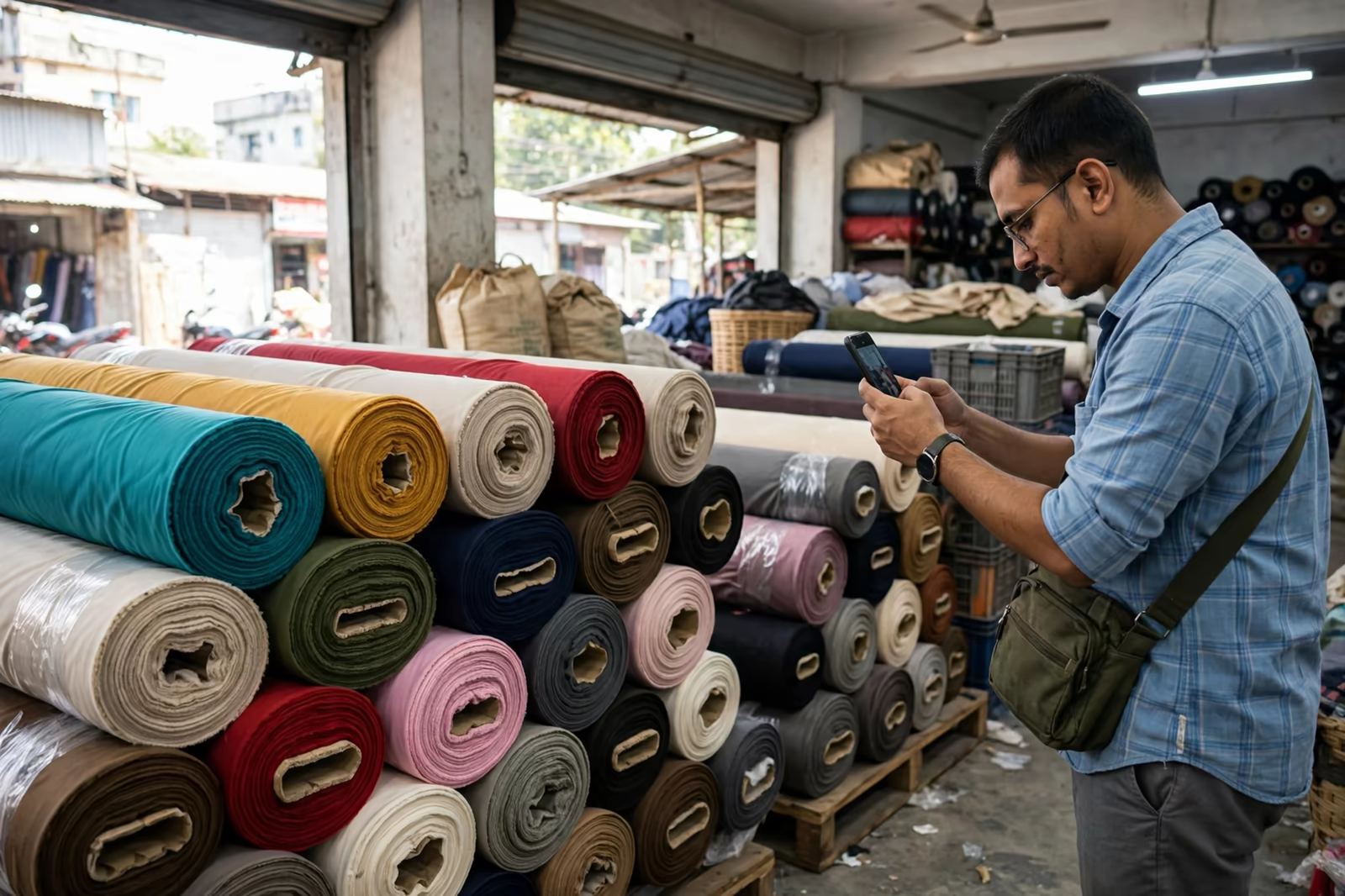
An order placed from another continent spends most of its life out of the buyer’s sight, and into that silence rushes imagination, usually pessimistic. Photo and video production updates close the gap: the factory shows the order at each stage, fabric arriving, cutting under way, the line sewing, garments being finished, so the buyer watches progress instead of picturing delay.
The merchandising teams behind this guide work in Bangladesh, sending structured photo and video updates on export orders bound for buyers in the USA, the UK, Germany, Australia and across Europe and the Middle East. Done well, remote monitoring replaces anxiety with evidence, and problems surface while they are still small enough to fix cheaply.
Remote updates are part of how we work, set out on our about us page, inside the framework on our MOQ and production page, and arranged for any order through our contact page.
What a Good Update Looks Like
A useful update is specific: dated, tied to a stage, and showing the buyer’s actual order rather than a generic factory tour. Fabric rolls with the order’s shade, cut panels in the buyer’s sizes, the line sewing the buyer’s style with its label visible, each photograph answers the question the buyer would ask if they were standing there.
Captions carry the data photographs cannot: quantities completed, the stage percentage in plain words, what happens next and when. A picture of sewing without numbers is reassurance; a picture with numbers is management information, and buyers learn quickly which factories send which kind.
Consistency is the third quality. Updates that arrive on an agreed rhythm, at agreed milestones, build a record the buyer can trust and compare, while random bursts of photographs after long silences read as performance rather than reporting.
The Milestones Worth Photographing
Fabric arrival and inspection open the story: the cloth is real, in the building, and passing its checks. Cutting follows, panels stacked by size, because cutting converts fabric into commitment and buyers feel the order become physical at this shot.
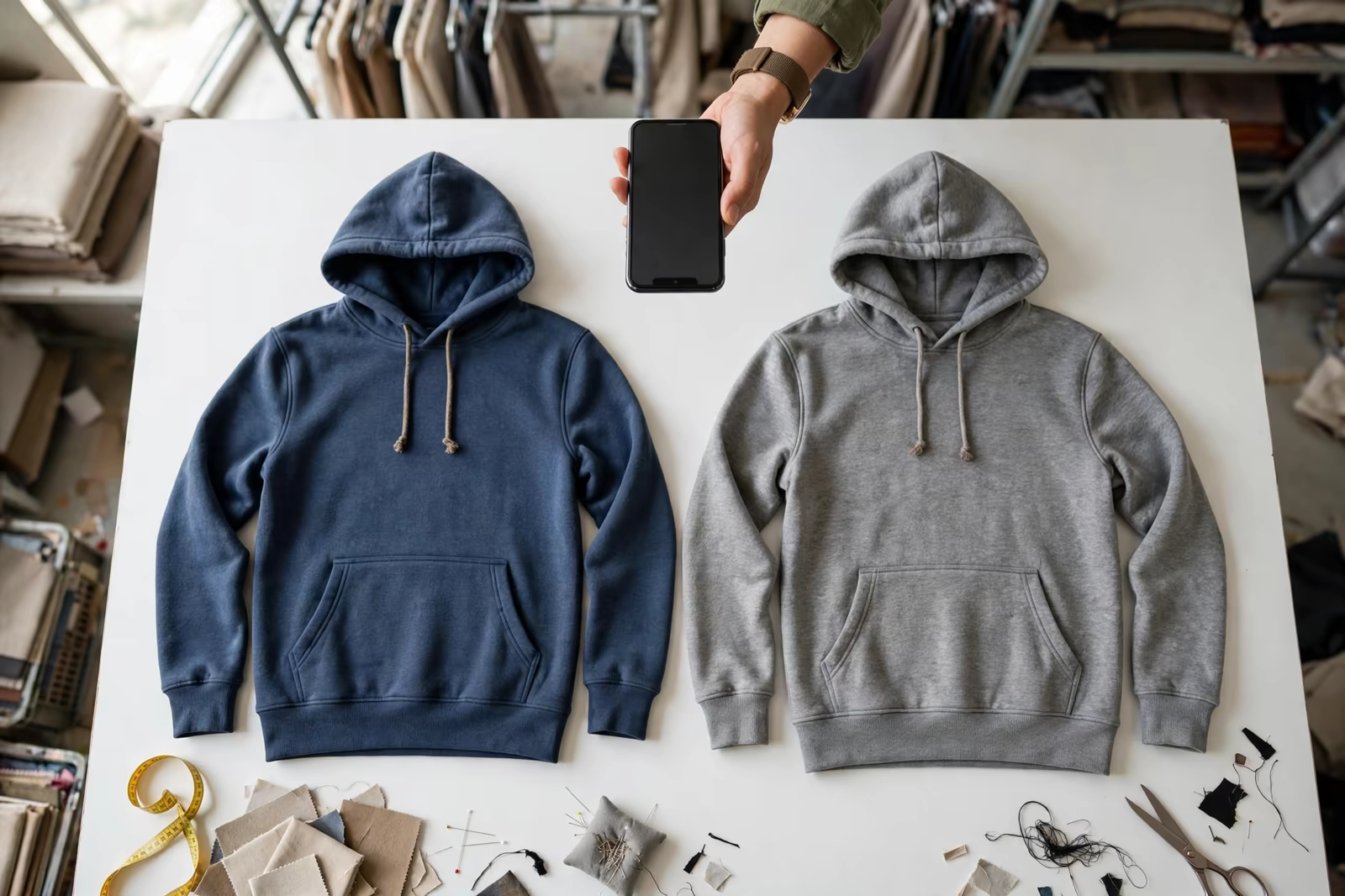
The first finished garment is the milestone buyers treasure most: the complete style, sewn, pressed and photographed from front, back and detail, compared openly against the approved sample. It is the moment a season of emails becomes a product, and the last cheap moment to catch a misunderstanding.
Sewing progress, finishing and packing close the sequence: the line at work, garments being trimmed and pressed, ratio packs forming, cartons sealing and stacking. A buyer who has watched those stages needs no imagination at shipment time, only the documents.
Video: Where Photographs Fall Short
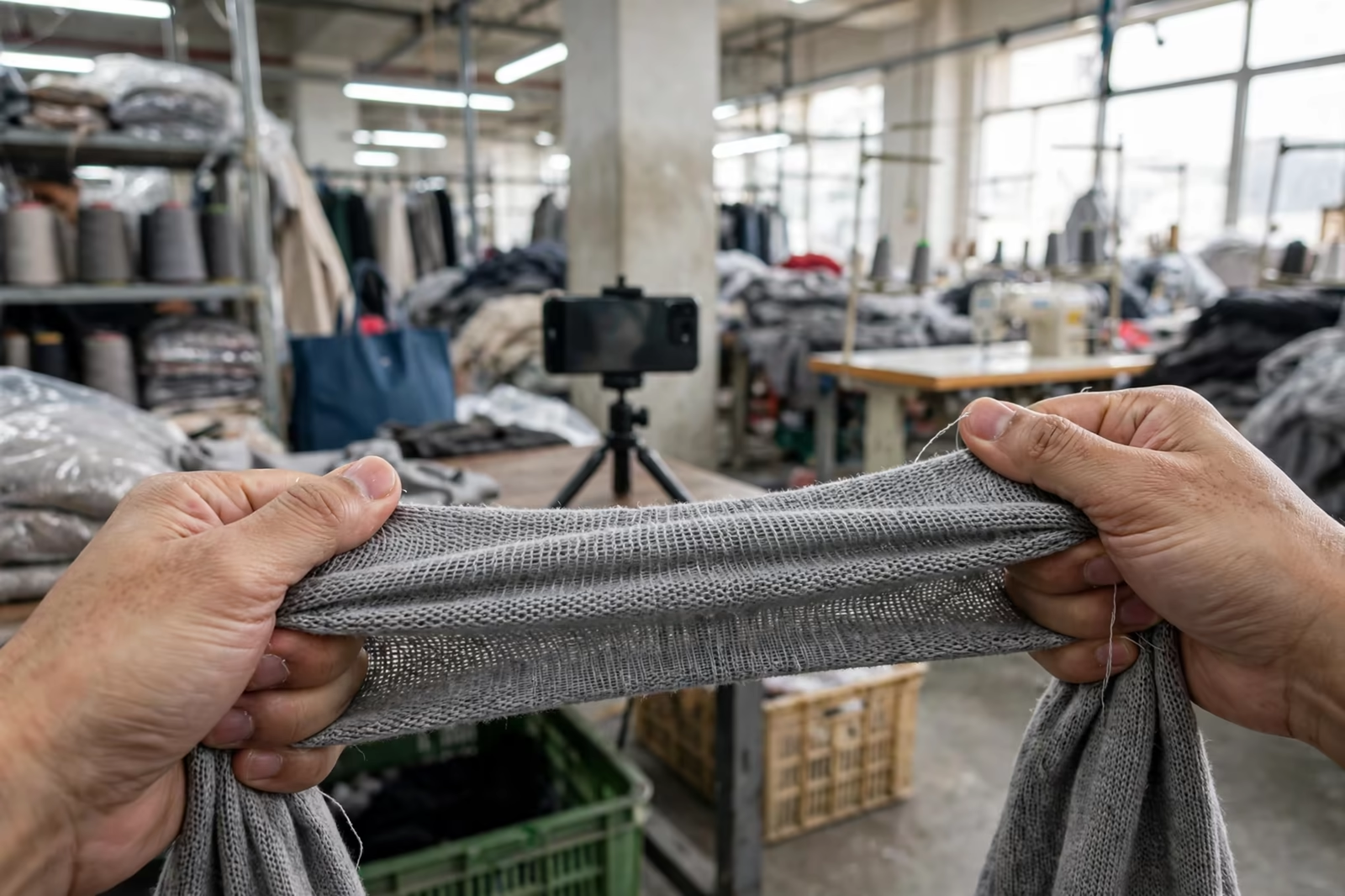
Video earns its place where stills cannot testify: a print’s hand feel shown by a hand stroking the fabric, a zip running smoothly, stretch and recovery in a knit pulled and released, the drape of a garment moved rather than arranged. Short clips answer fit and function questions that photographs argue about.
Live video calls at the line go further, letting a buyer ask for the camera to move: show me the back, hold that seam closer, open a packed carton at random. The unscripted quality is the value; anyone can stage a photograph, while a wandering live camera is hard to fool.
Video stays short and purposeful out of respect for everyone’s bandwidth and time. A forty-second clip of the right detail outperforms a ten-minute tour of everything, and factories that learn this get watched; factories that send epics get skimmed.
Time Zones, Channels and Turnaround
Remote monitoring runs across the world’s clock: the buyer’s morning questions meet the factory’s evening floor. Systems that respect this work in clear rounds, questions gathered and answered once per working cycle with complete evidence, rather than in dribbles that leave every thread half-finished in two hemispheres.
One agreed channel matters more than the channel chosen. Updates scattered across email, chat applications and personal phones become unfindable within a season, while a single thread per order builds the order’s biography, searchable by everyone who may need it when a question turns serious.
Turnaround expectations belong in the plan: photographs of a stage are sent when the stage happens, questions answered within the working day, and delays in the updates themselves reported like any other delay. A monitoring system that goes quiet without explanation fails at the one job it exists for.
Reading Updates Critically
Remote monitoring works when buyers look properly. Dates should match the claimed stage; details should match the order file, labels, trims and colours exact; quantities claimed should sit plausibly against quantities shown. A buyer who notices a wrong label in a progress photograph has just saved an order.
Questions are part of the system, not a breach of politeness. Asking what a photograph does not show, the other colours, the packed cartons, the measurement table, keeps the updates honest and complete, and good factories respond by widening the frame next time without being asked.
The failure mode to avoid is treating updates as ceremony: photographs received, filed and never examined. Monitoring that nobody monitors is theatre, and both sides eventually sense it and stop performing their parts well.
The Buyer’s Filing Habit: Building the Order’s Story
Updates are evidence, and evidence deserves filing. Buyers who keep each order’s photographs in order, dated and complete, hold something valuable at three future moments: when the shipment arrives and can be compared against its own history, when a dispute needs a timeline rather than memories, and when the next order with the same factory starts from knowledge instead of hope.
The file also disciplines the present. A buyer who reviews the sequence sees the order whole, fabric, cutting, first garment, packing, and notices the missing frame, the colour never photographed, the stage that jumped, sooner than a buyer reading messages one anxious evening at a time.
Factories keep the mirror file on their side for the same reasons. When both sides hold the same story, most arguments about what happened end before they begin.
What Updates Cannot Replace
Photographs show surfaces beautifully and interiors badly. Stitch tension, interlining quality, the inside of a garment where workmanship hides, measurement truth, none of these fully survive a camera. Updates complement physical checkpoints, samples, inspections and arrivals; they do not repeal them.
Colour is the camera’s oldest lie: screens shift shades, factory light flatters or dulls, and approval decisions still belong to physical samples under agreed light. A buyer who approves bulk shade from a phone photograph is gambling with excellent documentation.
Used honestly, the limit is understood by both sides: updates prove presence, progress and identity, that this order exists, is moving and is yours. Proof of quality still walks in through the older doors.
Agreeing the Update Plan at the Start
The best time to design monitoring is the order confirmation, not the first anxious week. Buyer and factory agree the milestones, the rhythm, the format and the channel, and name who sends and who receives. Written into the order routine, updates stop depending on anyone remembering or worrying.
Buyers should name their sensitive points explicitly: the print placement they lost sleep over last season, the label that once went wrong, the colour they will check first. A factory told what matters photographs what matters; a factory guessing sends the photogenic instead of the important.
Small orders earn a light version, three or four milestone sets; long or high-value orders earn the full sequence with video at the first-output stage. The plan scales with risk, like every other control in this industry.
How Good Factories Organise It
Behind a reliable update habit sits a small system: the merchandiser owns the schedule, photographs are taken at the stage rather than recreated after it, files are named by order and date so a season’s evidence stays findable, and one channel carries everything so nothing hides in a personal phone.
The habit pays the factory back. Documented progress answers buyer anxiety before it becomes escalation, the same photographs serve the post-order review, and a library of real production evidence is the most credible marketing material a factory owns.
Buyers can read a factory’s update discipline as a proxy for its general discipline, fairly reliably. Orders are run the way they are reported: factories careless with evidence are rarely careful with garments.
When an Update Reveals a Problem
Sooner or later a photograph shows something wrong: a print sitting lower than approved, a shade reading off under the factory light, a label that is not the final version. This is the system succeeding, not failing. The buyer who spots it has bought the correction at the price of a message instead of a shipment.
The professional response is fast, specific and unembarrassed on both sides: the buyer names the difference against the approved reference, the factory confirms the cause and the remedy, and the next update leads with the corrected evidence. Drama helps nobody; the photograph already did the hard part by existing.
Over a relationship, these catches become the trust’s foundation. A factory whose updates honestly show its work, including its mistakes and their corrections, is demonstrating the only kind of reliability that survives contact with real production.
Frequently Asked Questions
How often should I expect production updates?
At the agreed milestones rather than on a daily drip: fabric arrival, cutting, first finished garment, sewing progress, finishing and packing, with the rhythm fixed when the order is placed. Long orders may add a periodic progress set between milestones. The right measure is whether each update changes what you know; photographs that arrive on that basis are worth more than a constant stream.
Can photo and video updates replace inspection?
No, and any factory suggesting so should worry you. Updates prove an order exists, is progressing and matches its identity, labels, colours and stages. They cannot prove stitch quality inside the garment, exact measurements or hidden workmanship. Keep the physical checkpoints, samples, inspections, arrival checks, and let updates do their own job of keeping the weeks between them informed.
What should I ask for in an update?
Dated photographs of your actual order at each stage, with your labels and trims visible, the first finished garment shown from front, back and detail against the approved sample, short video where function matters such as stretch, drape or a print’s hand feel, and captions with quantities and the next stage. Name your sensitive points when the order starts so the camera looks where your worry lives.
What if the updates stop or turn vague?
Ask directly and early, because silence usually means a problem someone is hoping to solve before telling you, and occasionally means real trouble. A good factory answers a pointed question with fresh dated evidence within a day. Persistent vagueness after a direct request is information in itself, and should change how much verification you arrange for that order’s shipment.