
Recycled polyester is now the default sustainability story in activewear, and the Global Recycled Standard, GRS, is what separates a verifiable story from a wishful one. The standard certifies the recycled content of the fibre, follows it through the chain, and layers environmental, chemical and social criteria on top. This guide explains how the claims work and how the fabric itself performs when a runner, rather than a marketing team, tests it.
The performance desk behind this guide develops recycled-polyester programmes on activewear made in Bangladesh for the USA, the UK, Germany, Canada and Australia, where retail buyers now ask for the certificate and the percentage in the same breath.
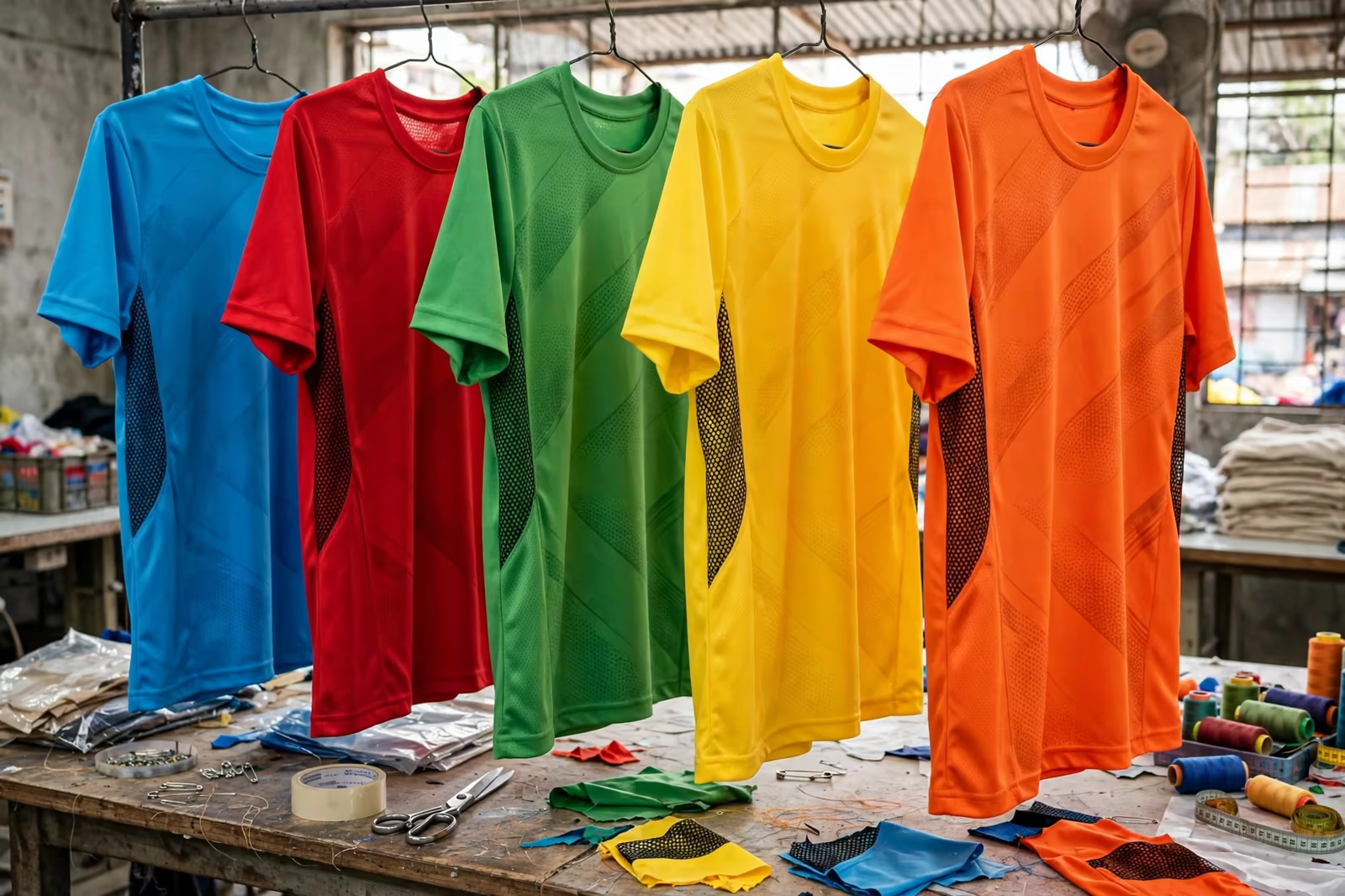
The range this fabric serves starts at our performance training t-shirt, the wider build sits inside our services, and brand claims are shaped in our brands work.
Where Recycled Polyester Comes From
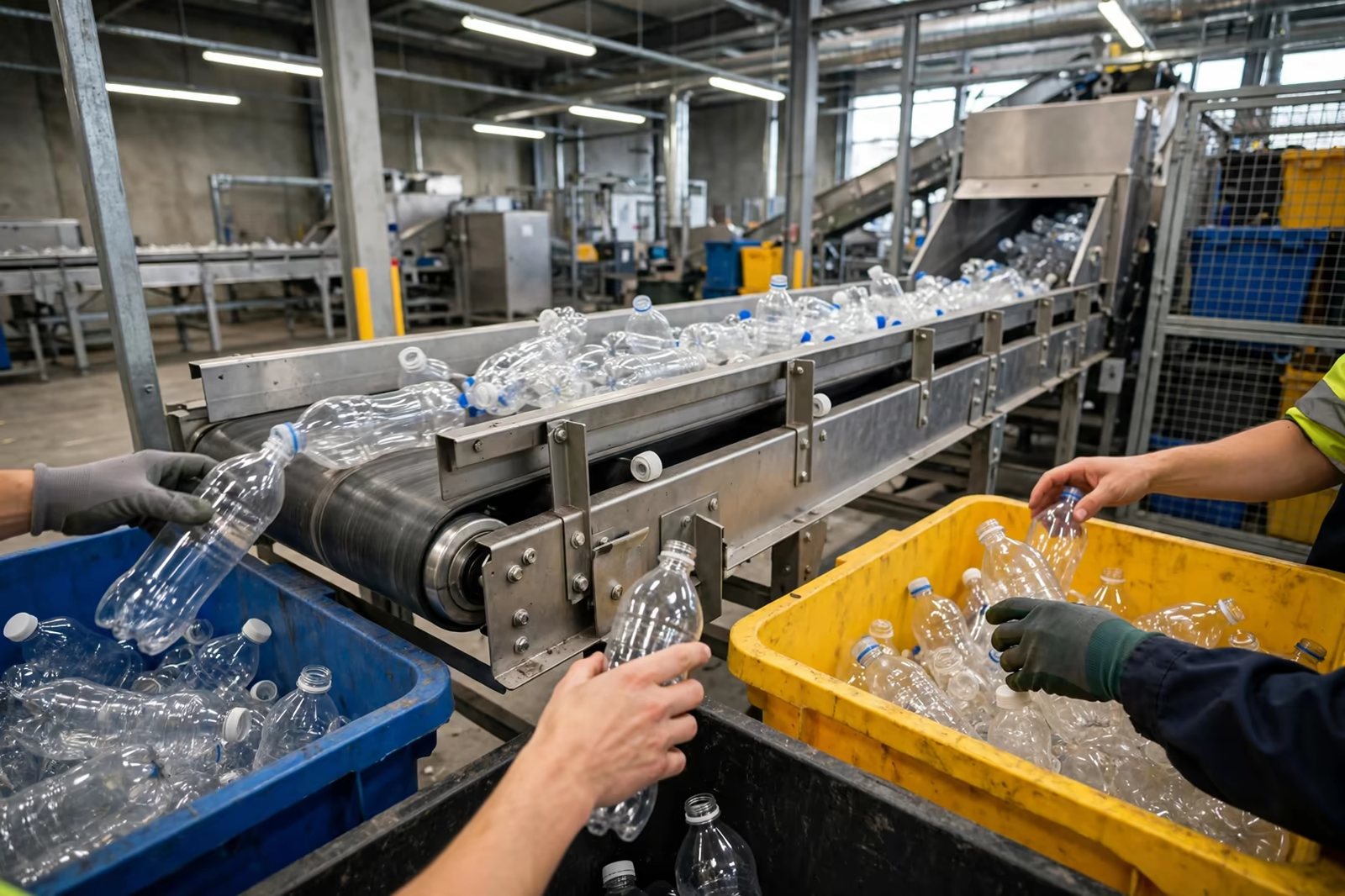
Two streams feed the standard. Post-consumer material has lived a first life: overwhelmingly PET drinks bottles for polyester fibre, collected, sorted, washed and flaked before being melted and re-extruded into new polymer chip and then filament. Pre-consumer material never reached a consumer: clean production waste diverted from the waste stream and reprocessed instead.
The two streams are not interchangeable in a claim. Post-consumer content carries the stronger environmental story and most buyers’ specifications name it, while pre-consumer content is legitimate but must be described as exactly what it is. The certificate records the mix, and the percentage on your hangtag should be readable straight off it.
Textile-to-textile recycling, garment waste returning as garment fibre, exists and is growing, but bottle-based feedstock still supplies most recycled polyester in activewear today; buyers reading “circular” claims should ask which stream the fibre actually came from.
From Bottle to Filament: The Conversion Itself
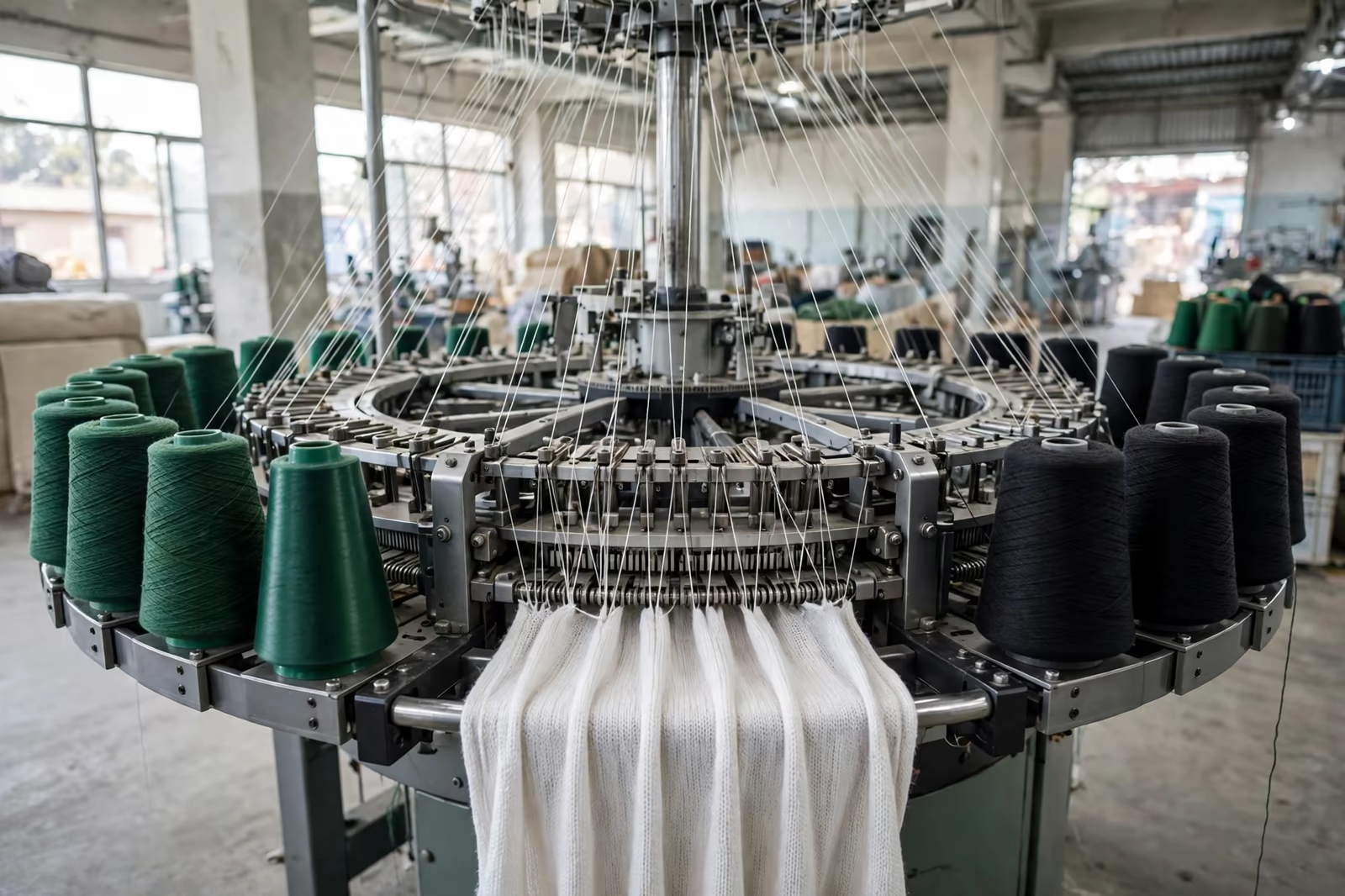
The bottle route is industrial housekeeping at scale. Collected bottles are sorted by polymer and colour, labels and caps removed, then washed and shredded into flake. The flake is melted, filtered and extruded into chip, and the chip is melted again through spinnerets to draw the filament yarns that knitting machines turn into fabric.
Each cleaning and filtering stage defends the next: contamination that survives washing shows up as filament breaks, dye spots or weak yarn, which is why certified feedstock streams and consistent sorting command their place in the price. Clear bottles dominate the feedstock because coloured input narrows the colours the yarn can become.
Mechanical recycling of this kind is the established route; chemical recycling, which breaks polymer back toward its building blocks, promises fibre from more mixed waste and is developing, but buyers should ask which process produced the yarn in front of them, because the certificate records the claim, and the claim should record the truth.
What GRS Certifies Beyond the Content
Content alone is the job of the lighter Recycled Claim Standard. GRS takes that verified percentage and adds the factory layer: environmental management requirements, restrictions on harmful chemical inputs in processing, and social criteria for the operations handling the material, each site certified and inspected.
Certification is possible from a defined minimum recycled share, with consumer-facing label claims held to a higher threshold, so the standard distinguishes between a product that may be certified and a product that may shout about it. The exact percentage claimed must reconcile with the certificates, which is where the chain of custody does its quiet work.
Scope certificates qualify each operation, transaction certificates follow each consignment, and mass balance ties input to output exactly as in the organic chain: no site can ship more certified content than it documented coming in.
Performance: What the Fabric Actually Does
The honest headline is that modern recycled filament has closed most of the performance gap that early versions carried. Moisture management, stretch recovery and durability in training wear are functions of the yarn specification, the knit construction and the finishing, and a well-specified recycled yarn meets the same test protocols as its virgin equivalent in the great majority of activewear uses.
Where differences can appear, they are manufacturing details rather than verdicts: shade consistency between lots needs watching, particularly in pale colours, and solution-dyed recycled yarn, colour added at the polymer stage, is often chosen partly because it holds shade superbly while cutting water use in dyeing.
Specification discipline settles the rest: ask for the test reports, wash performance and pilling results on the actual fabric, and judge recycled polyester the way you judge any performance textile, on evidence rather than on story.
Dyeing and Colour Work on Recycled Yarn
Colour behaves close to virgin polyester, with two practical wrinkles. Feedstock variation can make very pale shades drift slightly between lots, so colour-critical programmes approve lab dips per lot and hold shade bands tightly. Deep shades, blacks and navies, forgive almost everything and dominate recycled ranges for a reason.
Solution dyeing sidesteps the issue elegantly: pigment is added before extrusion, so colour runs through the filament itself, giving outstanding fastness and lot consistency alongside the water and energy savings that make it the sustainability desk’s favourite sentence. Its constraint is commitment: colours are chosen at the polymer stage, in production-scale quantities.
For prints, recycled polyester takes sublimation exactly as virgin fabric does, which is why so much printed teamwear already runs on certified recycled cloth without the wearer noticing any difference at all.
Fabric Constructions Buyers Actually Choose
The fibre becomes activewear through familiar constructions: single jersey for training tees, interlock where a smoother, more opaque body is wanted, mesh panels for ventilation zones, and brushed or peached finishes where a softer hand is the brief. Elastane joins for stretch and recovery, with its share declared inside the composition and the claim arithmetic.
Buyers sometimes fear the recycled story forces a compromise construction; in practice the knitters run the same machines and the same gauges, and the sampling conversation is about weight, finish and hand feel exactly as it would be on virgin yarn. The certificate changes the paperwork folder, not the machine settings.
Hold development samples to the same lab testing as any performance fabric, shrinkage, pilling, fastness, stretch recovery, and the fabric will tell you plainly whether it belongs in the range.
The Microfibre Honesty Note
Recycled polyester is still polyester at the washing machine. Like virgin synthetic fibres it sheds microfibres in laundering, and a brand whose sustainability story rests on ocean plastic should be ready for a well-informed customer’s follow-up question on this point.
None of this cancels the fibre’s real gains: diverted waste, lower reliance on virgin petroleum feedstock and, in solution-dyed form, meaningful dyehouse savings. It simply marks the boundary of the claim, and claims that respect their own boundaries are the ones that survive retail compliance review.
Product pages should therefore pair the recycled story with care guidance that reduces shedding, rather than presenting the swap as a complete answer to synthetic fibre’s footprint.
Claims Discipline for Brands
The rules mirror the other certified chains: name the percentage, name the stream, use only wording the certificates in hand support, and refresh the claim when the fabric source changes. A style developed on one supplier’s bottle-based yarn and re-sourced to another feedstock keeps its recycled claim only if the new chain certifies it.
Artwork approvals should travel with the transaction certificates for the bulk fabric, not ahead of them. The small delay that discipline costs is trivial beside a marketplace listing suspended for an unsubstantiated environmental claim, which is how these stories usually end when the paperwork lags the printing.
Kept tight, the GRS logo becomes what buyers need it to be: a short, checkable promise that the percentage on the label is the percentage in the cloth.
Specifying Recycled Polyester on an Order
Write the fibre specification the way certificates read: recycled share required, stream required (post-consumer unless you decide otherwise), the standard named, and the documents to be supplied with production and shipment. Then hold the sampling stage to it, because a lab dip struck on conventional yarn proves colour, not content.
Costing should expect a premium over virgin polyester that varies with feedstock markets, and quotations should show it transparently rather than bury the claim’s cost where it might quietly be value-engineered out at re-order. The percentage is part of the product; re-orders inherit it.
Finally, keep the finished garments’ test evidence beside the certificates: content verification, performance results and custody papers telling one consistent story is what a serious buyer’s compliance team hopes to find.
The Audit Trail on a Live Shipment
When the cartons are closing, the recycled claim should be provable from the order file alone: the fabric supplier’s scope certificate, the transaction certificate naming your consignment’s quantity and percentage, the mill’s test reports, and artwork approvals that quote the same percentage the certificates carry.
Auditors, and increasingly marketplace compliance teams, sample exactly this coherence. A listing that says one hundred percent beside a transaction certificate that says a blend is not a rounding difference; it is a claim waiting for its correction notice, and re-orders built on corrected paperwork rarely enjoy the original’s momentum.
The merchandiser’s habit that prevents all of it is dull and effective: the claim sentence is written last, after the documents arrive, and copied from them word for word.
Frequently Asked Questions
What does GRS certification guarantee?
That the product’s recycled content has been verified at each stage of the chain, with the percentage reconciled through scope and transaction certificates, and that the certified operations also meet the standard’s environmental, chemical-input and social criteria. It covers both post-consumer material such as PET bottles and defined pre-consumer streams, and the certificate records which stream and share your fabric carries.
Does recycled polyester perform as well as virgin polyester?
For most activewear uses, a well-specified recycled filament performs on par: moisture management, stretch and durability are set mainly by yarn specification, knit construction and finishing. Shade consistency between lots deserves extra watching, and solution-dyed yarn is often used for its strong shade holding. Judge any specific fabric on its own test reports, as you would a virgin equivalent.
What is the difference between pre-consumer and post-consumer recycled polyester?
Post-consumer fibre comes from products that completed a first life, for polyester typically collected PET bottles that are washed, flaked and re-extruded. Pre-consumer fibre comes from clean production waste diverted before reaching consumers. Both can be certified, but they are different claims: specifications and product pages should state which stream the content comes from, in line with the certificate.
How much recycled content does a garment need for a GRS claim?
The standard certifies products from a defined minimum recycled share and holds consumer-facing label claims to a higher threshold, with the exact percentage on the claim required to match the certificates. The practical rule for buyers is to specify the percentage wanted, verify it on the transaction certificate for the bulk fabric, and print only what that document supports.