
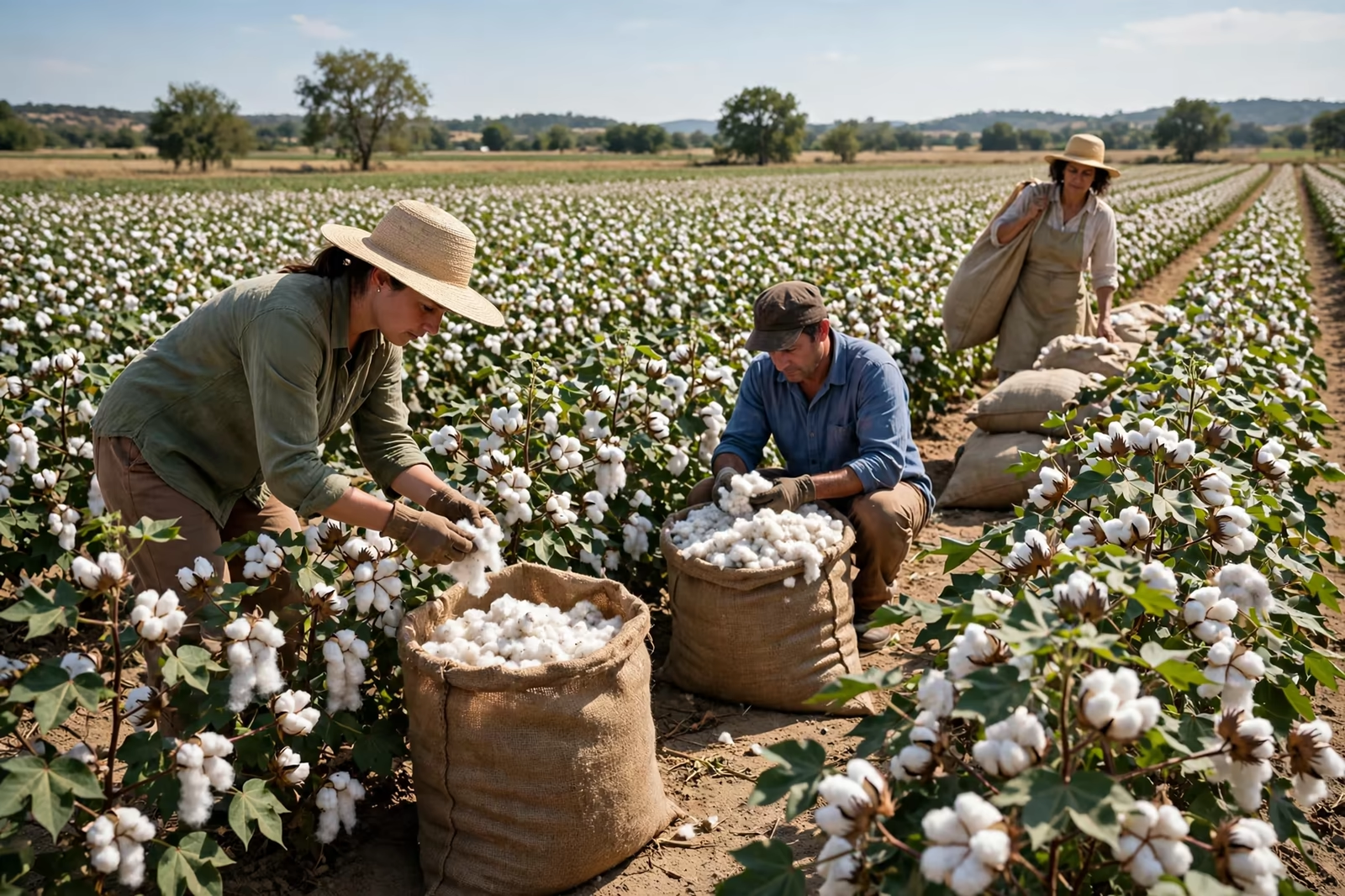
An organic claim on a garment is only as strong as the paperwork that walked beside the fibre. The Global Organic Textile Standard, GOTS, is the apparel industry’s fullest answer to that problem: a single standard that follows certified organic fibre from the field through every spinner, mill, dyehouse and sewing factory to the finished garment, checking the chain at every hand.
The compliance desk behind this guide handles buyer-specified organic programmes on clothing made in Bangladesh for the USA, the UK, Germany, Canada and Australia, where the difference between a certified chain and a hopeful one decides whether the word organic may be printed at all.
The cotton programmes this standard governs begin at our cotton t-shirts manufacturer page, brand programmes sit in our brands work, and an organic order is costed through our get a quote page.
What GOTS Certifies, End to End
GOTS certifies a chain, not a moment. It begins with fibre grown under recognised organic agriculture standards, without the synthetic pesticides and fertilisers of conventional cultivation, and then governs every processing stage the fibre passes through: spinning, knitting and weaving, wet processing and dyeing, garment making and trading.
At each stage the standard applies its own criteria: which chemical inputs may be used and which are prohibited, how wastewater is treated, how organic material is kept identified and separate from conventional material, and minimum social criteria for the people doing the work, drawn from international labour norms.
The finished label therefore rests on two pillars most product labels lack: environmental and social criteria inside the factories, and an unbroken documented chain from the farm forward.
The Two Label Grades
The standard issues two consumer-facing grades. A product labelled “organic” must contain at least ninety-five percent certified organic fibres. A product labelled “made with organic” must contain at least seventy percent, with the remainder governed by strict rules about what the non-organic share may be.
The grades matter commercially because the wording on the garment, the hangtag and the web page must match the grade exactly. A buyer whose blend falls to the lower tier owns a “made with” product, and marketing it as simply organic crosses from optimism into mislabelling.
Composition should therefore be designed with the grade in mind from the first costing: fibre choices made late, for hand feel or price, can quietly demote the claim the whole programme was built around.
In-Conversion Fibre: The Honest Middle Ground
Farms converting to organic methods pass through a transition period in which the land is farmed organically but not yet fully certified, and fibre from that stage is called in-conversion. The standard recognises it under defined conditions, with the claim worded to say exactly what it is, because supporting farms through conversion is how certified supply grows.
For buyers, in-conversion programmes are a legitimate strategy with a labelling discipline attached: the product is not yet simply “organic”, and the wording must carry the distinction onto the garment and the product page. Handled honestly, it lets brands fund the pipeline their future organic ranges depend on; handled loosely, it becomes the classic claim that outruns its certificate.
Ask which stage any offered fibre has reached and let the paperwork, not the enthusiasm, set the wording.

Chain of Custody: Scope and Transaction Certificates
The custody system runs on two documents. The scope certificate belongs to each certified operation, the spinner, the mill, the garment factory, confirming that site is approved to handle certified goods, for the product categories named, within its validity dates. No valid scope certificate, no place in the chain.
The transaction certificate follows the goods: issued per consignment between certified operations, it records what organic material moved, in what quantity and composition, from whom to whom. The garment buyer’s shipment should trace back through an unbroken set of these certificates to the fibre’s own certification.
Mass balance is the audit logic underneath: certified inputs and certified outputs must reconcile. An operation cannot sell more organic output than its documented organic input allows, and certifiers test that arithmetic at inspection, which is what makes paper fraud difficult to sustain.
Segregation: Where Chains Actually Break
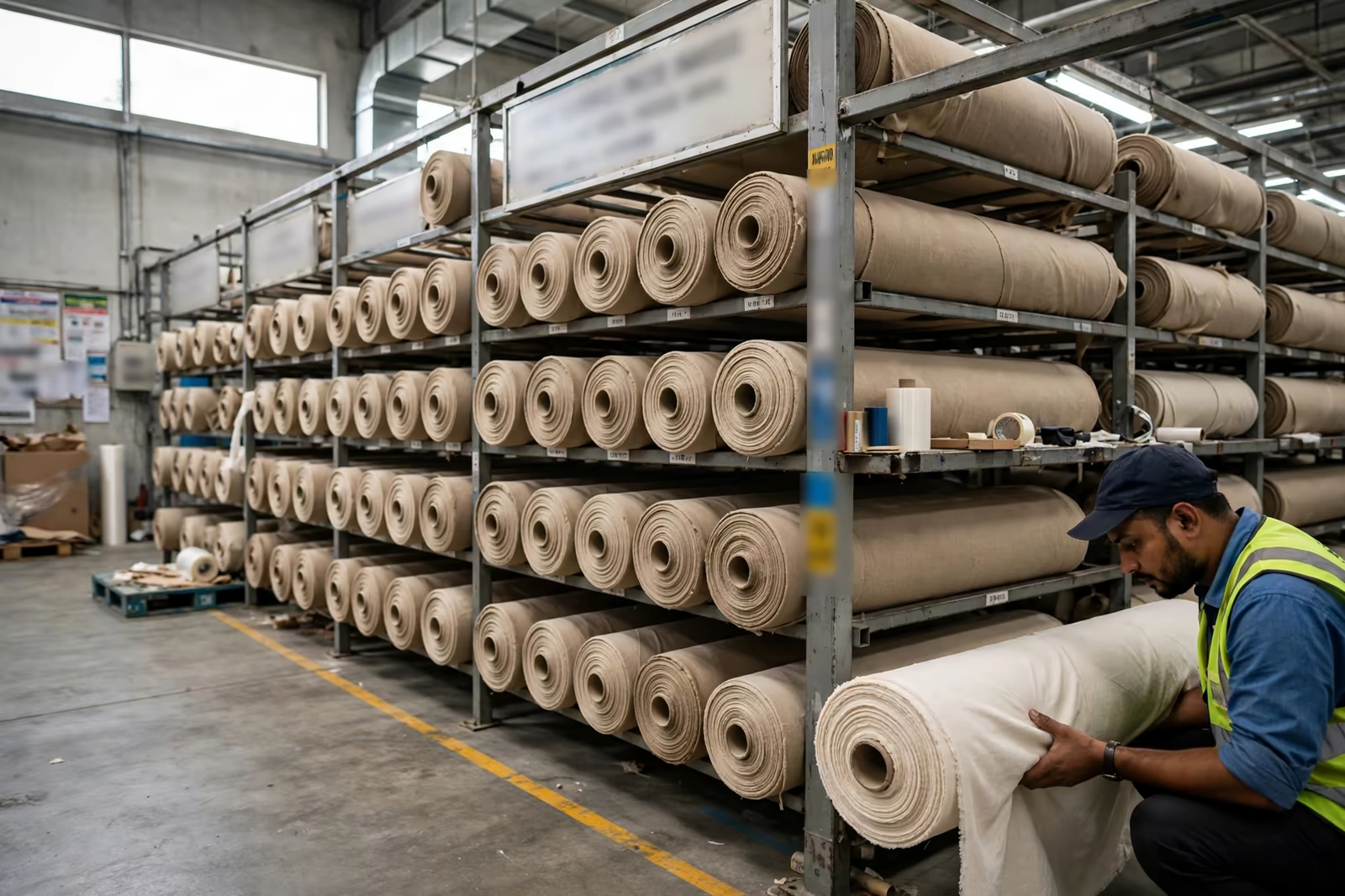
In working factories, the chain rarely breaks in the paperwork office; it breaks on the floor, where organic and conventional materials share buildings, machines and stores. The standard therefore requires physical and procedural segregation: identified storage, documented cleaning and line clearance between runs, and labelling discipline that survives a busy shift change.
Buyers auditing an organic programme should walk exactly this ground: ask where the organic fabric sleeps, how a mixed day’s production is sequenced, and what happens to the part-used roll at the end of an organic order. The answers, and the floor evidence behind them, reveal the chain’s real strength.
Residual mixing risk is also why composition testing and the mass-balance audit matter: the system is designed assuming humans and forklifts, and it verifies accordingly.
Blends, Elastane and the Small Print
The remaining share in a blended product is governed, not free. The standard restricts which conventional fibres may accompany the organic majority, with regenerated and synthetic companions assessed against its criteria, and it caps the small functional additions, elastane for stretch being the everyday case, that garments need to perform.
Accessories live under their own rules: sewing threads, interlinings, buttons and labels each have material requirements, and an otherwise certified garment can stumble on an uncertified component chosen carelessly at the trim store. The bill of materials for an organic style is therefore built inside the standard’s lists from the first sample.
Buyers approving substitutions mid-programme, a new zip, a different thread, should route the change past the certification logic before the purchase order, not discover at transaction-certificate stage that one small component quietly broke the grade.
Chemical and Environmental Criteria in Processing
GOTS reaches into the wet processing that lighter content standards leave alone. Inputs are assessed against the standard’s approved lists and prohibitions: certain dye classes and finishing chemicals are excluded, discharges are controlled, and wet-processing units must run functioning wastewater treatment and keep records of chemical inventory, energy and water use.
For the buyer, this is the difference between an organic fibre claim and an organic product claim. A garment can be sewn from certified fibre inside a chain whose dyeing would fail the standard, and under GOTS that garment simply cannot carry the label.
It also explains why certified supply costs what it does: compliant chemistry, segregated handling and certified audits at every stage are real costs, priced into genuine programmes and absent from suspicious ones.
What Certification Costs, and Why the Gap Exists
Buyers comparing a certified quotation with a conventional one are looking at a stack of real costs: the organic fibre premium at origin, certification and inspection fees carried by every operation in the chain, segregated storage and handling, compliant chemistry, and the administrative labour of custody documentation on every consignment.
The premium also prices scarcity honestly: certified capacity at each stage must exist simultaneously, and a chain is only as available as its least-available link in a given season. Programmes built early, with fibre committed ahead, run smoother than organic ambitions announced at the sampling stage. Buyers feel that arithmetic as longer planning horizons rather than as anyone’s excuse.
When a quotation shows organic claims at conventional prices, the arithmetic deserves the same suspicion as any too-cheap offer: somewhere in the stack, a cost the standard requires is not being paid, and the certificates will usually show where.
Running an Organic Order on a Mixed Factory Floor
Most garment factories run organic work beside conventional work, so the standard’s discipline becomes operational choreography: organic fabric received, checked against its transaction certificate and stored in its identified area; cutting scheduled with documented clearance; sewing bundles travelled with their identity cards; finished goods packed and labelled under the claim’s own controls.
The merchandising file mirrors the floor: one folder per organic order in which scope certificates, transaction certificates, test reports and label approvals accumulate in order, so that an auditor, or a buyer’s compliance team, can walk the consignment backwards from carton to fibre without asking anyone to reconstruct it from memory.
Handled this way, the organic programme stops feeling like a special event and becomes a documented routine, which is precisely what the standard was designed to produce.
How Buyers Verify a GOTS Claim
Verification is document arithmetic. Collect the scope certificates of every operation named in the chain and check validity, holder name and product scope. Then, for the shipped goods, obtain the transaction certificate covering your consignment and trace its quantity and composition against the order.
The label itself is licensed: use of the GOTS marks follows the standard’s labelling rules, tied to the certified chain and the grade achieved, so artwork should be approved against the certificates in hand rather than designed around a hopeful logo file. Public databases maintained for the standard let buyers check certified operations independently.
Treat any gap the way you would treat a missing shipping document: a chain with one uncertified hand is not a certified chain with an asterisk; the claim restarts from the last certified point.
Frequently Asked Questions
What does GOTS certification cover?
The whole textile chain for organic fibres: certified organic fibre production, then environmental and social criteria at every processing stage, spinning, fabric formation, dyeing and wet processing, garment making and trading, with segregation of organic from conventional material throughout. It is governed by chain-of-custody documentation, so the finished label rests on both factory criteria and an unbroken paper trail from the fibre forward.
What is the difference between the two GOTS label grades?
The “organic” grade requires at least ninety-five percent certified organic fibres. The “made with organic” grade requires at least seventy percent, with strict rules governing the remaining share. The wording used on garments, hangtags and product pages must match the grade the composition actually achieves, so blends should be designed against the intended grade from the first costing.
What is a transaction certificate and why do I need it?
It is the document issued for a consignment moving between certified operations, recording the organic material, quantity and composition transferred. Your shipment’s transaction certificate is the link that ties the physical goods to the chain of scope certificates behind them. Without it, a buyer holds certified neighbours and uncertified goods; with it, the claim can be traced and audited.
How is GOTS different from a simple organic content claim?
Lighter content standards verify the share of organic fibre in a product and its chain of custody, but do not impose GOTS’s processing criteria. GOTS additionally governs the chemistry allowed in dyeing and finishing, wastewater and environmental management at wet processors, and social criteria in the factories, which is why it supports a full organic product claim rather than a fibre-content statement alone.