
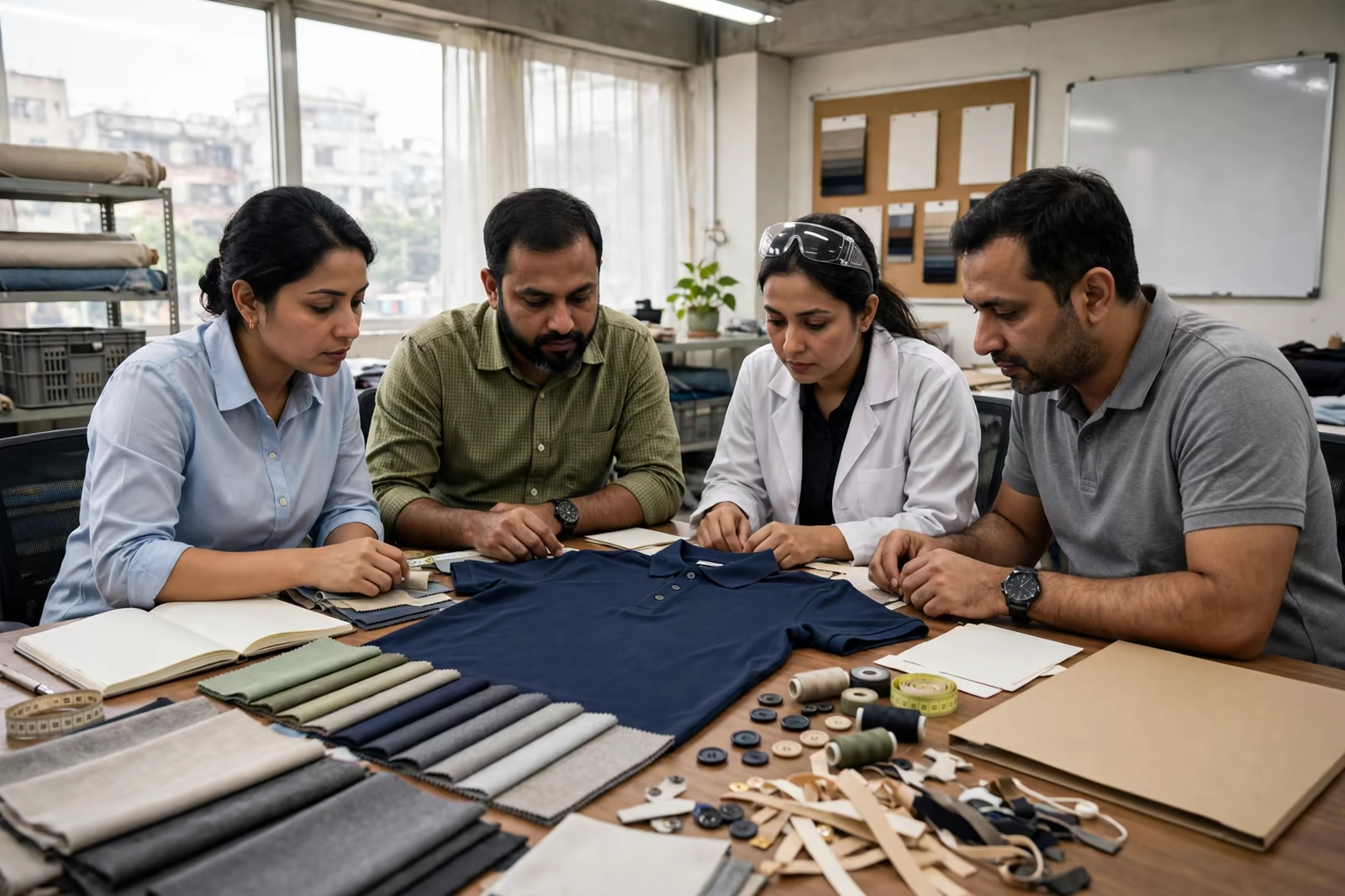
Most order disasters are not made on the sewing line. They are made quietly, weeks earlier, in misunderstandings nobody noticed: a trim colour read differently by two people, a print position assumed rather than agreed, a size ratio nobody confirmed. The pre-production meeting exists to catch those misunderstandings while they are still cheap. Half an hour around one table, before bulk production starts, is where the order is really decided.
The merchandising and quality teams behind this guide work in Bangladesh, running these meetings for export orders bound for buyers in the USA, the UK, Germany, Canada and across Europe. The buyers who attend, on a call or through their local agents, consistently ship smoother orders than the buyers who skip.
Pre-production meetings sit inside the framework on our MOQ and production page, run across the range on our services page, and can be arranged for any order through our contact page.
What the Meeting Is For
The meeting has one purpose: to make sure every person who will touch the order shares the same understanding of it. The approved sample is on the table, the specification beside it, and the team walks the garment from fabric to carton, naming who does what, to which standard, by when. Anything ambiguous gets resolved or assigned an owner and a deadline.
It is not a ceremony for its own sake. A good meeting is short because its inputs were prepared: the sample approved, the file complete, the open questions listed in advance. A meeting called to discover the order, rather than confirm it, runs long and settles little.
The output is a record: agreed points, open points with owners, and the production start it authorises. Teams that write the record down and circulate it argue far less later, because memory is the first casualty of a busy season.
Who Sits at the Table
The core seats are merchandising, production, quality and the pattern or sample lead, with fabric and trims represented because their timelines govern everyone else’s. Each seat brings its own risks: production brings capacity and line questions, quality brings the inspection plan, merchandising brings the buyer’s exact words.
The buyer joins by call when time zones allow, or through an agent, and their presence changes the meeting’s chemistry for the better: questions that would have been emailed, guessed at or deferred get answered by the only person whose answer counts.
Suppliers of critical trims join when their item decides the schedule, a special zip or a custom woven label, because a delivery date promised by the factory on a supplier’s behalf is a guess wearing a suit.
The Approved Sample as the Agenda
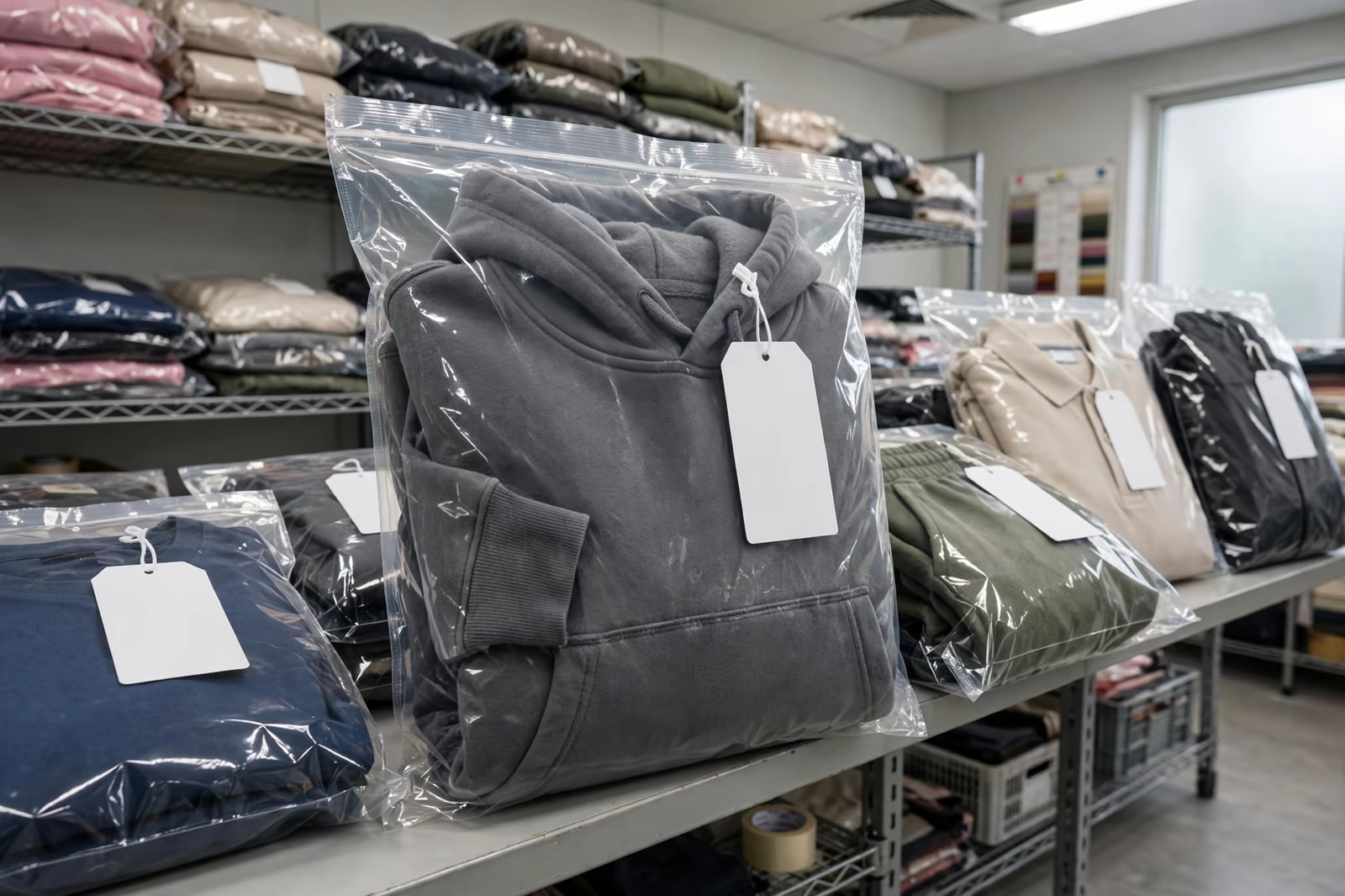
The meeting walks the garment itself. The sealed pre-production sample, approved by the buyer, sits at the centre, and every specification point is checked against it: fabric and shade, construction and stitching, print or embroidery placement and size, trims, labels, measurements and packing. Where the paper and the sample disagree, the disagreement is settled in the room, never carried silently into bulk.
Fit and measurement points get special attention, because they are the hardest to correct after cutting. The team confirms which sizes the size set proved, what shrinkage allowance the pattern carries, and how finished garments will be measured and reported.
The sample leaves the meeting sealed and labelled as the production reference. From that moment, “like the sample” has a physical meaning anyone on the floor can check.
Outstanding Approvals: The Meeting’s Hit List
Every order carries a tail of small approvals still in flight when production approaches: a shade band not yet signed, a strike-off awaiting comment, a label layout the buyer’s office has not released. Individually trivial, collectively they are the commonest cause of the start date sliding while everyone insists nothing is wrong.
The meeting lists them without mercy. Each outstanding item gets a name, an owner and the date by which production truly needs it, distinguished from the date people politely ask for. Some items gate cutting, some gate sewing, some only gate packing, and knowing which is which converts panic into sequence.
Buyers often clear half the list within a day of seeing it written down, because items sat unactioned through vagueness rather than difficulty. The list is the meeting’s most practical product, and factories that send it before the meeting give the buyer a head start on their own homework.
Fabric, Trims and the Critical Path
Half the meeting is really about materials. Bulk fabric status, lab dip and shade approvals, test results, and the arrival plan for every trim are reviewed against the production date, because sewing cannot start on time with a button missing, and a line standing idle burns the schedule the order was promised on.
Risks get named plainly: a fabric lot still in dyeing, a trim awaiting the buyer’s artwork, a test pending at the laboratory. Each risk leaves with a mitigation and a date, or with an honest escalation to the buyer while choices still exist.
This is where realistic schedules are born. The meeting that surfaces a two-day trim delay in week one saves the frantic air-freight conversation in week nine.
The Risk Review: Naming What Could Go Wrong
A standing agenda item asks each seat for its worry. Cutting worries about a fabric whose shrinkage varied between lots; sewing worries about an operation the sample room found slow; quality worries about a dark shade hiding defects from tired eyes. Worries spoken in the meeting become plans; worries left unspoken become surprises.
Each named risk leaves with one of three answers: a prevention built into the process, an early check scheduled to catch it young, or an honest acceptance recorded so nobody later claims they were not told. The third answer is legitimate; undocumented risk is not.
Over seasons, the risk review builds the factory’s memory. The same worries recur across orders of a type, get engineered out once, and quietly stop appearing, which is how a good factory’s meetings grow shorter while its orders grow safer.
Quality Checkpoints Agreed in Advance
The meeting fixes the order’s quality plan: what is checked at fabric stage, what the inline inspections watch, which points the final audit measures, and which defect definitions apply. Inspectors who know the buyer’s sensitive points, a print that must sit level, a shade that must not vary, aim their attention where the buyer will aim theirs.
Approval samples for printing and embroidery are scheduled here too, with the rule that bulk never starts on an unapproved strike-off repeated out loud, because seasons get busy and shortcuts get tempting.
Packing is agreed in the same pass: ratio or solid packs, carton marks, polybag warnings, assortment details. Packing decided at the meeting is packing that does not get invented at the end under time pressure.
The Buyer Questions That Earn Their Keep
Certain buyer questions pay for themselves every time. What could still change on this order, and what is the last honest moment for each change? Which approval is still outstanding, and whose desk is it on? What does the factory see as this order’s biggest risk? A factory answering those three plainly has told the buyer more than a month of status emails.
The mirror questions matter from the factory’s side: is the size ratio final, is the packing assortment confirmed, are all artworks the final versions? Buyers discover in meetings that a file they considered closed had a successor sitting in someone’s inbox.
None of these questions signals distrust. They signal that both sides have been hurt by assumptions before and prefer the mild embarrassment of asking to the expensive embarrassment of assuming.
When the Meeting Is Skipped
Orders without a pre-production meeting do not fail always, but they fail characteristically: the first bulk inspection becomes the meeting, held over finished garments, where every misunderstanding costs rework instead of a conversation. The print sits two centimetres lower than the buyer pictured, the trim shade reads differently in bulk, and both sides are correct by their own documents.
Small repeat orders earn a lighter version, a short call against a checklist, because the garment is known and the risks are mostly materials and dates. New styles, new factories and new buyers earn the full table, every time, because nothing about the order is known yet except its capacity to surprise.
The meeting’s cost is measured in minutes. Its absence is measured in claims, air freight and relationships, which is why factories that run them well advertise the habit.
From the Meeting to a Clean Start
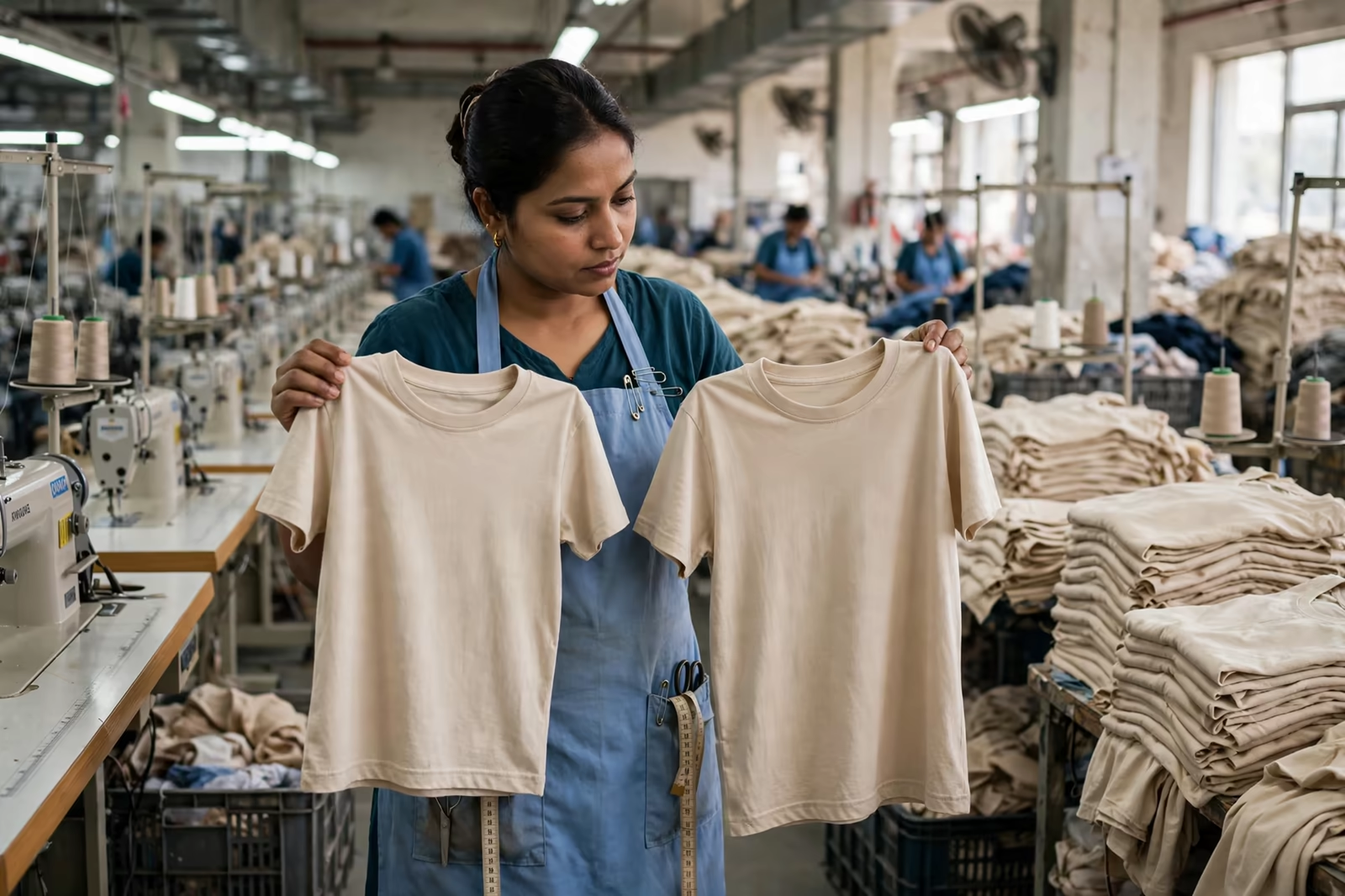
The meeting ends with a start it can defend: materials confirmed or dated, approvals listed, checkpoints set, the sample sealed. The first pieces off the line are then checked against everything agreed, early and visibly, because the cheapest confirmation that the meeting worked is a first-output review while the line is still young.
Where that first review finds drift, the meeting’s record makes correction surgical: the agreed point, the observed difference, the adjustment. Without the record, the same conversation dissolves into competing memories of what was promised.
Buyers feel the meeting’s value in negative space, in the status reports that stay boring. An order whose dramas were held in a meeting room rarely performs any in the shipping schedule.
Frequently Asked Questions
When does the pre-production meeting happen?
After the pre-production sample is approved and before bulk cutting and sewing begin. That timing is the point: approvals are fresh, materials are arriving, and every question the meeting raises can still be answered without unmaking finished garments. Holding it earlier wastes it on unapproved details; holding it later turns it into an inspection of problems already made.
Does the buyer need to attend?
Attendance helps and is easy by video call, but a well-run meeting protects an absent buyer too, provided their approvals, specifications and open answers are complete in the order file. Where a buyer’s agent or inspector is local, their seat at the table is valuable. What a buyer should not do is leave questions unanswered in the file and assume the meeting will guess them correctly.
What should a buyer send before the meeting?
The final versions of everything: approved sample comments, the size specification and size ratio, final artworks, packing and assortment instructions, labelling requirements and any test standards that apply. Sending finals, and confirming they are finals, closes the commonest gap the meeting finds, two versions of one document circulating as if both were current.
What comes out of the meeting?
A short written record: the points agreed against the sample and specification, the materials status and risks with owners and dates, the quality checkpoints and packing decisions, and the authorisation to start production. Both sides keep the record, and it becomes the reference when memories differ later, as memories do.