
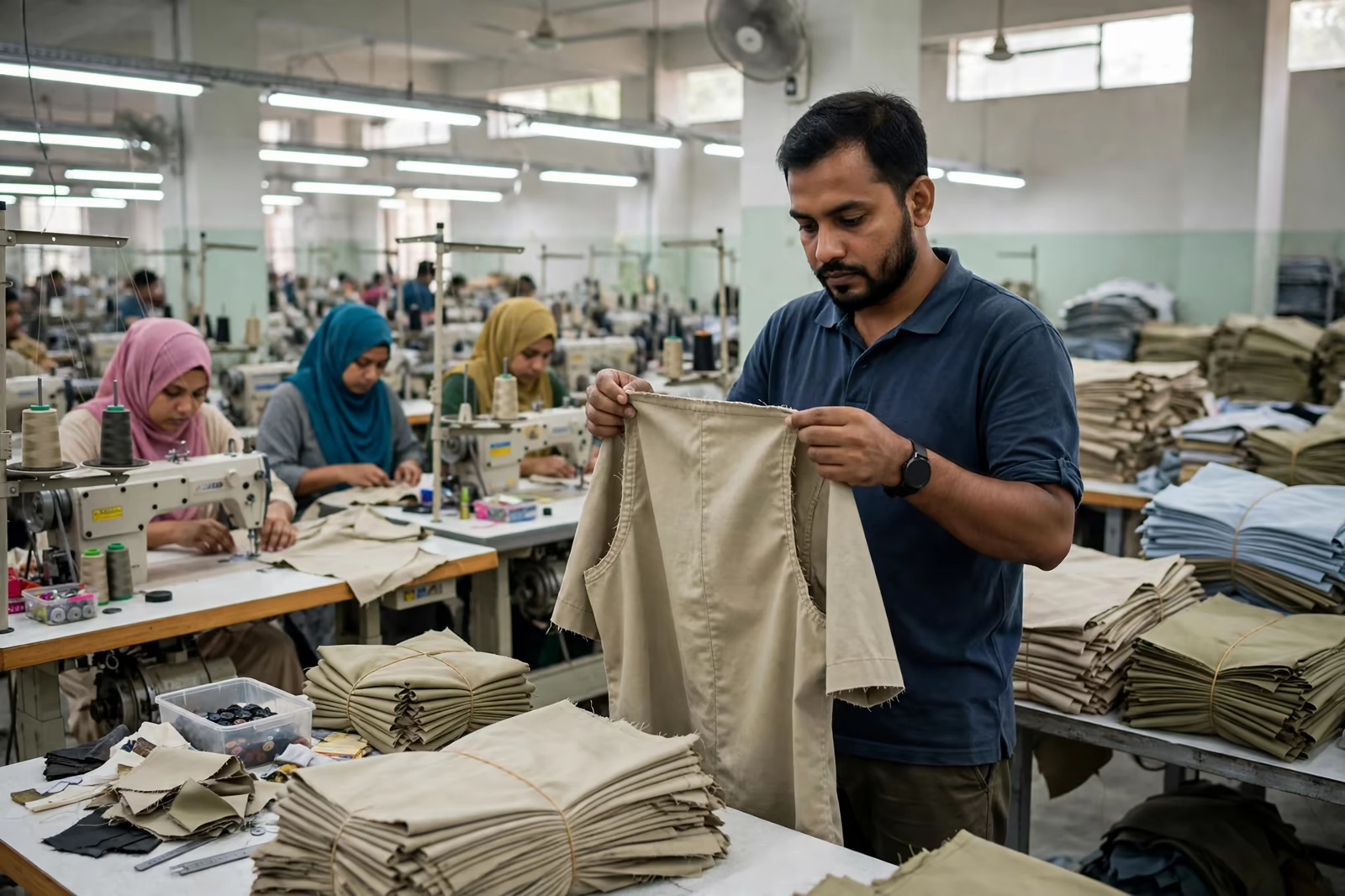
Ask a buyer what quality control an order received and the answer is usually a single event: the final inspection. Ask the factory that ships clean orders season after season and the answer is a system, in which the final inspection is only the last of two safety nets. The first net is inline inspection, woven through production itself. Understanding what each net catches, and what each one misses, is the difference between managing quality and merely measuring it.
This comparison reflects how export orders are run in Bangladesh for buyers in the USA, the UK, Germany and the wider European market, where a passed final inspection is the normal condition for shipment. Both nets described here may be staffed by the factory, the buyer or an independent company; what matters is that both exist and that each is aimed at the failures it can actually prevent.
Both nets sit inside the quality system described on our services page and the production framework on our MOQ and production page. To discuss which arrangement fits your orders, contact us with a current style and we will walk through its checkpoints.
Two Nets, Two Different Jobs
Inline inspection works during production. Its inspectors patrol the sewing line and the finishing section while garments are being made, checking output as it appears, operation by operation. Its question is not “is this order acceptable?” but “is this process still producing what the approved sample promised?”
Final inspection works after production, on the packed or nearly packed order. Its inspectors draw a statistical sample from the finished lot and judge the lot against the specification and the agreed AQL levels. Its question is the commercial one: does this shipment pass or fail?
The jobs differ in timing, in evidence and in consequence. Inline findings lead to corrections on the line within the hour. Final findings lead to verdicts on the lot: pass, or screen and rework. Confusing the two, or funding only one, leaves a hole exactly where the missing net should have been.
Inline Inspection: Catching Drift While It Is Cheap
Production drifts. A needle dulls and starts skipping stitches. A new operator joins an operation and sews a wider seam allowance. A bundle cut from a slightly different shade layer enters the line. None of these faults announces itself; each one quietly reproduces itself in garment after garment until somebody looks. Inline inspection is the looking.
Its economics are brutal and simple. A fault caught at the operation costs a conversation and the last few pieces. The same fault caught at final inspection costs the screening of a finished lot, rework where rework is possible, and a re-inspection, all inside a shipping window that no longer has room for them. Inline inspection exists because the price of a defect rises with every stage it survives.
It also changes behaviour on the line. Operators who know their output is sampled continuously sew to the standard as a habit, not as a performance for inspection day. The net disciplines the process even when it catches nothing.
What Inline Inspectors Actually Check
The inline routine starts at the first operations of the day: are the first pieces off each operation matching the approved sample in measurement, stitch quality and appearance? First-piece approval at each operation stops a wrong setting from becoming a thousand wrong garments.
Through the day, inspectors pull pieces at intervals from each operation and from the end of the line. They check the measurements most likely to drift, the seams under most stress, label placement, and the faults that operation is known to produce. Findings are recorded by operation, so a pattern of faults points at its source rather than at the order in general.
At finishing, inline checking continues through trimming, pressing and packing: thread ends, stains picked up in handling, correct folding, correct bagging, correct size and colour assortment in the cartons. Packing faults are the most common final-inspection findings on otherwise good orders, and they are born here, in the last hour, under time pressure.
The Mid-Line Review: The Middle Checkpoint
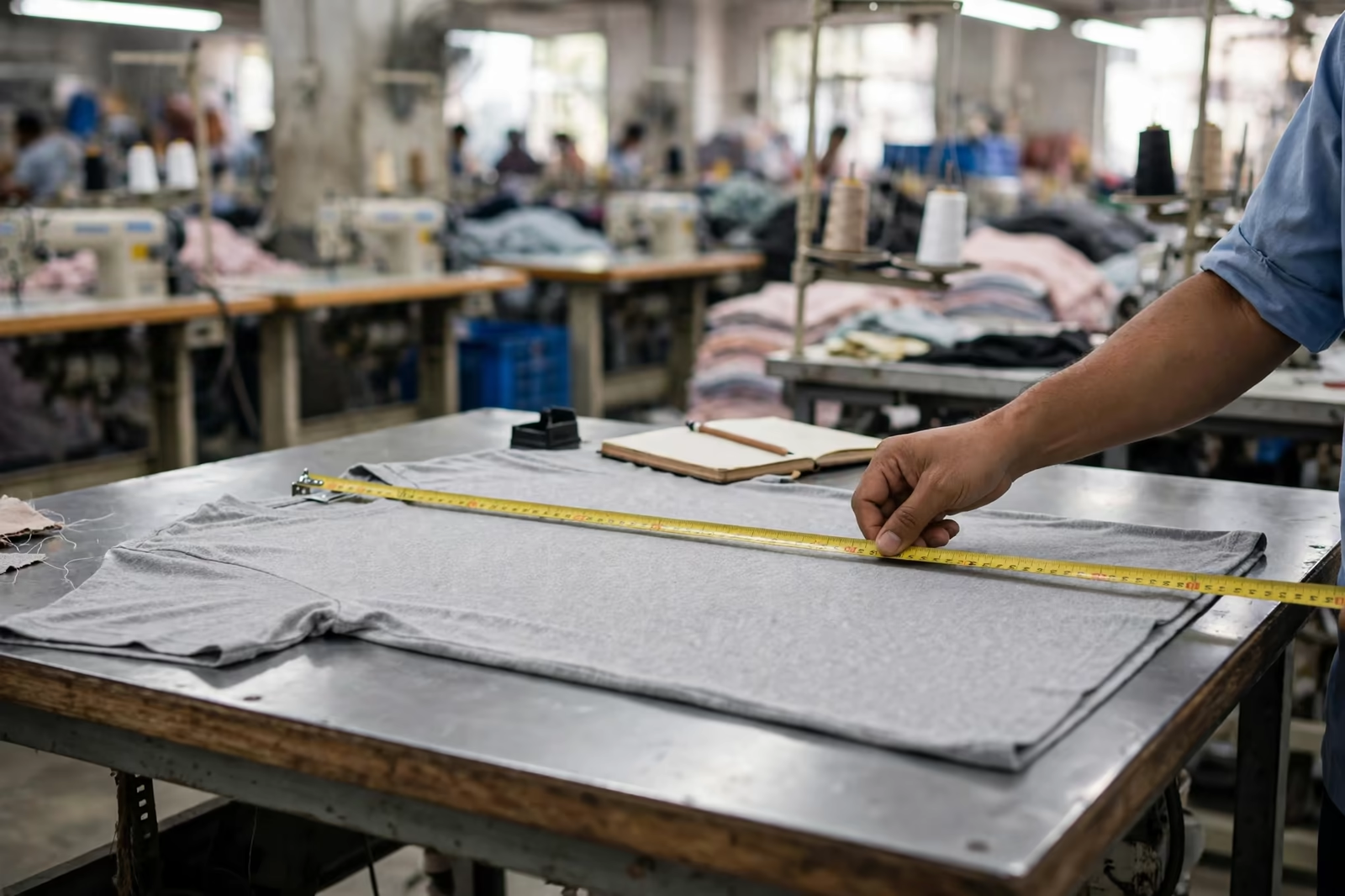
Between daily inline patrols and the final verdict sits a checkpoint many orders skip and good factories insist on: a structured review when production is well underway, examining a larger sample of completed garments pulled from the line’s output so far, measured fully and judged as a preview of the final inspection.
Its value is timing. It happens early enough that a systematic problem, a measurement drifting across sizes, a shade band appearing between bundles, can still be corrected across most of the order, yet late enough that the sample represents real production rather than the first pieces of day one.
Buyers with their own staff or agents often attend or receive this review as the order’s main progress evidence. A factory that reports its mid-line findings honestly, including the faults it found and fixed, is showing you the first net working.
Final Inspection: Judging the Lot, Not the Line
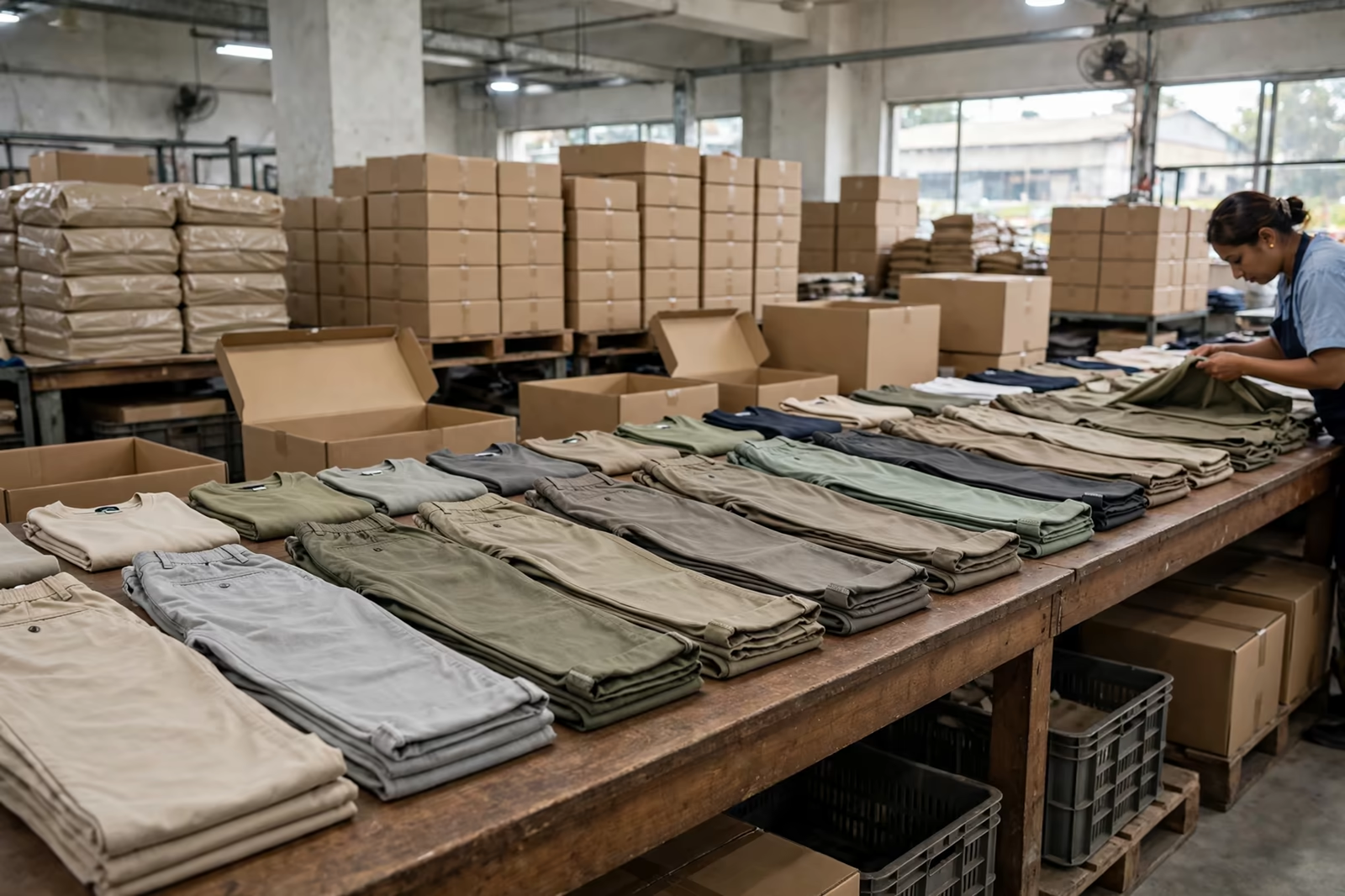
The final inspection’s strength is its independence from the process. It does not care how the garments were made; it draws its sample randomly from the finished lot, cartons included, and judges what the customer will actually receive: workmanship, measurements, appearance, labelling and packing, against the specification, the sealed sample and the agreed AQL limits.
That randomness is the point. Inline checks are vulnerable to a human weakness: people inspect what they expect to see. A cold sample drawn from sealed cartons sees the order as a stranger would, including the carton packed last, at the end of the longest day, which no patrol may have visited.
Its verdict also carries contractual weight that inline findings do not. The final report is the document shipment decisions, payments and claims are argued from. However good the inline system is, the lot still needs its formal judgement.
Why Final Inspection Alone Fails Factories
A factory that relies on the final inspection to catch its problems has built a quality system that can only fail expensively. By the time the sample is drawn, every garment exists. A systematic fault is not a correction; it is a lot-wide screening, a rework programme and a missed vessel, with the buyer watching.
Final sampling also has statistical edges. A well-designed AQL plan catches bad lots with high probability, but a fault concentrated in a few cartons can hide from a random sample, while the same fault would have been obvious to an inline inspector standing at the operation producing it. The end-of-line net has holes shaped exactly like the faults the process net was built to catch.
The pattern shows in repeat business. Factories working final-only tend to pass most orders and fail some catastrophically. Buyers experience them as unreliable even when their average quality is respectable, because the failures arrive at the worst possible moment.
Why Inline Alone Is Not Enough Either
The opposite error exists. A factory proud of its inline system may argue the final inspection is a formality, and inside a long, clean relationship it can start to feel like one. But inline inspection is run by people inside the process, close to the line, the supervisors and the deadline, and closeness erodes over time into accommodation.
Standards drift socially as well as mechanically. A fault tolerated once at the line becomes the line’s new normal, and the inline records keep showing passes while the garments slowly change. The cold final sample, drawn by someone with no stake in the day’s output target, is the audit that keeps the first net honest.
There is also the matter of evidence. Inline records are working documents, often partial and written for the floor. A buyer’s organisation needs a formal report on the shipped lot, and only the final inspection produces one. Trust, in export trade, still travels on paper.
How the Two Nets Work Together on One Order
On a well-run order the sequence reads like this. Before production, the checkpoints are agreed: what inline will sample, at which operations, and what the final inspection will judge, at which AQL levels. During the first days, inline confirms the line has settled onto the approved sample. Through the run, patrols and the mid-line review hold it there, and their findings are shared with the buyer as progress evidence.
At packing, inline attention shifts to finishing and cartons, where late faults breed. When the order is complete, the final inspection draws its sample from a lot the factory already believes in, because it has been watching it for weeks. The final verdict, in such a system, is rarely a surprise to anyone, and that absence of surprise is the true product being sold.
When the final inspection does find something in a two-net system, it is usually a genuinely random fault pattern rather than a systematic one, small in count and quick to screen. The nets divide the work exactly as designed: the first keeps the process true, the second proves the lot.
What Buyers Should Ask and Specify
Ask how inline inspection is staffed and recorded. Inspectors independent of the line’s output targets, written findings by operation, and first-piece approvals at each operation are the marks of a real system. Vague assurances about “checking at every stage” are not.
Specify the final inspection in the order terms: who performs it, at what AQL levels, against which sealed sample and specification, and what happens on a failure. Then ask to see both nets’ output on your first order, the inline findings as they arise and the final report before shipment.
Finally, read the relationship between the two. A factory whose final reports are always perfect but whose inline records show no findings is probably not inspecting inline; real lines find faults daily and fix them. The healthiest file is a busy first net and a calm second one.
What the Two Nets Cost, and What They Save
Inline inspection costs salaries inside production; final inspection costs a fee or a day of your own team’s time. Both are minor beside the cost of failure they prevent: a screened lot, a re-inspection and a missed vessel, priced in freight and in a season that does not wait.
Frequently Asked Questions
How often should inline inspection happen during a production run?
Continuously, as a patrol rather than an event: first-piece approval at each operation when work starts, then sampled checks through the day at every operation and at the end of the line, plus a structured mid-line review of completed garments. The exact rhythm flexes with order size and risk, but a run with days between checks is not being inspected inline in any useful sense.
Can strong inline inspection replace the final inspection on repeat orders?
It can change the final inspection’s shape, and long clean histories sometimes move buyers to lighter sampling levels under the standard’s switching rules. Dropping the formal final judgement entirely removes the independent audit and the contractual document the shipment travels on. Most experienced buyers keep the final inspection and let its strictness, not its existence, reflect the record.
What should happen when inline inspection finds a serious fault mid-run?
Production of the affected operation stops, the pieces made since the last clean check are pulled and screened, the cause is corrected, and the operation restarts under first-piece approval again. The buyer should hear about a serious mid-run fault and its fix in the progress reporting, not discover it for the first time in the final inspection report.
Who should perform each inspection, the factory or an outside company?
Inline inspection is normally the factory’s system, because it must sit inside production and act within the hour; buyers audit it by reviewing its records and findings. The final inspection is often given to the buyer’s staff or an independent company for its contractual independence. What matters most is that inline findings are written and shared, and the final inspector works from your written brief.