
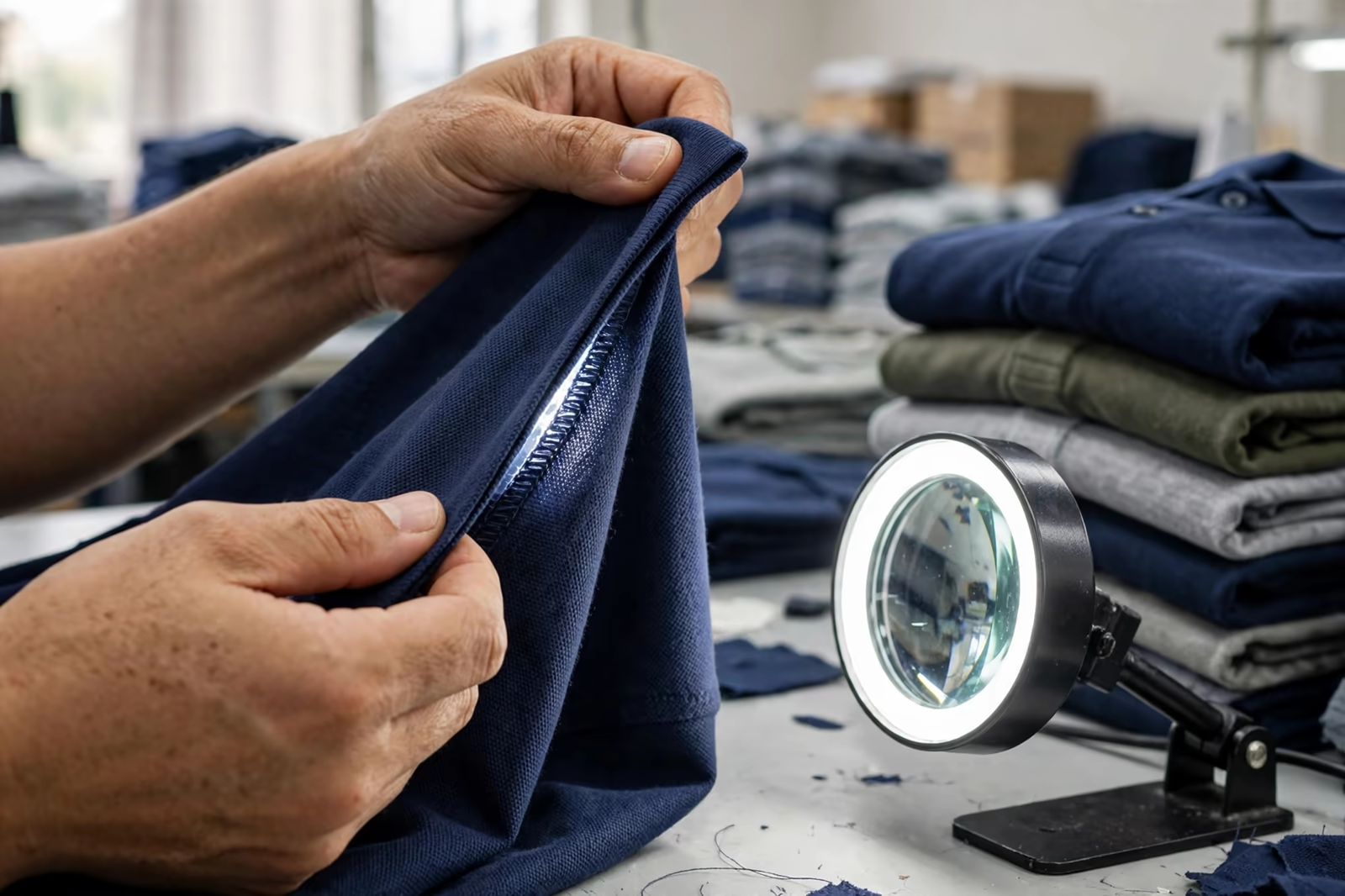
Nobody inspects every garment in a bulk order. Even a modest shipment holds thousands of pieces, and checking each one would take longer than making it. Instead, final inspections judge the whole order from a carefully drawn sample, using a statistical system called AQL. Buyers who understand the system read inspection reports properly, argue about the right things when an order fails, and stop expecting the system to do what it was never designed to do.
The inspections described here are the ones run on export orders sewn in Bangladesh for buyers in the USA, the UK, Germany and the wider European market, where third-party AQL inspection is a standard condition of shipment. The system is international, but its daily use is local: a sample drawn from your cartons, on your factory’s inspection table, deciding whether your goods travel.
Final inspection sits inside the wider quality system on our services page and the production framework on our MOQ and production page. What happens when goods do not meet the agreed standard is set out on our returns page.
What AQL Actually Is
AQL stands for Acceptable Quality Limit. It comes from ISO 2859-1, the international standard for sampling inspection, and it answers one precise question: given the size of this shipment, how many garments must be checked, and how many defects in that sample are tolerable before the whole lot is rejected?
The system’s honesty is its strength. AQL does not pretend a sample proves an order perfect. It defines, in advance, a level of quality both sides agree to accept as the lot standard, and a sampling plan strict enough to catch lots that fall below it with high probability. Buyer and factory argue about the plan before the inspection, not about the result after it.
An AQL inspection is therefore a contract tool as much as a quality tool. The level agreed in the order terms, the defect definitions agreed in the specification, and the standard’s tables together decide the outcome, which is why experienced buyers fix all three before production starts.
The Three Defect Classes
Every fault found in the sample is sorted into one of three classes, and the class decides how much it counts. Critical defects are the non-negotiables: anything that could harm the wearer or break the law. A needle fragment in a garment, a sharp edge on a children’s product, or a banned substance finding sits here, and the tolerance for critical defects is zero.
Major defects are faults a customer would notice and reject the garment for: an open seam, a hole, a broken stitch line, a wrong size in the bag, a visible stain or a shade difference within one garment. The garment is unsellable as first quality, even though nobody is harmed by it.
Minor defects are imperfections that do not stop the garment being sold: a small untrimmed thread inside, a slight pressing mark that steams out, a measurement at the edge of tolerance. Customers may never see them, but they are counted, because a sample full of minor faults signals a line that is drifting.
How a Sample Size Is Chosen
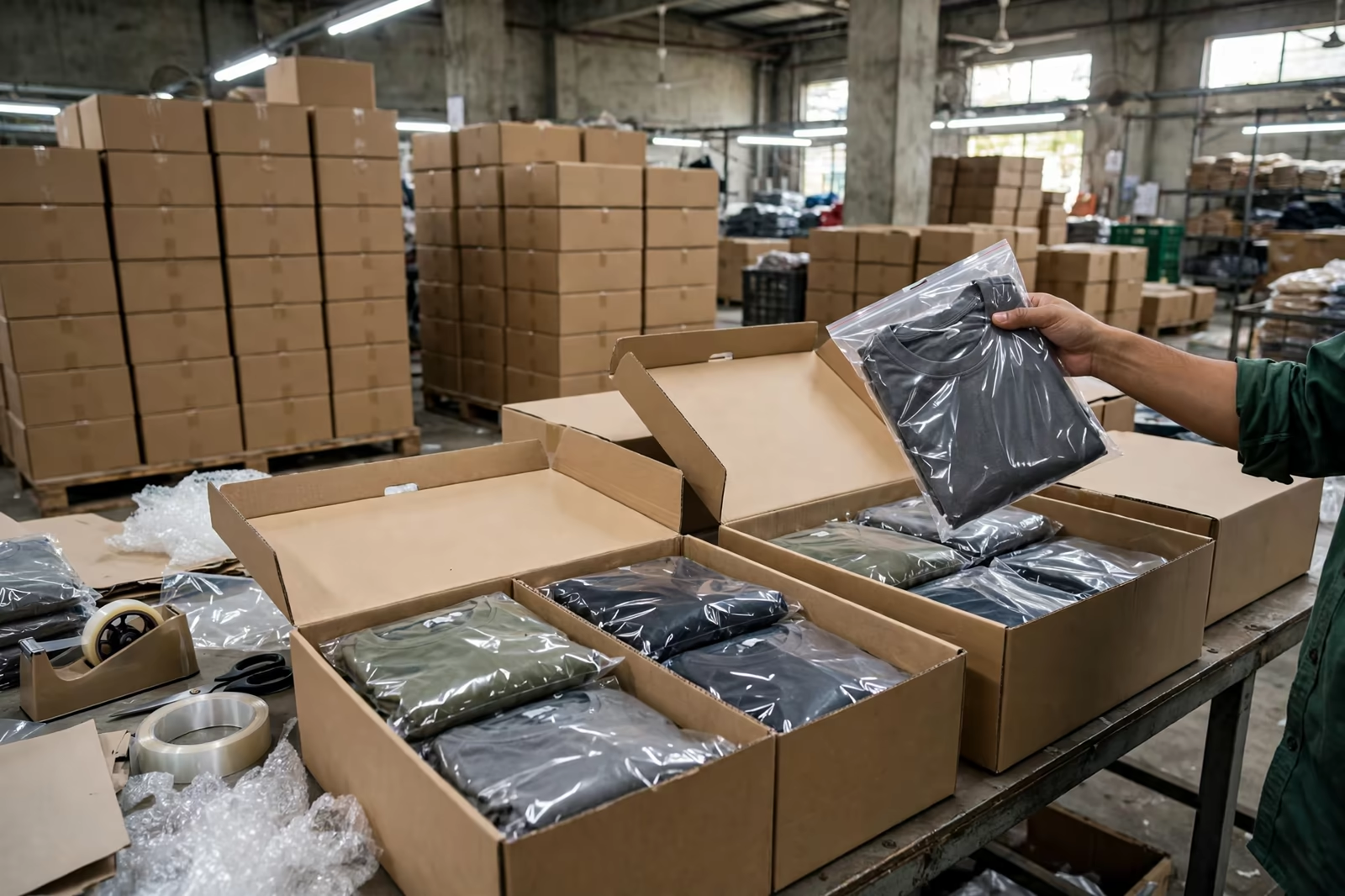
The sample size comes from the standard’s tables, not from anyone’s preference. Two inputs decide it: the lot size, meaning the total quantity in the shipment being judged, and the inspection level, which sets how deep the sampling goes. Bigger lots get bigger samples, but not proportionally; the mathematics of sampling means confidence grows faster than the count.
General inspection level II is the default most apparel orders use. Level I samples less and is chosen for low-risk repeat orders with a strong history. Level III samples more and is used where the cost of a bad lot is high. Special levels exist for destructive tests, where each check consumes the garment.
The standard also carries switching rules. A factory whose lots pass consistently can earn reduced inspection; a factory that fails moves to tightened inspection, where the same quality level is judged on a larger sample with stricter acceptance. History, under AQL, has consequences.
Accept and Reject Numbers: The Moment of Decision
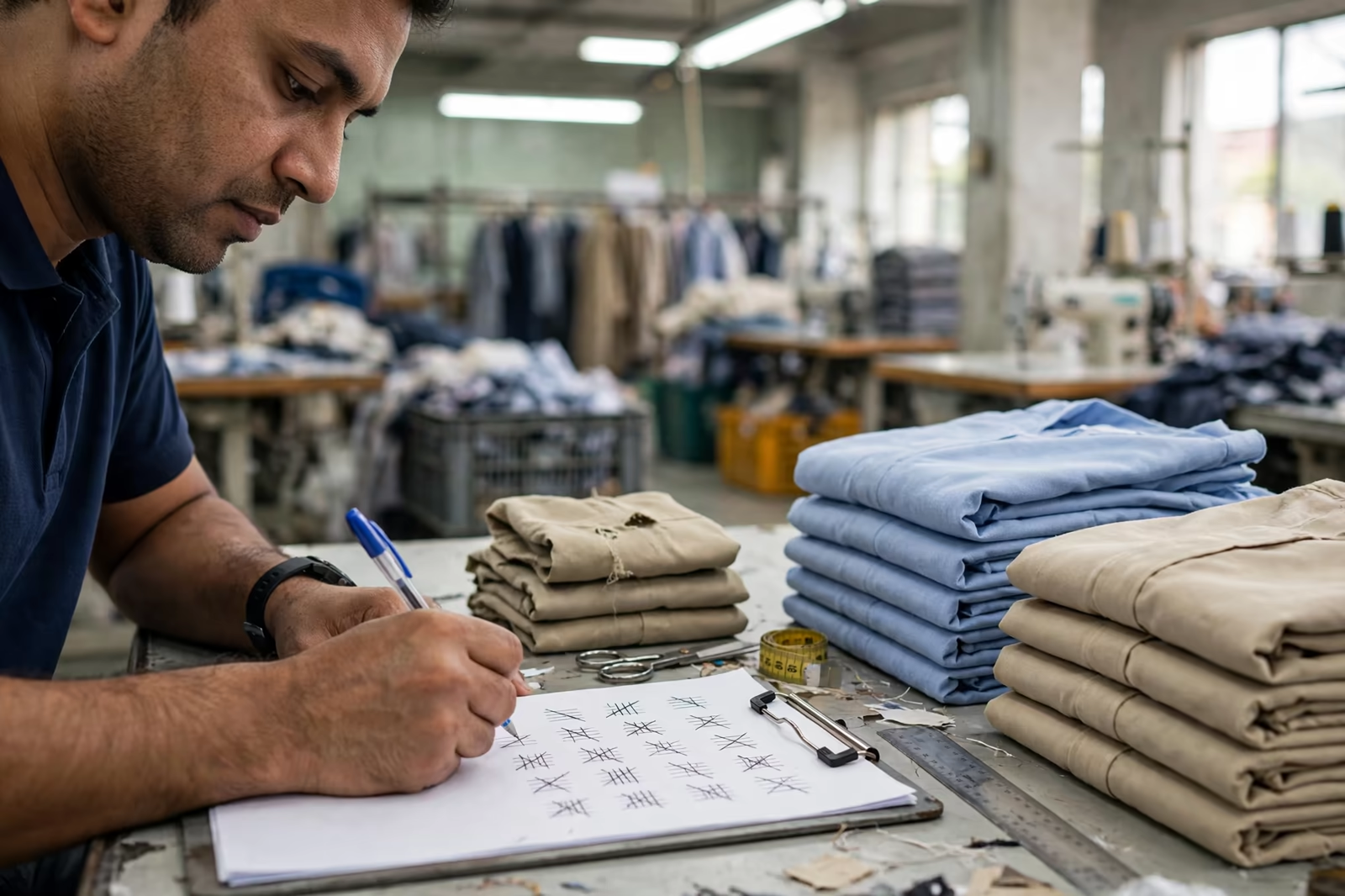
Once the sample size and the quality level are fixed, the tables give two numbers for each defect class: the acceptance number and the rejection number. If the defects found in that class are at or below the acceptance number, the lot passes on that class. One more defect than that, reaching the rejection number, and the lot fails.
The count is kept per class, not in total. A sample can pass on minor defects and fail on majors in the same inspection, and the lot fails, because each class has its own limit. This is why arguments about whether a fault is major or minor matter so much at the inspection table; the classification moves the defect from one budget to another.
The inspector records every defect against the garment and location, photographs the significant ones, and the report shows the counts beside the allowed numbers. A buyer reading the report can see not just pass or fail, but how close the lot came to the line.
The Levels Buyers Actually Use
For apparel, one combination dominates export practice: critical defects at zero acceptance, major defects at AQL 2.5, minor defects at AQL 4.0. Premium brands tighten the majors to 1.5 or 1.0 on sensitive products. Promotional basics sometimes run looser. The numbers are conventions agreed between buyer and factory, written into the order terms before production.
What the level means in practice is often misunderstood. AQL 2.5 does not mean 2.5 percent of your order may be defective and shipped with approval. It means a sampling plan calibrated so that lots around that defect rate are accepted most of the time, worse lots are rejected with rising probability, and the sample is the judge. The shipped quality of passed orders is normally far better than the limit suggests.
Choosing the level is a commercial decision wearing a technical coat. A tighter level costs inspection time and demands a more capable line; a looser one accepts more risk into your warehouse. Buyers set it by what a returned garment costs them, not by habit.
Measurement Checks Inside the Inspection
Sampled garments are measured point by point against the tech pack chart and tolerances; a measurement outside tolerance counts as a defect in the tally.
What AQL Cannot Do
A sample is a sample. A plan that accepts a lot with two major defects in eighty checked garments can also pass a lot whose unchecked garments hold more, and every honest inspection report carries that statistical reality inside it. AQL controls risk to an agreed level; it does not certify every piece.
AQL also judges only what the inspector is briefed to look for. Measurements are checked against the specification supplied, workmanship against the approved sample, packing against the instructions given. An error inside the specification itself passes inspection cleanly, which is why the tech pack and the sealed sample matter as much as the inspection.
And AQL happens once, at the end. It detects the order you made; it cannot improve it. The factories that pass consistently do so because their in-process checks caught problems while they were still cheap, a point the next section takes up.
What Happens When an Order Fails
A failed final inspection is a serious commercial event, but it is a defined one. The lot is not shipped. The factory is told which defect class failed and by how much, and the standard remedies follow: one hundred percent screening of the affected garments, rework of the faults that can be corrected, replacement of those that cannot, and a re-inspection of a fresh sample from the corrected lot.
The cost of screening, rework and re-inspection falls where the order terms place it, which is normally the factory side when the failure is a production fault. The calendar cost falls on everyone, which is the punishment: a failed inspection inside a tight shipping window can mean air freight or a missed season, and both dwarf the inspection fee.
Repeated failures change the relationship, not just the order. Switching rules tighten the sampling, buyers move inspection earlier into production, and trust is rebuilt lot by passed lot. One failure, handled openly and corrected properly, is an incident. A pattern of failures is a verdict.
Passing Is Decided Long Before the Inspection
The orders that pass final inspection at the first attempt share a profile. The fabric was inspected on arrival, so shade and defects never entered production. Cutting was checked against the pattern. Inline inspectors worked the sewing line daily, so drifting measurements were corrected on the next pieces, not discovered in the cartons.
They also share a paperwork profile: one controlled tech pack, a sealed approved sample the inspectors can measure against, and packing instructions the finishing team actually followed. Most final-inspection findings are workmanship and packing faults, and both are decided by systems that run all through production.
This is the buyer’s practical lever. When you choose a manufacturer, ask how inspection is layered through the order, not only who performs the final one. A factory relying on the final inspection to catch its problems will eventually present you with one it could not catch.
Third-Party Inspectors and Your Own Eyes
Many buyers appoint an independent inspection company, and the arrangement has real advantages: the inspector owes nothing to the factory, works from your brief, and reports in a format your team already reads. The factory’s job is to have the goods, the sample and the documents ready so the inspection judges the order, not the organisation around it.
Other buyers inspect through their own local staff or accept the factory’s final inspection report with photographic evidence. That route can work well inside a long relationship with a proven record, and it saves the fee and the scheduling friction. It depends entirely on the record; it is a trust earned by passed lots, not a starting position.
Either way, the buyer’s own discipline decides the value: a clear brief, the agreed AQL levels in writing, the specification and sealed sample supplied to whoever inspects. An inspector guessing at your standard protects nobody.
Frequently Asked Questions
What does AQL 2.5 actually mean for my order?
It is the quality limit used to select the sampling plan for major defects: the standard’s tables set the sample size and the accept and reject numbers so that lots performing around that level pass most of the time and worse lots are increasingly rejected. It is not permission for 2.5 percent of your shipment to be faulty; passed orders normally run far cleaner than the limit.
How many garments get checked in a final inspection?
The standard’s tables set the sample from your lot size and inspection level. A shipment of a few thousand pieces at general level II typically means a sample in the low hundreds, drawn randomly across the cartons. The inspector’s report states the sample size, the defects found per class and the allowed numbers beside them, so you can see how the decision was reached.
Who pays when an order fails its final inspection?
Where the failure is a production fault, the factory side normally carries the screening, rework and re-inspection costs under the order terms. The heavier cost is time: a failed lot inside a shipping window risks air freight or a missed selling season. This is why well-run factories inspect in process, long before the final sample is drawn.
Can I insist on checking every single garment instead?
You can commission one hundred percent screening, and for a corrected lot after a failure it is exactly what happens. As a routine it is slower, more expensive and less reliable than it sounds, because human checkers tire and miss faults that a fresh statistical sample, properly drawn, is designed to reveal in aggregate. Most buyers reserve full screening for failures and high-risk products.