
A purchase order is not the finish line of buying clothes. It is the starting gun. Between the day a PO is signed and the day cartons leave for the port, an order passes through fabric booking, sampling, cutting, sewing, finishing and inspection, and each stage hands over to the next. Buyers who understand the sequence plan better seasons, approve faster and stop being surprised by their own supply chain.
This is the timeline we run in Bangladesh for brand owners and buyers in the USA, the UK and Europe, stage by stage, in the order the work actually happens. No stage can be skipped without cost, because each one exists to catch a problem while it is still cheap to fix. The sequence is the same for a first order and a tenth repeat; what changes is how much of it is already proven.
The commercial frame around the timeline sits on our MOQ and production page, and the deposit and balance structure on our payment terms page. When you are ready to put dates against your own style, get a quote and we will walk the same stages with your numbers attached.
Stage One: The Purchase Order and What It Must Contain
A production-ready PO names the style, the fabric and its composition, the colours and the quantity per colour, the size ratio, the agreed price, the delivery window and the packing specification. Anything left vague at this stage returns later as a question, and questions cost days while an order sits still.
The tech pack travels with the PO: measurements, construction details, artwork files and the label and packaging specification. A complete tech pack is the single strongest predictor of a smooth order, because every later stage works from it rather than from memory or messages.
On receipt, the order is checked against capacity and the delivery window is confirmed in writing. That confirmation is the moment the timeline becomes real, and it is why honest manufacturers confirm dates only after seeing the full specification.
Stage Two: Fabric and Trims Booking
With the PO confirmed, fabric and trims are booked against the order. Yarn or greige fabric is arranged, dyeing is scheduled to the approved colour standard, and trims such as buttons, zips, drawcords, labels and polybags are ordered in parallel. Nothing about a garment can start until its materials are moving.
This stage holds the timeline’s biggest variable. A standard fabric in a standard colour moves quickly through a mill’s schedule. A custom colour, a special finish or an unusual trim waits for its own production slot. Buyers who approve lab dips promptly keep this stage short; buyers who revise colours twice should expect the calendar to show it.
Materials are checked on arrival for shade, weight and defects before they are released to cutting. Fabric that fails inspection is replaced at this point, not discovered at the sewing line.
Stage Three: The Pre-Production Sample
The pre-production sample, the PP sample, is the order’s contract made physical. It is sewn from the actual production fabric, in the actual construction, with the real trims and branding. Everything the bulk run will be is present in this one garment.
The buyer checks fit, measurements, colour, workmanship and branding against the tech pack and either approves it or lists corrections. Corrections are made and resubmitted until the sample is right. Experienced buyers treat this stage as sacred, because an hour spent on the PP sample saves the entire order.
Once approved, the PP sample is sealed as the reference. The cutting, sewing and inspection teams all work against it, and the final inspection compares bulk production to it piece by piece.
Stage Four: Size Set and Production File
Alongside the PP sample, a size set proves the grading across the full size range. One approved middle size does not guarantee the smallest and largest sizes keep the same proportions, so each size is made and measured before bulk cutting commits fabric to the whole run.
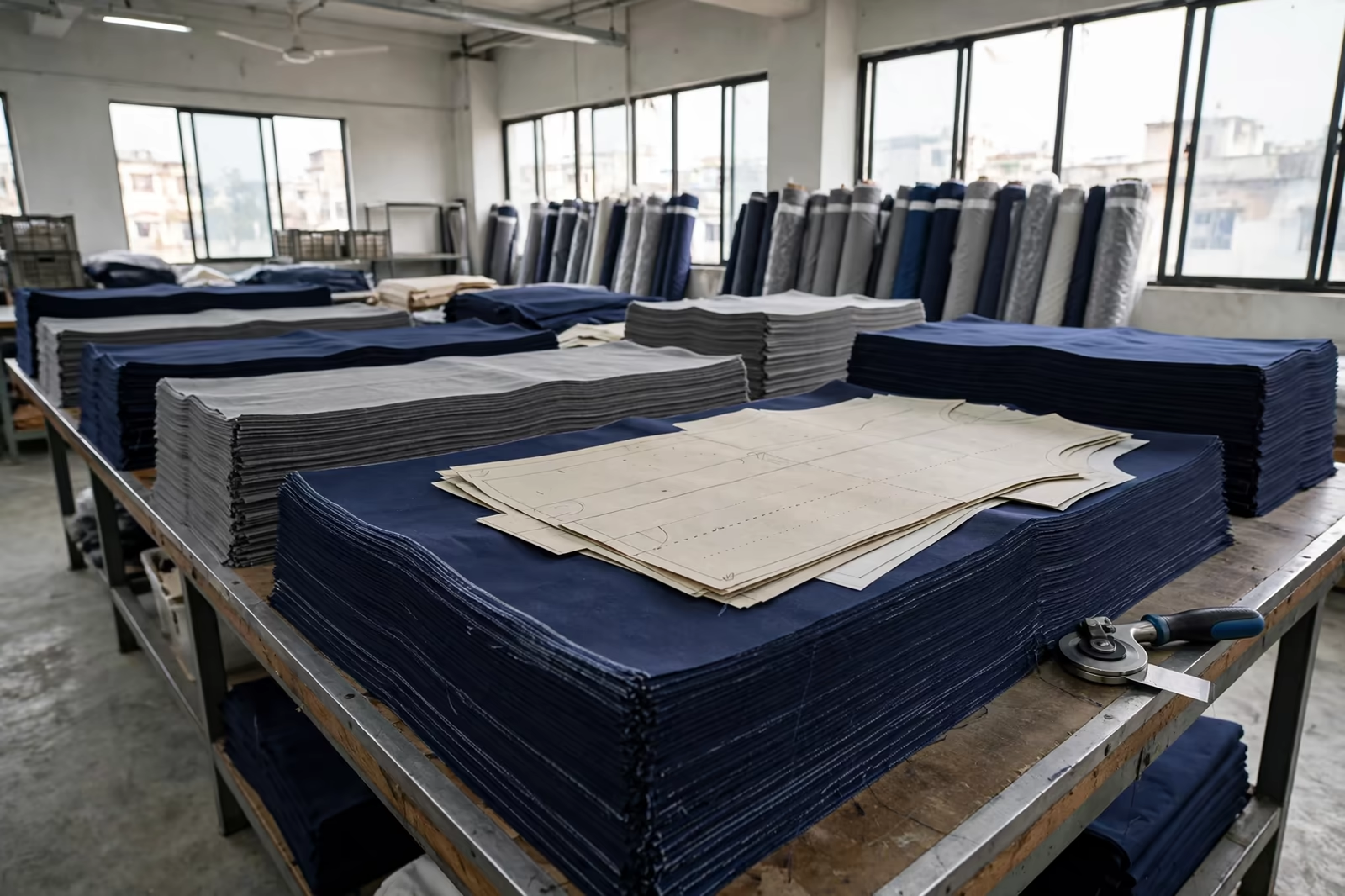
The production file is then assembled: final patterns, the marker plan that lays pattern pieces for cutting with the least waste, the approved samples, and the quality checkpoints for each operation. This file is what the factory floor actually runs on.
For repeat orders this stage is short, because patterns and grading are already proven and held on file. That is one reason repeats run smoother than first orders on any timeline.
Stage Five: Cutting
Cutting turns fabric into garment pieces. Fabric is spread in layers, rested so it relaxes to its natural dimensions, and cut to the marker. Pieces are numbered and bundled so that parts cut from the same layer stay together through sewing, which keeps shade consistent inside each finished garment.
Cutting is inspected before sewing begins: piece dimensions are checked against the pattern, and any panel with a fabric fault is replaced from spare cutting. A defect caught here costs a panel. The same defect caught after sewing costs a garment.
The cutting stage is also where fabric consumption is confirmed against the booking. If the marker uses more than planned, the shortfall is known now, while there is still time to react.
Stage Six: Sewing, Line by Line
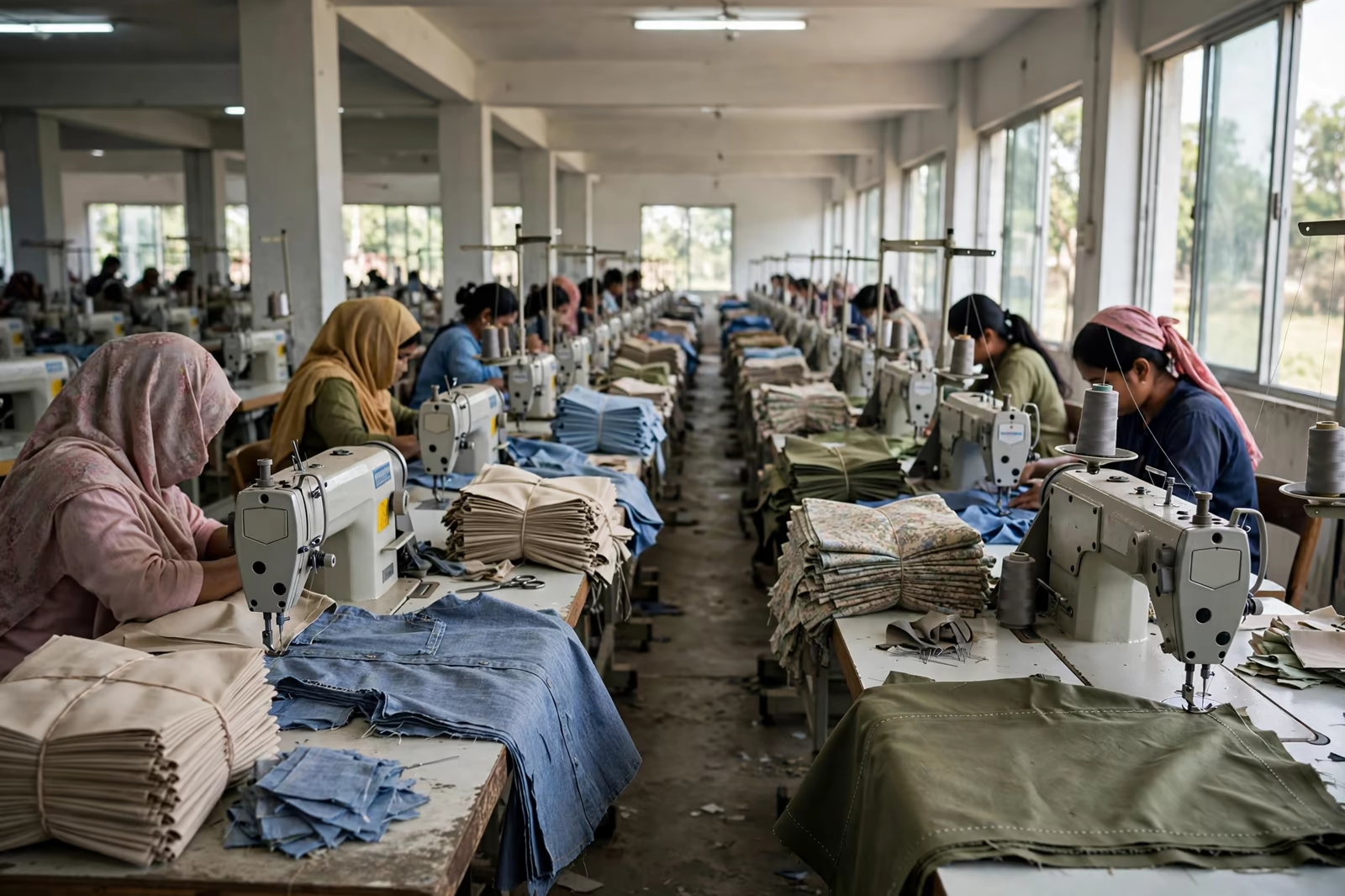
Sewing assembles the bundles operation by operation: panels are joined, collars and cuffs attached, pockets set, branding applied and closures fitted, each step by operators who specialise in it. The line is balanced to the garment, with more hands on the operations that take longest.
Inline inspection runs inside the sewing stage, not after it. Checkers examine garments as they come off the line, so a drifting measurement or a weakening stitch is corrected on the next pieces instead of being discovered across a finished batch.
Output from sewing is counted daily against the plan. A line that falls behind is visible within a day, while there is still room to add hours or rebalance operations.
Stage Seven: Finishing, Pressing and Packing
Finished garments go through thread trimming, stain and needle checks, final pressing and folding. Loose threads are removed, each garment is examined under good light, and metal detection is run where buyers require it, because a broken needle fragment is the one defect no factory may ever ship.
Packing follows the PO specification exactly: folding method, polybag, size and colour assortment per carton, carton marking and labelling. Retail-ready packing, with hang tags and barcodes applied as specified, means the goods can move from the buyer’s warehouse to the shop floor without rework.
Cartons are weighed and measured as packed. The totals feed the shipping documents, and any shortage or overage against the PO is visible before the goods leave, not after they land.
Stage Eight: Inspections Along the Way
Quality on a well-run order is not one inspection at the end. It is a series: fabric inspection at arrival, cutting checks, inline checks during sewing, a mid-line review of finished garments, and measurement audits against the sealed PP sample at every stage.
Each checkpoint has the same logic. Defects are cheapest where they are born. A shade problem costs a fabric roll at stage two, a batch at stage six and an order at stage nine, so the system spends its inspection effort early.
Buyers receive the results as the order moves: sample approvals, production updates and inspection outcomes. Silence from a factory is never a good sign; a timeline you can see is a timeline you can plan around.
Stage Nine: Final Inspection and Shipment Booking
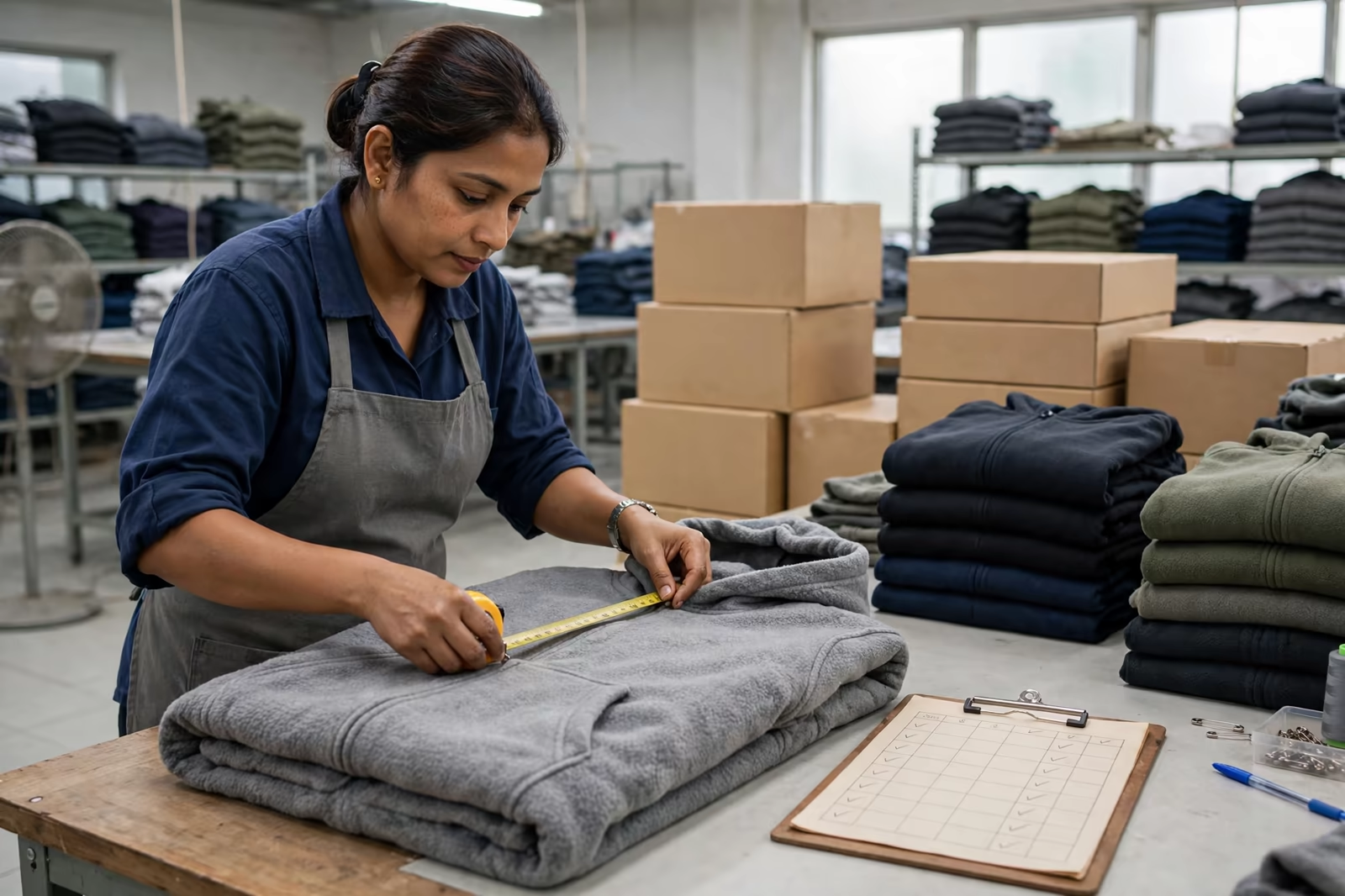
When production is complete and packed, a final inspection examines a statistical sample of the order against the sealed PP sample and the PO: measurements, workmanship, colour, branding, packing and carton condition. Many buyers send their own inspector or a third-party agency; the factory’s job is to make sure the order passes whoever checks it.
Passed goods are booked onto freight against the delivery window, sea or air as the order specifies, and the export documents are prepared: invoice, packing list and the certificates the destination market requires. The documents are checked against the physical cartons, because a paperwork error delays goods as surely as a production error.
Shipment closes the timeline the PO opened. The order’s record, patterns, approved samples and inspection results stay on file, which is what makes the next order faster at every stage.
What Slows an Order Down, and What Speeds It Up
The same delays appear on almost every late order. Slow sample approvals stall the stage everything else waits on. Colour revisions restart the fabric clock. Incomplete tech packs generate questions at every handover. None of these are factory problems, and all of them are fixable by the buyer’s own process.
The accelerators are equally consistent. A complete tech pack, a fast and decisive PP approval, standard fabrics in standard colours, and a style repeated from a previous season each remove waiting from the calendar. Factories can compress sewing; they cannot compress approvals that have not happened.
The practical lesson is to plan the season backwards from the delivery date, stage by stage, and to guard the approval points like deadlines of their own. An order managed that way rarely surprises anyone.
The buyer’s calendar matters as much as the factory’s. Holidays at either end, port congestion and document queries at destination all sit on the same critical path, and a season planned with a little slack at those points absorbs them without drama.
Frequently Asked Questions
Can any stage of production be skipped to save time?
Stages can be overlapped but not honestly skipped. Trims are booked while fabric is in dyeing, and the size set is made alongside the PP sample. Skipping the PP approval or the size set does not remove the risk those stages carry; it moves the risk into the bulk run, where it is most expensive.
Why does the fabric stage decide so much of the timeline?
Because nothing can be cut, sewn or sampled in production fabric until the fabric exists in the right colour and quantity. Custom colours and finishes wait on mill schedules that no garment factory controls. Standard fabrics in approved colours keep this stage predictable, which is why experienced buyers develop colour stories around achievable fabrics.
What should I send with my first purchase order?
A complete tech pack with measurements and construction details, artwork files for any print or embroidery, the label and packaging specification, quantities by size and colour, and your delivery window and destination. The fuller the pack, the fewer questions come back, and every answered question at this stage saves days later.
How do I know my order is on track during production?
By the checkpoints: fabric arrival confirmed, PP sample approved, cutting started, daily sewing output, packing totals and the final inspection result. Ask for those milestones when you place the order. A manufacturer running a real timeline can report every one of them without hesitation.