
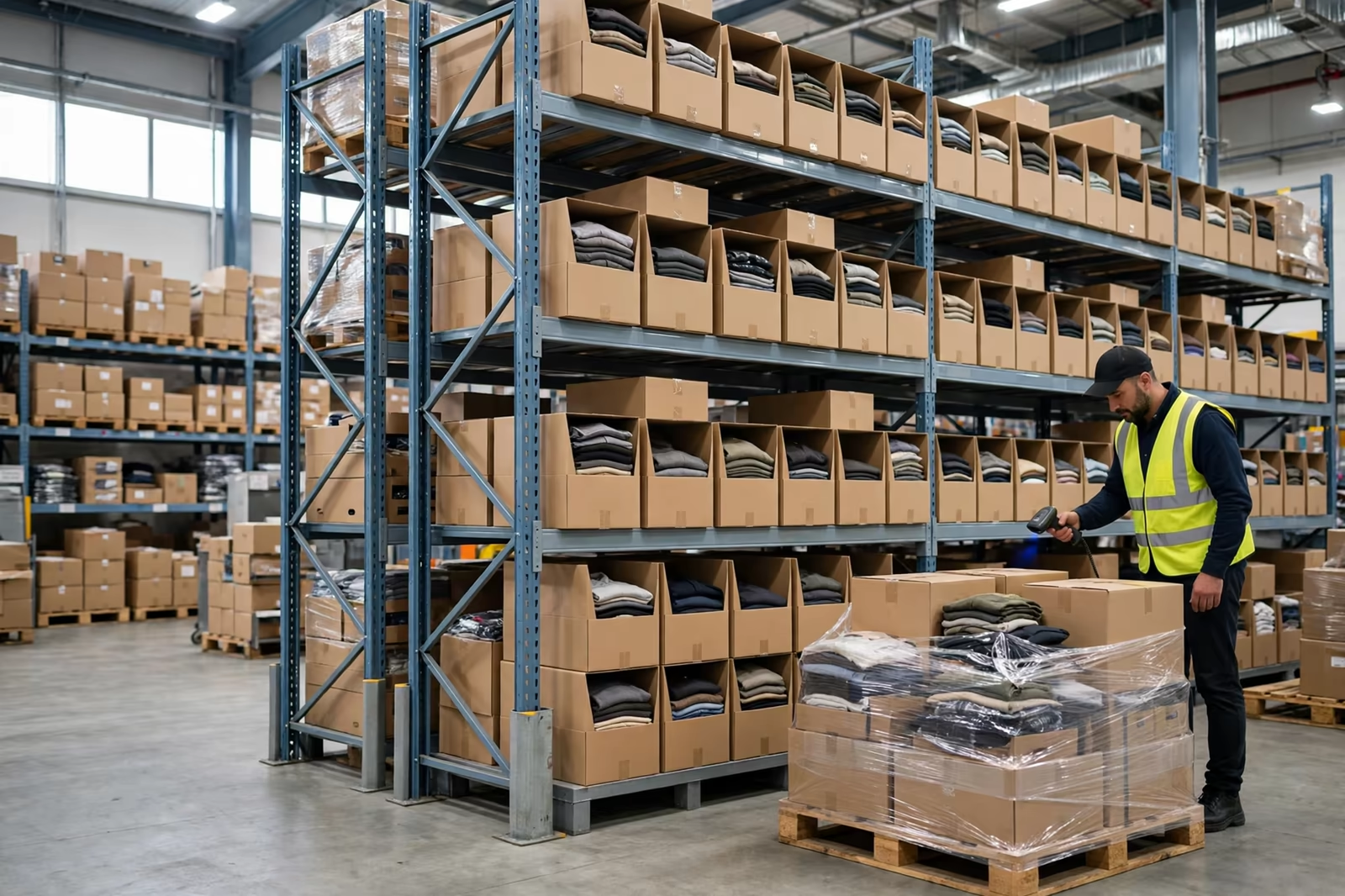
Before Brexit, clothing from Bangladesh reached British buyers through the European Union’s door: one customs system, EU rules, and duty-free treatment carried quietly inside the single market. That door has closed, and the UK now runs its own border, its own tariff and its own preference scheme. The good news is that the route remains attractive, and in one respect simpler to understand than before.
The sourcing teams behind this guide ship apparel from Bangladesh to buyers in the UK, the USA, Germany, Canada and Australia. This guide explains what changed for the UK route, what importers now handle themselves, and where the Bangladeshi advantage sits inside the new rules.
The route touches the regions on our market area page, the order structure on our MOQ and production page, and help through our contact page.
What Brexit Actually Changed for This Route
The core change is jurisdictional: the UK is now a separate customs territory. Goods arriving from Bangladesh enter under UK law alone, declared to HMRC through the UK’s systems, with UK commodity codes, the UK Global Tariff, and UK rules of origin. Nothing about the shipment passes through EU customs anymore, and EU paperwork no longer covers a British arrival.
For Northern Ireland, arrangements differ under the Windsor Framework, and buyers receiving goods there should take specific advice, since goods movements between Great Britain and Northern Ireland carry their own declarations. This guide addresses the standard Great Britain import picture.
What did not change matters equally: the garments, the factories, the shipping lanes and the buyer relationships all continued, and the UK built a preference scheme that keeps Bangladeshi apparel competitive, which the next section covers.
The Duty Position Under the DCTS
The UK’s Developing Countries Trading Scheme, the DCTS, replaced the earlier generalised preference arrangements and sorts partner countries into tiers. Bangladesh sits in the scheme’s strongest tier for least-developed countries, giving its qualifying goods duty-free access to the UK on the overwhelming majority of tariff lines, apparel included.
That position is the commercial headline of this route: where a competitor country pays the UK Global Tariff rate on a garment, a qualifying Bangladeshi garment enters at zero. The duty saving compounds across a season’s volume and belongs in every landed-cost comparison a UK buyer runs.
Two disciplines protect the benefit. The goods must genuinely originate in Bangladesh under the scheme’s rules, evidenced through the origin documentation the factory provides, and the importer must claim the preference correctly on the declaration. An unclaimed preference is simply duty paid for no reason, which happens more often than buyers admit.

Rules of Origin: Proving the Garment Is Bangladeshi
A preference is only as good as its evidence. Under the DCTS, apparel qualifies through the scheme’s origin rules, which for clothing generally look for substantial manufacture in Bangladesh, the cutting and making that Bangladeshi factories perform as their core work. The factory issues the origin statement or certificate that travels with the documents.
Buyers should treat origin as a specification, not a shipping-week request: the requirement named in the order, the document listed in the document checklist, and a copy checked before the vessel sails. Where origin evidence is missing or wrong, the preference claim fails and standard duty applies, whatever the garments’ true history.
Keep the origin documents with the entry file for the years customs may ask. Preference claims are exactly the kind of thing audits revisit, and a tidy file closes the conversation quickly.
Setting Up: EORI, Declarations and VAT
A UK importing business needs an EORI number beginning with GB to move goods through customs, obtained from HMRC before the first shipment travels. Declarations are submitted through the Customs Declaration Service, in practice almost always by a customs agent or broker acting for the importer, whose accuracy the importer ultimately owns.
Import VAT is part of the picture: it applies on entry, and UK VAT-registered importers commonly use postponed VAT accounting, declaring the import VAT on their VAT return rather than paying it at the border, which protects cash flow on every shipment. Your accountant or agent sets this in place once, and it applies from then on.
Also decide your Incoterms with the factory carefully on this route: who arranges the UK leg, who acts as importer, and whose EORI the entry uses. The companion guides on this blog cover shipping terms and export documents in full.
Classification and the UK Global Tariff
Each garment is classified under a UK commodity code, and where no preference applies that code carries the UK Global Tariff rate. With Bangladeshi origin properly claimed, the DCTS preference usually sets the duty to zero, but the classification still matters: it drives the declaration, any product-specific rules, and the correctness of the preference claim itself.
Classification follows the same logic as everywhere, fibre, construction, garment type and gender, taken from the approved specification. A fabric change between sample and bulk is a classification question as well as a quality question, and the approved tech pack is the reference customs can test against.
Agents confirm codes from specifications before goods ship. Keeping one classification file per style, shared between factory, agent and buyer, prevents the same garment being described three ways across three documents, a classic trigger for queries.
Labelling and Product Compliance in the UK
UK labelling for apparel centres on fibre composition and care information under UK textile rules, with origin marking expected as a matter of trade description honesty. The practical artwork work is familiar to any EU importer, but the legal references are now British references, and labels shared across EU and UK programmes should be checked rather than assumed identical.
Product safety follows UK law: general product safety duties, flammability requirements for nightwear and relevant categories, and chemical restrictions under the UK’s own REACH regime. Children’s clothing carries its familiar extra weight, including drawstring safety rules that the UK applies strictly.
Build the UK label and testing requirements into the purchase order, as with any market: artwork approved on a labelled sample, tests named in the order, certificates filed with the shipment documents. Bangladeshi export factories run these as routine deliverables when they are written down.
Selling Into Both the UK and the EU
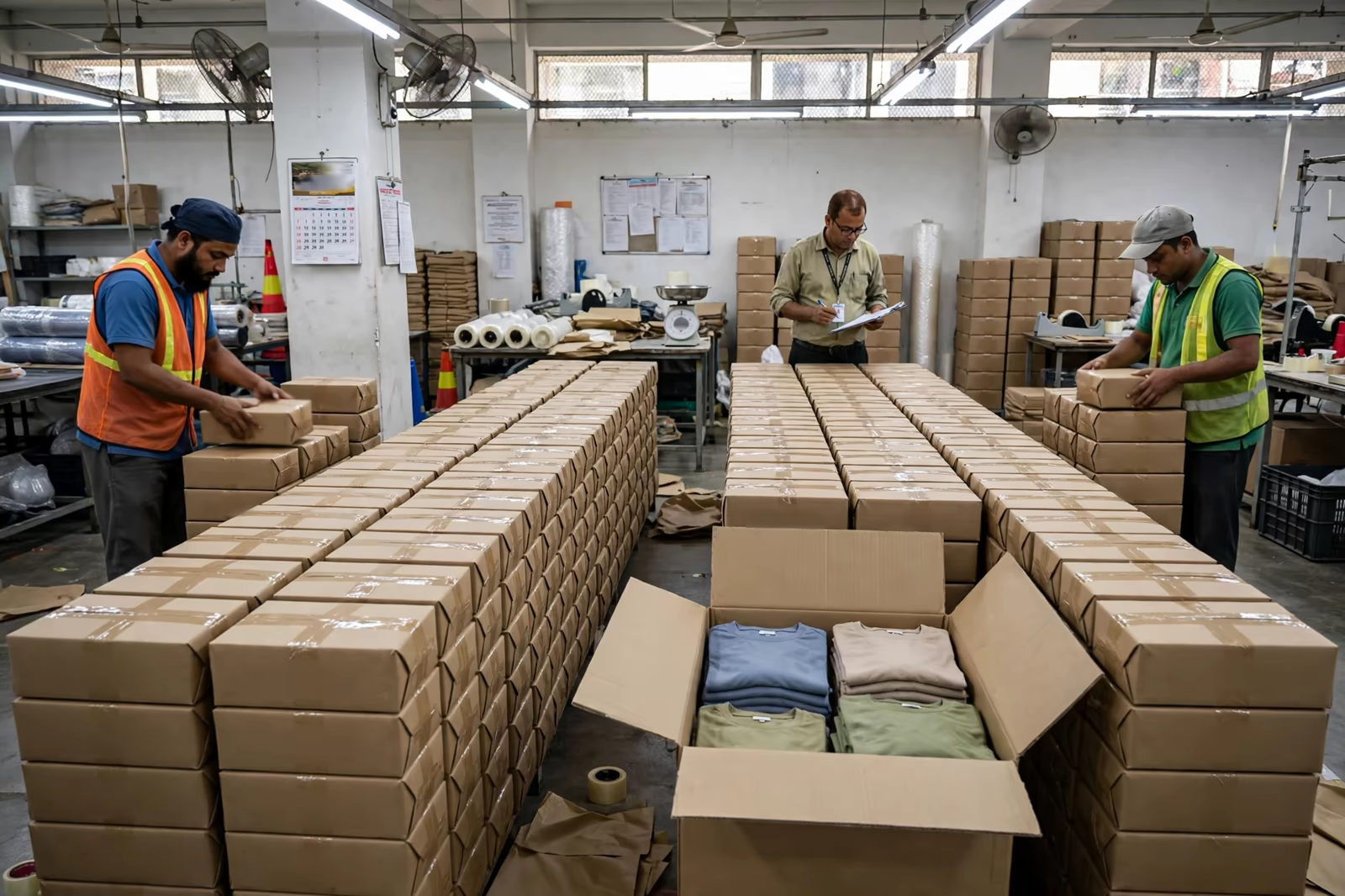
Many British brands also sell into Europe, and the post-Brexit discipline is separation. The same garment range may travel to a UK warehouse under DCTS claims and to an EU distribution point under Everything But Arms claims, each with its own declaration, origin file and label check.
The factories cope easily; the failures happen in buyers’ own administration, where one market’s documents are reused for the other. Two folders, two checklists, two claims: the structure is simple, and it keeps both preferences safe.
Where volumes allow, some brands split production runs by destination at the packing stage, cartons marked and documented per market from the factory floor. It costs a little planning and removes a whole category of warehouse confusion later.
Moving Goods: Ports, Routes and the Practical Border
Ocean freight carries this route’s volume, arriving at the UK’s major container ports and moving inland to warehouses by road or rail. The physical border process is documentary rather than theatrical when the paperwork is right: pre-lodged declarations, matching documents, and release without examination for the great majority of compliant apparel entries.
Where queries arise, they trace back to the usual suspects: values, descriptions or origin evidence that disagree between invoice, packing list and declaration. Factories with disciplined documents, and agents who check before lodging, keep the route boring, which in importing is the highest praise available.
Air freight keeps its rescue role for samples and emergencies. Programme planning should treat the ocean rhythm as the route’s heartbeat, with stock cover sized to it.
Ordering From Bangladesh as a UK Buyer
The commercial mechanics mirror other markets: sampling and approvals, production to your label, inspection before shipment, and documents prepared as part of the order. On our own lines the standard minimum is 1,200 pieces per style in up to two colours, sized for retail, promotional and uniform programmes that UK buyers typically run.
Payment terms should be agreed with the same care as the goods, deposits and balances structured against milestones and documents, with the inspection as the final quality gate before the balance moves. Our payment guidance page sets out the framework we work to.
One Brexit-era habit is worth forming: keep EU and UK files separate. A range sold into both now travels under two customs regimes, two preference claims and potentially two label references. Factories supplying both will handle it readily when the buyer’s own paperwork keeps the lanes distinct.
Common First-Shipment Problems
The classics repeat on this route as on every other. An EORI applied for after the vessel sails. A preference available but never claimed because the agent was not told the goods were Bangladeshi origin under the scheme. Invoice descriptions too vague for the commodity code they sit under.
Each is a one-line fix applied early. Walk the first shipment’s document set with your agent before production ends, not after loading, and most of the list never happens. By the third shipment the route should feel like administration rather than adventure.
The factories see their side of the same list: origin documents requested late, label artwork approved after cutting, inspection booked against a vessel that moved. Written checklists shared at order stage are the whole cure, and they cost nothing but an hour.
Frequently Asked Questions
Is clothing from Bangladesh duty-free into the UK after Brexit?
Generally yes, under the UK’s Developing Countries Trading Scheme, which gives least-developed countries including Bangladesh duty-free access on the great majority of tariff lines. The goods must meet the scheme’s rules of origin, the factory provides the origin evidence, and your agent must claim the preference on the declaration. Confirm the position for your specific garments when the order is placed.
What do I need before my first UK import?
A GB EORI number for your business, a customs agent or broker to lodge declarations through the Customs Declaration Service, and a decision on import VAT handling, where postponed VAT accounting suits most VAT-registered importers. Then the commercial set: agreed Incoterms with the factory, label and testing requirements written into the order, and an inspection before shipment.
Does Northern Ireland work the same way?
No. Under the Windsor Framework, Northern Ireland follows arrangements that differ from Great Britain’s, including alignment with certain EU goods rules and specific declarations for goods moving between Great Britain and Northern Ireland. If your goods are destined for Northern Ireland, take advice specific to that route rather than applying the Great Britain picture.
Has Brexit made Bangladesh more or less attractive for UK buyers?
Arguably more focused. The UK preference scheme keeps Bangladeshi apparel duty-free, UK demand for basics and private label programmes remains deep, and the administrative steps, EORI, agent, preference claim, are one-time setups rather than per-shipment burdens. The buyers who struggled were those who assumed nothing had changed; those who rebuilt the file once now run the route smoothly.