
Every bad garment order begins the same way: a factory that looked convincing in an inbox turned out to be something else entirely in production. Vetting exists to close that gap before money moves, and it is a learnable discipline rather than a talent.
This guide sets out how to vet a clothing factory properly, what to ask, what to verify independently, and how to read the answers, for buyers in the USA, the UK, Germany, Canada and Australia preparing to place serious orders with a manufacturer in Bangladesh.
The factory you want welcomes this process. Rigorous buyers are a factory’s favourite signal, because they are the customers who pay on time, approve on time and stay for years.
First Pass: The Public Record
Vetting starts with everything the factory cannot script: its registrations, its history, its presence in the trade and the consistency of what it says in different places. Spend an hour here before a single conversation, and the conversations improve immediately.
- Legal registration and export credentials, current and checkable
- How long the business has traded, corroborated beyond its own site
- The markets it claims to serve, and whether the claim is plausible
- Consistency between website, directories and documents
- Any presence in trade press, fairs or buyer references
- The story on pages like about us: specific, dated and verifiable, or vague
Vagueness is data. A real factory’s story accumulates specifics over years; an invented one stays smooth and empty no matter where you press it. Press in several places before concluding anything: one gap is an oversight, while the same smoothness everywhere is a strategy.
The Questions That Reveal a Factory
Structured questions separate production businesses from trading fronts, because factories answer from the floor and fronts answer from a brochure. Ask about the work itself, in operational detail, and listen for the grammar of experience.
- Which product categories run on your lines most weeks of the year?
- What is your standard minimum, and what drives it?
- Which processes happen inside your control and which are placed outside?
- How do you schedule capacity, and what does your order book look like now?
- Who inspects, at which stages, against what standard?
- Describe your last problem order and what you did about it
That last question is the most valuable one in this guide. Honest factories have war stories with lessons attached; questionable ones claim a history without weather.
Documents Worth Asking For
Documents do not prove quality, but their quality proves a great deal about the business behind them. Request them before the order, read them like an auditor, and note how the factory handles being asked.
- Business registration and export licence, current
- Audit reports or summaries the factory chooses to share
- Certificates relevant to your market’s requirements, verified at source where possible
- A blank copy of the factory’s own order documentation
- Banking details that match the legal name exactly
- Sample invoices or packing lists with buyer details removed
Our standard minimum of 1,200 pieces per style in up to two colours will appear in this conversation with any genuine maker of scale; the point here is not the number but the coherence of everything around it.
Handle the request itself as a test. A professional factory sends documents promptly, in order, with the names matching across every page. Evasion, delay and inconsistency at this stage are the cheapest warning a buyer will ever receive, because they cost an email instead of an order.
Samples as an Interrogation
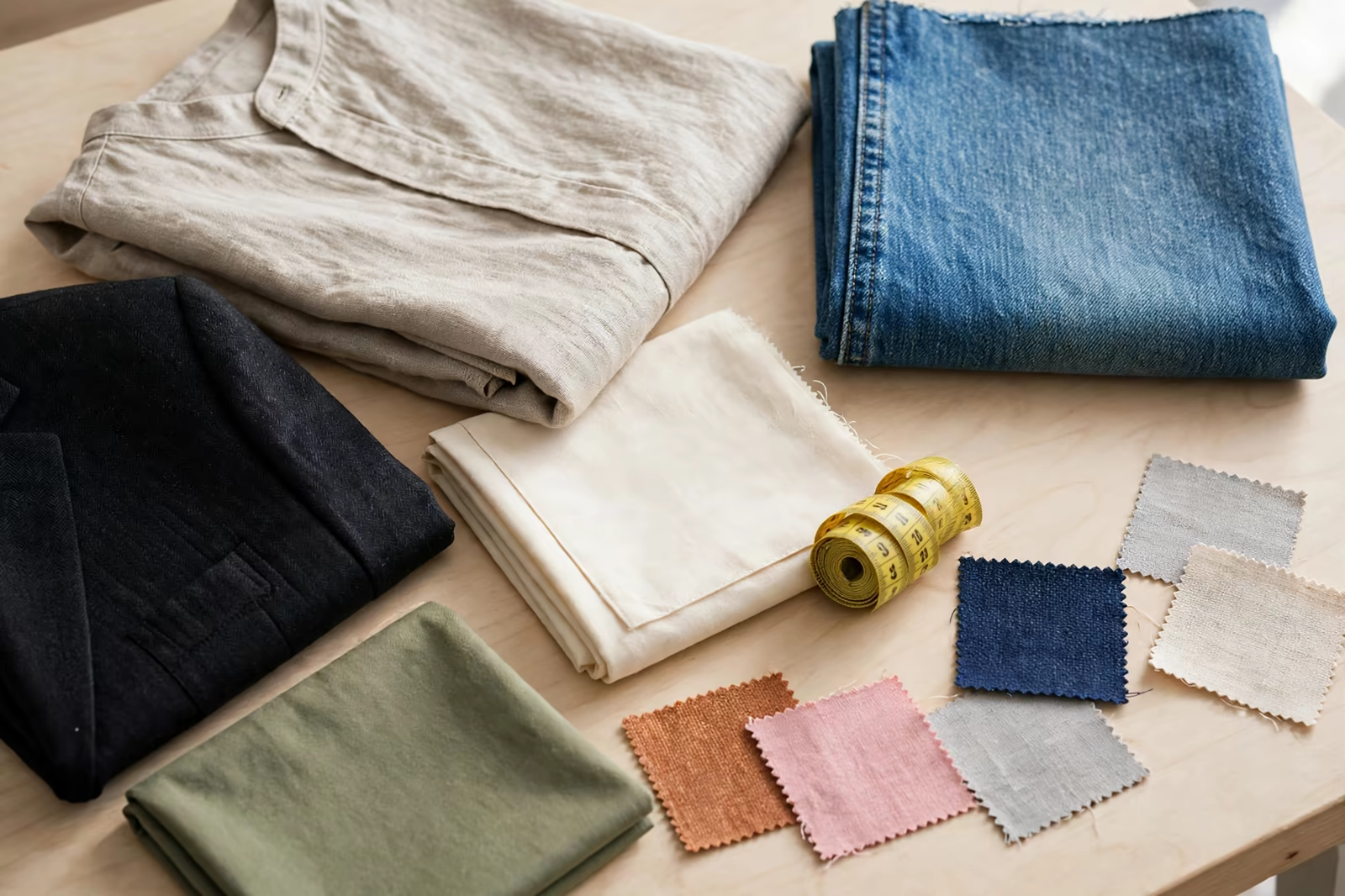
The sample stage is where vetting becomes physical. Samples reveal workmanship, honesty about capability, and the factory’s attitude to detail, three things no video call can establish.
- Commission a sample in your actual fabric and specification
- Measure it against your specification point by point, in writing
- Wash and wear it as your customer will
- Note how corrections are received: argued, or engineered
- Ask for a sample of something at the edge of their claimed range
- Keep every sample; they are the baseline the bulk is judged against
A factory that improves visibly between sample rounds is showing you its true quality system. One that resents the rounds is showing you that too.
The Visit, or Its Honest Substitutes
Nothing vets like walking the floor, and the visit section of any guide must be honest about both its value and its staging. Factories show visitors the best line on the best day; the skilled visitor looks at the systems instead.
- Work in progress for buyers like you, at real stages of completion
- The inspection tables and the records they are producing today
- Fabric storage, trims control and the cutting room’s discipline
- The packing area, where export reality is most visible
- Staff who answer operational questions without a translator of convenience
- When travel is impossible: live video walk-throughs, unscripted and specific
Remote vetting, done with live questions and requested angles, is weaker than presence and far stronger than photographs. Use it without embarrassment; good factories are used to it.
References and the Quiet Checks
The last layer is other people’s experience. References supplied by the factory are a start, and the buyer’s own network, freight forwarders, inspectors and trade contacts is the corroboration that turns a start into knowledge.
- Ask for references in your market and your product category
- Ask references about problems, not only about satisfaction
- Independent inspection companies can verify capacity and conditions
- Payment behaviour runs both ways; expect to be vetted in return
- Start the relationship at a size that tests truthfully
Make the first approach through contact or a structured get a quote request with your specification attached. How a factory handles a precise enquiry is itself a vetting result, available free, before anything else has happened.
The Trial Order: Vetting in Production
All vetting before production is prediction; the trial order is measurement. Structure the first real order to test the relationship at survivable scale: a genuine product, a real deadline, and your full specification and inspection regime applied without apology.
- Choose a representative product, not the easiest one in the range
- Inspect the trial as you will inspect everything: your standard, applied
- Watch communication during problems more closely than during calm
- Measure the outcome against the approved sample, point by point
- Close with a written review shared with the factory, agreements for next time
A factory is not really vetted until it has recovered from something in your presence. The trial order’s gift is that it provides the something while the stakes are still small enough to be educational.
Choose the trial’s timing with the same care as its product: inside the factory’s normal rhythm, not in its quietest week and not at its peak. You are measuring the ordinary factory, the one your future orders will actually meet, and ordinariness is the one performance that cannot be staged for long.
Scoring What You Found
Vetting produces impressions; decisions need structure. Close the process by scoring the evidence under a few honest headings, so that comparison between factories and the memory of why you chose one survive the season’s end.
- Capability: the range, the lines and the processes, evidenced
- Quality system: inspection stages, records and the sample rounds
- Communication: speed, specificity and behaviour under pressure
- Commercial fit: minimums, terms and pricing logic you can understand
- Integrity signals: documents, banking, references and consistency
- Trajectory: investment, stability and the order book’s health
File the score with the samples. When the relationship is reviewed a year later, that page explains the choice better than anyone’s memory, and it shows the factory exactly where trust was earned and where it is still being built. That file becomes the relationship’s memory, outliving the people who wrote it on both sides.
Vetting Never Really Ends
The last discipline is continuity. Factories change: owners, managers, order books and fortunes all move, and the supplier vetted thoroughly three years ago is a historical document today. Professional buyers re-vet lightly and continuously, inside the ordinary rhythm of the relationship.
- Each order’s evidence filed against the original vetting score
- An annual refresh of documents, certificates and references
- Attention to drift: slower answers, new names, changed banking
- Periodic visits or video walk-throughs, however strong the relationship
- A second source understood well enough to be a real alternative
None of this is suspicion; it is maintenance, of exactly the kind good factories perform on their buyers in return. Relationships that expect it grow stronger under it, because trust that is verified regularly never has to be rebuilt from rubble. That is the entire return on the habit.
The Other Side of the Table
While you vet the factory, the factory vets you, and understanding its side improves yours. Serious makers assess a new buyer’s specification quality, payment credibility, approval discipline and volume honesty, because bad buyers are as expensive as bad factories.
- Precise specifications signal a buyer whose orders run cleanly
- Realistic timelines signal experience; impossible ones signal trouble
- Prompt sample payment signals commercial seriousness
- Named decision-makers signal approvals that will actually happen
- Honest volumes signal a relationship worth investing capacity in
The practical consequence is welcome: vetting done professionally is welcomed professionally, and doors open in proportion to the quality of the questions. The buyer’s rigour is not an obstacle to the relationship. It is the relationship’s foundation, poured first.
Frequently Asked Questions
What is the single best vetting step?
The specified sample, measured and washed, combined with the problem-order question. Between the physical evidence of the garment and the honesty of the war story, most of what a buyer needs to know is on the table. Everything else in this guide corroborates those two.
How can I tell a factory from a trading company?
By operational grammar. Factories answer questions about lines, capacity, processes and inspection from daily knowledge, in specifics that survive follow-up questions. Trading fronts stay at the level of price and promise. Neither is automatically wrong to use, but you should know which one you are paying. The follow-up question habit exposes the difference fastest: ask how, then ask how again, and notice whose answers keep finding floor-level detail and whose keep finding new adjectives.
Should I always visit before a large order?
Visit when the relationship justifies the cost, and substitute rigorously when it does not: live unscripted video, third-party inspection at first production, and a staged first order. The unacceptable option is neither, a large order placed on the strength of a website.
What are the classic red flags?
Banking details that do not match the legal name, resistance to specified samples, prices dramatically below every comparable quote without explanation, pressure for full payment upfront, and a history with no problems in it. Any one deserves a pause; several together deserve a walk away. Trust the pattern over any single explanation, because each flag has an innocent story available and the combination rarely does.