
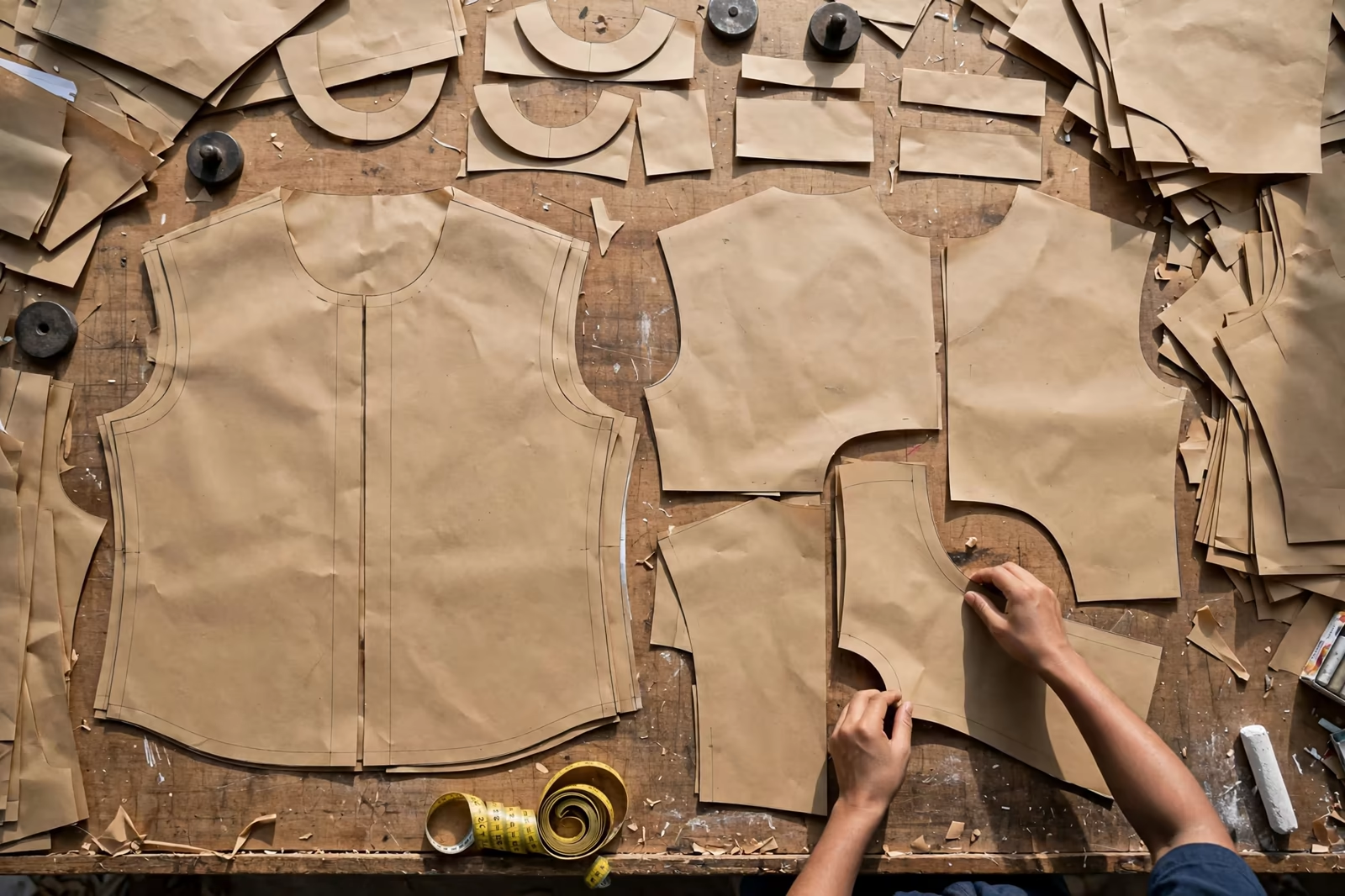
Fabric is the largest single cost in almost every garment, commonly more than half of what a finished piece costs to make. That is why the cutting room, an unglamorous hall of long tables and paper patterns, is where a factory’s discipline shows first and where a buyer’s money is quietly saved or quietly wasted. Three crafts decide the outcome: marker making, spreading and the cutting itself.
The cutting rooms behind these lines work in Bangladesh, preparing export orders for buyers in the USA, the UK, Germany and the wider European market. Their output feeds sewing lines whose work is only ever as good as the pieces they receive, which is why experienced buyers ask about cutting with the same seriousness they bring to sewing and inspection.
Cutting sits inside the production system described on our services page and the framework on our MOQ and production page, and the factory behind both is introduced on our about us page.
Why the Cutting Room Decides the Fabric Bill
Every garment begins as an area of cloth. The pattern pieces for a size, front, back, sleeves, collar, pockets and facings, must be fitted onto the fabric’s usable width. The share of that cloth ending up in garments rather than on the floor as waste is called marker efficiency, and a few points of efficiency across a bulk order is real money in either direction.
The cutting room also decides consistency. Pieces cut from the same layer of the lay stay together through sewing, so one finished garment never mixes two dye shades. Pieces cut accurately sew together without forcing, stretching or puckering. Most “sewing faults” a buyer complains about were actually born at the cutting table.
And it decides capacity honesty. Consumption confirmed at cutting, the fabric actually used per garment, is the number the whole order’s costing stands on. A factory that cannot tell you its achieved consumption is estimating your price, not calculating it.
Marker Making: The Puzzle Everything Depends On
A marker is the plan of the cut: a paper or digital layout showing every pattern piece for the sizes being cut, arranged within the fabric width like a jigsaw. The marker maker, working by hand on paper or with CAD software, rotates and nests pieces into the gaps between larger pieces, sleeves into the curve of a back, pockets into the space beside a leg.
The rules of the puzzle are strict. Pieces with a grain line must sit on the grain, or the finished garment twists in wear. Pieces with a nap or a one-way print must all face the same direction. Checks and stripes must match across seams, which fixes pieces in place and lowers efficiency by design rather than by failure.
Markers are made per order and per fabric, because width changes everything. A fabric arriving narrower than specified invalidates the planned marker, squeezes efficiency and must be caught at fabric inspection, before booking, not discovered at the table with the lay already spread.
Ratio Planning: Sizes Inside the Marker
Most bulk markers carry several sizes at once, in the ratio the order demands: more mediums than smalls, for instance, mirroring the size breakdown of the PO. Ratio planning lets one lay produce balanced stock, so the order completes evenly instead of finishing with a surplus of the size nobody ordered most.
The ratio is a compromise managed by the planner. The ideal efficiency marker, built purely to nest pieces tightly, rarely matches the ideal commercial ratio. Skilled planning blends the two: markers that respect the order’s size needs while keeping efficiency within reach of the costing.
When a buyer changes the size ratio mid-order, this is the machinery that absorbs the change: new markers, new lays, new bundle counts. It is also why ratio changes late in production carry a cost conversation with them.
Spreading: Laying the Cloth True
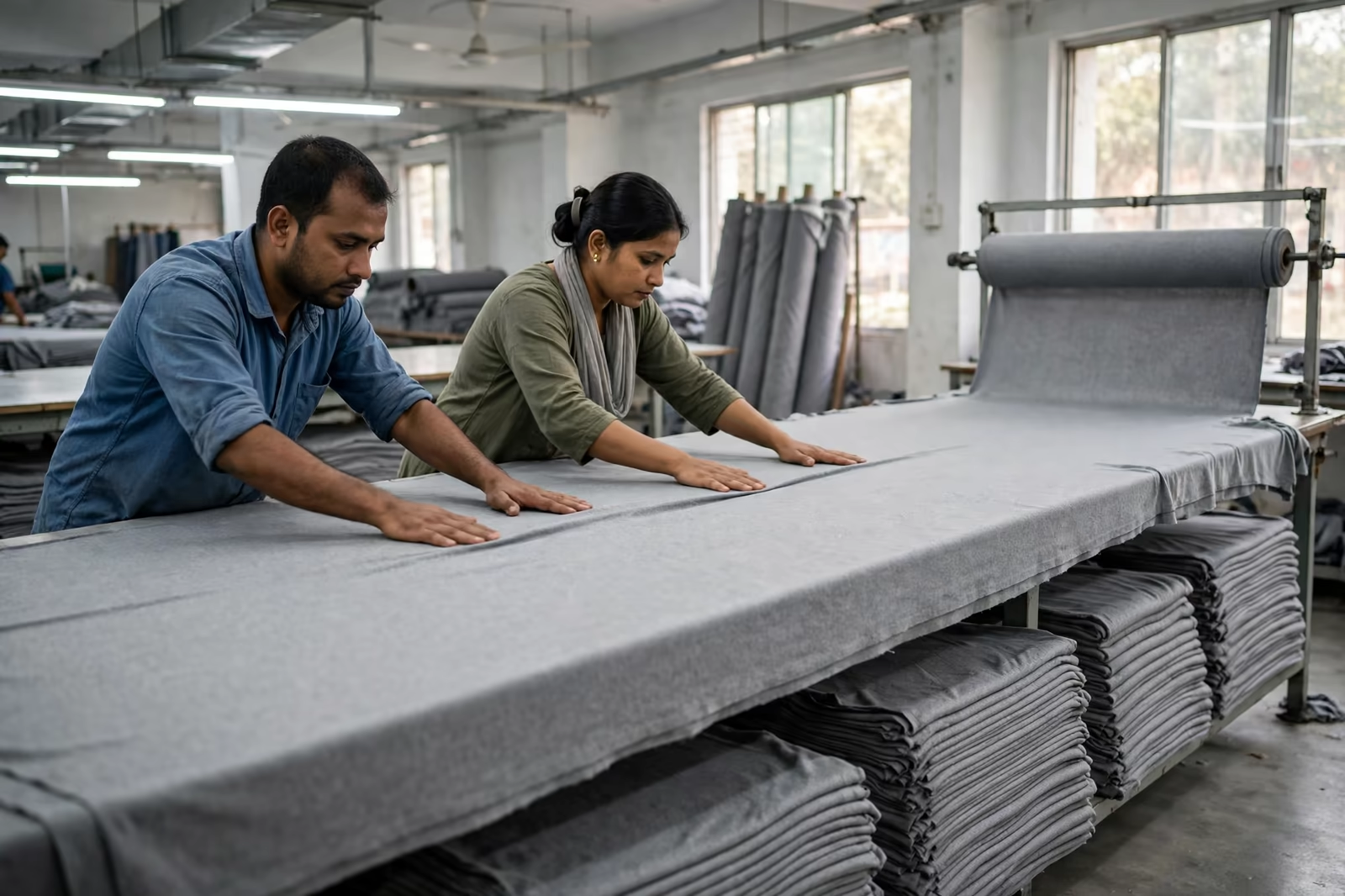
Spreading is the laying of fabric onto the cutting table, layer upon layer, until the lay holds enough plies for the planned cut. It sounds simple and is not. Each ply must lie flat, aligned at the edges, at even tension: stretched plies shrink back after cutting and produce small garments; slack plies produce wavy edges and pieces that vary from the top of the lay to the bottom.
Before spreading, knitted fabric is rested, unrolled and left to relax, because jersey leaves the roll under tension and contracts when freed. Cutting rested fabric is the difference between a size chart that survives the first wash and one that only existed on the roll.
Spreading is also where shade discipline happens physically. Rolls from different dye lots are never mixed inside one lay, and the lay’s pieces are kept together as bundles afterwards, so a garment’s panels always come from the same cloth, start to finish.
The Cut Itself: Machines, Knives and Control
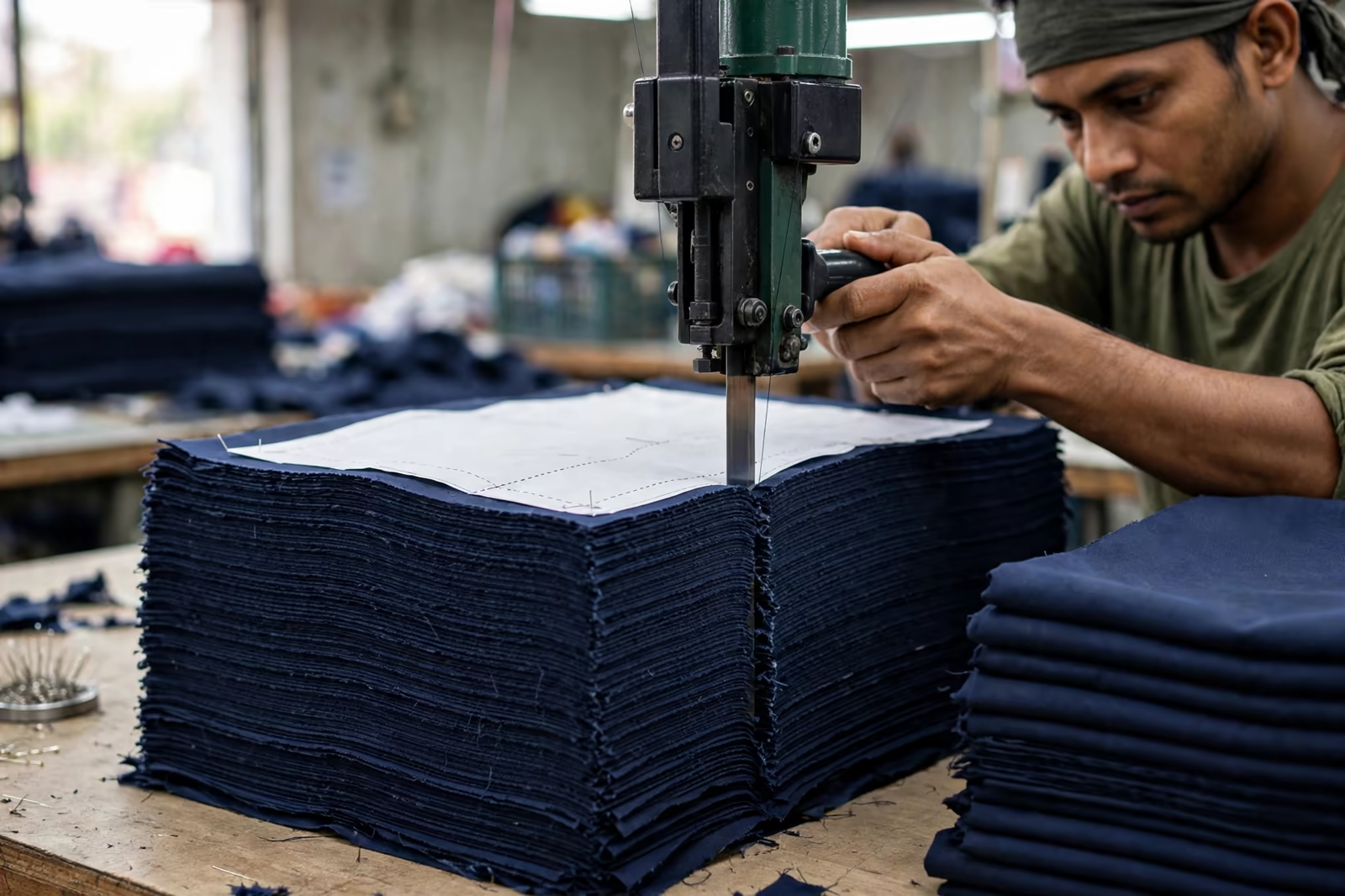
Long straight runs are cut with a straight knife machine that travels through the lay; tight curves and small parts are cut on a band knife, against a template; delicate or very accurate work uses a round knife or die cutting. Computer-controlled cutters do the same work automatically on the largest programmes. The machine matters less than the discipline around it.
Cut pieces are checked against the pattern before they leave the table: dimensions spot-measured, notches and drill marks confirmed, faulty panels replaced from spare fabric cut for the purpose. A defect that leaves the cutting room costs a panel. The same defect discovered after sewing costs a garment, and discovered by the customer it costs a claim.
Numbering and bundling close the stage. Each bundle is ticketed by size, shade layer and quantity, so sewing receives matched sets and shade consistency inside garments survives the whole journey from roll to rail.
Knits and Wovens Behave Differently at the Table
Woven fabric is comparatively stable: it spreads flat, holds its dimensions and cuts cleanly to the marker. Knits curl at the edges, stretch under their own handling and relax after cutting, which is why they get resting time, gentler spreading and weights rather than tension. Denim and heavy twills reverse the problem, demanding stronger knives and shorter lays so the bottom plies cut as truly as the top. The plan is written per fabric, not per habit.
Fabric Saving: Where the Points Are Won
The first saving is the marker itself, addressed above. The second is width discipline: buying fabric at the width the marker was planned for, and checking the delivered width on every roll, because two centimetres lost across the width is a percentage lost on every garment in the order.
The third is end management. Every lay loses a little cloth at each end and at roll joins where faults are cut out. Planning lay lengths against roll lengths, and grouping orders of the same fabric so remnants feed the next lay, keeps those small losses small. Remnant discipline is unglamorous bookkeeping that shows up directly in your price.
The fourth is honesty about what saving cannot do. Efficiency has a ceiling set by the pattern shapes themselves, and promises far above it are paid for in narrower seam allowances, off-grain pieces or squeezed sizes. A buyer should want the real number, well achieved, not a heroic number achieved by quietly shrinking the garment.
Checks, Stripes and One-Way Prints
Patterned fabric raises the cutting room’s difficulty sharply. A check that must match across a pocket, a placket and a side seam fixes those pieces in exact positions on every ply, and the marker efficiency falls accordingly. This is physics, not inefficiency, and it belongs in the costing from the start.
One-way prints and pile fabrics such as corduroy impose direction: every piece in one garment must face the same way, or panels shade differently in the light. Direction removes the marker maker’s favourite trick, rotating pieces to fill gaps, and again the efficiency cost is real and predictable.
The buyer’s part is to supply this information early. A print’s repeat size and direction, a check’s dimensions, approval of where matching matters and where it does not: decisions made at the tech pack stage cost sentences, while the same decisions at the cutting table cost lays.
The People at the Table
A cutting room runs on a small cast whose skills compound: the marker maker whose puzzle decides the fabric bill, the spreaders whose hands decide whether plies lie true, the cutters whose control decides piece accuracy, and the checkers and bundlers who keep shade and size identity intact. It is skilled work buyers rarely see, usually done by the factory’s most experienced hands, because everyone downstream depends on its accuracy.
What Buyers Should Ask About Cutting
Ask how markers are made and what efficiency the costing assumed, then ask what the last order of a similar garment actually achieved. The gap between assumed and achieved consumption is where unexplained price differences live, and a factory that tracks it can show you both numbers.
Ask about fabric resting for knits, shade separation between dye lots, and how cut panels are checked before sewing. These three answers describe the cutting room’s discipline more honestly than any machine list.
Ask, finally, how consumption surprises are handled. Fabric arriving narrower, shorter or heavier than booked happens in every supply chain; the professional response is an immediate recalculation with options, presented before cutting commits the order, not a quiet adjustment discovered in the invoice.
Frequently Asked Questions
What is a good marker efficiency for a typical garment?
It depends on the pattern shapes, the fabric width and whether prints or checks must match, so any single number quoted without your garment is meaningless. Simple knit styles on wide fabric reach the high eighties in percent; heavily matched checks sit far lower by design. Ask for the efficiency assumed in your costing and the efficiency achieved on delivery, and judge the pair rather than either figure alone.
Why must knitted fabric rest before cutting?
Jersey is knitted and rolled under tension, and it contracts when released. Fabric cut while still stretched produces garments that measure correctly at the table and shrink below the size chart after relaxation or the first wash. Resting the fabric, typically unrolled and left flat before spreading, lets it reach its natural dimensions so the cut pieces keep the sizes the chart promises.
Can cutting really change how a garment sews and fits?
Yes, more than most buyers expect. Off-grain pieces twist in wear, uneven plies make the top and bottom garments of a lay measure differently, and shade-mixed panels show as two-tone garments under shop lighting. Sewing can only assemble what cutting hands it, which is why disciplined factories check cut panels against the pattern before a single seam is sewn.
Who pays for fabric wasted by poor marker planning?
In practice the buyer does, inside the garment price, because consumption sits in the costing whether it is efficient or not. That is precisely why marker efficiency and achieved consumption are worth asking about when you compare factories: two quotes on the same garment often differ mainly in the cutting room, not on the sewing floor.