
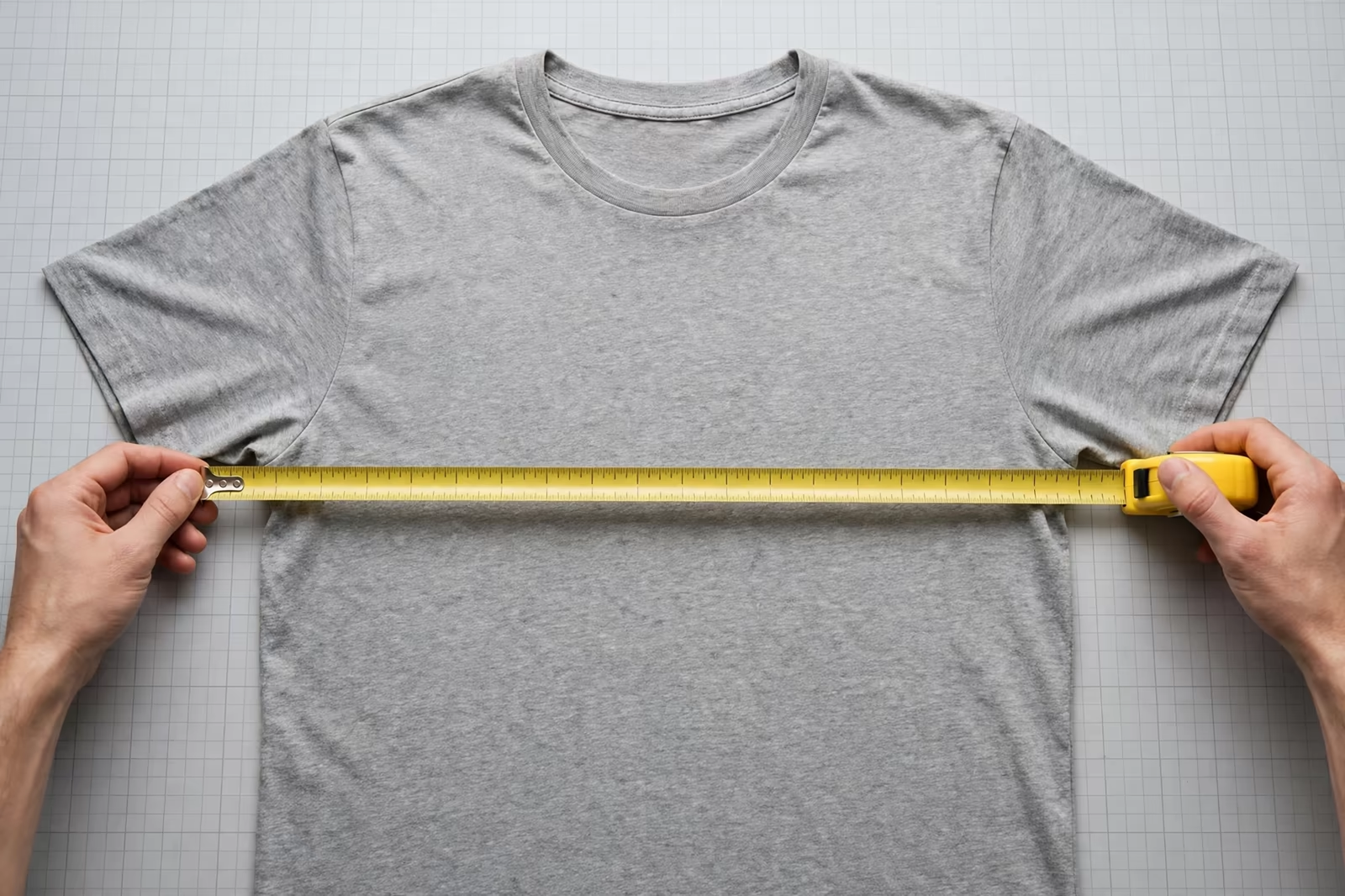
Fit approval is where a sample stops being a garment and becomes evidence. A technician does not ask whether a sample looks right; she measures it, point by point, against the specification, and lets the numbers argue. The difference between that discipline and the hopeful fitting, where a sample is turned in the light and declared fine, is the difference between brands whose bulk matches their samples and brands whose customers meet a stranger. This guide sets out how samples are measured properly, what the numbers mean and how to run an approval a factory can respect.
The samples measured in this guide were sewn in Bangladesh for buyers in the USA and Canada, and the fits signed off on them become the standard those markets reorder against.
The measurement discipline sits inside our MOQ and production framework, the sample work in our services, and the specifications agreed when buyers get a quote.
Before the Tape: Preparing the Sample
Measurement begins before the tape comes out. The sample must rest flat and relaxed on a smooth table, out of its bag long enough for creases from folding and transit to fall away, because a garment measured straight from the courier’s parcel is a garment measured in a state it will never be worn in. Knits in particular need their rest: stretched by handling, they read long and narrow until the fibres settle back to their honest dimensions.
The room matters less than the ritual: same table, same light, same state of rest, every time. Technicians condition samples the way laboratories condition instruments, not from fussiness but because approval decisions are comparisons, and comparisons are only as good as the sameness of the conditions they were made under.
Points of Measure: The Agreed Map
Every style has its points of measure, the exact places the tape is applied: chest one inch below the armhole, waist at the natural line the spec defines, length from the highest point of the shoulder, sleeve from the shoulder point, and so on. The definitions matter more than the numbers, because two honest people measuring “the waist” at different heights will produce two different truths and an argument neither can win.
This is why professional spec sheets carry measurement diagrams or written definitions beside every figure, and why a brand approving fit should ask one question before all others: measured how, and from where? A factory and a brand using the same map can disagree productively about a number; using different maps, they cannot even disagree.
How a Technician Actually Measures
The sample lies flat, smoothed but never stretched, seams aligned, closures fastened exactly as the spec assumes: buttons buttoned, zips closed, waistbands lying in their natural curve rather than pulled straight. The tape follows the point of measure without riding over seams or sagging between them, read at the point the definition specifies, recorded immediately, to the precision the tolerance system uses.
Both sides are measured where the garment has two: both sleeves, both legs, because asymmetry is a fit defect the single-side habit never catches. And the technician measures as the spec is written, in its units, in its order, so the approval sheet builds itself as the tape moves and nothing depends on memory at the end of a long table. Experienced technicians also re-measure the first point at the end of the round, a quiet checksum: if the opening number has moved, the sample has been handled out of its rest or the tape work has drifted, and the round begins again rather than entering numbers nobody would defend.
Recording: The Measurement Sheet
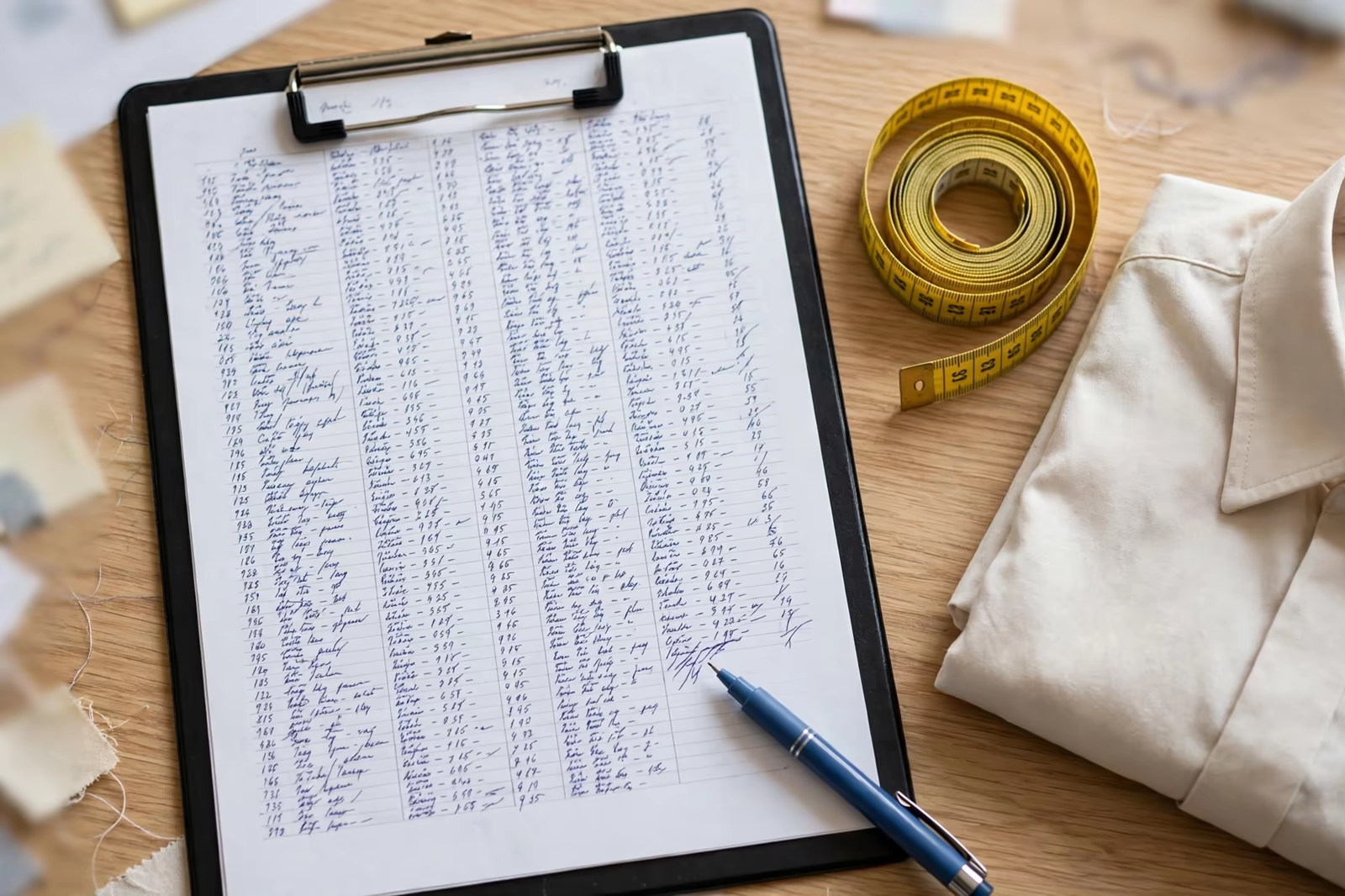
Numbers live on the measurement sheet: the spec value, the tolerance, the measured value and the variance, size by size for the sizes sampled. Its discipline is its power. A variance written down can be judged, patterned across a set and remembered at the next round; a variance mentioned in a call evaporates, and the same argument returns wearing a new sample.
The sheet is also the approval’s memory across people and seasons. When a fit comment at pre-production says the chest crept two rounds ago, the sheets are what prove it. Brands that keep them hold a longitudinal record of their own product; brands that do not re-litigate every fitting from first principles, forever.
Reading Variances: Signal and Noise
No sample measures exactly to spec, and the technician’s real skill is reading which variances matter. A single point outside tolerance on one sample may be a measuring artefact, a crease, a moment. The same point outside in the same direction on every size is a pattern speaking. Variance with a pattern is information; variance without one is usually handling, and confusing the two sends factories correcting ghosts while real drift walks past.
Direction matters as much as size: measurements that grow as sizes grow suggest the grade; measurements off only at the base suggest the pattern; measurements off randomly suggest the making. The sheet, read well, is a diagnostic instrument that points at the department responsible before a single accusing word is written.
Beyond the Tape: Fit on the Body
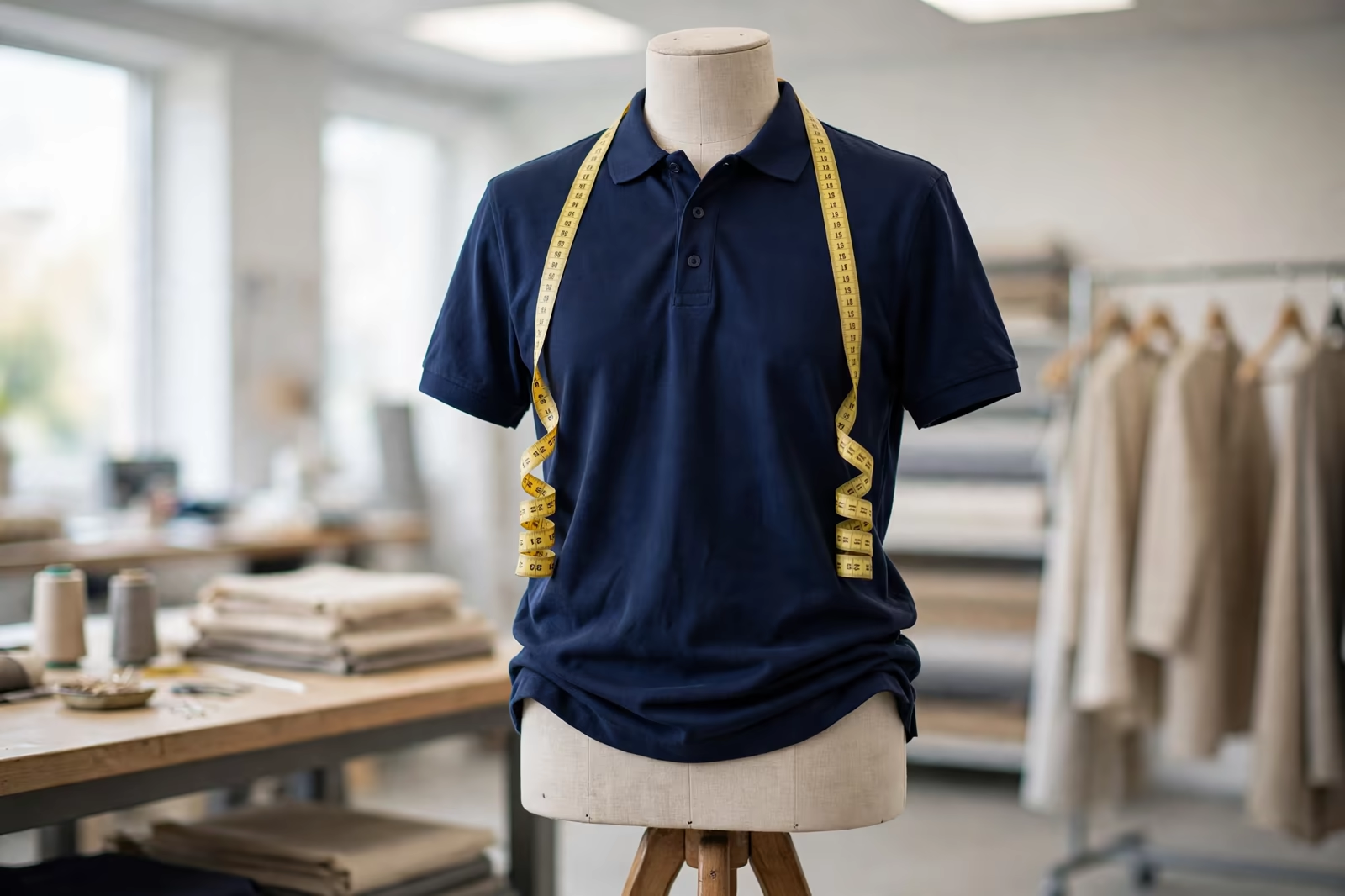
Numbers are necessary and not sufficient. A garment can measure to spec and still fit badly, because fit lives in three dimensions: the balance of front and back, the hang of the cloth, the behaviour at the armhole when the arm actually moves. So after the tape, the sample goes on the body or the stand it was designed for, and the technician reads it: drag lines pointing at tightness, pooling at looseness, a hem that swings from a balance the measurements approved but the eye cannot.
The order is the discipline: tape first, body second. Fitted first, a sample seduces the eye into forgiving its numbers; measured first, the numbers have their say before charisma enters the room, and the body check then answers the one question the tape cannot: whether a correct garment is also a right one.
Fit Comments: Writing What the Factory Can Use
Approval output is the fit comment, and its quality decides the next sample. A usable comment names the point of measure, the measured variance and the wanted correction in the factory’s own terms: chest measures one centimetre over spec across all sizes, bring the pattern in by that amount at the chest point. An unusable comment says the sample feels generous, and leaves a pattern master to guess at a feeling’s dimensions.
Photographs earn their place when they show what numbers cannot: a drag line, a collar standing away, a sleeve twisting, each annotated with where and how much. The rule across all of it: every comment should be executable by someone who was not in the room, because usually, it will be. Comments written to that standard travel well across languages, time zones and staff changes; comments written as impressions need their author in the room forever, which is a dependency no supply chain survives.
Approving in Stages: Proto, Fit, PP
Fit approval is not one event but a narrowing series. Early samples are judged on proportion and direction, with tolerances read generously because the pattern is still learning; the fit sample is judged strictly, because it sets the pattern’s final truth; the pre-production sample is judged as bulk’s representative, measured as bulk will be measured, with no allowance left for promises.
Trouble begins when the stages borrow each other’s standards: proto strictness that strangles development in round one, or PP leniency that waves through what the fit round would have caught. The technician’s calendar is a ratchet, tolerances tightening as the sample’s authority grows, and saying so plainly at kickoff prevents most end-stage arguments.
The Sealed Standard: Approval Made Physical
When fit is approved, the measured sample becomes the sealed standard: signed, dated, kept unwashed, unworn and untouched as the physical half of the specification, its measurement sheet filed as the other half. Bulk is then not an interpretation but a comparison, and every later dispute has an arbiter that cannot misremember, flatter or forget.
Our programs run at a standard minimum of 1,200 pieces per style in up to two colours, and every one of those pieces claims descent from the approved sample. Fit approval done like a technician, points defined, variances recorded, comments executable, a standard sealed, is what makes that claim true often enough to build a brand on.
Shrinkage: Measuring the Garment It Will Become
A sample fresh off the machine is a garment in its first state, not its final one. Washing relaxes or shrinks fibres, moves dimensions and settles the cloth into the size the customer will actually meet, which is why serious approvals measure after the wash the garment will receive, and why specs state whether their figures are before or after washing. An approval granted on unwashed measurements is a bet that shrinkage will be kind, placed with the customer’s wardrobe as the stake.
Programs therefore build the expected shrinkage into the pattern or prove it absent in testing, then measure the washed sample against the same map. When a brand’s returns say the product shrank, the sheets from approval usually show the moment the bet was placed: a column of perfect numbers recorded one wash too early.
Frequently Asked Questions
Should I measure samples myself or trust the factory’s sheet?
Read the factory’s sheet, and verify it with your own tape on the points that matter most, especially at fit and pre-production stages. The two sheets agreeing is the strongest signal in sampling; where they differ, the difference itself is the finding, usually a point-of-measure definition to align before any pattern is touched.
How far out of tolerance is acceptable at fit stage?
It depends on the point and the direction, which is why approvals are judgements and not arithmetic. A critical point, chest, waist, length, outside tolerance needs a pattern correction and a new sample; a minor point fractionally out, consistently explained, may be accepted and recorded. What is never acceptable is an unrecorded acceptance: the sheet must show what was waived, or the waiver becomes next season’s dispute.
Why does my sample measure differently from the factory’s report?
Almost always for ordinary reasons: the sample was measured in a different state of rest, the tape followed a different definition of the point, or closures were fastened differently. Align the method first, same rest, same map, same state, and most phantom variances disappear; the ones that survive the alignment are real, and now both sides can see them.
What if a sample measures perfectly but still fits badly?
Then the specification, not the sample, is wrong: the numbers encode a fit the body rejects, in balance, ease placement or proportion. The technician’s answer is to change the spec deliberately at the points the body indicts, record the new targets, and re-sample. A perfect sample of a wrong spec is the most instructive failure in development, because it proves the factory can build exactly what the paper says.