
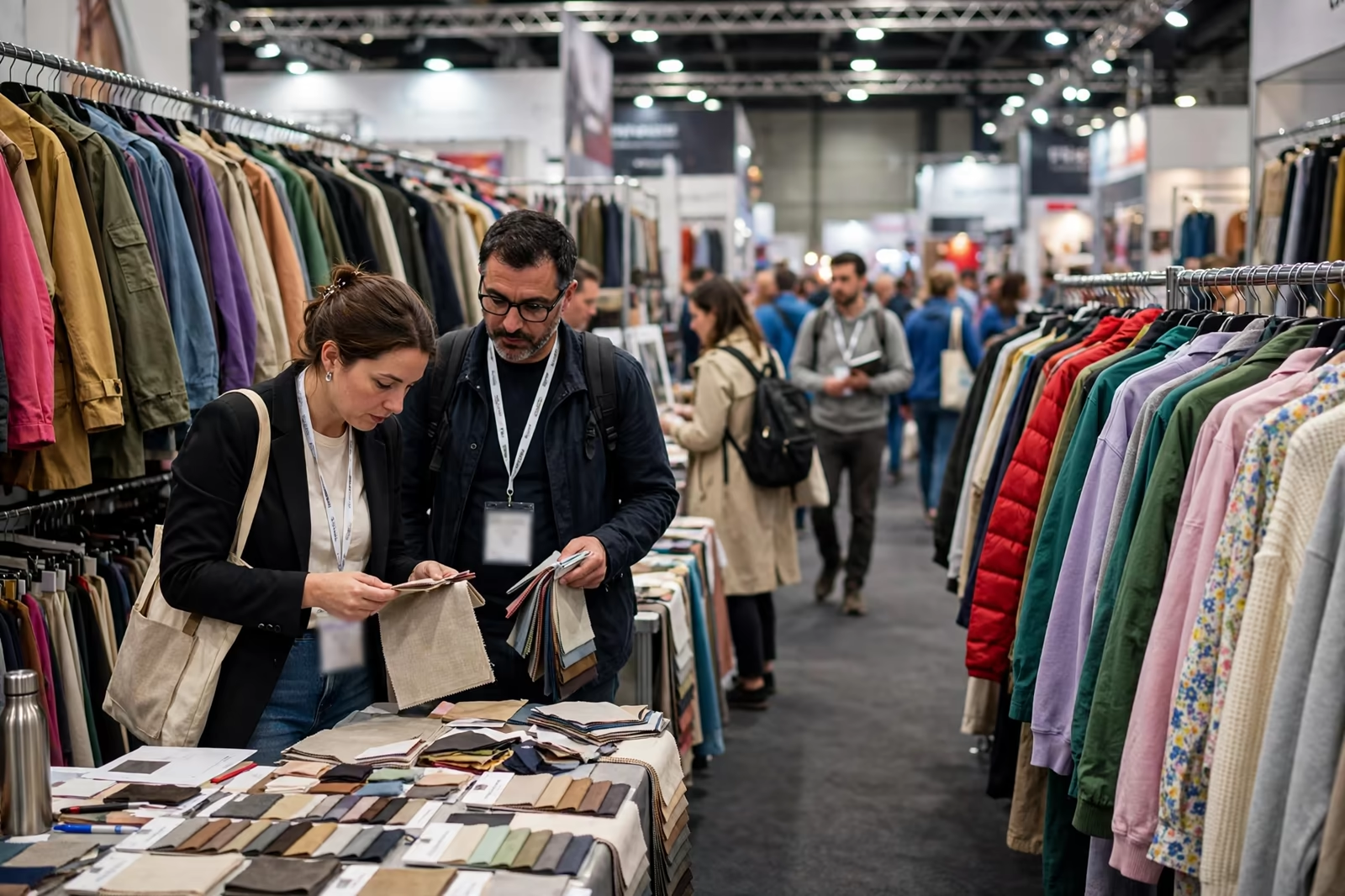
Every sourcing journey starts with a discovery problem: where do the right factories come from? Buyers have three classic routes, the trade show, the online platform and direct factory contact, and each finds a different kind of supplier at a different cost of time and risk. This guide compares the channels honestly, including what the show floor cannot tell you and what a direct conversation can.
The team behind this guide exhibits at no show and works entirely through direct contact with buyers in the USA, the UK, Germany, Canada and Australia, sourcing apparel made in Bangladesh. That is our interest declared openly; the comparison below is still written to send some readers to the show hall, because for certain buying jobs it is the right tool.
Our own door is described on our about us page, opened through our contact page, and priced through our get a quote page.
The Trade Show: Breadth at Walking Speed
A sourcing fair compresses a market into a hall: hundreds of exhibitors, garments on rails, samples in hand, and conversations that would take months of email done in days. For a buyer mapping a new category, comparing price levels across countries, or reading where a product group is heading, nothing else matches the density.
Touch is the show’s unique evidence. Fabric hand, stitch quality and finishing standards can be judged on the rail in seconds, and a stand’s sample quality is a real, if partial, signal of the factory behind it. Buyers leave with bags of swatches and a shortlist that pure desk research rarely produces as fast.
The costs are time, travel and selectivity: exhibitors are the factories that chose to market, in the regions that chose to exhibit, presenting their best face for three days. The hall shows you the market’s shop window, which is valuable and is not the market itself.
What the Show Floor Cannot Tell You
A stand cannot show you the production floor on a wet Tuesday in peak season: capacity under pressure, quality behaviour on the four-hundredth carton, or how the factory handles a problem when the buyer is not watching. Exhibiting factories also range from the genuine manufacturer to the trading company with borrowed samples, and the stand alone does not separate them.
Price talk at shows is similarly provisional: show quotations are opening positions given without your full specification, and the real numbers arrive later against tech packs and quantities. Buyers who mistake the show price for the order price budget wrong in both directions.
So the show is best used as a discovery and shortlisting engine, with verification deliberately scheduled after it. The work the hall starts, the audit, the samples and the trial order must finish.
Direct Factory Contact: Depth From the First Email
Contacting factories directly, through their own websites and referrals, inverts the show’s economics: slower discovery, far deeper evidence per candidate. A serious factory’s site and correspondence reveal its product focus, its documentation quality, its responsiveness and its command of your product, all before any money moves.
The conversation also starts at the right altitude. Instead of a stand’s three-minute pitch, a direct enquiry opens the full sequence: specification, sampling, costing against your actual quantities, terms, and the factory’s questions back to you, which are among the best quality signals in sourcing, because real manufacturers interrogate the order.
The cost is that discovery is on you. Search engines and directories return whoever markets best, impostors included, so the verification discipline from our payment safety guide, company checks, video calls, samples before bulk, belongs inside this channel from day one.
Reading a Supplier Website Like an Auditor
A factory’s website is evidence if read properly. Look for product specificity: real ranges with construction detail, rather than everything-for-everyone catalogues. Look for process language that matches how garments are actually made, and for consistency between the site, the documents the factory sends and the answers its team gives on a call.
Generic stock photography of other people’s factories, addresses that do not resolve, and catalogues spanning unrelated industries are the standard tells of the trading layer and the impostor. Neither is automatically disqualified, traders can be excellent partners when honestly presented, but you should know which animal you are dealing with before pricing starts.
Response behaviour completes the audit: a factory that answers specification questions with specification answers, asks about your standards and names its constraints is showing you its production culture in miniature.
Online Platforms: The Middle Channel
Sourcing platforms aggregate supplier listings with search, reviews and transaction protection, offering discovery speed between the hall and the open web. For standard products and first experiments they lower the cost of starting, and their assurance programmes add a referee to early orders.
Their weakness is depth: listings reward marketing craft as much as manufacturing quality, reviews measure transactions more than production, and the factories most worth finding for a serious private-label programme are often lightly present or absent, busy making clothes rather than listings.
Many buyers use platforms as a sampling channel, prove a product, then migrate the programme to a direct factory relationship for the control, pricing and communication the platform cannot carry at scale.
The Cost Ledger of Each Channel
Channels also differ in where they hide their cost. Shows charge openly: flights, hotels, days away and stand-side time, all visible. Direct research charges in staff hours, sample couriers and the occasional paid audit, spread across the calendar. Platforms charge in margin: prices quoted through layers, and the cost of discovering a supplier’s limits after committing.
None is free, and the honest comparison is cost per verified supplier relationship, not cost per contact. A show that produces three audited, sampled, trial-ordered factories was cheap at any airfare; a hundred free platform contacts that never survive verification were expensive in the only currency that matters, which is time.
Budget the verification stage inside every channel’s cost from the start, and the channels compare fairly for the first time.
Agents and Sourcing Offices
A fourth route deserves naming: the buying agent or liaison office that works the origin market on your behalf. Good agents compress local knowledge, factory access and quality follow-up into one fee, and for buyers without travel budgets or local language they are often the rational channel.
The same caveats apply doubled: the agent’s factory pool becomes your world, their incentives need understanding, and the verification questions simply move one chair along. Ask which factories they represent, how they are paid, and whether you may speak to the factory directly; comfortable answers are the signal.
Several of our own long programmes began through introductions of exactly this kind before settling into direct working relationships, a pattern the trade repeats constantly.
Choosing by Buying Job, Not by Habit
Match the channel to the job. Exploring a new category or country: the show. Starting small on standard products: the platform. Building a private-label programme with repeat volume: direct contact, verified properly, possibly reached through an agent’s introduction. Replacing a failing supplier urgently: direct contact with the deepest verification, because speed without evidence restarts the failure.
Most mature buying offices run all channels at once in different proportions, shows for horizon scanning, direct relationships for the core programme, platforms for experiments. The channel is not an identity; it is a tool selected per task.
Whichever channel found the factory, the destination work is identical: samples, a trial order, document and payment structure, and a first shipment treated as an audition. Channels differ in discovery; they must never differ in proof.
And keep notes on how each candidate was found. When a supplier fails or excels two seasons later, the channel that produced them is evidence about where your next search budget belongs.
Fairs in Producing Countries vs Destination Shows
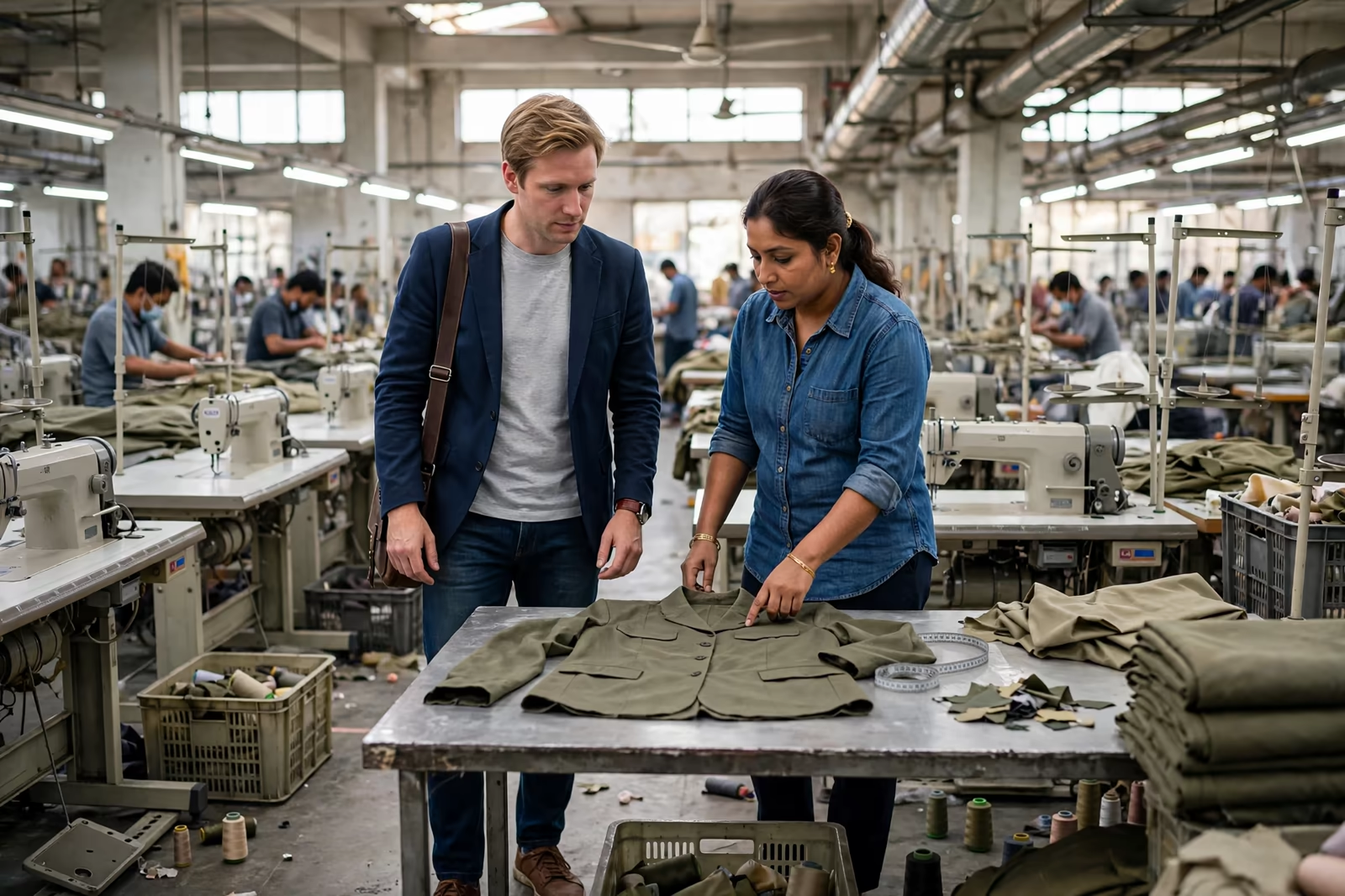
One refinement matters: shows split into two species. Destination-market fairs gather exporters selling into that market, excellent for comparing origins side by side. Producing-country fairs and factory-visit trips put you inside the supply base itself, where the range is wider, the trading layer thinner, and a show visit can be combined with real factory tours in the same journey.
For a buyer ready to commit volume to one origin, the producing-country trip is usually the highest value travel in sourcing: stands in the morning, sewing floors in the afternoon, and verification built into the itinerary rather than bolted on afterwards.
Buyers building a Bangladesh programme will find that pattern at its most efficient, since the export industry is geographically concentrated and a single trip can cover meaningful ground.
From Shortlist to First Order
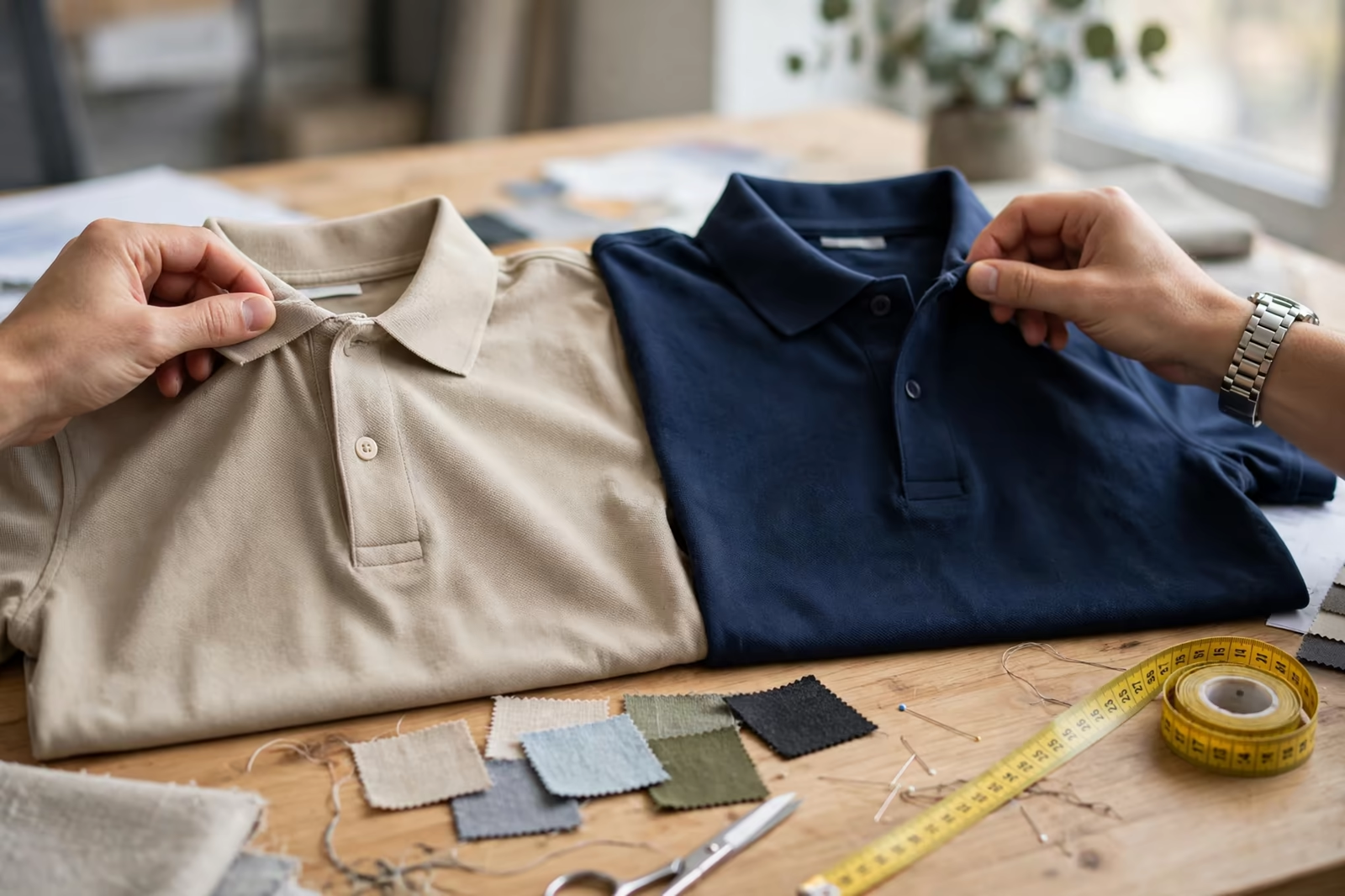
Every channel should end at the same desk: a shortlist of two or three factories per product family, each carried through samples, costing against your specification, and a structured trial order. Running two candidates in parallel through sampling is cheap insurance and the fastest truth serum in sourcing, because quality differences invisible in conversation appear immediately in garments.
Keep the losers warm. A verified second factory, sampled and priced, is the beginning of the two-supplier resilience our strategy guide discusses, and it costs almost nothing to maintain once the discovery work is done.
Record what each channel actually delivered, suppliers found, verified, ordered, repeated, and let that ledger, not habit or fashion, set next season’s channel mix.
Frequently Asked Questions
Are trade shows still worth attending for apparel sourcing?
Yes, for the jobs they do uniquely well: mapping a new category or country quickly, judging fabric and construction quality by hand across many suppliers, and building a shortlist in days. They do not verify production capacity or behaviour under pressure, so treat the show as discovery and schedule audits, samples and trial orders after it.
How do I find factories directly without a trade show?
Through factory websites found by product-specific search, industry directories, referrals from other buyers and introductions from agents, then verified properly: company and export history checks, video calls and factory walk-throughs, samples produced before bulk terms, and payment structured in stages. Direct contact gives deeper evidence per candidate but puts the discovery and verification work on you.
Can I trust factories found on sourcing platforms?
Trust the process, not the listing. Platforms are efficient for discovery and small first experiments, especially with their assurance programmes, but listings reward marketing as much as manufacturing. Run the same verification you would anywhere, and expect serious programmes to migrate to direct relationships as volume and customisation grow.
What is the best channel for a first private-label programme?
Usually direct factory contact, verified thoroughly, because private label lives on specification detail, sampling rounds and repeat consistency that need a real working relationship. A show can build the shortlist and a platform can prove a product idea, but the programme itself should sit with a factory you have audited, sampled and paid safely.