
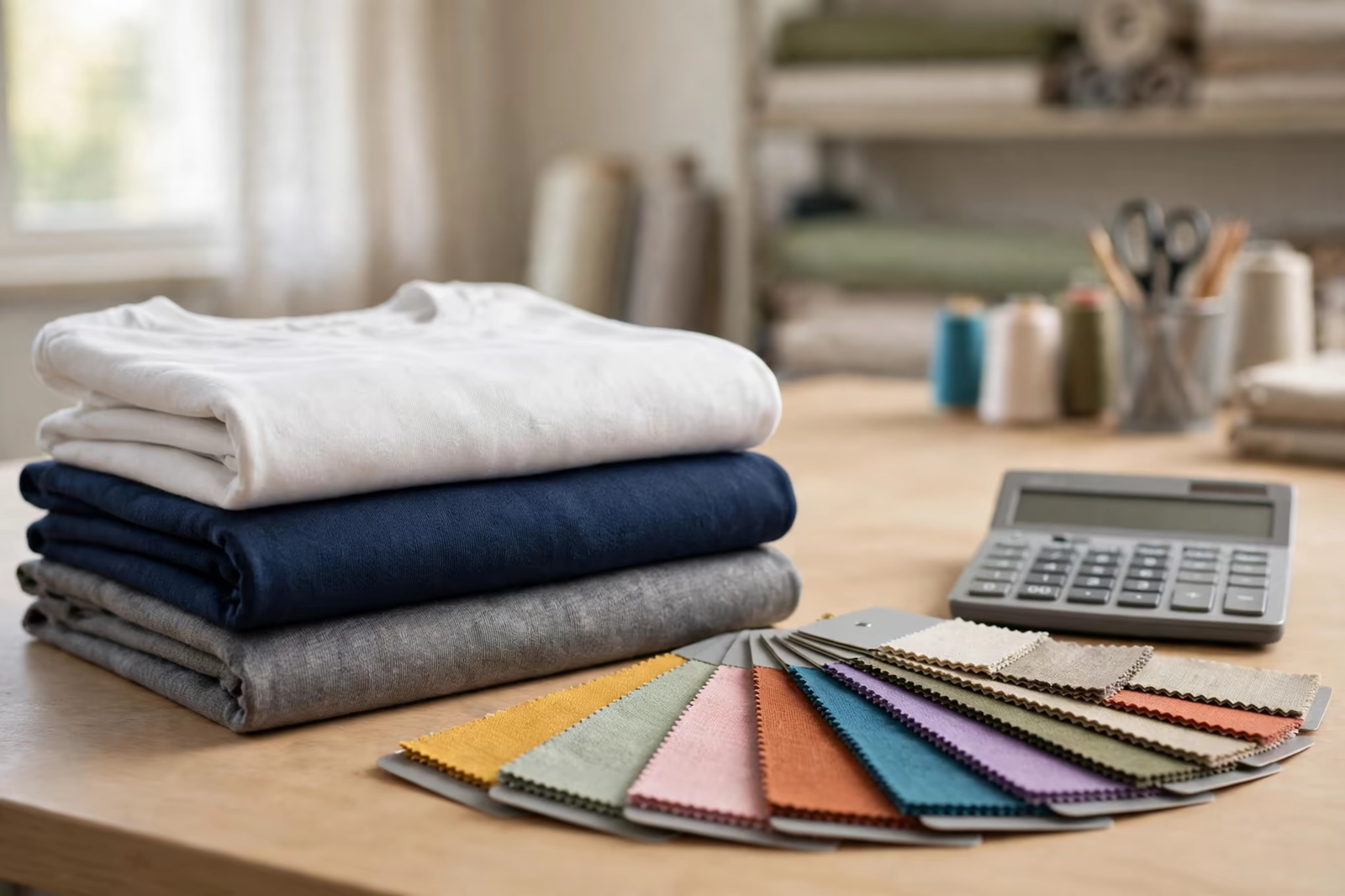
A custom t-shirt quote looks like one number, but it is really a list of decisions, each priced separately and added together. Buyers who can read the list negotiate better, compare factories fairly and stop paying for things they never asked for. This guide opens a typical quote from a manufacturer in Bangladesh and walks through every line, so the next quotation that lands in your inbox reads like a document you understand rather than a figure you have to trust.
Everything here follows how made-to-order production actually works. Nothing is pulled from stock: fabric is sourced or developed for the order, garments are cut and sewn after confirmation, and printing follows your artwork. Our standard minimum of 1,200 pieces per style in up to two colours is the scale the prices in this guide assume, serving brands and merchandisers across the USA, the UK, Germany, Canada and Australia.
The Anatomy of a Quote
A complete garment quote is built from the same blocks everywhere in the world. The order of the blocks and the honesty of the numbers are what separate a careful factory from a careless one.
- Fabric: the yarn, knitting, dyeing and finishing of the cloth itself
- Cutting and sewing: the making cost of turning cloth into garments
- Decoration: printing, embroidery or any other artwork application
- Trims: labels, tags, threads, buttons and packaging materials
- Washing and finishing: any wash, pressing, checking and final preparation
- Quality control: inspection time built into the production cost
- Overhead and margin: the factory’s running costs and profit
- Freight terms: separated clearly as FOB, CIF or another agreed basis
When a quote arrives as a single unexplained figure, ask for the breakdown. A factory that prices carefully can show its workings; one that cannot is guessing, and guesses usually resolve in the factory’s favour later.
Fabric: The Biggest Line on the Page
On a basic tee, fabric is commonly the largest single cost, often more than the sewing. That is why small specification changes move the price so much: the cloth is where the money sits.
- Fibre: combed cotton costs more than carded; organic and recycled fibres carry certification costs
- Weight: a heavier GSM uses more yarn in every single garment
- Construction: single jersey, pique, interlock and rib all knit and dye differently
- Colour: dark shades and special dyeing cost more than white and light shades
- Yield: the fabric width and marker efficiency decide how much cloth each shirt consumes
- Finishing: bio-wash, silicone softening and anti-pilling treatments each add a process
This is also why a classic crew-neck t-shirt at two different weights is really two different products wearing the same name. When you compare quotes, compare the fabric specification word for word before you compare the totals.
Making: Cutting, Sewing and Finishing
The making cost covers the labour and machine time of production. It looks simple from outside and is anything but: a t-shirt passes through cutting, a sequence of sewing operations, thread trimming, checking, pressing and folding before it is a finished garment.
- Operation count: more seams, panels and details mean more machine minutes
- Stitch quality: denser stitching and reinforced seams take longer to sew
- Size range: very large sizes consume more fabric and slightly more time
- Finishing standard: thread trimming, measurement checks and careful pressing are labour
- Rejection allowance: a serious factory prices in the cost of remaking faulty pieces
Making costs differ between countries mainly through wages and efficiency, which is exactly why Bangladesh remains competitive: skilled sewing labour at scale, in factories that run these operations all day, every day.
Print and Embroidery Pricing
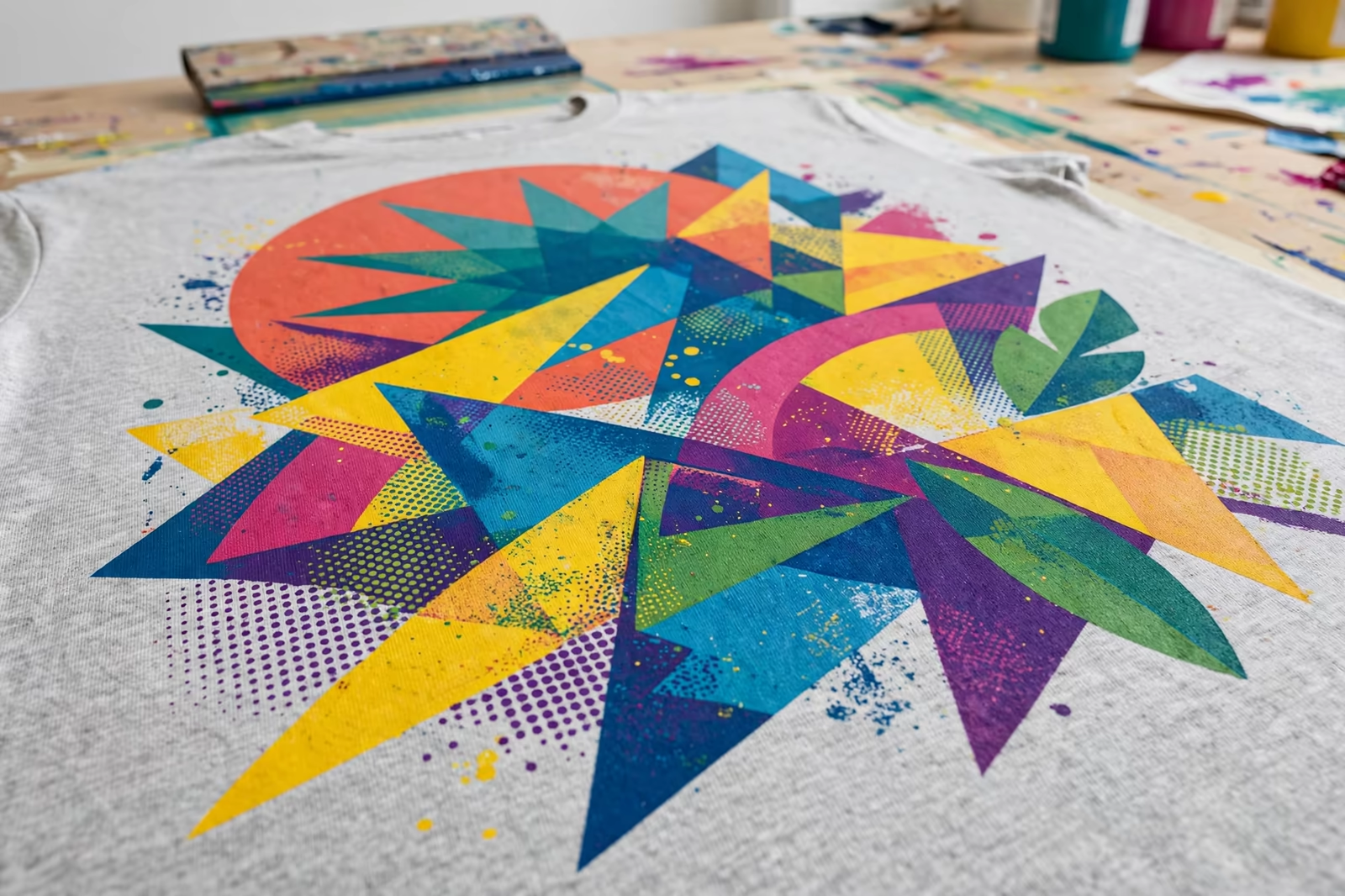
Decoration is priced by its own logic, and it is the line buyers most often under-specify in the enquiry and over-pay for at the end. A print quotation depends on the artwork, not just the garment underneath it.
- Number of print colours: every colour needs its own screen and pass
- Print size: a large front print uses more ink and more press time
- Placements: chest, back and sleeve positions are priced as separate prints
- Technique: plastisol, water-based, discharge and special effects all cost differently
- Embroidery: priced by stitch count, so a dense logo costs more than an outline
- Artwork state: clean vector files avoid studio charges and delays
The practical lesson is to send the artwork with the first enquiry. A factory quoting blind will protect itself with a cautious decoration price, and the cautious price is rarely the lowest one.
The Small Lines That Add Up
Individually, trims and packing look trivial. Across a full order they are real money, and they are where unspecified quotes quietly grow after confirmation.
- Woven labels and printed size labels, made under your brand
- Hang tags, barcode stickers and any retail-ready presentation
- Polybags, tissue, folding style and garments per carton
- Carton quality and printing, built for a sea voyage
- Testing charges where your market or your own standard requires them
- Courier costs for approval samples at each stage
None of these lines should surprise you at invoice stage. The time to price them is in the quotation, which is why a detailed specification at the start protects the buyer far more than hard bargaining at the end.
Quantity and the Price Curve
Unit price falls as quantity rises, and the reason is arithmetic rather than generosity. Setup costs, screen making, marker making, machine setting and approval work are fixed sums: spread over more garments, each garment carries less of them. Fabric also buys better in full rolls than in part rolls, and a cutting room works more efficiently on long runs of one style.
The curve is steepest at small quantities and flattens as the order grows, which is why our standard minimum of 1,200 pieces per style in up to two colours sits where it does: it is the point where a custom specification becomes genuinely economical. Below it, the same shirt is not worse, just more expensive per piece, and an honest factory will show you that curve rather than hide it.
What a Fair Comparison Looks Like
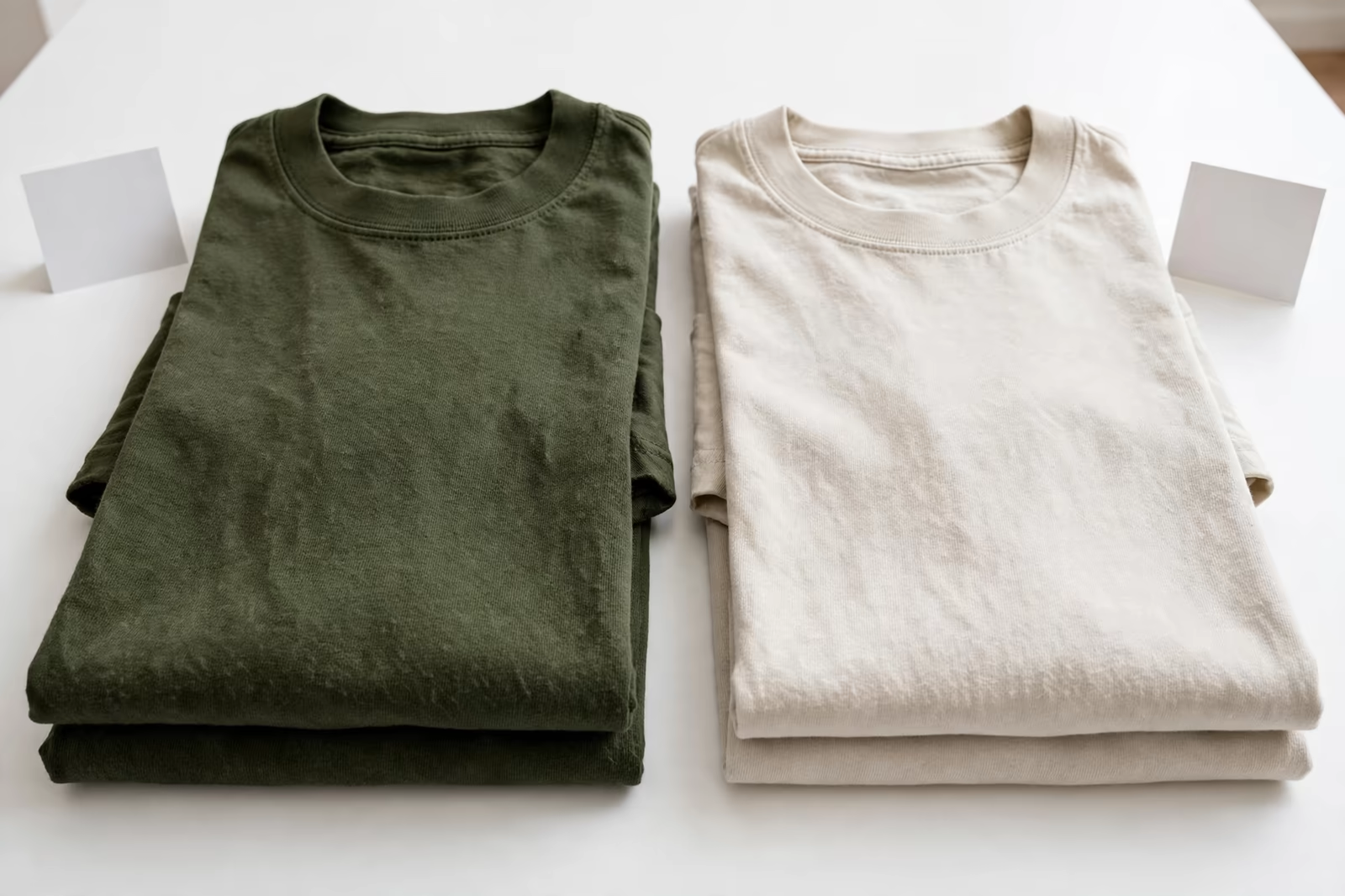
Two quotes can only be compared when they describe the same garment on the same terms. Before ranking prices, align the following, and treat any quote that refuses alignment as a warning sign.
- Identical fabric specification: fibre, weight, construction and finish
- Identical decoration: same artwork, colours, sizes and placements
- Identical packing: same folding, bagging and carton standard
- Identical trade basis: FOB compared with FOB, never with CIF
- Identical payment structure, checked against the payment terms
- Validity period stated, so the price you accept is the price you pay
With the specifications aligned, the cheapest quote deserves one more question: which line is doing the saving? If the answer is fabric weight or stitch density, the saving will arrive as a quality problem. If it is efficiency, overhead or margin, it is a saving worth taking. When you are ready, send the full specification through get a quote and expect a breakdown you can read line by line.
How to Read a Real Quotation Document
A quotation is a document with a structure, and reading the structure tells you as much as reading the numbers. A professional quote names the garment, states the specification it is priced on and separates what is included from what is not, so both sides sign the same understanding.
- The specification summary: fabric, weight, decoration and packing, stated in words
- The unit price and the trade basis it stands on, FOB or otherwise
- The validity period, after which yarn and fabric prices may move
- What is excluded: international freight beyond the stated basis, duties and destination charges
- Sample charges and whether they are credited against a bulk order
- The payment structure the price assumes, deposit and balance
Two red flags deserve attention. A quote with no specification summary is pricing a garment you have not defined, and the definition will be settled later by the factory. A quote far below every other, with no breakdown available, is not a bargain; it is a number waiting to be corrected upwards or delivered downwards in quality.
Where Buyers Overpay Without Noticing
Most overspending on custom t-shirts is not caused by high factory prices. It is caused by specification habits that add cost without adding value the customer will ever perceive.
- Copying a heavy GSM onto a summer promotional shirt that needs to be light
- Adding print colours the artwork does not need, one screen at a time
- Choosing air freight by habit for goods that could sail on schedule
- Upgrading packing to retail presentation for garments that will be handed out free
- Ordering repeated sample rounds instead of deciding firmly at the first round
- Changing the specification after confirmation, when every change reprices the order
None of these are factory tricks; they are buying decisions. A good breakdown makes them visible before the order is placed, which is the entire point of reading a quote properly: the cheapest garment is the one specified correctly once, produced once and shipped once.
Currency, Validity and the Small Print
Export quotes are normally written in US dollars, and the small print around the number decides how long the number survives. Yarn and dyestuff prices move with global markets, so every serious quote carries an expiry, and accepting inside the validity is what locks your price.
- Currency stated clearly, with no conversion surprises at payment
- Validity period stated, and fabric booking explained on acceptance
- Any surcharge triggers named in advance, never invented later
- The specification attached to the quote, so the price has a definition
Frequently Asked Questions
Why do two factories quote very different prices for the same t-shirt?
Because the same t-shirt is rarely the same specification. Differences in fabric weight, yarn quality, stitch density, print method and packing standard hide inside an identical style name. Ask both factories for the full breakdown and compare line by line; the gap usually explains itself.
What part of a t-shirt quote is usually negotiable?
Margin and specification choices move more easily than raw material costs. Changing a finish, simplifying a print or adjusting packing can reduce a price honestly, while squeezing the fabric or sewing lines usually returns as a quality problem in the finished garments.
Does a higher GSM always mean a higher price?
Almost always, because a heavier fabric uses more yarn in every garment. The exception is efficiency: a well-planned marker on a wider fabric can offset part of the increase. Either way, weight should be a deliberate choice for the garment’s purpose, not a number copied from another product.
Why does the quote change after sampling?
Sampling reveals the true consumption and making time of your exact specification: the real print size, the actual marker yield, the finishing the fabric needs. Small movements are normal and should be explained line by line against the original breakdown, not presented as a new unexplained total.