
A corporate uniform is not a garment; it is a system. The chief executive, the field technician, the receptionist and the driver wear different clothes that must still read as one company at a glance, in photographs, across climates and after a hundred washes. Designing that system, roles, fabrics, colours, branding and replacement logic, is a different discipline from ordering shirts, and programmes that treat it as one discover the difference in their second year. This guide builds the system properly.
The uniform programmes behind this guide are produced in Bangladesh for companies in the USA, the UK, Germany, Canada and Australia.
The system’s anchors here are our classic pique polo shirt and work shirt; programmes start at get a quote.
Start With Roles, Not Garments
Every uniform design begins with a role map: who wears what, where, doing what physical work, in front of which audience. Office and client-facing roles need polish and structure; field and warehouse roles need abrasion resistance, pockets and movement; drivers and outdoor roles need weather logic and visibility; management needs the same language at a slightly elevated register, never a different language.
The map also records laundering reality per role, home wash, industrial laundry, daily change, because fabric and construction choices hang on it.
Programmes that skip the role map buy garments; programmes that draw it buy a system that survives staff turnover and growth. The map also exposes the awkward cases early, the staff who move between roles, the seasonal workers, the executives who refuse the polo, each of which the design must answer before production does.
One Identity, Many Silhouettes
The unifying devices are colour, branding placement and detail language, not identical clothing. A company colour carried across polo, shirt, softshell and cap reads instantly as one team, while each garment stays honest to its job. Logo position and size should be standardised per garment family, chest left on tops is the trade’s default grammar, with sleeve or back placements reserved by role.
Detail echoes help: the same contrast tipping, button colour or pocket shape repeated across families ties the range together at close range, where customers actually stand.
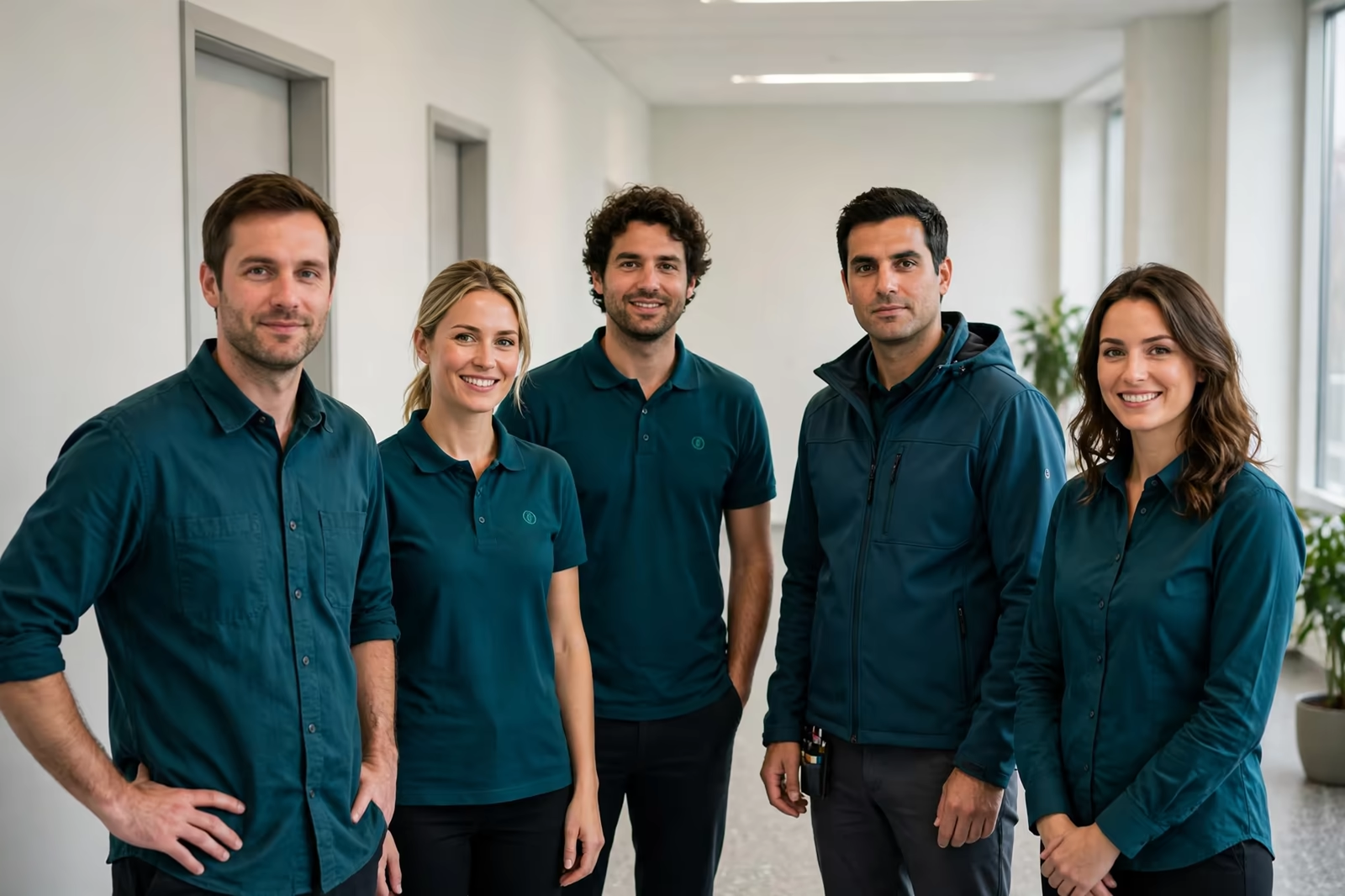
The test of a system is a corridor photograph: mixed roles in one frame should look related, not uniformed by accident. Photographs matter beyond the corridor, too: recruitment pages, press shots and customer case studies all publish the uniform, which argues for testing the range on camera at sample stage, under real light, on real staff.
Fabric Choices per Role Family
Fabric follows work. Polos in pique cotton or cotton-rich blends give office and sales roles their classic hand; polyester-rich performance knits serve field and logistics roles with wicking and easy care; woven work shirts in durable twill or poplin carry structure for supervisors and service roles; outer layers add weather protection sized over the layers beneath.
Colourfastness and shrinkage discipline, covered in this site’s compliance guides, matter doubly in uniforms because mismatched fading across a team is the system’s most visible failure, visible in every group photograph and every customer visit where two staff members stand side by side.
Every fabric decision should be recorded with its reason, since year-two reorders will ask why. Weight is a comfort decision as much as a durability one: the heaviest twill outlasts everything except the staff’s patience in August, and a system people resist wearing has failed at a more basic level than testing.
Branding Methods Across the System
Embroidery is the corporate default for good reasons: it survives industrial laundering, reads as quality at conversational distance, and ages with the garment. Chest logos on polos and shirts, cap fronts and outerwear all take it naturally. Print earns its place on event and campaign pieces, large back designs and short-life garments where embroidery’s cost per unit cannot be justified.
The system document should fix the logo’s size, position and thread colours per family, with the digital files held centrally, because five locations ordering five interpretations is how brand drift starts.
Woven badges and printed neck labels extend the same identity to the garment’s inside, where staff see it daily. Thread colour discipline deserves its own line: the logo’s approved colours rendered in embroidery thread need named thread references, because every supplier’s “navy” is a different navy until the standard fixes it.
Climate and Layering Logic
A workforce spread across seasons or sites needs the system designed as layers: base garments that stay constant, mid layers for cool indoor and shoulder seasons, outer layers for weather, each carrying the identity so removing a layer never removes the brand. Sizing must anticipate the stack, outerwear graded over knits, knits over shirts.
Hot-climate roles argue for breathable weaves, moisture management and lighter colours that show less salt and dust; cold roles for brushed interiors and wind resistance.
The role map from the first section should carry a climate column, since a system designed for headquarters’ weather fails the depot in another state. Multi-country programmes meet this at full scale: the same identity must survive a Canadian January and a Gulf August, which only layering logic with regional options inside the system can honestly do.
Gender, Fit and Inclusivity in the Range
Modern uniform programmes pattern for real bodies: women’s fits cut as their own patterns rather than shrunken men’s blocks, extended size ranges in every family, and maternity and religious-dress accommodations designed in rather than improvised. Fit is a retention issue as much as a dignity one; staff who feel well dressed wear the uniform properly.
Fitting samples in every family, collected sizes per our sizing guide, turn this principle into numbers the factory can cut to.
The range document should list the fit variants per family so reorders reproduce them exactly. Consultation belongs in the design stage itself: the staff who will wear the range can name its daily frictions, ladder-climbing, driving, food service, better than any catalogue, and programmes that ask them early rarely regret it.
The Programme Document: Writing the System Down
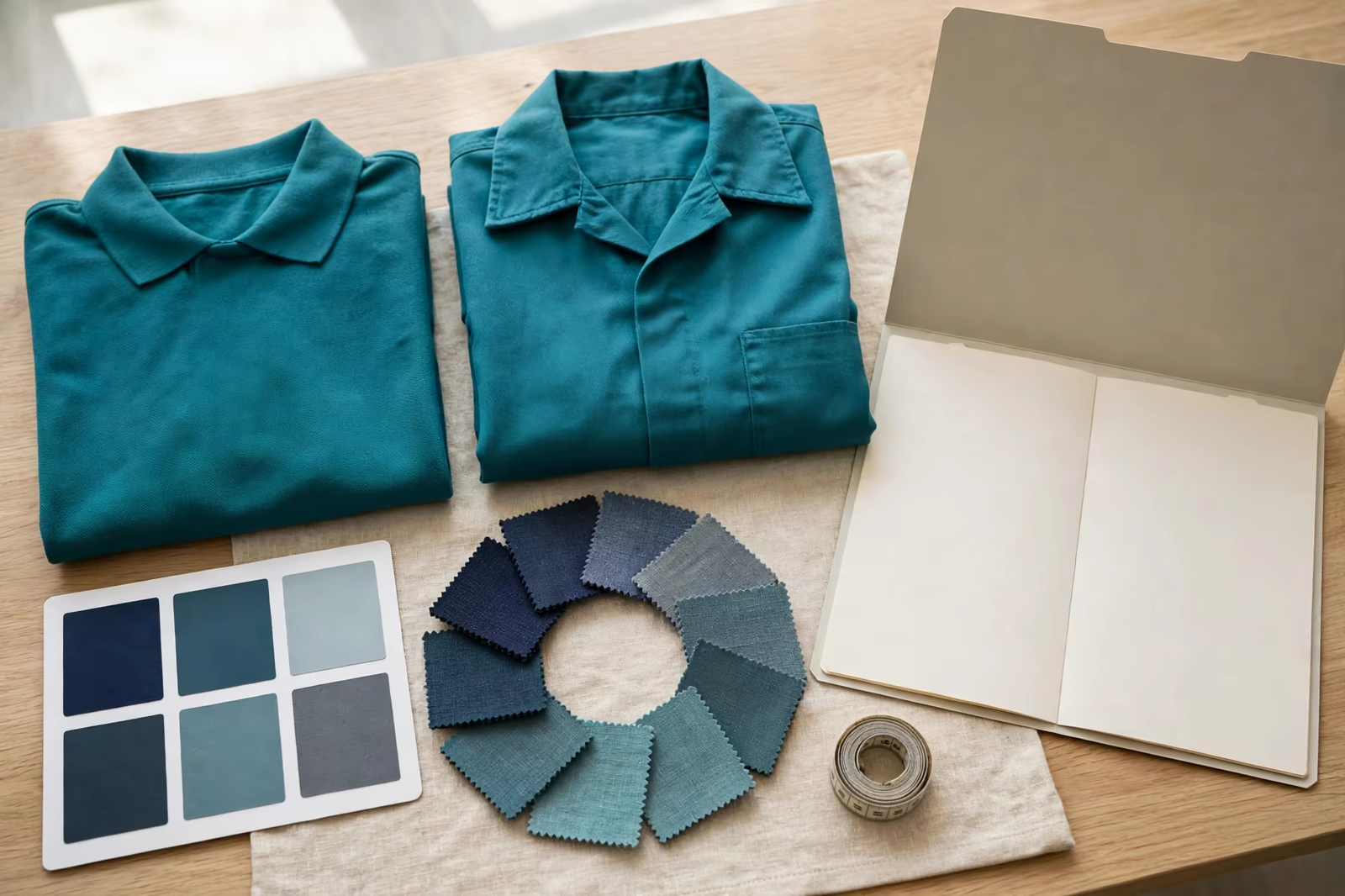
A uniform system that lives in one manager’s head dies with their job change. The programme document records the role map, garment families, fabrics with reasons, colour standards, branding specifications, size curves, spares policy and reorder triggers. It is unglamorous and it is the difference between a uniform and a wardrobe accident repeated annually.
The document also names the approval chain for changes, since every local exception, a site ordering its own cap colour, is a small withdrawal from the identity bank.
Our programme packs are built to become this document, so the client’s second order needs a purchase order, not a redesign. The document should also carry photographs of the approved garments on people, since written colour and fit descriptions drift in memory while a photograph of the standard does not.

Rollout: Pilot Group, Feedback, Full Issue
Wise programmes pilot before they commit: one site or department wears the new system for a trial period, washing it, working in it and photographing it, while the design team collects structured feedback on fit, comfort, durability and how the identity reads in the wild. Adjustments at pilot stage cost samples; adjustments after full issue cost credibility.
The pilot also tests the logistics: size distribution, spares consumption, laundry behaviour, the machinery that year two will run on.
Only then does full issue proceed, role by role, with the old uniform retired on a date rather than fading out over a year of mixed identity. Communication belongs in the rollout plan as well: staff told why the change is happening, and shown the fitting process, become the programme’s defenders rather than its critics.
Replacement and Spares: Designing Year Two
Uniforms wear out on a schedule set by role intensity, and the system should price its own replacement cycle from the start: how many sets per person, expected garment life per family, the spares pool for new joiners, damage and size changes. Budgeting this at design stage prevents the classic second-year scramble, covered fully in our replacement cycle guide.
Colour continuity is the reorder risk: dye standards and retained samples keep year-two garments indistinguishable from year one.
A system designed with its replacement logic attached costs less over its life than a cheaper design re-invented annually. Spares policy deserves one explicit number agreed at the start: the buffer per size held for joiners and swaps, since the day a new starter cannot be dressed is the day the system visibly fails.
How We Build a Uniform System
Our uniform work starts from the client’s role map, or builds one with them, then develops the families against it: fabrics proposed with reasons, branding specified per family, samples piloted in real roles, and the whole system written into a programme pack covering sizes, spares and reorders. Production follows the pack, and the client’s next order is a reference number, not a new negotiation.
The invitation is simple: bring the workforce as it actually is, roles, climates, laundries and all, and expect honest questions back.
Systems built on reality fit the people who wear them, which is the entire point of the exercise. The measure of success is unglamorous and total: two years on, a visitor in any location meets staff who look like one company, in uniforms that still match the document on the shelf, without exception.
Frequently Asked Questions
How many garment types does a uniform system need?
As few as the role map allows: most companies run three to five families, typically a polo or shirt family, a workwear family, an outer layer, and headwear or aprons where roles demand them. Every added family multiplies sizes, stock and reorder complexity, so new types should have to argue their way in against the map.
Should every employee wear exactly the same colour?
The core colour should be shared, since it carries the identity, but role accents are legitimate: hi-vis elements for yard roles, an apron colour for food roles, a softer shade for wellness staff. The discipline is that accents are designed exceptions inside the system, listed in the programme document, not local improvisations.
How are sizes handled across a whole workforce?
By collecting real staff measurements or fitting samples per role before production, then ordering to the collected size curve plus a spares allowance per size for new joiners and replacements. Guessing a standard curve for a real workforce is the commonest cause of first-issue complaints; our sizing collection guide walks through the fitting-day method.
How long should a corporate uniform design stay in service?
Programmes usually hold a design for several years, refreshing fabrics and fits without breaking the identity, because rebranding a workforce is expensive and recognition compounds. Design for that horizon at the start: classic silhouettes, colours that survive trend cycles, and branding methods, embroidery above all, that age as slowly as the garments.