
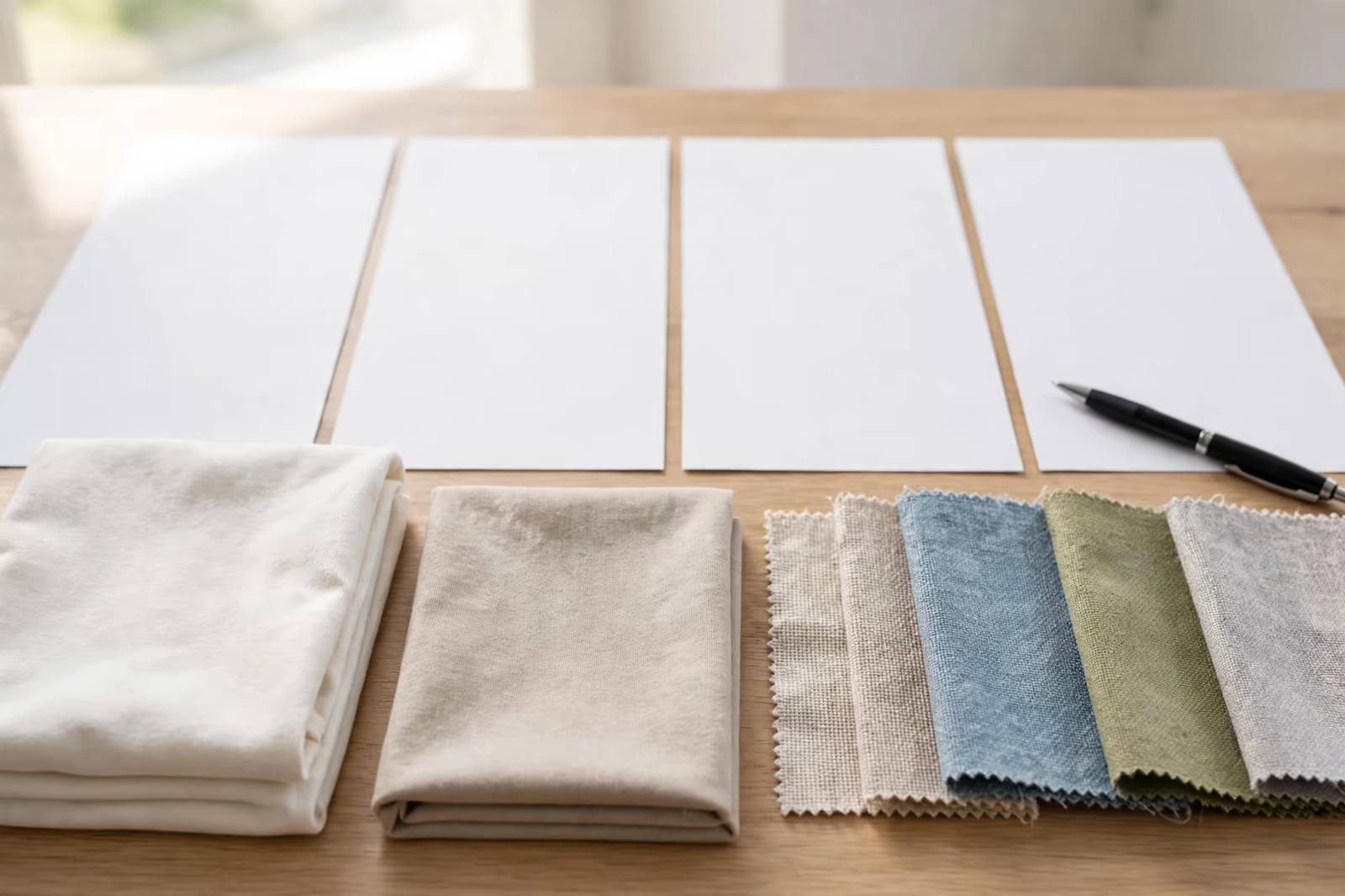
Comparing garment quotes sounds simple: put the prices side by side and choose. In practice, buyers get burned not by high prices but by quotes that were never describing the same garment. One includes packing, another excludes it. One is FOB, another quietly is not. This guide sets out a calm method for comparing quotations from clothing factories, used by experienced buyers sourcing from a manufacturer in Bangladesh for the USA, the UK, Germany, Canada and Australia.
The method rests on one principle: a price is only meaningful attached to its specification. Everything below is about forcing every quote onto the same specification, the same terms and the same sheet of paper, so the numbers finally mean the same thing.
Step One: Freeze the Specification
Before asking anyone for a price, write the specification once and send the identical document to every factory. If each factory prices its own interpretation, you are comparing interpretations, not prices.
- Fabric: fibre, construction, weight and finish, in words
- Garment: style details, stitching standard and size range
- Decoration: artwork file, colours, print size and placements
- Trims: labels, tags and brand presentation required
- Packing: folding, bagging, ratio and carton standard
- Quantity: the same quantity and colour split for everyone
Our standard minimum of 1,200 pieces per style in up to two colours is the quantity this method assumes. Whatever your quantity, the rule holds: one specification, sent to all, with no side conversations that quietly change it for one factory only.
Step Two: Normalise Every Quote Onto One Sheet
Quotes arrive in every format imaginable: spreadsheets, PDFs, a single line in an email. Your job is to rebuild each one onto a single comparison sheet with the same rows, filling gaps with questions rather than assumptions.
- Unit price, and exactly what it includes, row by row
- Fabric specification as quoted, not as requested
- Decoration as quoted: colours, sizes and placements
- Packing as quoted, including carton standard
- Trade basis: FOB, CIF or ex-works, named explicitly
- Payment structure and validity period
- Sample charges and the conditions attached to them
The rows where a factory has written nothing are the most important rows on the sheet. Silence in a quote usually means excluded, and excluded items return later as extra charges. Mark every blank as a question to ask, not a zero to assume.
The Traps That Burn Buyers
Most quote disputes follow a small set of patterns. None of them require dishonesty; all of them reward the buyer who checks early.
- The lighter fabric: same style name, lower weight, lower price, weaker garment
- The missing decoration: print quoted for one placement when the artwork shows two
- The packing gap: bulk packing priced where retail presentation was requested
- The basis switch: an ex-works price compared against an FOB price as if equal
- The short validity: a keen price that expires before you can accept it
- The sample surprise: sampling charges that appear only after commitment
Each trap disappears when the comparison sheet forces the detail into the open. A factory quoting honestly has nothing to lose from your questions; the answers are already in its costing.
Price Is One Column, Not the Sheet
Once the quotes are normalised, price differences usually shrink, and what remains is a genuine difference in efficiency, overhead or margin. That remaining gap still should not decide alone, because a garment order is a relationship measured in months, not a single transaction.
- Communication quality: complete answers, in writing, without chasing
- Specification discipline: the quote follows your document exactly
- Transparency: a breakdown offered before it is demanded
- Production fit: your garment type is their daily work, not an experiment
- Terms clarity: payment and validity stated on the payment terms without ambiguity
- References and history: verifiable trading record in your markets
Weight these factors beside the price. The cheapest normalised quote from a factory that answers questions fully is a very different proposition from the same number offered with silence around every detail.
Verify With Samples Before You Believe
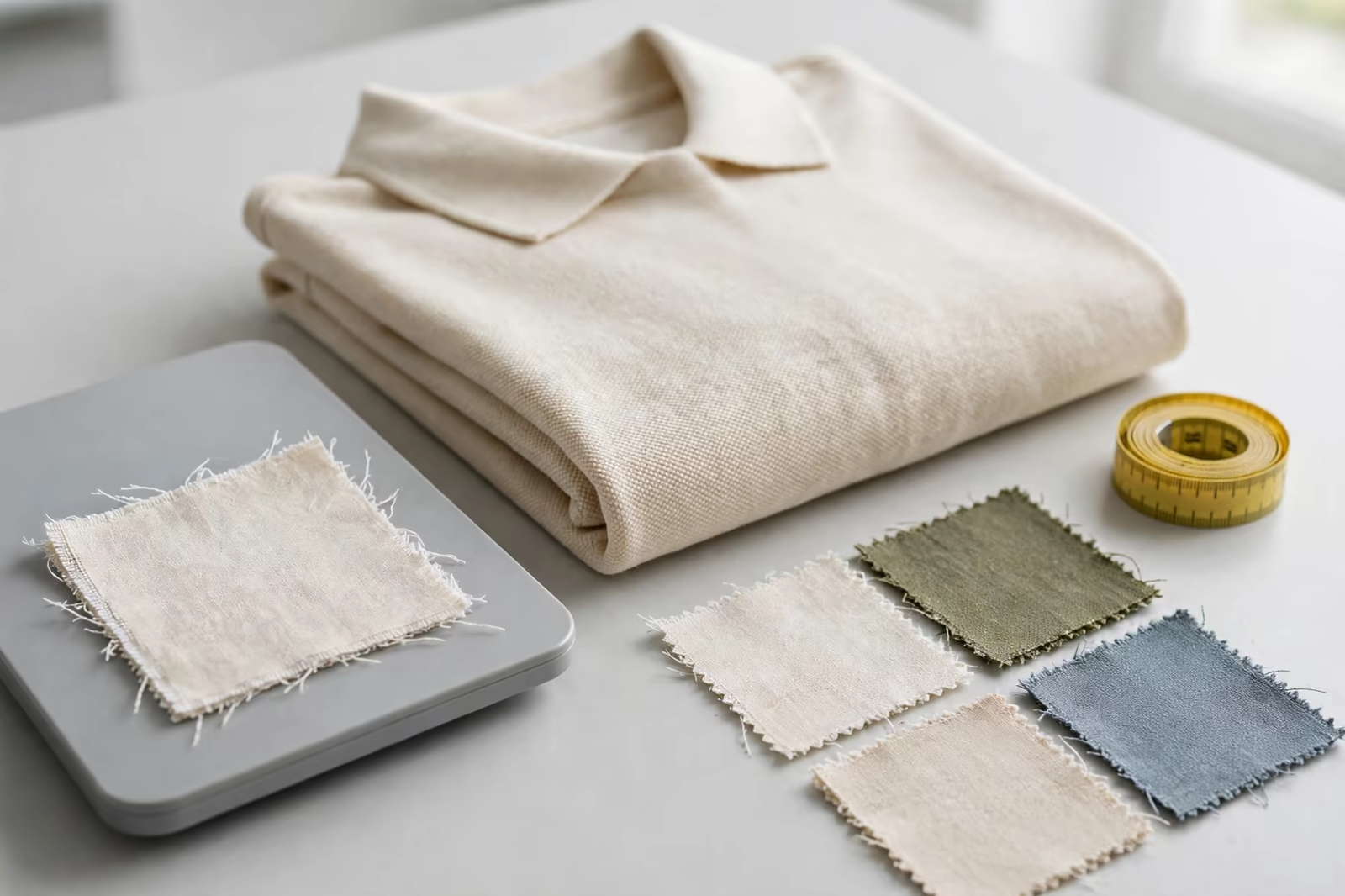
A quote is a promise about a garment that does not exist yet. Sampling is how the promise gets tested while the cost of being wrong is still small. Order pre-production samples from your leading candidate and check them against the specification physically, not from photographs.
- Weigh the garment and compare it with the quoted fabric weight
- Measure against the size chart, point by point
- Wash the sample and check shrinkage, twist and colour
- Inspect stitching density and seam strength by hand
- Check the print: position, colours, hand feel and wash fastness
- Confirm labels and packing match the quoted presentation
A factory that welcomes this checking is telling you how it will behave during bulk production. One that resists it is also telling you something, and it is cheaper to learn it at sample stage. The sampling and minimum framework behind this sits on the MOQ and production page for reference.
The Decision, Documented
Make the final comparison a document, not a memory. Keep the frozen specification, the normalised sheet, the questions asked and the answers received, and the sample results in one file. If the order later drifts, that file is the ground both sides return to, and it settles in minutes arguments that otherwise run for weeks.
Then place the order with the factory whose complete picture you trust: specification matched, terms clear, samples verified and communication sound. If you would like a quote built to be compared, send the full specification through get a quote and it will come back itemised, ready to sit on your comparison sheet beside anyone’s.
Keep the file after the order too. When the next season’s enquiry goes out, last season’s sheet is your starting point: the specification history, the questions that mattered and the answers each factory gave. Buyers who build that record stop relearning the same lessons, and their comparisons get faster, calmer and cheaper every single season.
A Worked Pattern: Two Quotes, One Shirt
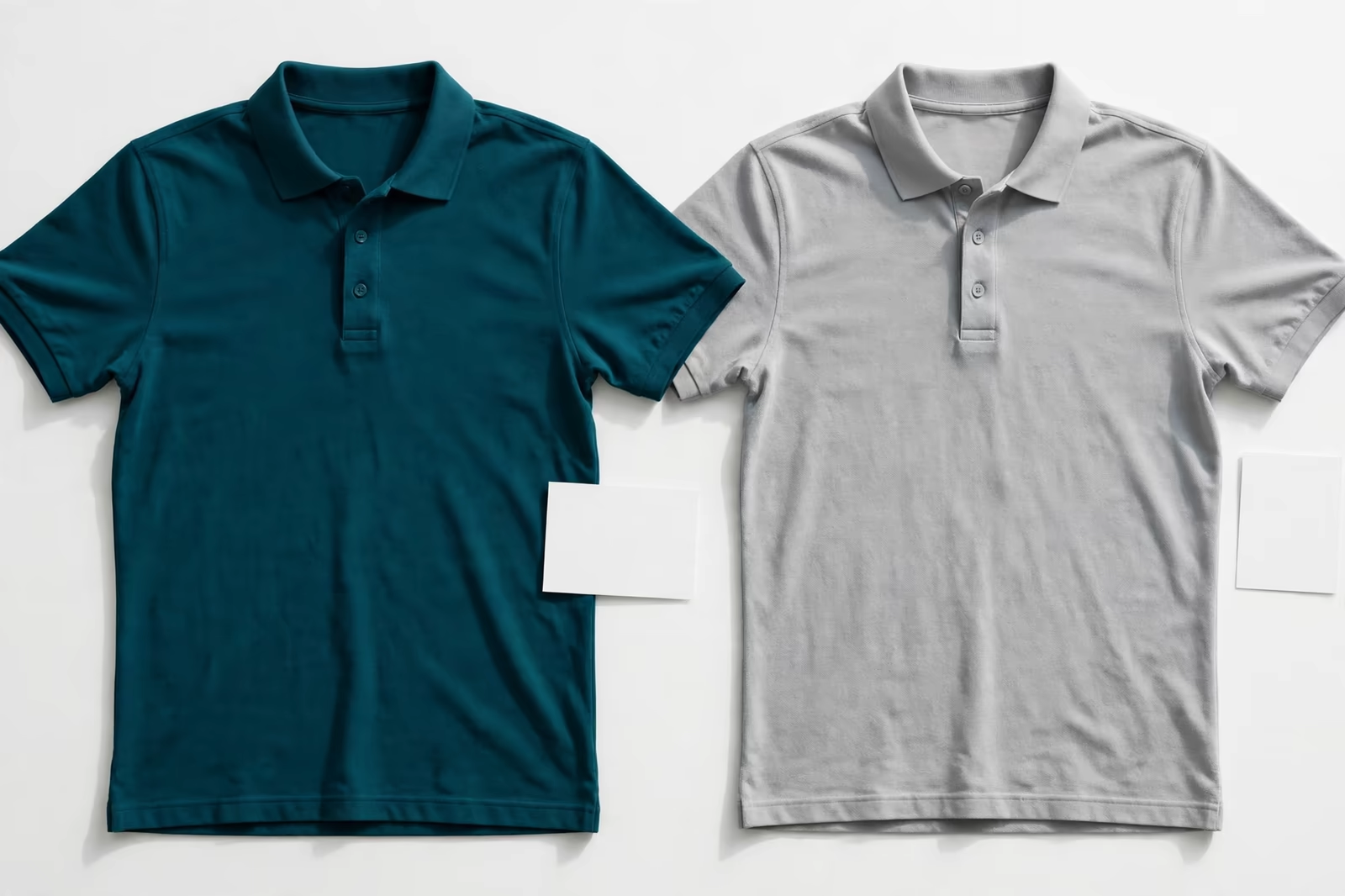
Consider the pattern buyers meet every season. Two factories quote on the same polo shirt. The first price is noticeably lower, and the buyer is tempted to place the order the same day. On the comparison sheet, though, the rows begin to speak.
The cheaper quote lists the fabric by name only, with no weight. The dearer one states the weight, the yarn type and the finish. The cheaper quote mentions printing once; the artwork carries a chest and a sleeve position. The cheaper quote says nothing about packing; the specification asked for individual bagging with size stickers. The cheaper quote is ex-works, a fact written nowhere on its single page.
None of this proves the cheaper factory is dishonest. It proves the two prices were never for the same garment. When the missing rows are priced and added, the gap narrows to a small, honest difference, and sometimes it reverses entirely. The comparison sheet did that work, quietly, before any money moved.
Questions That Reveal a Costing
A well-costed quote survives questions without changing shape. Asking these, in writing, separates factories that priced your garment from factories that priced a guess.
- What fabric weight and yarn does this price stand on?
- Which print placements and colours are included in this figure?
- What packing standard is included, and what would retail packing add?
- On what trade basis is the price, and what sits outside it?
- How long is the price valid, and what happens on the day it expires?
- Are sample charges credited against the bulk order?
- Which lines would move if the quantity changed, and in which direction?
Judge the answers for consistency as much as content. A factory whose replies shift the specification each time is telling you the original number was never anchored to your garment at all.
Total Cost, Not Unit Price
The unit price is the loudest number in sourcing and rarely the final one. Experienced buyers compare the total cost of owning the finished goods in their warehouse, because that is the figure their margin actually feels.
- Sampling: how many rounds, at what charge, credited or not
- Freight basis: who pays what, port to port and beyond
- Testing: the cost of proving compliance in your market
- Rework risk: the price of a factory whose quality needs rescuing
- Delay risk: late goods miss seasons, and missed seasons cost most of all
- Your own time: hours spent chasing answers are a real cost line
Seen this way, a slightly higher unit price from a transparent, consistent factory routinely lands cheaper than the bargain that needed two sample rounds, one rescue inspection and a freight upgrade to hit the season. Compare totals, and the ranking of your quotes may change before your eyes.
When the Quotes Are Practically Equal
Sometimes the normalised sheet produces a near-tie, and buyers stall, hoping one more round of emails will separate the factories. It rarely does. Ties are broken by judgement about behaviour, and the evidence is already sitting in your inbox.
- Who answered the difficult questions without being asked twice?
- Who flagged a problem in your specification before pricing it?
- Whose sample arrived matching its own paperwork?
- Who wrote terms down clearly, including the uncomfortable ones?
- Whose production genuinely specialises in your garment type?
Choose the factory that behaved best while being compared. Comparison behaviour is production behaviour in miniature: the care taken over a quotation is the care you will meet over a bulk order, when the sums are larger and the season is ticking.
Frequently Asked Questions
How many factories should I ask for quotes?
Three to five is the working range for most buyers. Fewer gives no market picture; more creates an administrative burden and signals that the enquiry is a fishing exercise, which the best factories answer last or not at all. Choose candidates whose daily production genuinely matches your garment type and your order size.
A quote is much cheaper than the others. What should I check first?
The fabric specification and the inclusions. Most unusually low quotes are light on fabric weight, silent on decoration placements or missing packing and finishing lines. Ask for the breakdown in writing and compare it row by row on your sheet before treating the price as real.
Should I tell factories what other factories quoted?
Sharing a target range can be fair negotiation; inventing numbers is not, and experienced factories recognise invented figures quickly. The stronger lever is specification clarity: a factory that knows exactly what to price, and knows it is being compared fairly, sharpens its pencil on its own.
When is a cheap quote genuinely a good quote?
When the breakdown shows the saving coming from efficiency, scale or margin rather than from materials and making: the same fabric, the same stitching, the same packing, priced lower. Verified by a sample that matches the specification, that is a saving worth taking every time.