
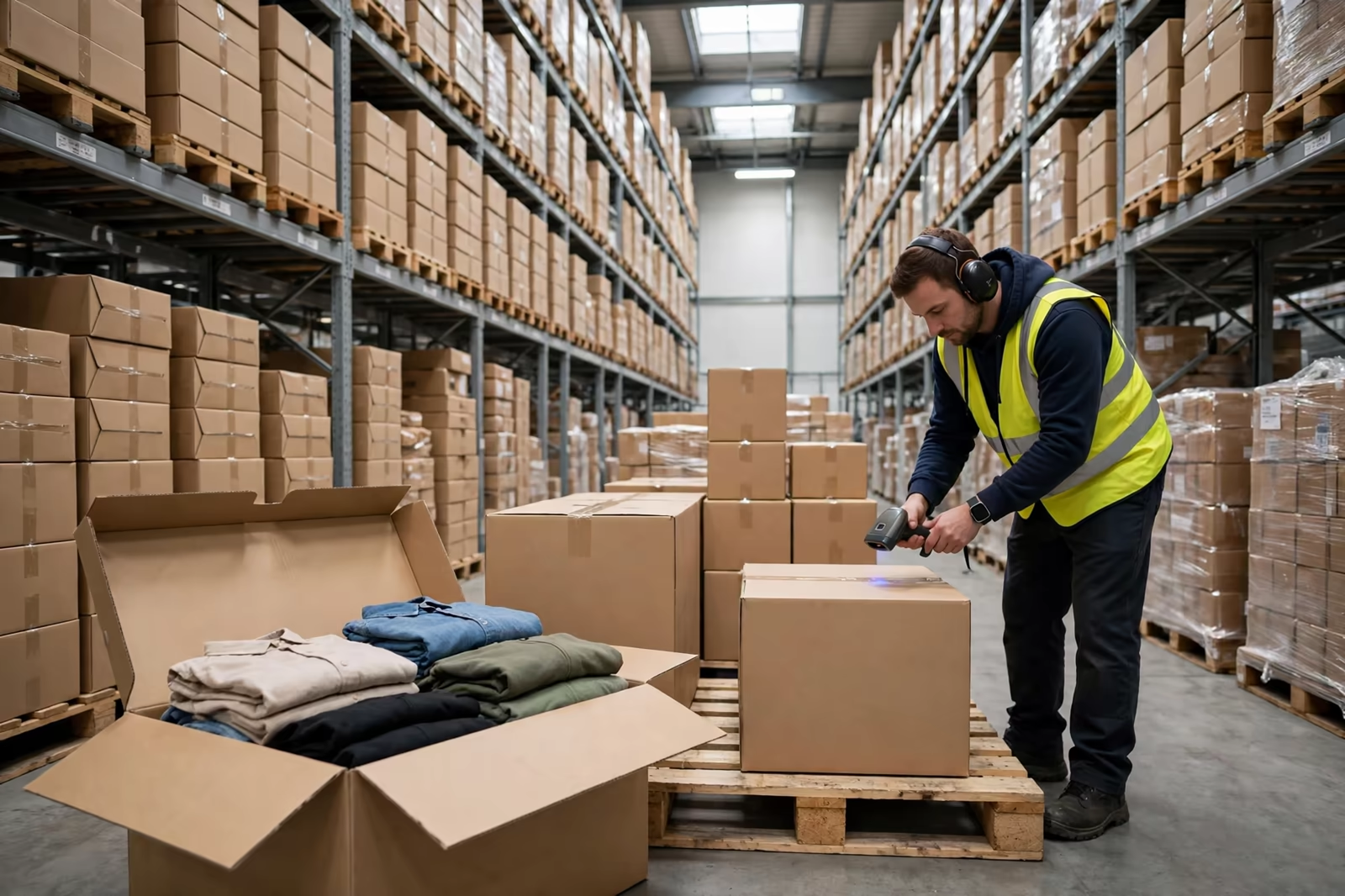
For clothing orders bound for Europe, one comparison comes up in nearly every sourcing meeting: Bangladesh for value at scale, or Turkey for speed close to market. Both supply European high streets and online retailers in depth, and many brands use both deliberately, different jobs for different hands. This guide maps where each genuinely wins.
The sourcing teams behind this guide work in Bangladesh, producing apparel to order for buyers in the USA, the UK, Germany, Canada and Australia, with Germany and wider Europe among our most practised routes. Turkey is treated honestly here, because its near-market advantages are real, and a comparison that pretends otherwise would not survive one conversation with an experienced European buyer.
Programme planning draws on the regions served on our market area page, the company background on our about us page, and the order framework on our MOQ and production page.
The Core Trade: Distance Against Cost
Strip the comparison down and one exchange remains: Turkey sells time, Bangladesh sells economics. Turkey borders Europe’s markets, moving goods by road and short sea routes, so a style can travel from factory to European distribution quickly and in smaller, more frequent drops. Bangladesh ships by sea over a far longer route, so its programmes are planned in fuller, steadier cycles.
Against that, Bangladeshi production economics on basics are among the sharpest in the world, and for price-led European programmes the difference per garment routinely outweighs the value of speed. Turkey’s costs sit clearly higher, the price of its proximity, its wage levels and its faster model.
Everything else in this comparison, product fit, duties, flexibility, hangs off that central exchange. The buyer’s real question is what a week of speed is worth on this particular style, and the honest answer changes style by style.
Product Fit: Fashion Speed Against Basics Depth
Turkey’s industry is built for fashion pace: denim, wovens, knit fashion, frequent style turnover, small drops repeated quickly, and a fabric base that feeds new ideas fast. Retailers chasing trends, test-and-repeat models, and replenishment of winning styles find their natural partner there.
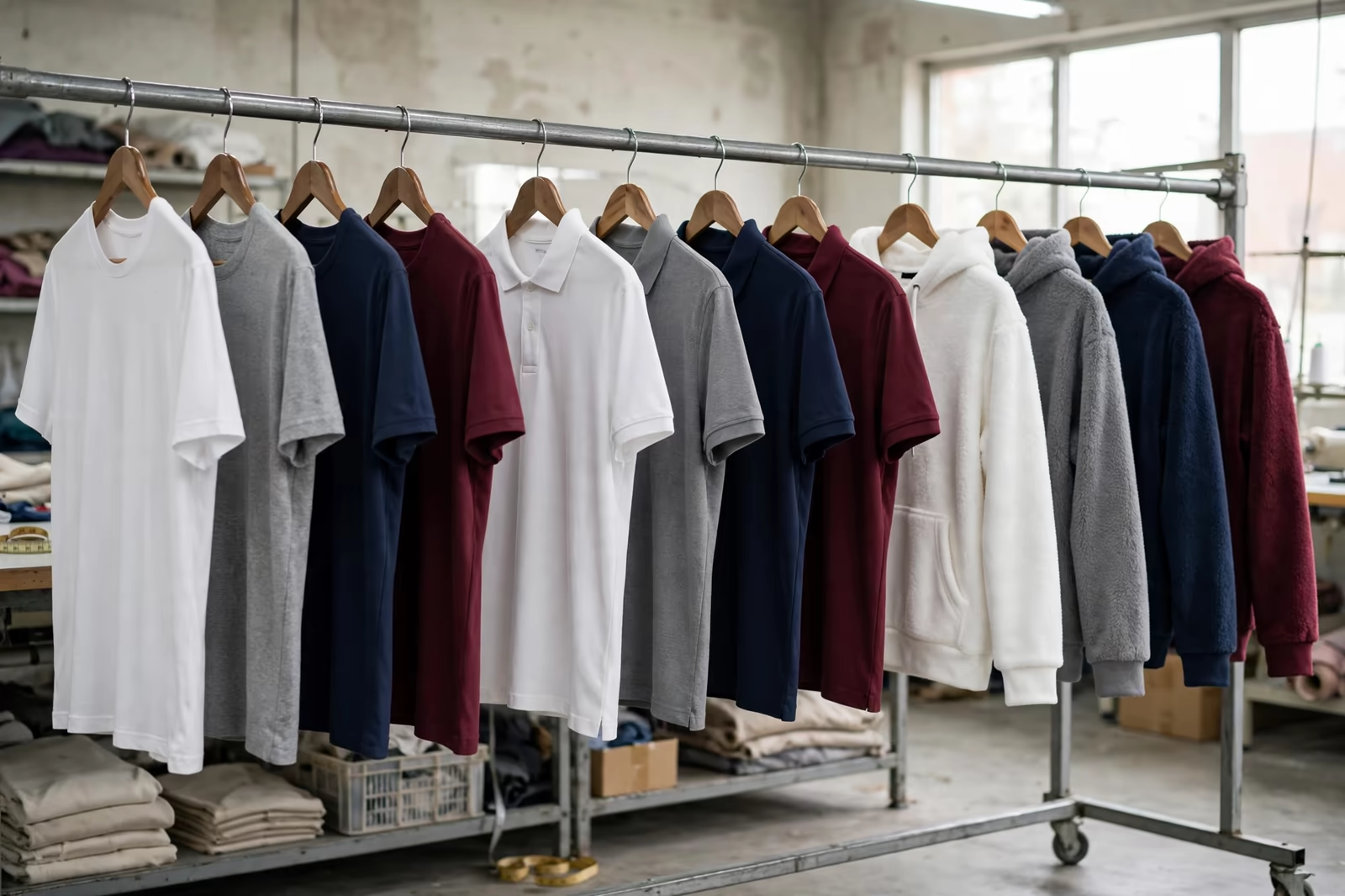
Bangladesh’s centre of gravity is programmed basics: tees, polos, fleece, hoodies, jersey and woven staples produced in depth, with printing and embroidery at scale and colourways repeated season after season. European basics programmes, private label core ranges and promotional volumes sit naturally here.
Between the centres there is overlap, Turkish factories sew fine basics and Bangladeshi factories sew fashion, but each industry’s economics reward its centre. Fashion speed bought from a basics industry arrives at basics pace; basics volume bought at near-market prices pays for speed it never uses.
Minimums and Flexibility Patterns
Flexibility follows the distance logic. Near-market factories commonly court smaller, faster-moving work, test drops and partial repeats, because their model monetises turns. Bangladeshi basics factories are organised for fuller styles and colourways; on our own lines the standard minimum is 1,200 pieces per style in up to two colours, tuned to real production runs rather than test drops.
That difference is not a quality judgement. A European buyer developing a new fashion line needs the small-drop pattern; a buyer feeding a core basics programme across thirty stores needs the production-run pattern, and would overpay for test-drop flexibility it never uses.
The mismatch cases are the painful ones: tiny experimental orders placed into volume factories, and huge basics programmes placed into speed merchants. Both end in the factory’s least favourite work and the buyer’s least favourite results.
Duties Into Europe: Two Different Doors
Turkey trades with the European Union under a customs union covering industrial goods, which lets qualifying Turkish-made clothing move into the EU without import duty, supported by movement documentation. It is a genuine structural advantage, simple and fast in practice.
Bangladesh enters through the Everything But Arms arrangement described on this blog, under which least-developed-country exports, apparel included, enter the EU duty-free provided rules of origin are met and documented. The duty outcome for a qualifying basics programme is therefore similar, zero, while the paperwork disciplines differ: origin compliance and evidence carry the Bangladeshi route.
Buyers should weigh that difference honestly rather than lazily. Duty-free by customs union is effortless; duty-free by preference is earned through documentation. Our export documentation practice is built for the second, and experienced Bangladeshi exporters handle it daily, but the buyer must still choose suppliers whose origin paperwork would survive an audit.
Replenishment and the Repeat Order
European retail increasingly runs on reaction: test a style, read the sales, repeat the winners. Turkey’s proximity is engineered for that game, with repeat drops following early reads closely enough to matter commercially. For volatile, trend-exposed styles, that reaction speed can be worth more than any unit saving.
Bangladeshi programmes answer the same need differently: deeper initial buys on proven basics, safety held in steady core styles where demand is predictable, and repeats planned into the following cycle. The model wastes little on core ranges, where sales are knowable, and concedes the trend-chase to nearer suppliers by design.
Most mature European buyers therefore split the range exactly along this line: volatile fashion nearer home, knowable core volume where the economics live, with each country’s factories doing the work their distance suits.
Cost Anatomy on an EU Programme
On the unit price line, Bangladesh generally wins clearly on basics, and the gap funds a great deal of European retail margin. Turkey’s higher unit prices buy the speed and flexibility described above, a rational purchase when sell-through risk is the expensive problem.
The full comparison adds duty (zero both ways for qualifying goods), freight (short road and sea against long sea, with corresponding cost and carbon differences), and inventory behaviour: near supply permits leaner stock and fewer markdowns on fashion; far supply asks for commitment and rewards it on staples.
Run per style rather than per country, this anatomy explains why the dual-source pattern is so common. The spreadsheet, honestly kept, points fashion one way and basics the other.
When Turkey Is the Right Answer
Honesty about the other side’s strengths is what makes a comparison useful, so plainly: choose Turkey when the style is unproven and reaction speed decides its profit, when drops are small and frequent, when denim or fashion wovens lead the range, or when a promotion needs stock behind it faster than a sea route allows.
Choose Turkey, too, when your team’s working rhythm is weekly and hands-on, with visits, quick approvals and rolling changes; proximity feeds that rhythm and distance starves it.
Choose Bangladesh when the style is proven, the volumes are real, the range is basics-led, and the margin depends on unit economics repeated faithfully across seasons. Each country, chosen for its own game, is a good supplier. Each, chosen for the other’s, disappoints.
Fabric, Quality and Working Style
Turkey’s fabric base is strong and fast, particularly for fashion fabrics and denim, with mills accustomed to short development cycles. Bangladesh’s base knits and dyes basics fabrics at national scale, jersey, fleece, pique, with depth on repeats and shade consistency across large volumes.
Quality expectations in both industries are set by the factory, not the flag. European buyers audit Turkish and Bangladeshi suppliers under the same social, safety and product standards, and both countries host factories that pass the toughest retail audits alongside factories that would not. Supplier selection, sampling and inspection discipline decide quality on either shore.
Working styles differ in texture: nearer suppliers fold into the buyer’s weekly rhythm with visits and quick turns; Bangladeshi merchandising teams are practised in milestone reporting and documentation across the longer route. Both are professional; they simply suit different programme shapes.
Sustainability and Carbon Conversations
European buyers increasingly ask about the journey as well as the garment. Turkey’s shorter routes reduce transport distance, a point its industry makes fairly, while sea freight per garment remains an efficient mode even over long routes. Fabric production methods, dye house practice and energy sources usually outweigh the transport leg in a garment’s full footprint.
Both industries are investing under buyer pressure: effluent treatment, safer chemistry, recycled fibres and traceability are live programmes in serious factories on both sides. Buyers should ask for evidence at factory level, test reports, certificates, audit findings, rather than accepting country-level green claims from either direction.
The honest comparison is therefore factory against factory on environment, just as on quality, with distance counting as one factor among several.
Building the Dual-Source Range
In practice, the split is planned at range level each season. Start by grading every style on two questions: how predictable is its demand, and how expensive is a late or missing repeat? High predictability points to Bangladesh; high cost of slowness points to Turkey; styles between the poles are argued on their numbers.
Keep the shared disciplines unified: one specification standard, one testing regime, one labelling and packaging language, so garments from both sources sit indistinguishably on the same rail. Buyers who let standards drift by source end up managing two quality worlds instead of one range.
Review the split as evidence arrives. A fashion test that proves itself becomes a core style and migrates to volume economics; a core style that fades stays near market for its shorter remaining life. The border between the two sources is a management line, not a wall.
Frequently Asked Questions
For EU orders, is Turkey always faster than Bangladesh?
For delivery to European distribution, yes, geography decides it: Turkey moves goods by road and short sea routes while Bangladeshi programmes travel a long sea route, so Turkish supply suits test-and-repeat fashion and rapid replenishment. Bangladeshi programmes are planned in fuller cycles for core basics, where demand is predictable and speed matters less. Most European buyers use both, fashion nearer, basics from Bangladesh.
Do both countries get duty-free access to the EU?
Effectively yes for qualifying clothing, through different doors. Turkey’s customs union with the EU lets qualifying industrial goods, clothing included, enter without import duty. Bangladesh’s apparel enters duty-free under the Everything But Arms arrangement for least-developed countries, provided rules of origin are met and documented. The paperwork discipline differs, so choose suppliers with audited origin documentation practice.
Which is better for private label basics sold in Europe?
Bangladesh, in most cases. Core private label basics, tees, polos, fleece, underwear and staple jersey programmes, reward unit economics, shade consistency and repeat depth, all Bangladeshi strengths, and the duty outcome matches Turkey’s for qualifying goods. Turkey earns its premium where the range turns fast and replenishment speed protects sell-through. Many European private label buyers run core volume here and fashion capsules nearer home.
Can one supplier strategy cover both?
Yes, the split-range strategy is standard practice among experienced European buyers: volatile, trend-exposed styles near market for reaction speed, and proven basics volume in Bangladesh for economics. Keep specifications, testing and labelling standards identical across both sources so the range reads as one to your customers, and review the split each season as styles prove themselves.